Xerochrysum bracteatum
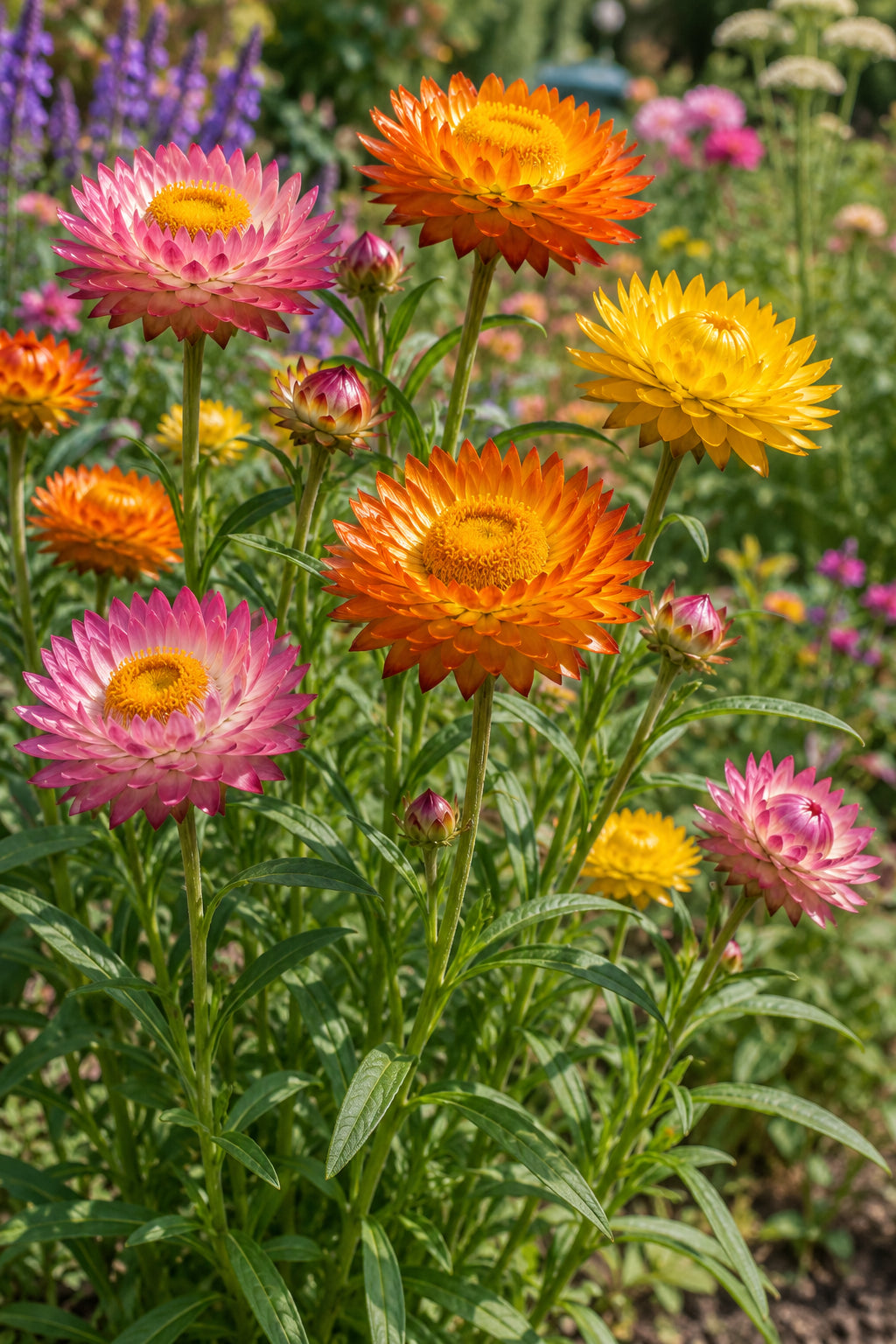
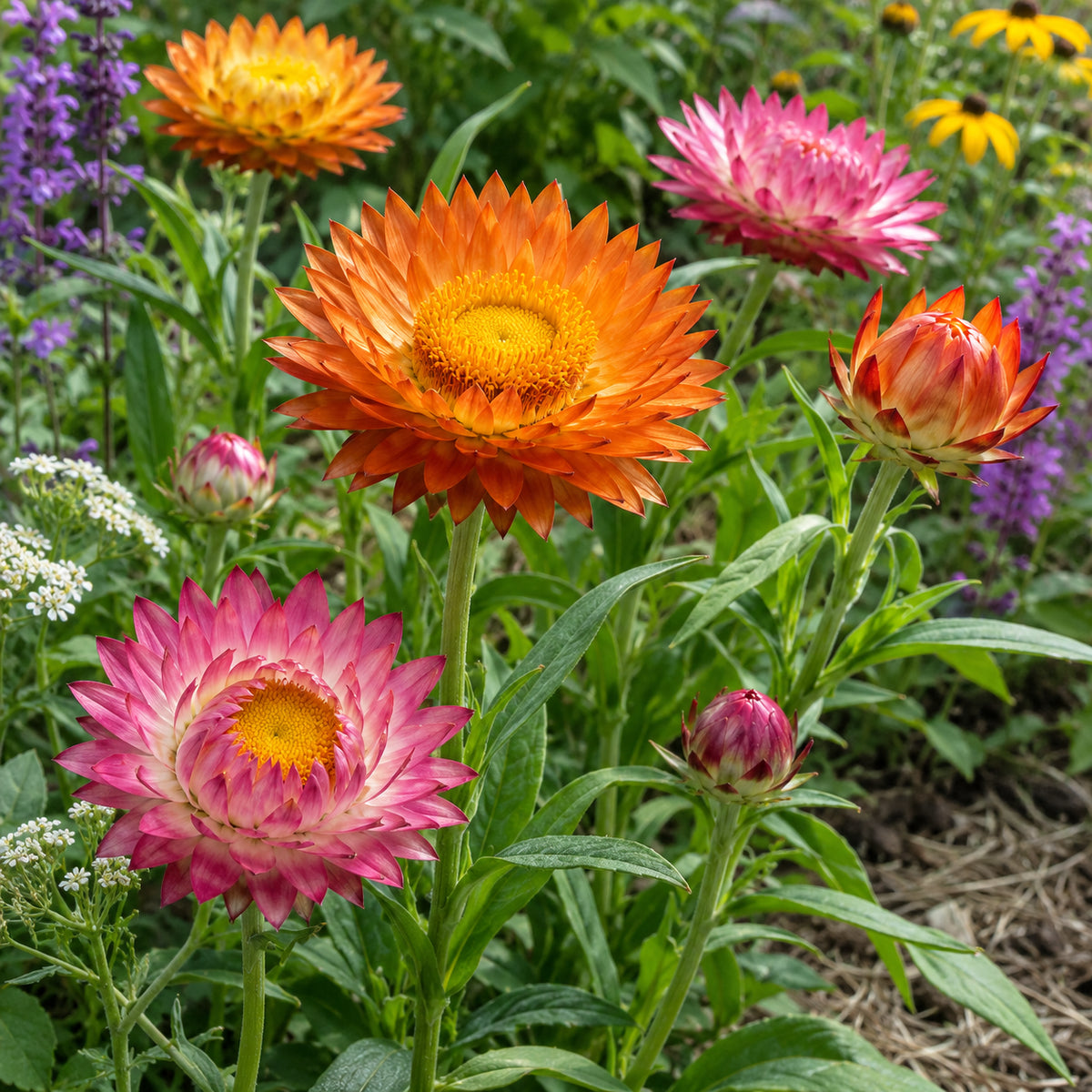
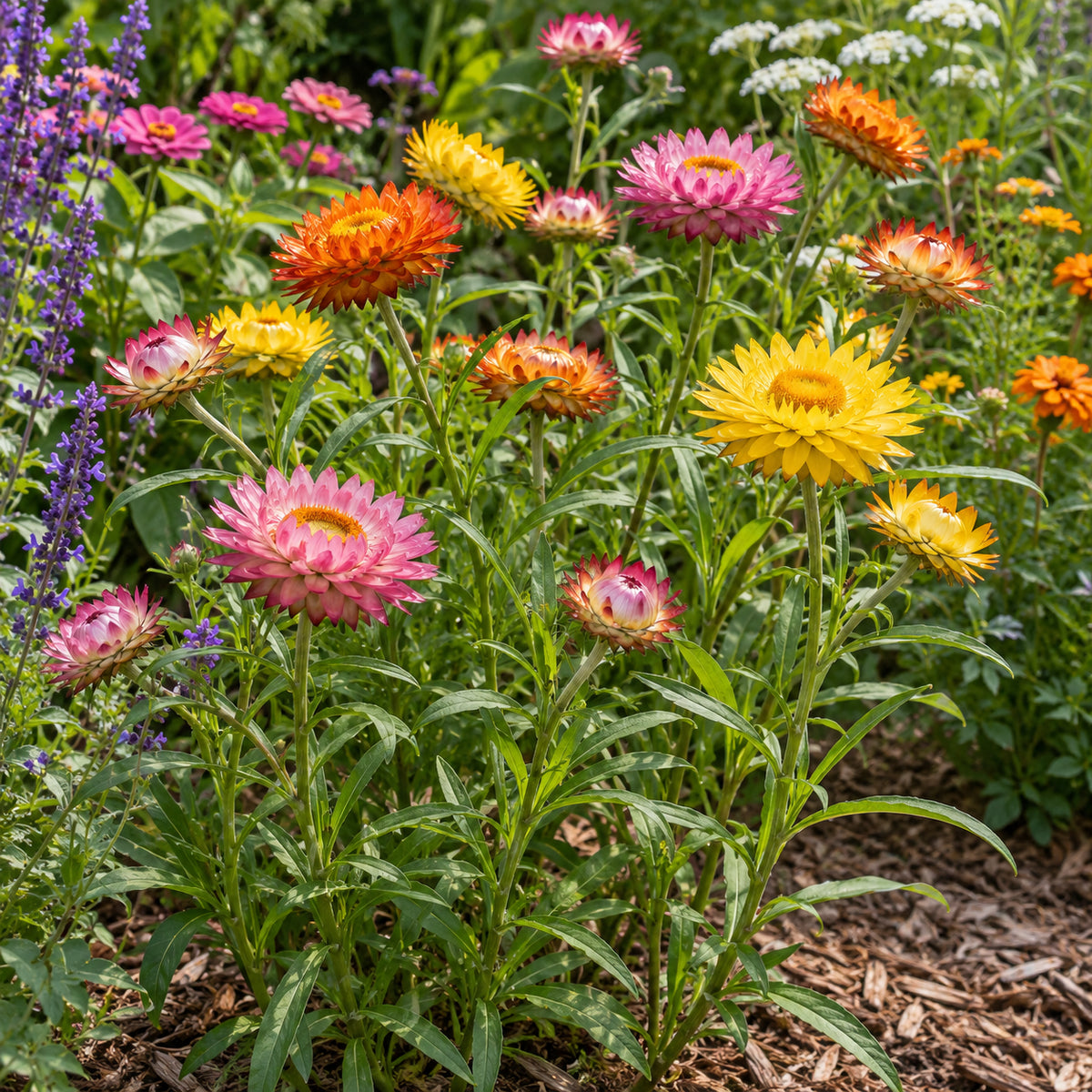
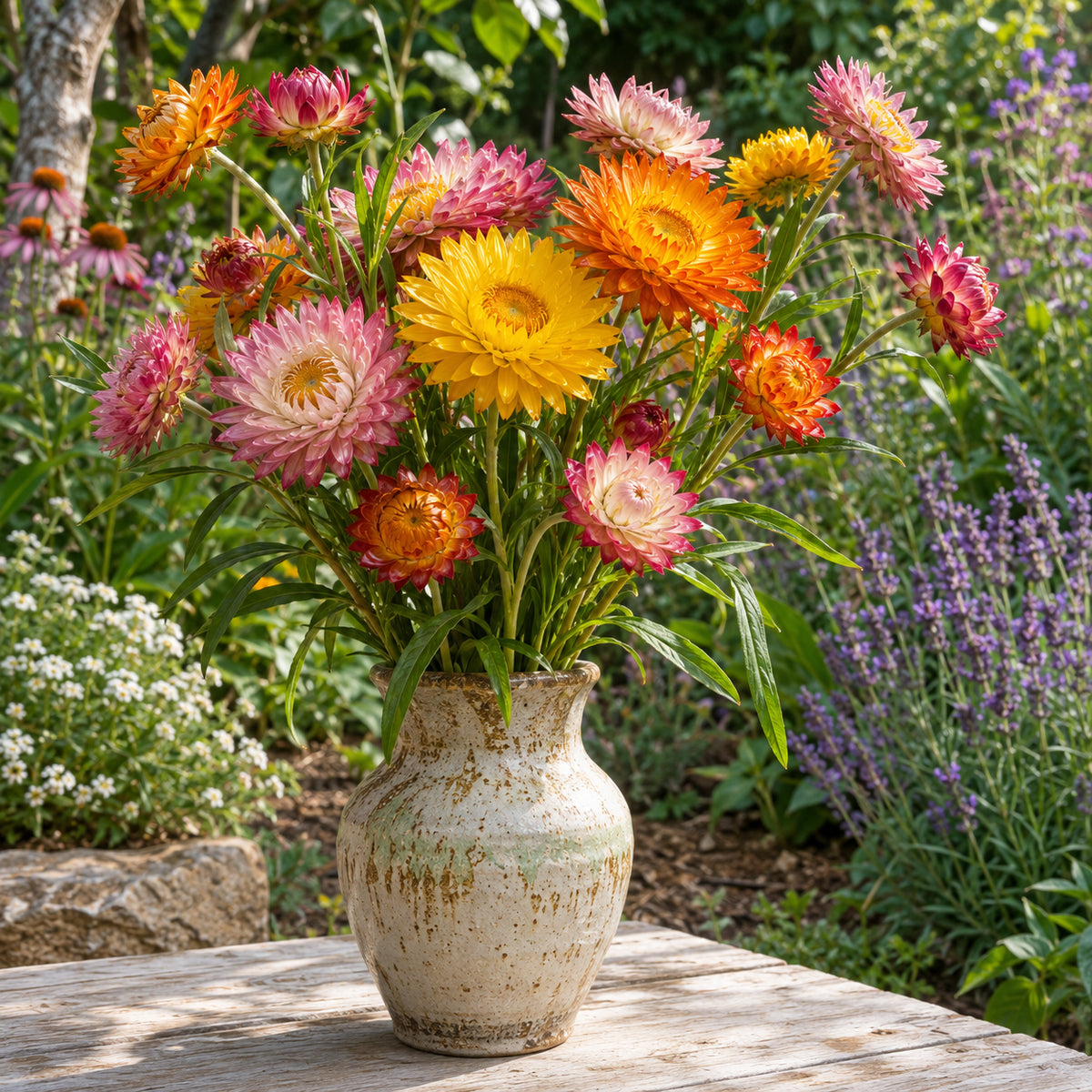
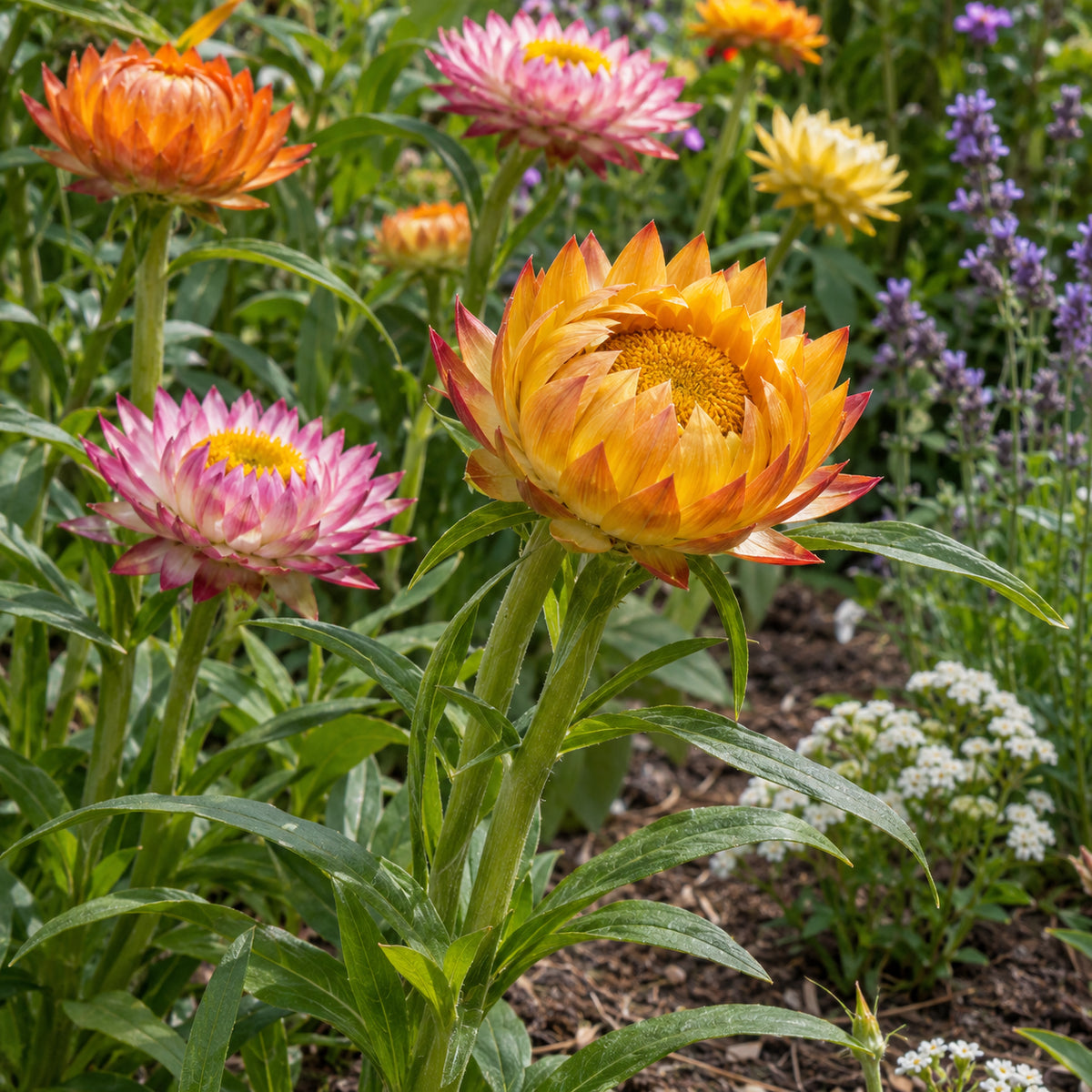
Strawflower, or bracted everlasting, retains the dry texture it is known for in bouquets. Around the center, the colorful parts are bracts: they protect the small central flowers and keep their shape long after cutting. Native to Australia, this plant is grown here as an annual to create summer flower beds and make dried bouquets.
Characteristics:
- Colorful bracts with a papery texture.
- Summer flowering, which can continue into early autumn.
- Stems can be used in fresh or dried bouquets.
Sowing tips:
-
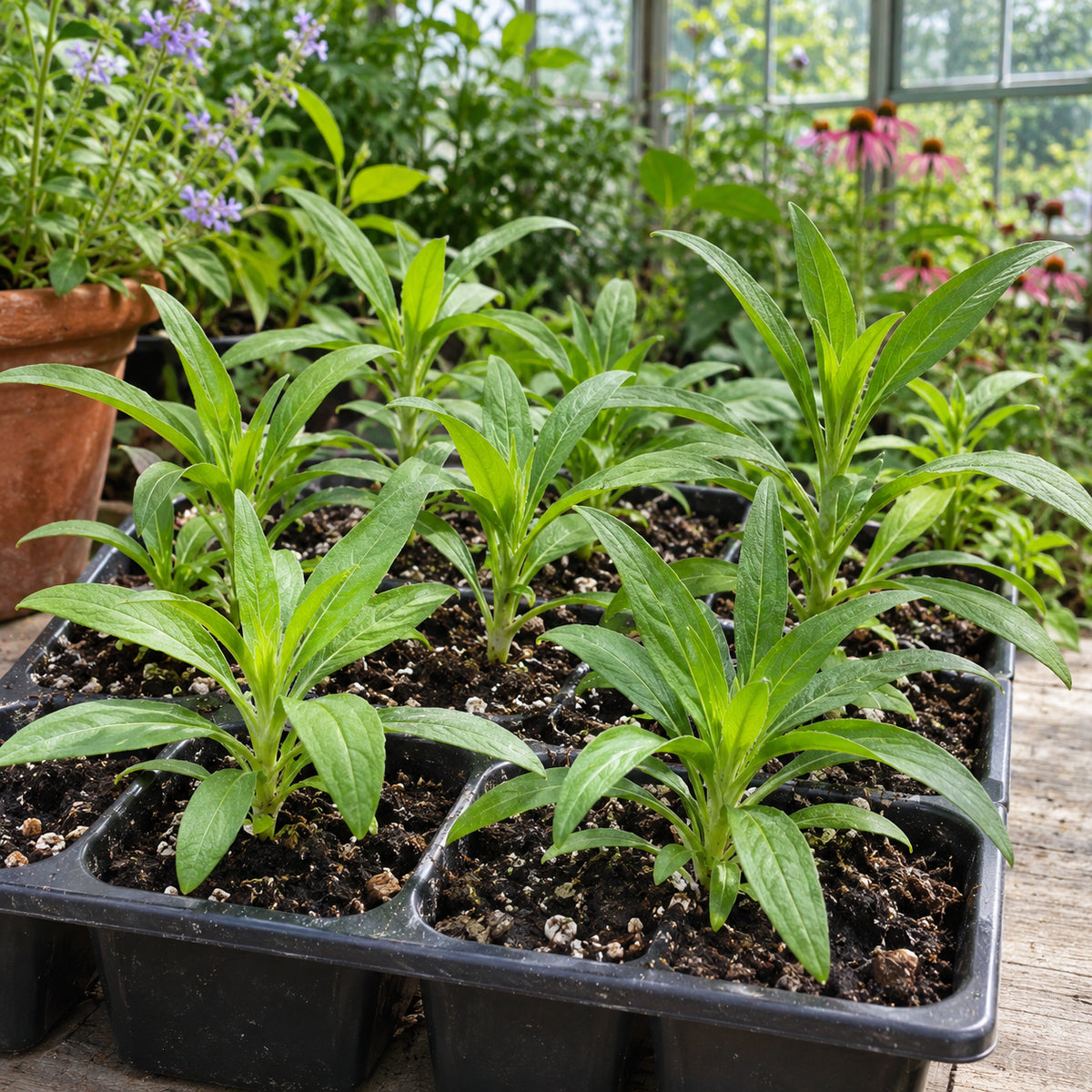
Timing: Sow in spring under cover to prepare seedlings for planting out after the last frosts.
-
Technique: Scatter the seeds over fine potting soil and press gently. Light encourages germination: leave the seeds on the surface without covering them.
-
Moisture: Moisten gently to avoid displacing the seeds. Keep the surface cool, ventilate the cover, and transplant when the seedlings can be handled.
Find the preparation steps in our guide to sowing methods.
Growing and care tips:
Choose a sunny spot and well-drained soil. Gradually acclimate the plants to the outdoors before planting, then water them to help them establish. Allow air to circulate between clumps and avoid locations where water collects. Once the plants are established, adjust watering to the weather and soil, checking more regularly when growing them in containers. Cutting stems for bouquets also refreshes the look of the flower bed; keep the heads intended for seeds separate.
Flowering and harvest:
For a dried bouquet, cut before the flowers fully open, when the first rows of bracts have unfurled but the center is still tight. The flower will continue to open after cutting. Choose a dry day, remove the lower leaves, and hang small bunches upside down in a dry, well-ventilated place out of direct light. A flower harvested when fully open may look less neat after drying: pay attention to its stage rather than just the size of the head.
Garden use:
Strawflowers pair well with airy grasses, globe amaranths, or dried foliage. In a fresh bouquet, they already add textural contrast to soft flowers. In the garden, pair them with plants that share their need for sun and good drainage, without burying them in overly dense growth. Their French name, immortelle, reflects their ability to retain decorative appeal after drying, rather than a bloom that lasts indefinitely.
Harvesting your own seeds:
Leave the heads intended for sowing on the plant much longer than those cut for drying. Let them mature until the center turns brown and begins to release the small fruits with their feathery tufts. Collect them before they disperse, then finish drying them in an open envelope or on a clean surface. Gently sort them to separate the fruits from the bract debris. Label them with the year and parent plant; offspring may vary in color. See our tips for storing harvested seeds.
Commitment to Quality:
At SemiSauvage, we offer seed that breeds true to grow diversity in the garden. This packet contains at least 100 seeds, packaged in France. The dates shown are guidelines to adapt to your climate, soil, and seasonal conditions.
Cut the heads when the bracts are partly open for dried bouquets, and leave others to mature on the plant for seeds.