Cucurbita pepo 'Jack O'Lantern'
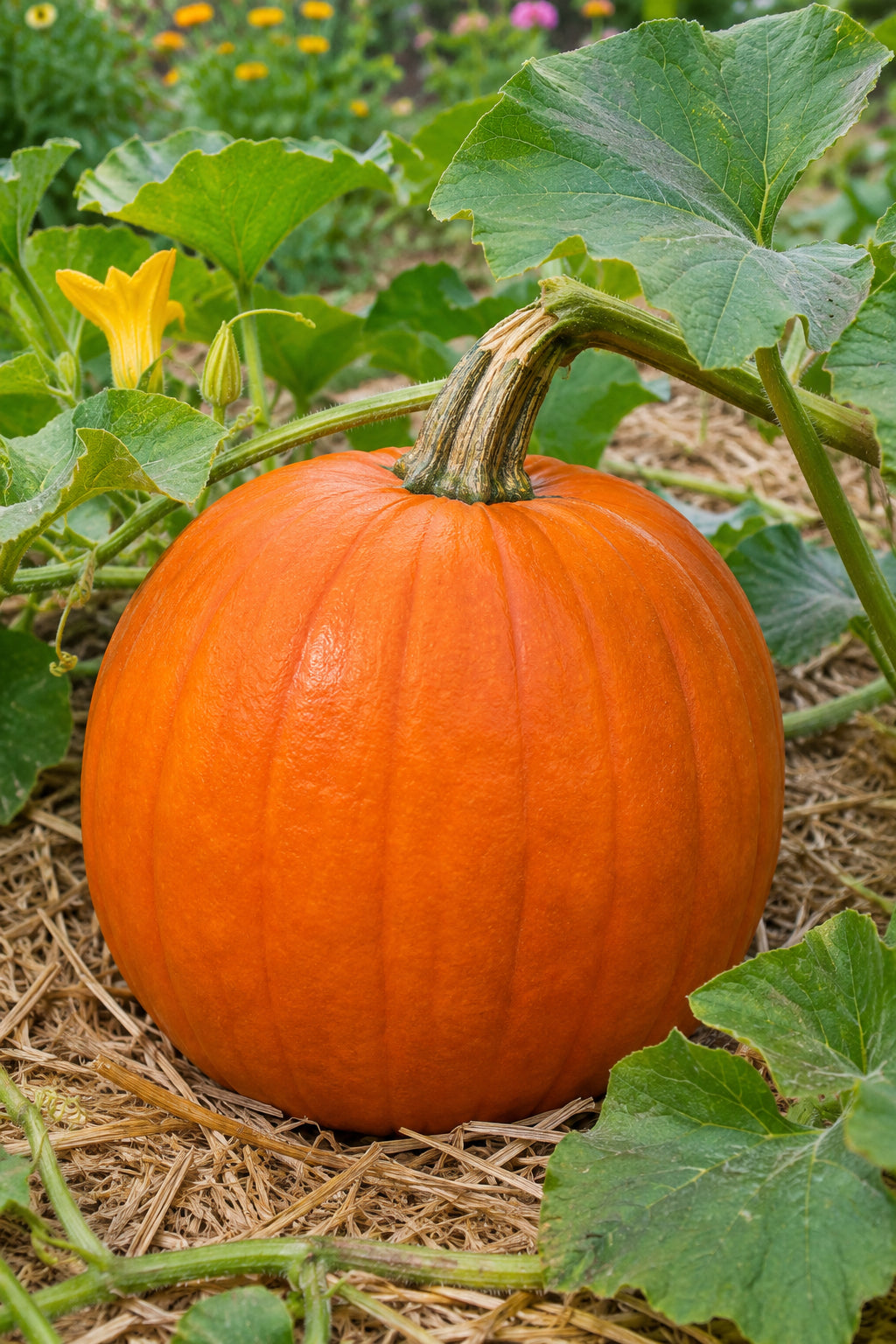
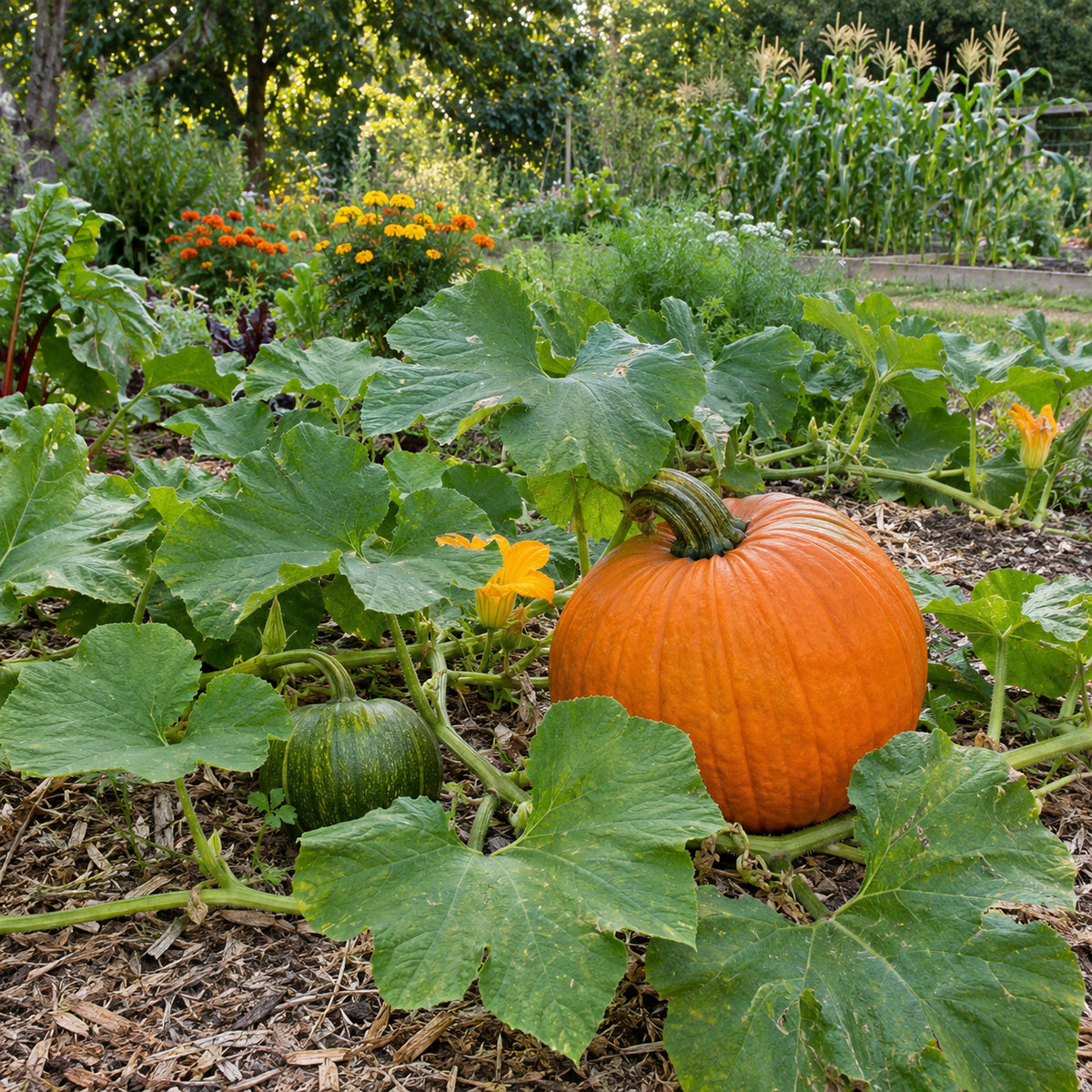
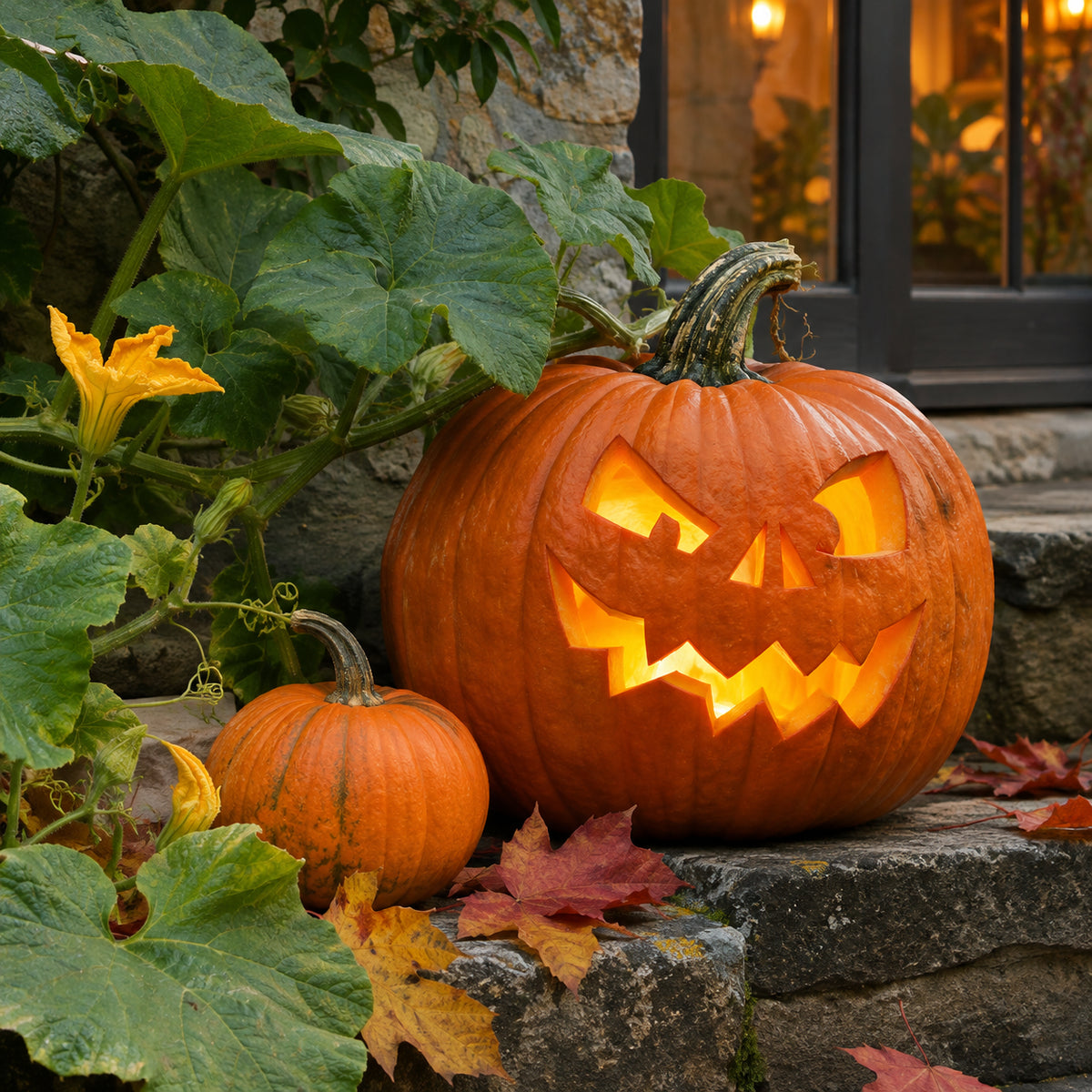
The ‘Jack O’Lantern’ pumpkin produces the orange, rounded, ribbed fruits associated with Halloween lanterns. Its flesh is edible and can be used in soup, although this variety is chosen mainly for carving. In the vegetable garden, it is a spreading plant: its long stems and large leaves need plenty of space, sun and enriched soil. Plan your planting in spring to get ripe fruits in autumn, before the frosts.
Characteristics:
- Annual squash with trailing growth and large leaves.
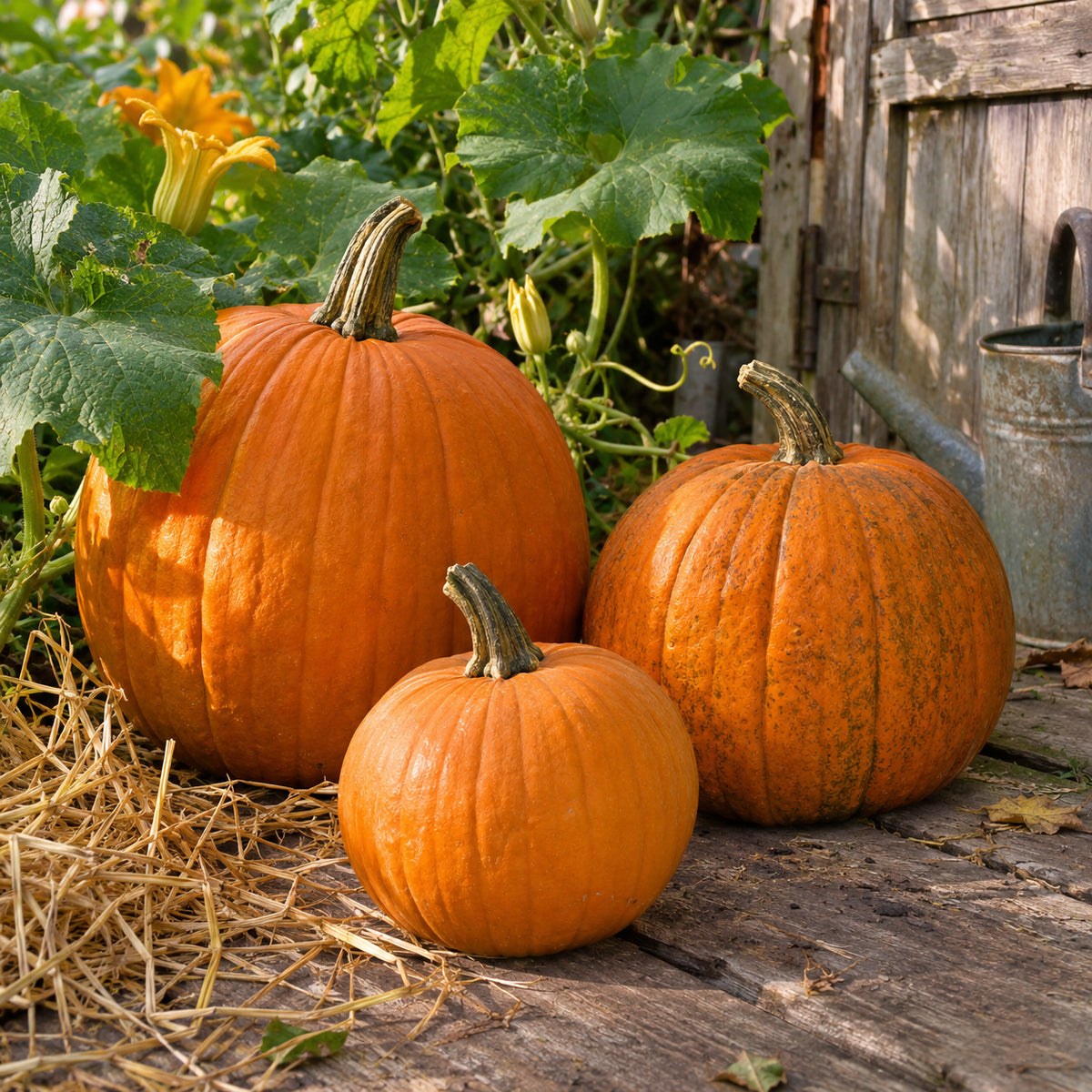
- Orange, round, ribbed fruits, suitable for making lanterns.
- A warm-season crop to plant after the last frost in rich, well-drained soil.
- Open-pollinated seeds; packet contains at least 15 seeds.
Sowing tips:
-
Under cover: Sow in April under cover, in individual pots, in growing medium kept between 15 and 20 °C.
-
Direct sowing: You can also sow directly in the ground in May once the soil has warmed up enough and all risk of frost has passed.
-
Germination: Water without soaking the soil and place the young plants in a bright spot. Don’t let them become leggy in a place that’s too dark.
Planting tips:
Gradually acclimatize seedlings grown under cover. Plant them in a sunny spot in soil enriched with mature compost, keeping the root ball intact. Leave enough room for the trailing stems and keep access clear for watering and harvesting. Our guide to sowing in pots or directly in the ground will help you choose the right approach for your garden.
Care tips:
Water regularly at the base when the weather is dry. Once the soil has warmed up, mulch to reduce drying out and keep the fruits clean. Guide the trailing stems toward the available space without breaking them. If needed, place a dry support under fruits resting on damp soil.
Harvesting tips:
Harvest in the fall before the first frost, when the fruits are ripe and their skins have hardened. Cut the stem, leaving a piece attached, and carry the squash from underneath. Keep healthy fruits in a dry, well-ventilated place until you’re ready to decorate them; check them regularly.
A tradition rooted in Irish lanterns:
In Ireland, Halloween lanterns were traditionally carved from turnips before pumpkin carving became popular in America. Jack O’Lantern carries on this tradition of face-shaped lanterns. Carve it shortly before Halloween, as a cut fruit does not keep as long as an intact one.
A squash for carving and cooking:
The flesh of Jack O’Lantern is edible and can be cooked in soup or puréed soup. This variety is chosen mainly for carving; its flavor is more modest than that of squash varieties selected for cooking. Only eat healthy fruit, before using it as a lantern. Do not eat fruit that is unusually bitter.
Harvesting your own seeds:
Choose a healthy, fully ripe fruit with hardened skin and a dry stem. Cut it open and scoop the seeds from the central cavity, remove the pulp and fibers, rinse, then spread the seeds out to dry completely without high heat. Other flowering Cucurbita pepo, including some zucchini and ornamental squash, can cross-pollinate with this variety. To preserve its characteristics, seed production requires isolation or controlled pollination; seeds simply collected from a fruit are no guarantee of identical offspring. See our tips on saving your seeds.
Commitment to Quality:
At SemiSauvage, we offer open-pollinated seeds to grow and discover the diversity of plants. This packet contains at least 15 seeds, packed in France. Our tips will guide you from sowing through growing; adapt them to your climate and garden conditions.
Grow Jack O’Lantern to harvest a pumpkin for cooking or carving, making sure to leave plenty of room for its sprawling growth.