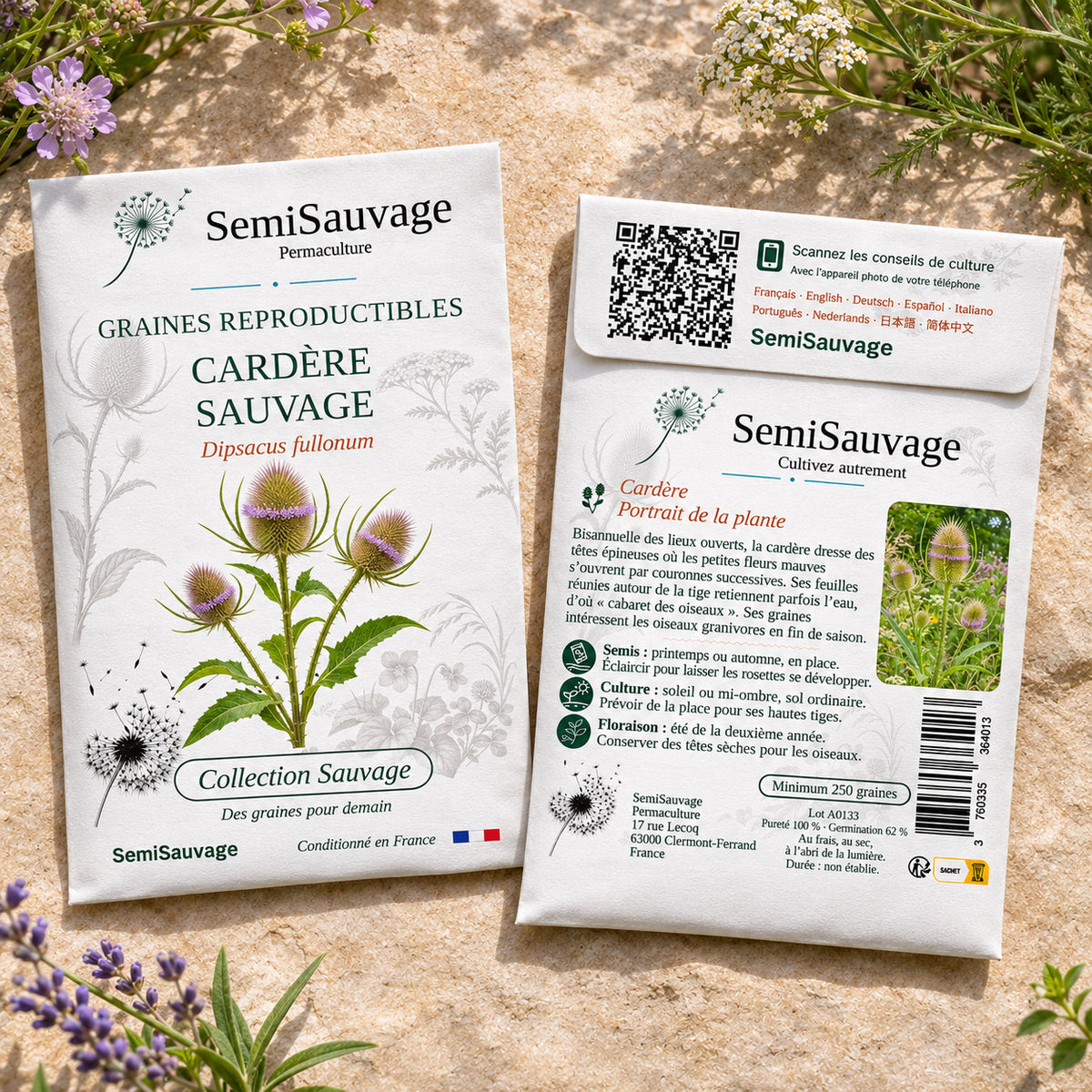
Dipsacus fullonum
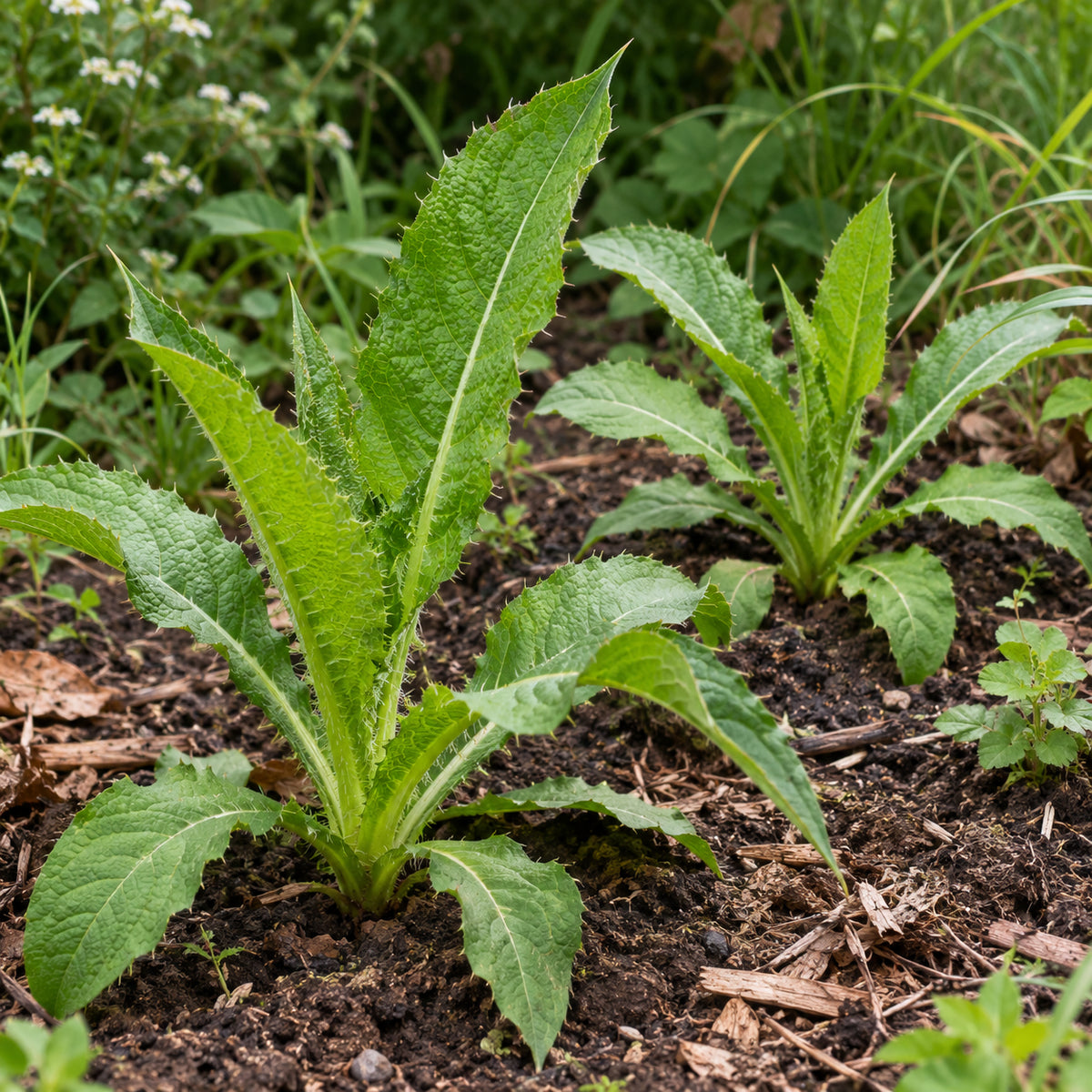
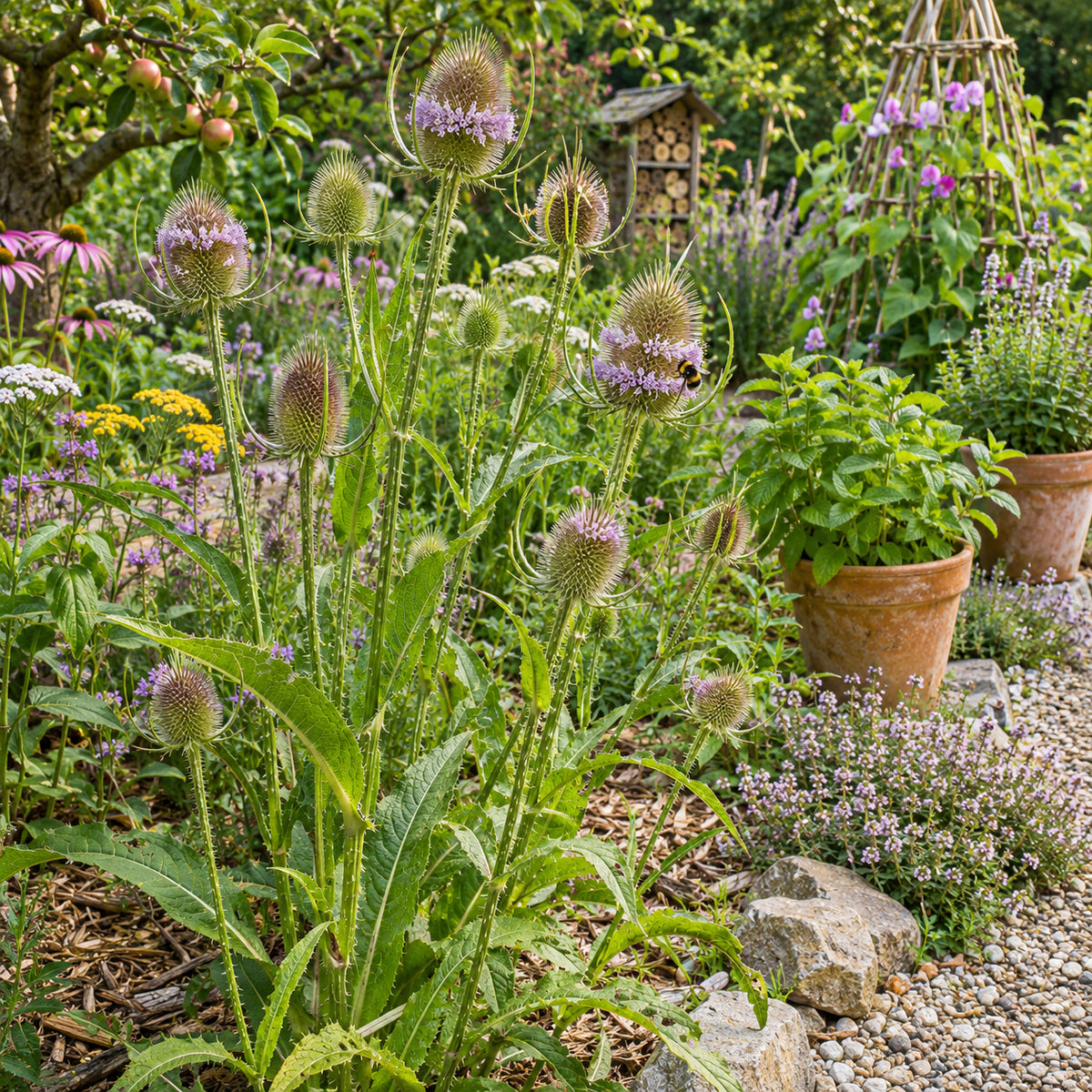
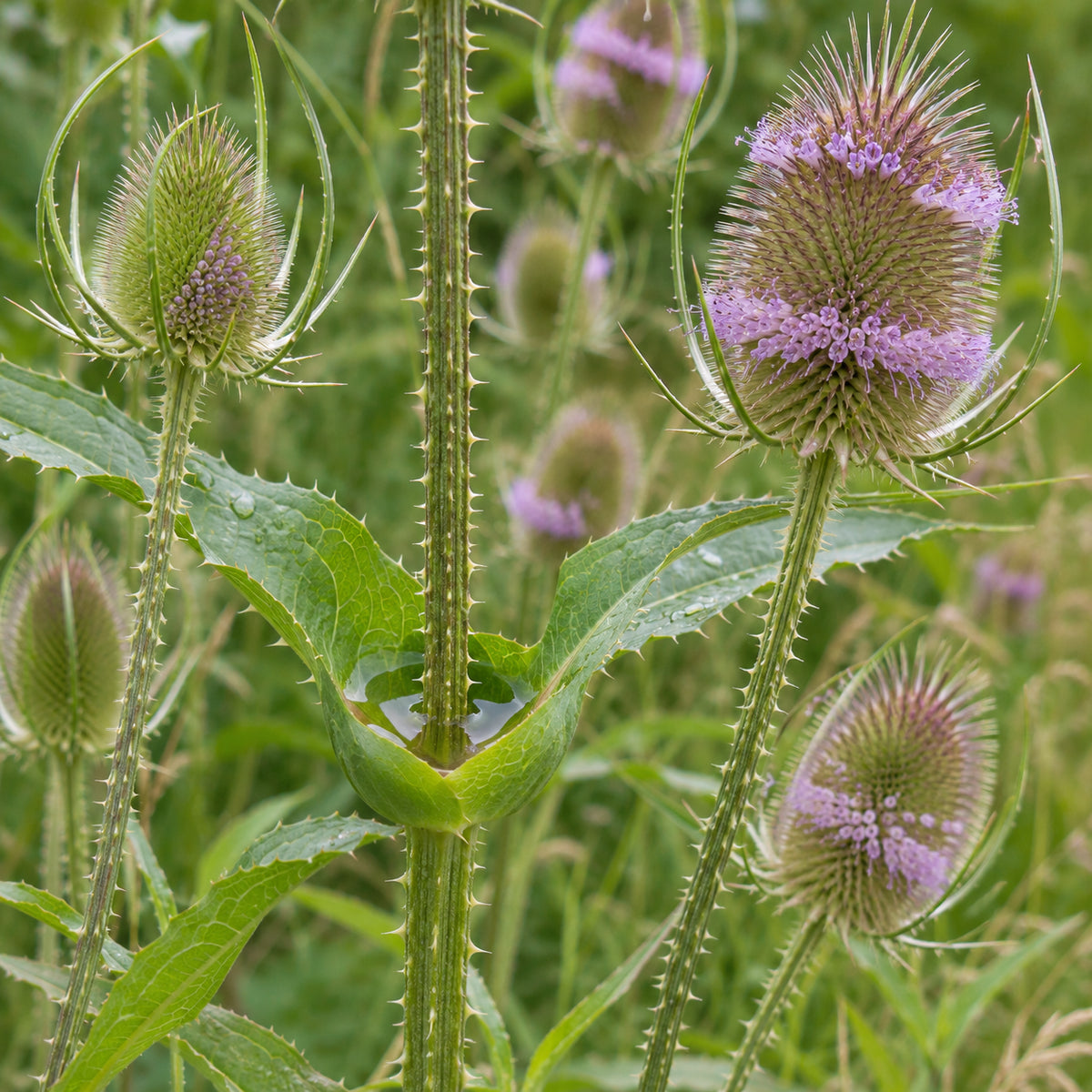
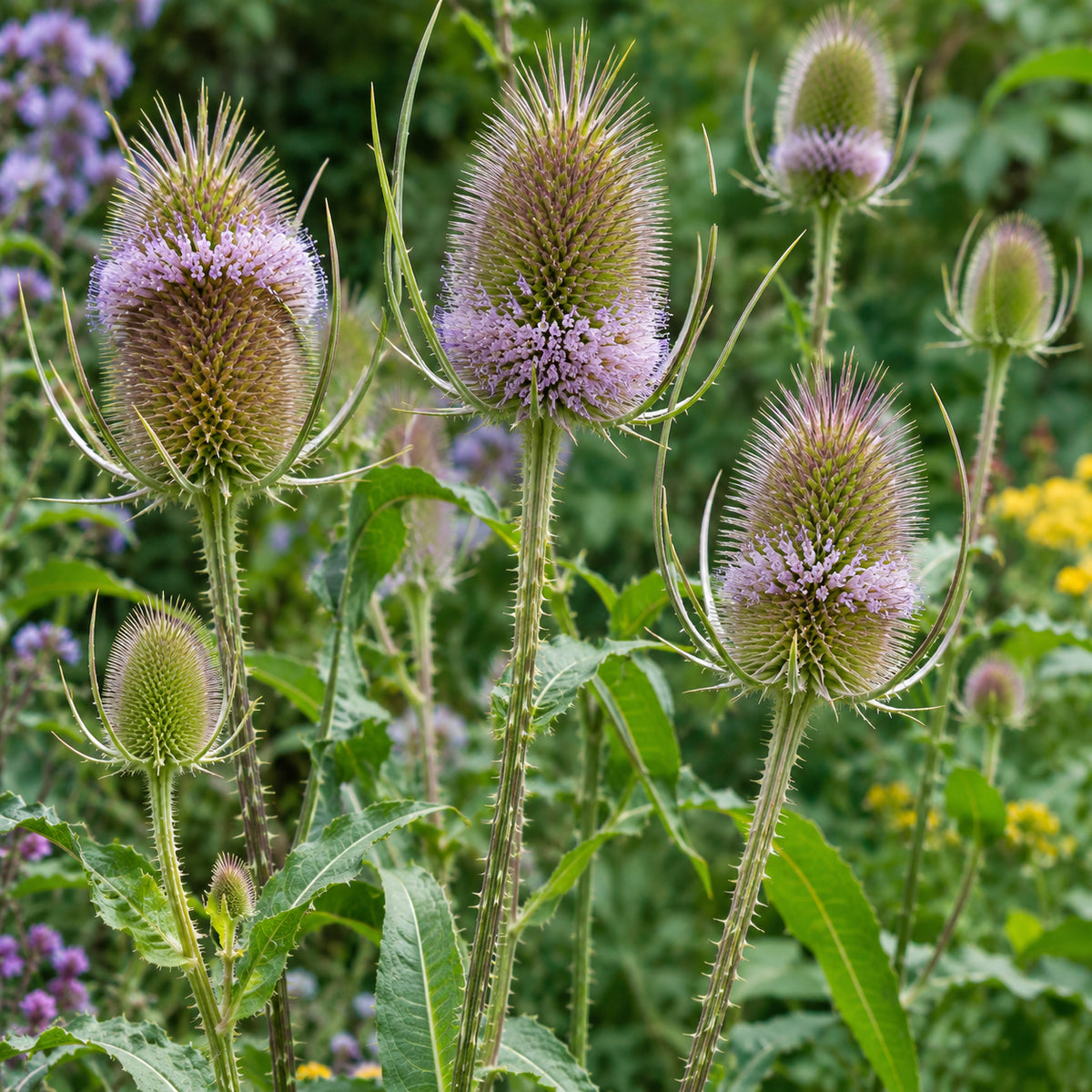
Wild teasel reveals itself over two seasons: first, a rosette of leaves takes shape, then a tall stem bears thorny flower heads. Small mauve flowers open in successive bands on these heads, which remain decorative after flowering. Its other name, “teasel,” evokes the leaves that join around the stem and can hold a little water. In the garden, it makes a bold statement and stays appealing with seeds left for the birds.
Characteristics:
- Biennial plant: a rosette in the first year, usually flowering in the second.
- Thorny stems and flower heads; small mauve flowers clustered on egg-shaped heads.
- Opposite leaves whose bases join around the stem.
- Dry flower heads are attractive in dried bouquets and to seed-eating birds.
Sowing tips:
-
Timing: sow in place in spring or autumn.
-
Preparation: clear the ground and rake the surface smooth before scattering the seeds. Keep the soil moist enough for establishment without waterlogging the area.
-
Thinning: leave space between the rosettes. Our guide to sowing methods covers the basic steps for direct sowing.
Planting and growing tips:
Choose a sunny or partially shaded spot with ordinary to moderately fertile soil. Give it a place where its eventual height won’t come as a surprise: the initial small rosette doesn’t reflect the size of the flowering plant. At the back of a flower bed or along the edge of a less formal area, the stems will be visible without obstructing walkways. Avoid planting it right next to a narrow path because of its thorns.
Care tips:
Weed around young rosettes and water if a dry spell threatens their establishment. Check that tall stems remain upright in exposed, windy locations; support may be helpful. Then decide which heads to keep. Cutting them before the seeds disperse limits self-seeding; leaving some allows the cycle to continue and provides a resource for birds.
Flowering and dried bouquets:
Flowering takes place in summer, usually in the second year. The bands of flowers are not the same on every head: they develop according to its maturity. For a dried bouquet, cut a few stems and hang them in a well-ventilated place. Handle the flower heads with gloves suitable for their spines, and keep arrangements away from walkways.
Benefits for biodiversity:
The ripe flower heads attract goldfinches in particular, which come to forage for seeds. Leave some standing over winter if the location allows. The small water reservoir held between the leaves explains its common name; the seed value of the dry heads is another role, distinct from this feature of the foliage.
Harvesting your own seeds:
Save a few flower heads for your harvest and leave the rest for the birds. Wait until the heads are ripe and dry: each pollinated little flower produces a dry, indehiscent fruit, which does not open at maturity and contains one seed. Cut the heads in dry weather over a paper bag, then let them finish drying. Gently tap or thresh them to release the seeds, remove the debris, and label them. Protect your hands while handling them. See our tips for storing harvested seeds.
Commitment to Quality:
At SemiSauvage, we offer seeds that grow true to type to cultivate diversity in the garden. This packet contains at least 250 seeds, packaged in France. The periods indicated are guidelines to adapt to your climate, soil, and seasonal conditions.
The teasel makes room for the plant’s full life cycle, from rosette to dry heads visited by birds.