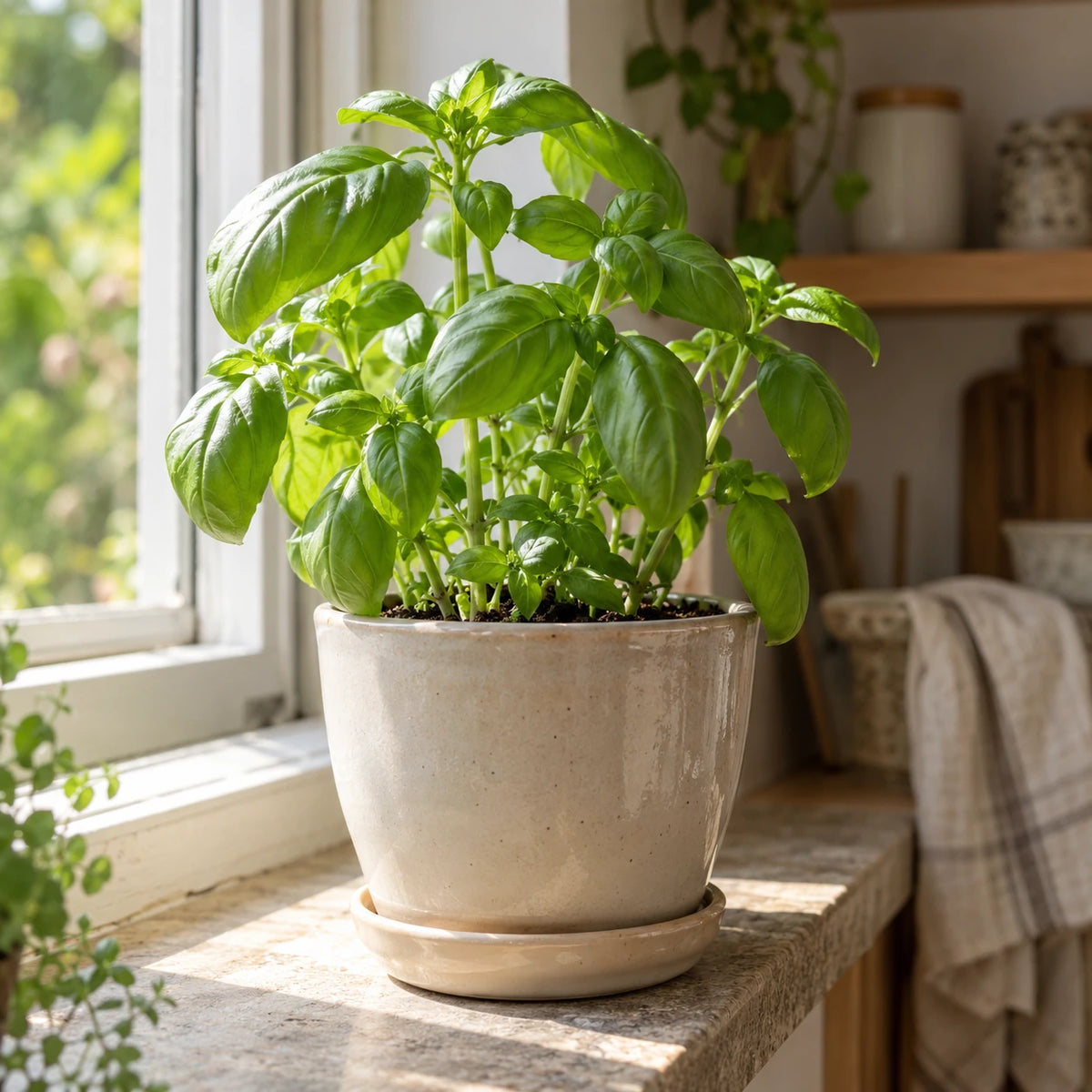
Draw a first furrow, sow a few seeds, come back each morning to look at the soil… A vegetable garden often begins with very simple actions. Then come the first leaves, a radish gently pulled from the soil, the scent of basil between your fingers, and the pride of cooking what you have grown.
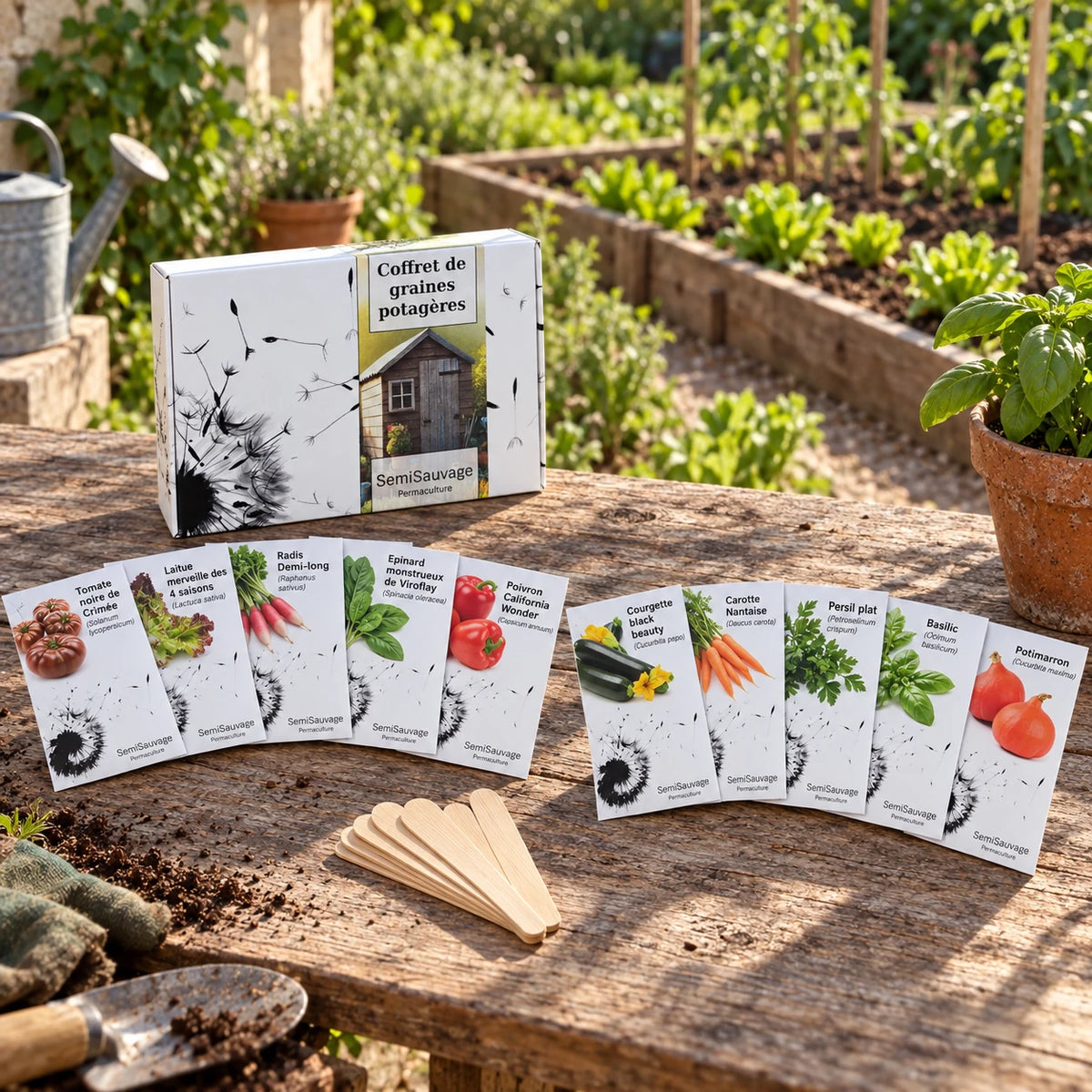
This seed collection for beginner gardeners brings together ten varieties of vegetables and herbs to discover these pleasures at your own pace. Fast-growing crops sit alongside summer vegetables and a squash to harvest later in the season. A selection for learning, observing, and finding the plants you will want to grow again every year.
A gift for yourself or someone else, it is ideal for a first vegetable garden, a few rows in the garden, or crops spread between open ground and large containers. You do not need to sow everything at once: start small, then let your garden grow with your experience.
The basics to get started
Contents: ten packets, containing a total of 2,420 seeds, and wooden labels for identifying your seedlings.
Advice: sowing instructions are printed on the back of each packet.
Presentation: a 15 × 10 × 3 cm box.
Location: a bright space, with exposure and an area suited to each crop.
Calendar: sow under cover or directly outdoors, depending on the species, season, and your climate.
What to have ready: compost or prepared soil, water, containers with drainage holes if necessary, and supports for plants that need them.
Ten varieties to discover the vegetable garden
Each packet lets you explore one aspect of gardening. Radishes provide a first point of reference, herbs invite you to pick a few leaves, and fruiting vegetables let you follow a plant from flower to harvest.
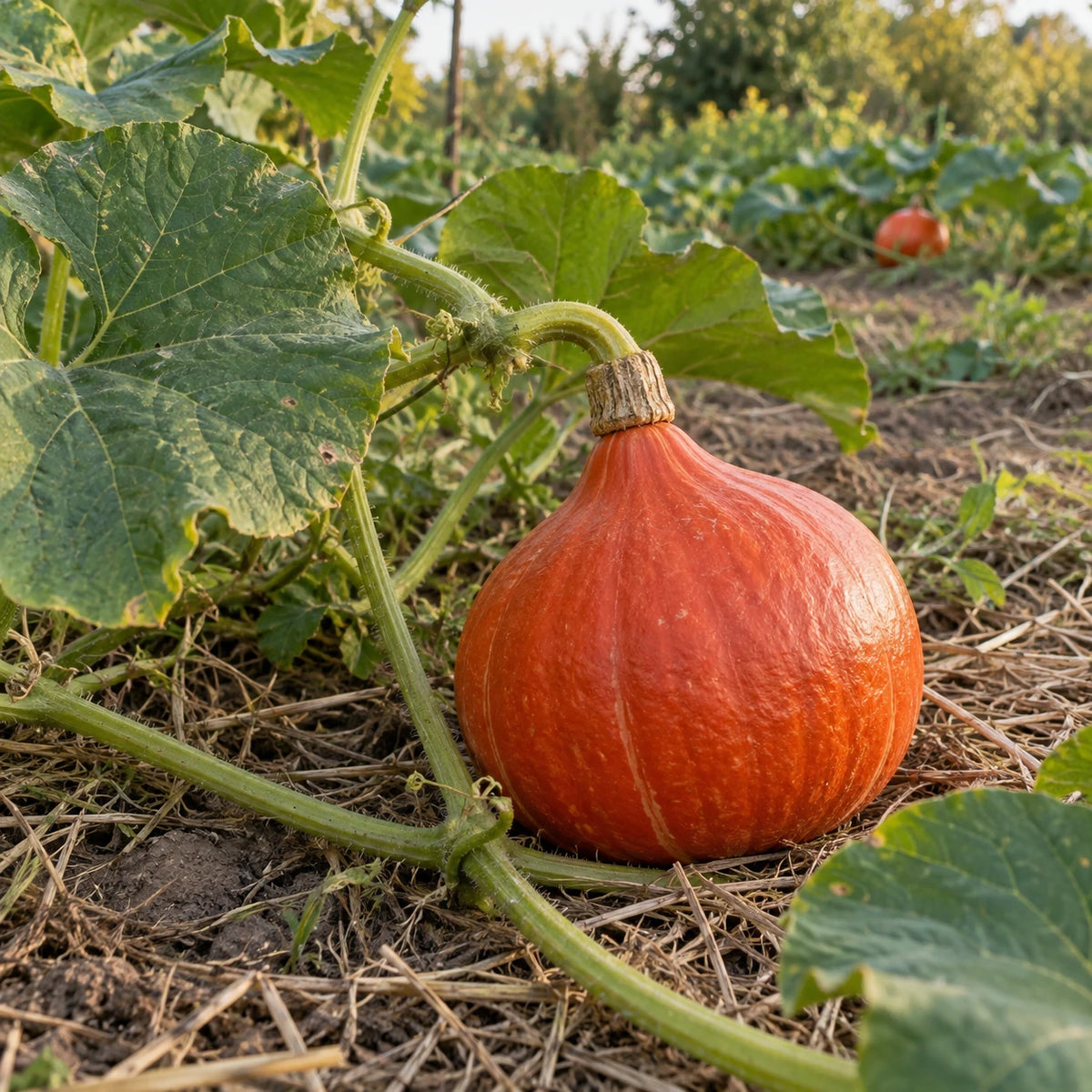
A squash for autumn; leave room for its trailing stems.
Total: 2,420 seeds divided among ten packets. These quantities make it possible to stagger sowings; they do not correspond to a guaranteed number of plants or harvests.
Setting up a first garden on your own scale
Choose a place you can easily access, near a water source if possible. A few accessible rows are more pleasant to tend than a large area that is difficult to maintain. Observe the sun throughout the day and leave a path for watering, checking, and harvesting without walking on the cultivated soil.
Reserve warm, sunny locations for tomatoes, peppers, zucchini, and squash. Lettuce and spinach prefer cooler conditions; adjust their growing season and exposure when the heat sets in. A pot of basil near a bright window, or parsley within easy reach of the kitchen, also lets you start on a small scale.
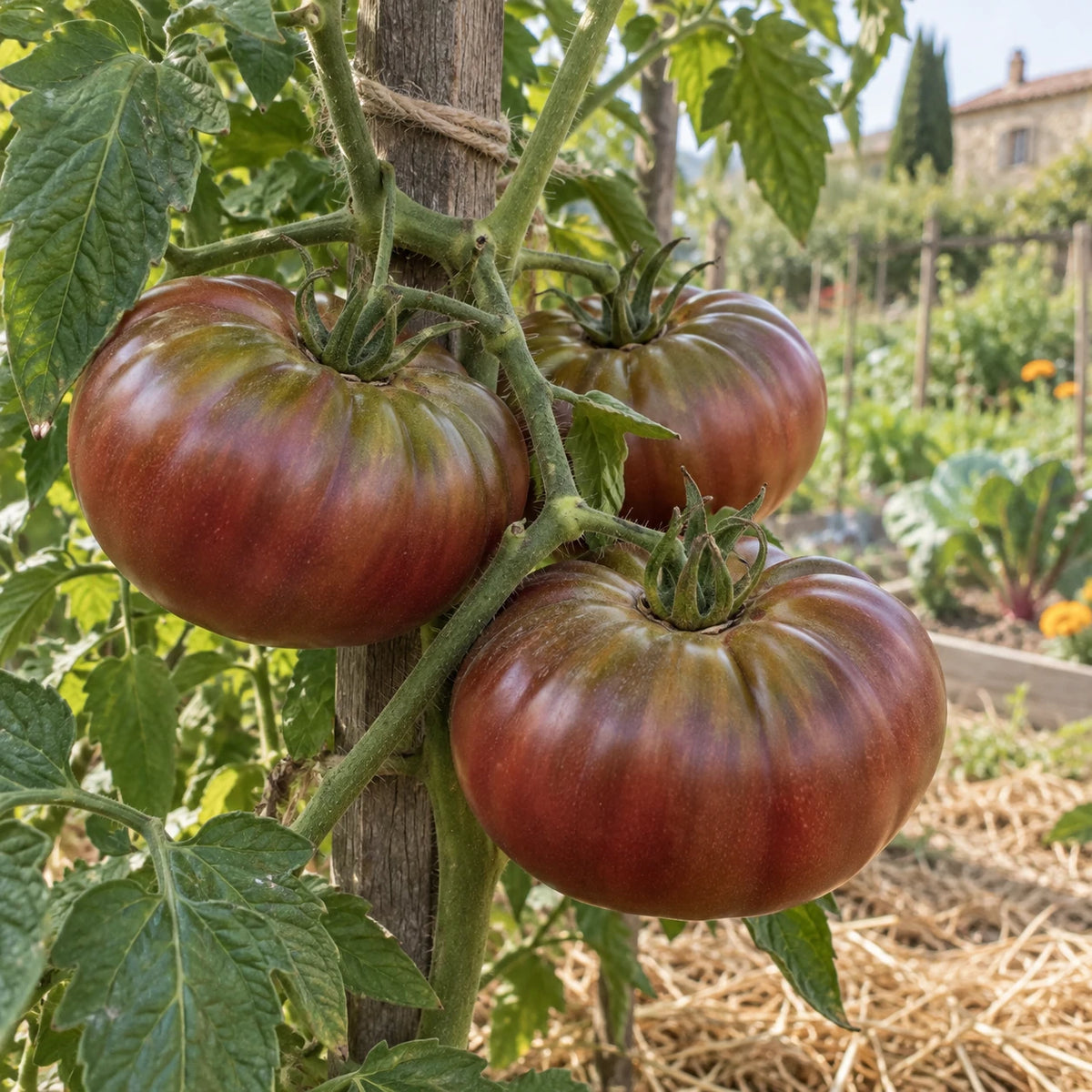
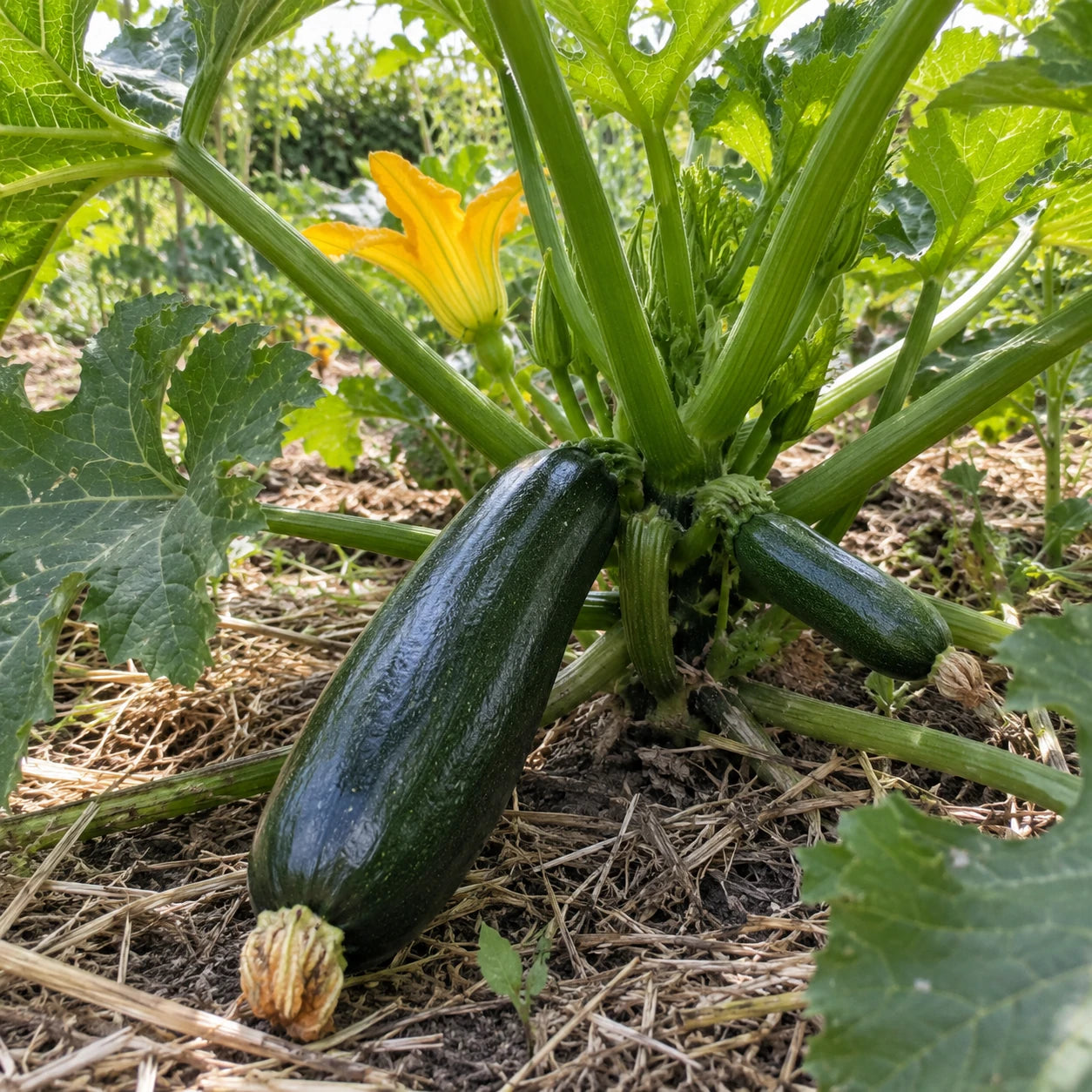
The ten varieties are not intended to share a single planter. Zucchini plants grow wide: allow about one metre between plants. Hokkaido squash develops trailing stems and needs an area where they can spread. The Black Krim tomato needs a sturdy stake.
If you garden exclusively in pots, choose crops suited to your space and sufficiently large containers, always with drainage holes. For a very small balcony, it is better to start with part of the kit and reserve the more space-hungry plants for a larger area.
Sow gradually, using the right techniques
Before you begin, prepare the labels and note the variety name and date. Spreading out the crops and keeping these few reference points makes monitoring easier, especially when several young seedlings look alike.
For direct sowing in place, prepare a fine, crumbly surface and sow without overcrowding. Radishes, carrots, and spinach can thus start where they will grow. Carrots should be sown directly in their final location, as moving their young roots can deform them. Lettuce can be sown in place or in a nursery, then transplanted.
For crops that like warmth, tomatoes and peppers should be started under cover in a warm place. As soon as they emerge, give them plenty of light. Zucchini and winter squash can be started in pots in spring or sown outdoors when the soil is warm enough and there is no longer any risk of frost. Basil also needs mild conditions.
Gradually acclimatize plants grown indoors to outdoor conditions before planting them out: take them outside for a few brief outings sheltered from the wind, then leave them outdoors for increasingly longer periods. Keep them protected if the nights remain cold.
Follow the depth indicated on the packets and maintain consistent moisture without waterlogging. Parsley may take several weeks to emerge: do not conclude too quickly that it has failed. For spinach, favor cool periods rather than the height of summer. Find detailed instructions in our guide How to sow your seeds.
Maintaining your garden without complicating daily life
Check the soil before watering: it should retain the moisture the plants need without remaining waterlogged. Pots generally dry out faster than the ground. Water seedlings gently to avoid displacing them, then water at the base of the plants as they grow.
Thin overcrowded seedlings: this means removing some young plants to give the others room to grow. This is especially useful for radishes and carrots. Weed carefully at first, when the vegetables are still small.
Add mature compost according to the needs of the soil and crops, especially fruiting vegetables. Once the plants are established, suitable mulch helps retain moisture. Tie tomatoes to their support with soft ties, and also keep an eye on pepper branches when they are carrying fruit.
A few regular minutes are enough to spot dry soil, a damaged leaf, or a new flower. Little by little, you will learn to recognize what is changing, without trying to master everything in your first season.
Harvesting at the right time
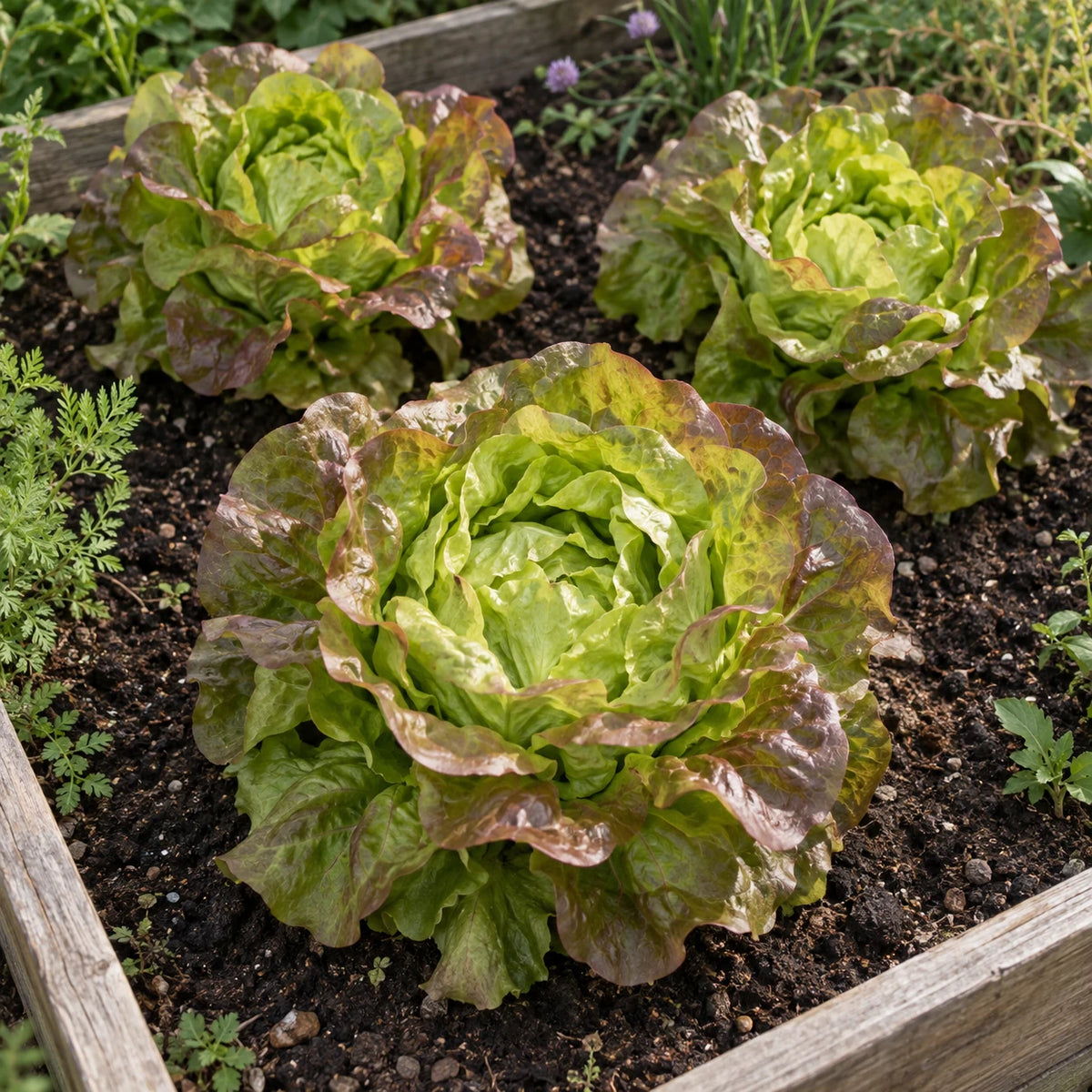
Harvests follow one another depending on sowing times and the weather. Pick radishes when they are young, before they become too fibrous. Harvest lettuces when their heads are the size you prefer, and pick the outer spinach leaves while leaving the center intact if you want to keep harvesting.
Parsley is harvested one stem at a time, starting from the outside. For basil, pinch off the tips just above a pair of leaves: this encourages branching. Just a few leaves are enough to transform a salad or pasta dish.
Harvest zucchini regularly while it is still young. California Wonder peppers can be picked green or left to turn red. The Noire de Crimée tomato retains its dark tones: observe its color and firmness to judge when it is ripe. Harvest Hokkaido squash before the first frosts, once ripe, keeping the stem attached.
To extend some harvests, sow small quantities of radishes and lettuce on several dates during favorable periods. You will discover what suits your garden and your kitchen’s needs.
Making Room for Living Things
A vegetable garden is also a zucchini flower visited in the morning, a bumblebee passing by, and soil you discover while working gently. Pollinating insects play an important role in the formation of squash fruit. Observing their visits is part of the learning process.
If space allows, let a few herbs flower at the end of the growing season. Keep your garden welcoming and avoid systematic intervention: a little observation helps you understand what is happening before taking action.
Saving Seeds for the Future
Reseal opened packets and keep them dry, away from heat and light. Shelf life varies depending on the species and conditions: not all seeds retain the same ability to germinate over the years.
Open-pollinated varieties also offer the chance to harvest your own seeds. This step requires allowing the plants to reach the necessary maturity and understanding the risks of cross-pollination. Carrots and parsley generally produce their seeds in the second year; with squash, crosses between varieties of the same species require particular attention.
Start with one species, identify your harvest, and dry the seeds properly before storing them. Our guide to storing your seeds will help you prepare for the next season.
The SemiSauvage Permaculture Spirit
At SemiSauvage, we champion gardening that respects living things, with open-pollinated, non-hybrid, untreated seeds. This collection invites you to reconnect with simple practices and discover the diversity of the vegetable garden without waiting to become an expert.
The first season is full of experiments, surprises, and small adjustments. A handful of radishes, a beautiful tomato, or a few basil leaves are already opportunities to enjoy gardening.
A few seeds, a patch of soil, and the desire to give it a try: your first vegetable garden can start this way.