Litchi chinensis
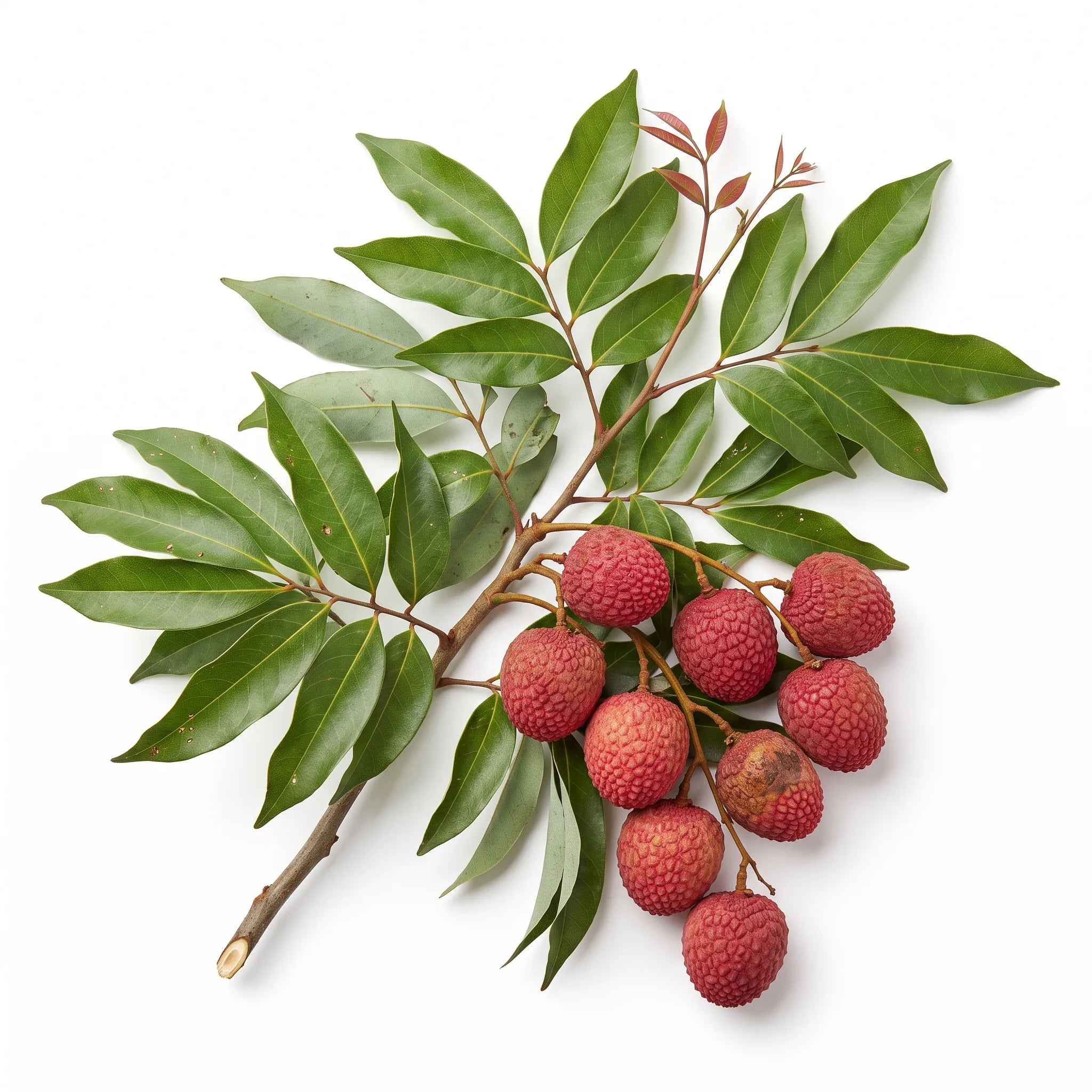
Lychee, litchi, Chinese cherry, Chinese quenette: cultivated in southern China for more than two thousand years, it was so highly prized at the imperial court that relay riders transported the fresh fruit over hundreds of miles. Beneath its red, scaly skin lies translucent white flesh with an incomparable floral fragrance.
Characteristics:
-
Fragrant fruit: small round berries with red, scaly skin and sweet, floral, translucent white flesh.
-
Evergreen foliage: glossy green compound leaves, decorative all year round.
-
Large tree: 10 to 20 meters tall in a tropical climate, much more modest when grown in a container.
-
Beautiful houseplant: even without producing fruit, its glossy foliage makes it an attractive potted plant.
Important — sow upon receipt:
- Lychee seeds are considered recalcitrant: they do not tolerate drying out and lose their germination capacity within just a few days. This is the most important characteristic of this species — sow them as soon as you receive them, without waiting for the warm season. A lychee seed cannot be stored.
- Strictly tropical plant: it cannot tolerate any frost. In our climates, it must be grown in a pot, conservatory, or heated greenhouse, with the option of moving it outdoors in summer.
- A plant grown from seed takes many years to bear fruit, and fruiting remains exceptional outside the tropics: grow it first for its unusual nature and foliage.
Sowing advice:
-
Position: full sun or bright light, with warmth and high atmospheric humidity.
-
Soil: light, humus-rich, acidic, and well drained. It dislikes lime, both in the soil and in irrigation water: rainwater is preferable. A mixture of ericaceous compost, potting soil, and sand works well.
-
Method: no stratification — this is a tropical species. Sow the seed flat, 2 cm deep, in a substrate kept constantly warm and moist, between 25 and 30°C. A mini-greenhouse or plastic wrap is very helpful. Germination in 2 to 4 weeks. See how to sow seeds.
Planting advice:
- Repot gradually into increasingly larger pots, never allowing the roots to become cramped or sit in water. Good drainage at the bottom of the pot is essential.
- Its delicate foliage and branching habit make it well suited to being trained as an indoor bonsai — see our guide creating a bonsai from a seed.
Care advice:
- Water regularly with lime-free water, without excess: lychee is just as sensitive to drying out as it is to stagnant water, which causes root rot.
- Mist the foliage, especially in winter in a heated room. Overwinter it somewhere warm and bright, never below 15°C.
Benefits for biodiversity:
- In its native range, its small yellowish flowers, grouped in panicles, are extremely attractive to bees: lychee honey is renowned in Asia and on Réunion Island.
- Grown in a pot without any treatment, it fits perfectly into a permaculture-managed conservatory.
Uses:
- Fruit eaten fresh, in fruit salads, sorbets, or exotic desserts. In our climates, it is above all a beautiful ornamental plant with evergreen foliage and a botanical curiosity.
Symbolism:
In China, lychee symbolizes love, beauty, and prosperity. It is associated with Yang Guifei, an eighth-century imperial concubine whose passion for this fruit sent riders racing across the entire empire.
Harvesting your own seeds:
Remove the shiny pit from a fully ripe fruit, clean all the flesh from it carefully, and sow it immediately: remember, lychee seeds can only be kept for a few days. See storing your seeds.
Commitment to Quality: at SemiSauvage - Permaculture, we grow and select our seeds with respect for living things as our guiding principle. Based near the Auvergne Volcanoes, we choose open-pollinated, non-hybrid varieties, tested for their germination rate, carefully sorted and packaged, without any chemical treatment. Our conviction: to restore gardeners' ability to sow, year after year, seeds that truly belong to them.
A seed to sow without delay, and tropical foliage all year round.