Brassica napus var. napobrassica
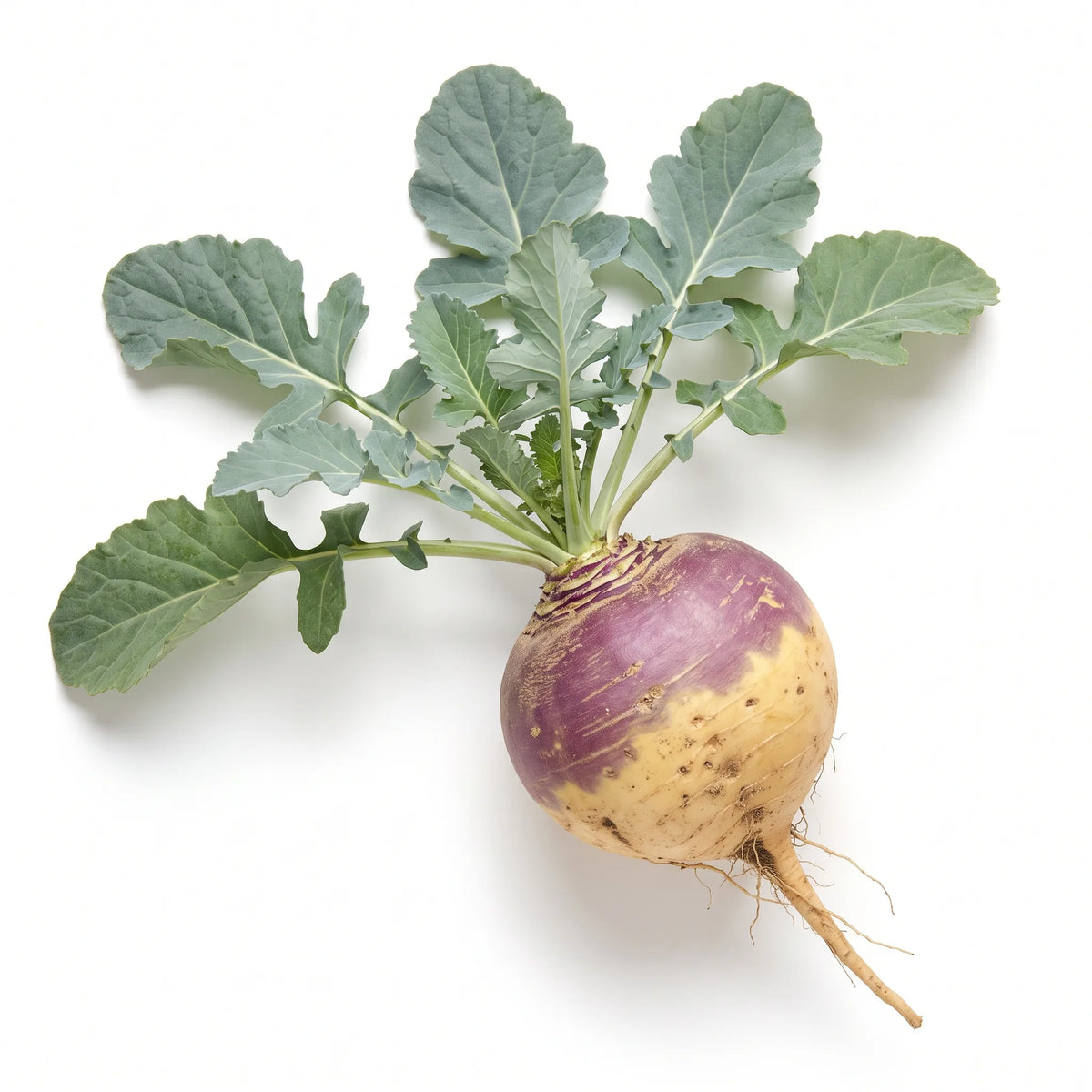
Rutabaga, swede, Swedish turnip, yellow turnip: born from a natural cross between kale and a turnip, this winter vegetable is unfairly associated with years of rationing. Its yellow flesh is actually mild and slightly sweet, especially after the first frosts, which significantly improve its flavor.
Characteristics:
-
Unique flavor: somewhere between cabbage and turnip, mild and slightly sweet.
-
Winter vegetable: it produces when the garden has little to offer and stores for a long time.
-
Very hardy: it tolerates frost without any problem and can remain in the ground.
-
Easy to grow: undemanding, it mainly requires consistent watering.
Sowing advice:
-
Exposure: sunny.
-
Soil: deep, cool, nutrient-rich, and well-drained. Avoid fresh manure, which causes the roots to fork, and use well-rotted compost instead. Do not grow it where another brassica has grown in previous years.
-
Method: sow in a nursery from March to April, 1 cm deep, or directly in the ground in May. See how to sow your seeds.
Planting advice:
- Transplant from May onward, when the seedling reaches 15 cm or has three to four leaves, spacing plants 30 to 40 cm apart: the root becomes large.
Care advice:
- Keep the soil slightly moist, without excess, to prevent root rot. Mulch around the base.
- Consistent watering is essential: drought makes the flesh fibrous and bitter.
Harvesting advice:
- Harvest from October onward, ideally after the first frosts: the cold converts starch into sugars and considerably mellows the flavor. This is the step that makes all the difference.
- It stores throughout the winter in a cellar, in slightly damp sand, or can remain in the ground in mild regions.
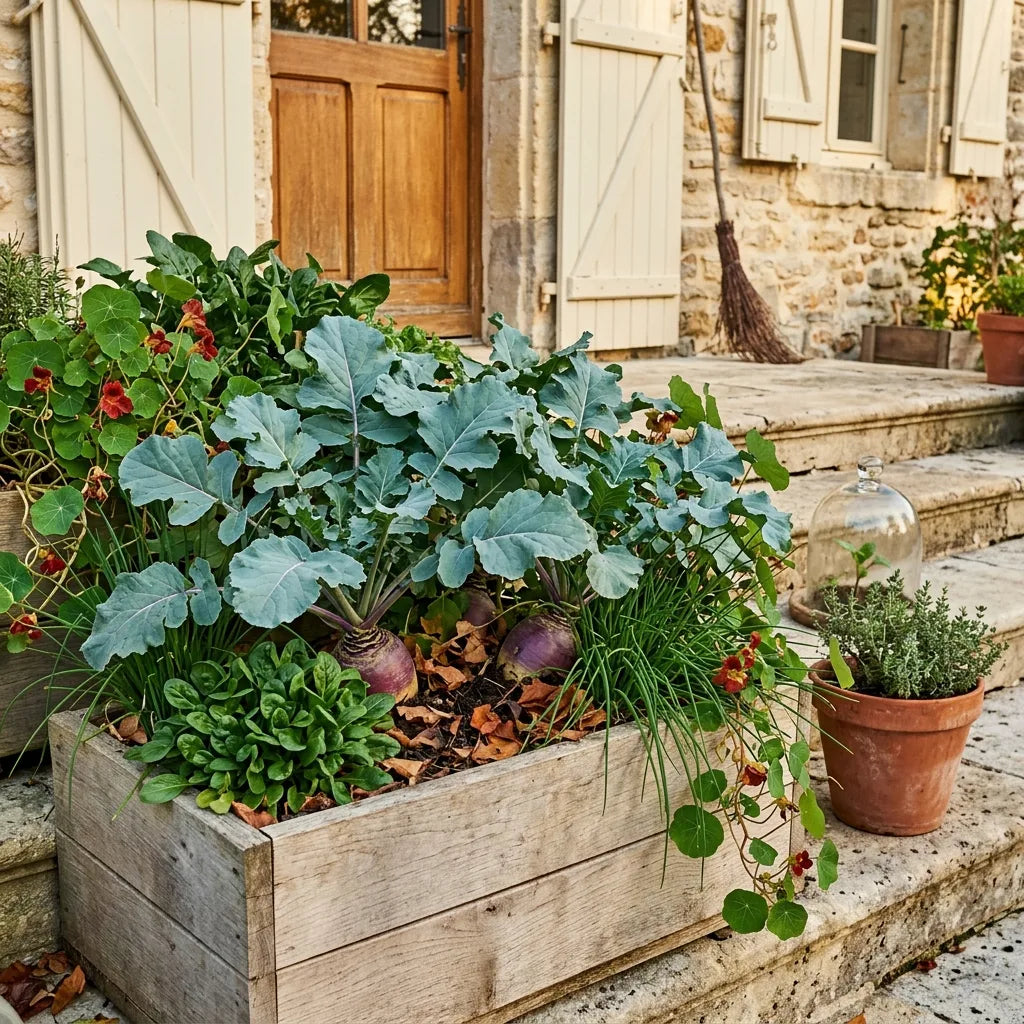
Beneficial combinations:
Benefits for biodiversity:
- Its winter presence in the vegetable garden maintains plant cover where the soil would otherwise be bare, protecting it from nutrient leaching.
- If allowed to flower in its second year, it produces clusters of highly nectar-rich yellow flowers, valuable at the very beginning of spring.
Uses:
- In comforting soups and stews, roasted in cubes in the oven until beautifully caramelized, mashed with potatoes, or grated raw into a salad. Its greens can be cooked like spinach.
Harvesting your own seeds:
As a biennial, it produces seeds in its second year: leave a few roots in the ground over winter, then harvest the brown, dry seed pods. Be aware that it cross-pollinates with rapeseed and wild turnips. See how to save your seeds.
Commitment to Quality: at SemiSauvage - Permaculture, we grow and select our seeds with respect for all living things as our guiding principle. Based near the Auvergne Volcanoes, we choose open-pollinated, non-hybrid varieties, test them for germination rates, and carefully sort and package them without any chemical treatment. Our belief: to give gardeners back the ability to resow, year after year, seeds that truly belong to them.
A winter vegetable worth rediscovering, at its best after the frosts.