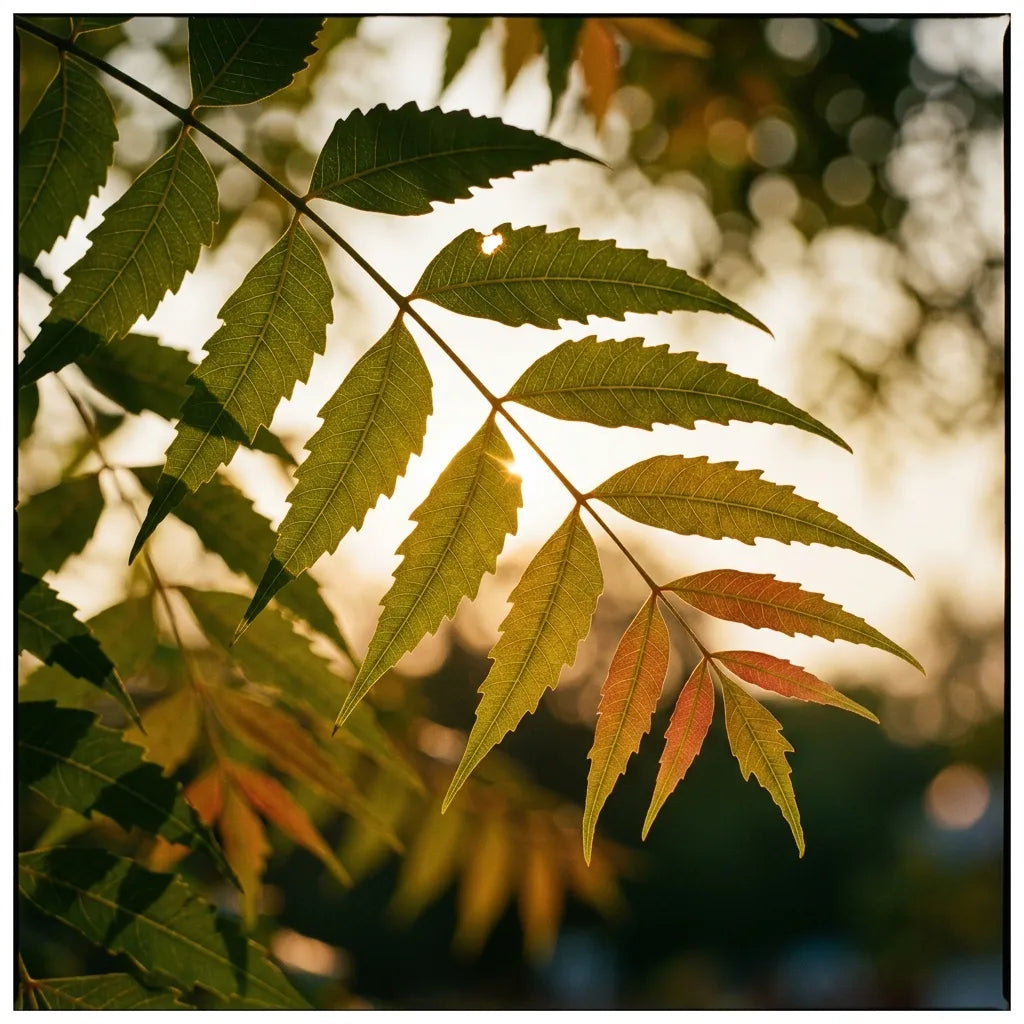
Azadirachta indica
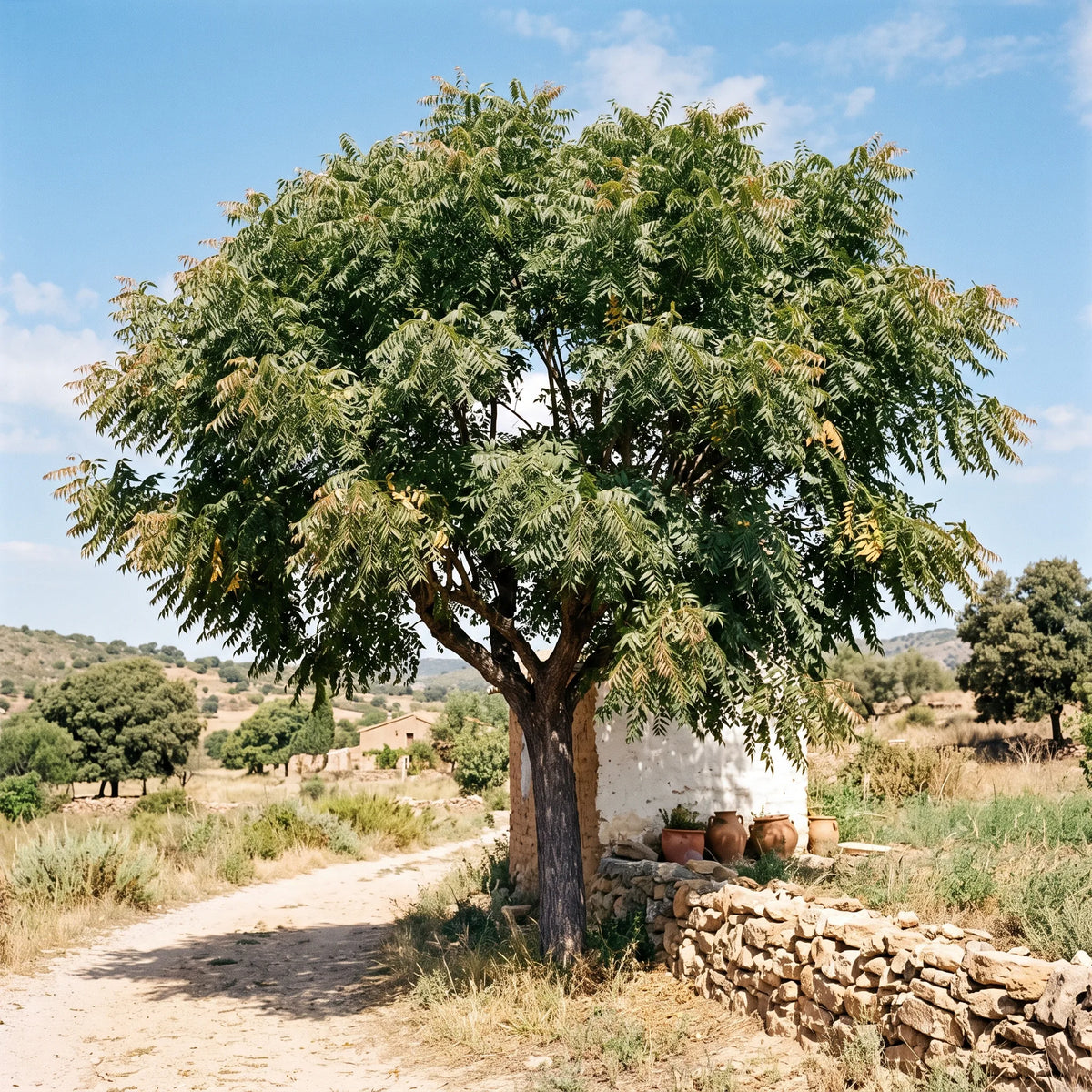
Indian lilac, neem, nim, lilac of the Indies, bead tree: in India, it is sometimes called “the village pharmacy,” because every part of it has found a use over the centuries. Its branches were traditionally used as chewing sticks, and its dense shade still shelters the squares of many villages across the subcontinent.
Characteristics:
-
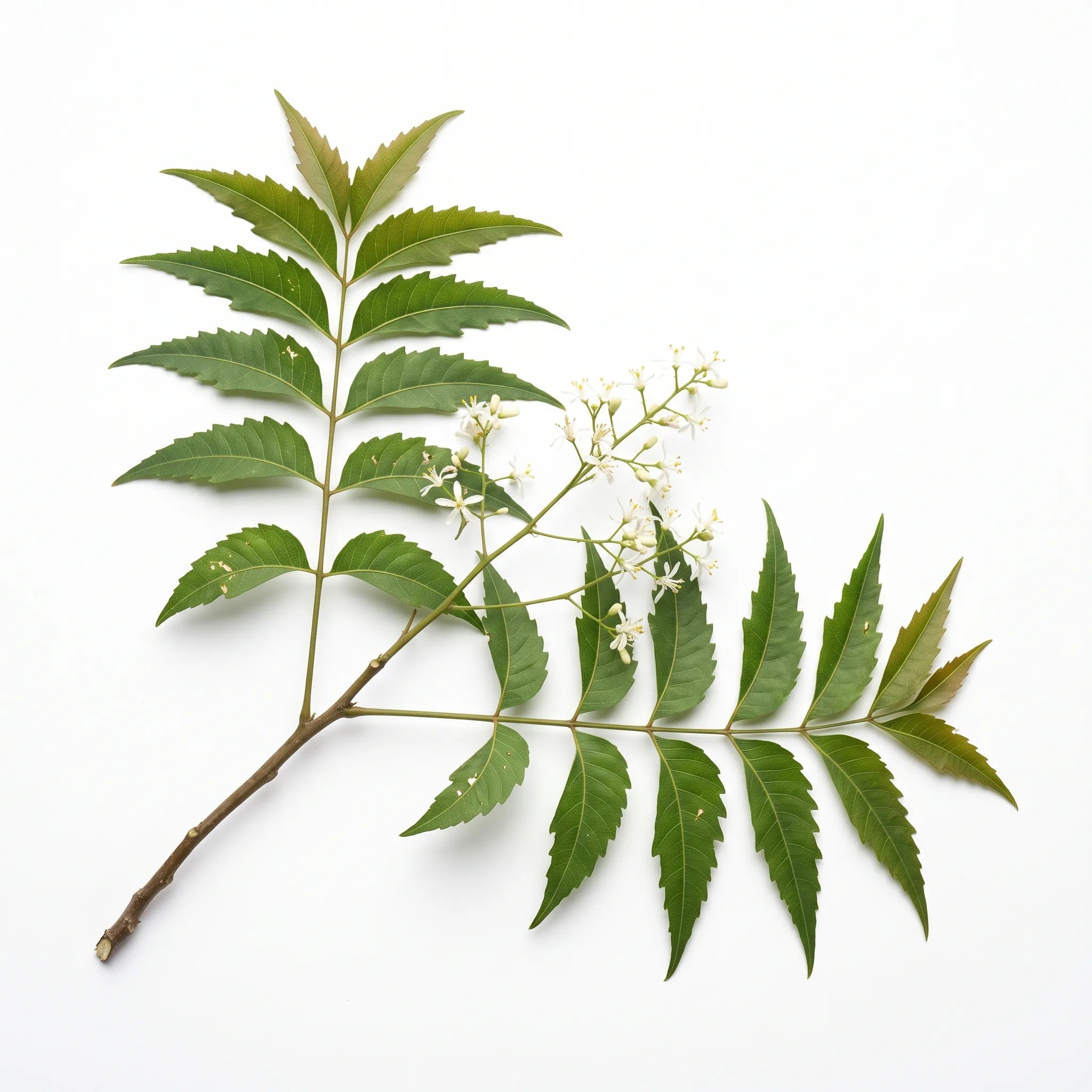
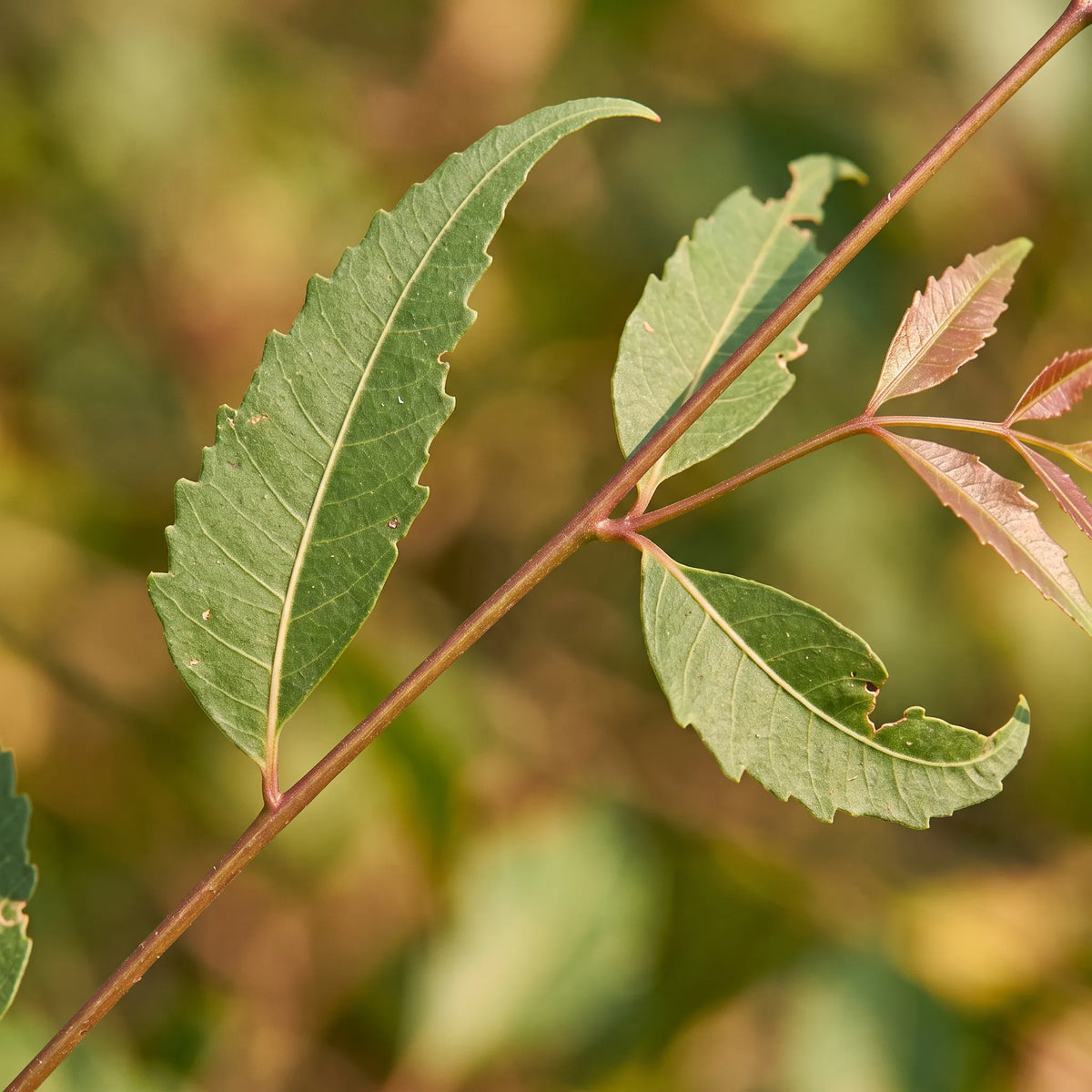
Evergreen foliage: glossy green compound leaves, providing dense shade all year round.
-
Large tree: it reaches up to 20 metres in tropical climates, with rapid growth.
-
Drought-resistant: once established, it tolerates dry, hot climates remarkably well.
Precautions:
- A strictly tropical tree, it cannot tolerate frost: in mainland France, it must be grown in a pot, conservatory or heated greenhouse, with the option of placing it outdoors in summer. It requires a minimum temperature of 10–15°C at all times.
- Do not consume any part of the plant: its traditional uses involve specific preparations and should not be improvised.
Sowing advice:
-
Position: full sun, with plenty of heat and light.
-
Soil: rich, sandy or stony, and above all very well drained. It tolerates poor and even slightly saline soils, but absolutely dislikes stagnant water, which causes its roots to rot. When grown in a pot, a potting soil, sand and gravel mix is essential.
-
Method: no cold stratification — this tropical seed requires constant warmth instead. It quickly loses its germination capacity: sow it as soon as you receive it, after soaking it for 24 hours in lukewarm water, 1 cm deep, in a substrate kept moist at 25–30°C. See how to sow your seeds.
Care advice:
- Water regularly during the first few years, then much less frequently: the tree becomes highly drought-tolerant.
- Overwinter in a warm, bright location, while significantly reducing watering.
Benefits for biodiversity:
- Its small, fragrant white flowers are highly attractive to bees and produce prized honey in its native range.
- In arid regions, it is widely planted to combat desertification, stabilise soils and create shaded areas where other crops can grow.
Uses:
- Grown as an ornamental plant in pots or conservatories in our climates; used as a windbreak and shade tree in warm regions.
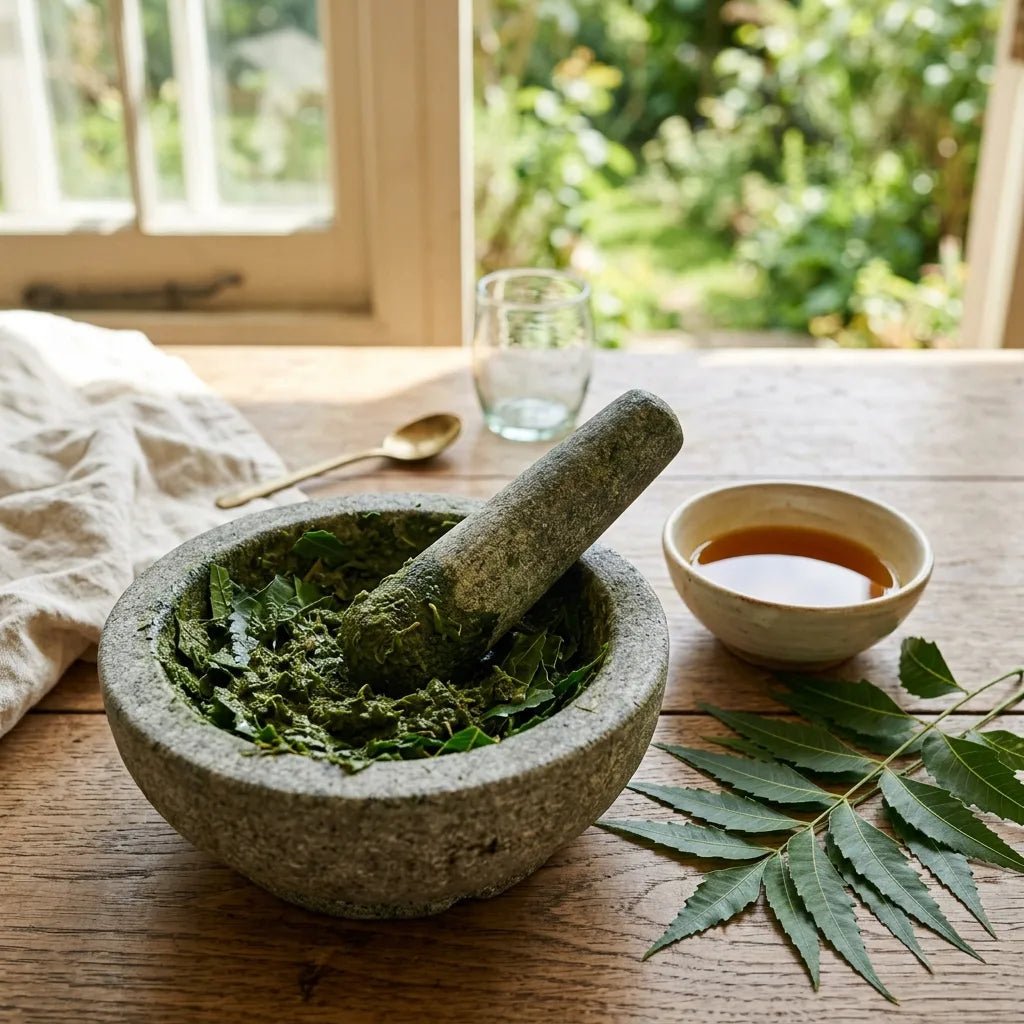
- A major plant in traditional Indian medicine, used for thousands of years in Ayurveda. See our medicinal plants to sow.
- Its seeds produce neem oil, used in natural cosmetics.
Symbolism:
In India, neem is associated with the goddess Shitala and considered a protective tree: its leaves are hung on doors during certain ceremonies, and it is traditionally planted near homes.
Harvesting your own seeds:
Its fruits, resembling small yellow olives when ripe, each contain one seed. Carefully remove the pulp, rinse the seeds and sow them without delay: neem seeds keep for only a few weeks. See how to store your seeds.
Commitment to Quality: at SemiSauvage - Permaculture, we grow and select our seeds with respect for living things as our guiding principle. Based near the Auvergne Volcanoes, we choose open-pollinated, non-hybrid varieties, tested for their germination rate, sorted and carefully packaged, without any chemical treatment. Our belief: to give gardeners back the ability to sow, year after year, seeds that truly belong to them.
Sales reserved for amateur gardeners seeking quality and authenticity.