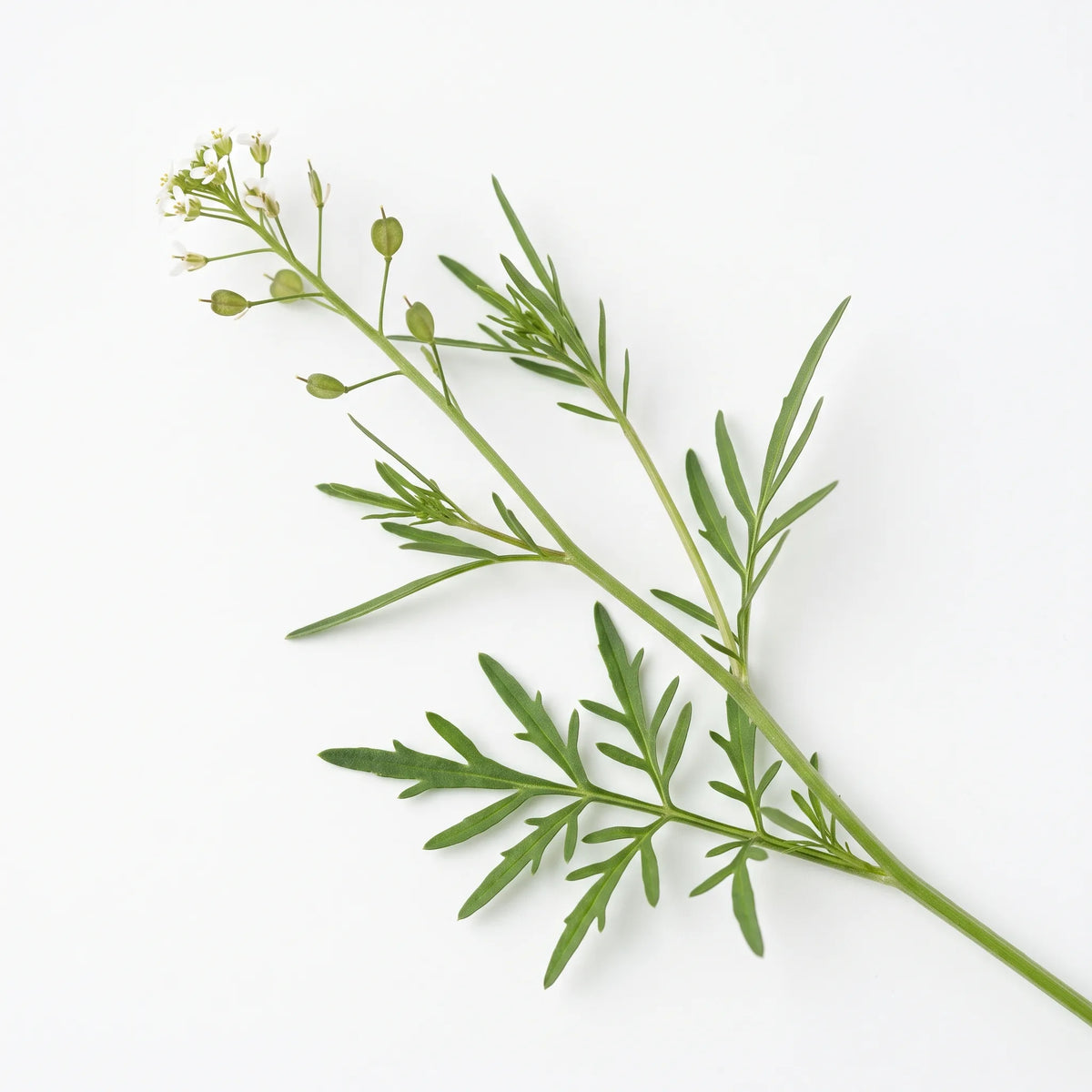
Lepidium sativum
Garden cress, cultivated cress, pepperwort, garden pepper cress: unlike watercress, it needs no running water — it grows in the ground, in a pot, and even on simple damp cotton. It is the fastest crop there is: the first shoots can be nibbled just ten days after sowing.
Characteristics:
-
Spicy flavor: bold and peppery, it adds zest to salads, open-faced sandwiches, and soups.
-
Ultra-fast growth: harvest possible just 10 to 15 days after sowing.
-
No running water: unlike watercress, it can be grown anywhere.
-
Ideal for children: its spectacular germination on cotton makes it the perfect educational crop.
Sowing advice:
-
Exposure: sun or partial shade — partial shade suits it very well in midsummer.
-
Soil: cool, humus-rich, fairly fertile, and well-drained. Constant moisture is the only real point to watch: soil that dries out will make it bolt immediately.
-
Method: sow thickly from March to August, on the surface or barely covered, in the ground, in a pot, or on a bed of damp cotton. Stagger sowings every two weeks: it grows so quickly that it is better to sow small amounts often. See how to sow your seeds.
Care advice:
- Keep it constantly moist; this is its only requirement. No thinning is necessary if you harvest it as young shoots.
Harvesting advice:
- Cut with scissors at substrate level as soon as the shoots reach 5 to 8 cm. Eat them quickly: they do not keep well.
- In the ground, you can let the plants grow larger and pick the leaves as needed for several weeks.
Beneficial combinations:
Benefits for biodiversity:
- Let a few plants flower: their small white flowers are visited by bees and hoverflies.
- It makes useful use of empty spaces in the vegetable garden rather than leaving the soil bare between crops.
Uses:
- Raw and snipped at the last moment: on buttered toast, hard-boiled eggs, salads, and cold soups. When cooked, it loses all its heat — add it off the heat.
Harvesting your own seeds:
Let a few plants flower, then form their small, flat, round siliques. Harvest them when thoroughly dry and crumble them over a container. See how to store your seeds.
Commitment to Quality: at SemiSauvage - Permaculture, we grow and select our seeds with respect for living things as our guiding principle. Based near the volcanoes of Auvergne, we choose open-pollinated, non-hybrid varieties, tested for their germination rate, carefully sorted and packaged, with no chemical treatment. Our belief: to give gardeners back the ability to resow, year after year, seeds that truly belong to them.
Ten days from sowing to plate: the fastest crop in the vegetable garden.