Foeniculum vulgare
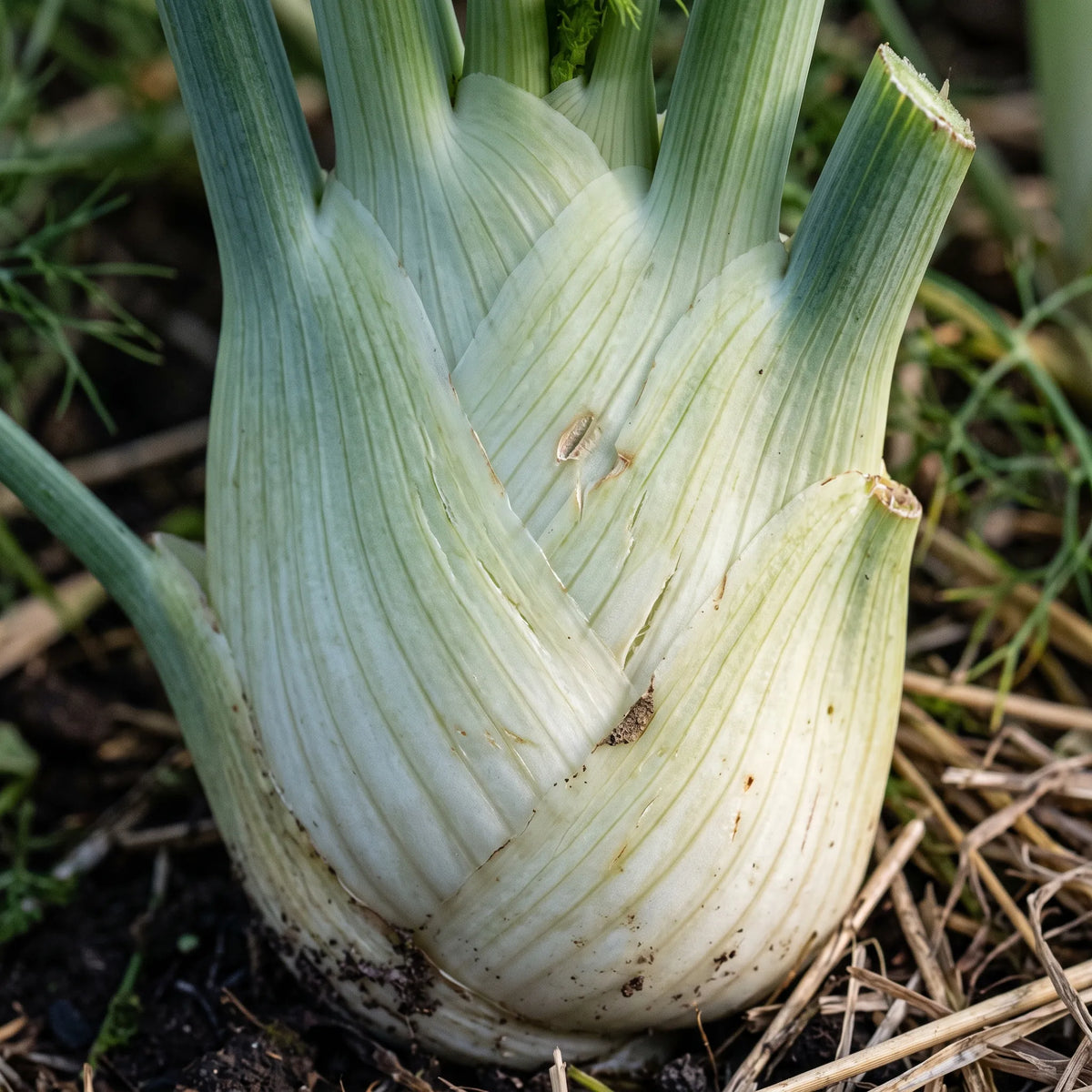
Fennel, sweet fennel, sweet dill, anise fennel: one plant, three harvests. Its bulb is cooked like a vegetable, its feathery foliage replaces dill, and its anise-flavored seeds are used as a seasoning. It is an umbellifer, related to carrots and parsley—hence its large yellow umbels, which delight pollinators.
Characteristics:
-
Triple use: bulb, foliage, and seeds—all parts are edible.
-
Anise flavor: mild and refreshing, raw or cooked.
-
Highly ornamental: its feathery foliage and yellow umbels have a place in flower beds.
-
Self-seeding: once established, it returns year after year.
Sowing advice:
-
Exposure: sunny.
-
Soil: deep, loose, moist, and well-drained, enriched with compost. Soil that stays moist is crucial: drought causes it to bolt before it has formed its bulb.
-
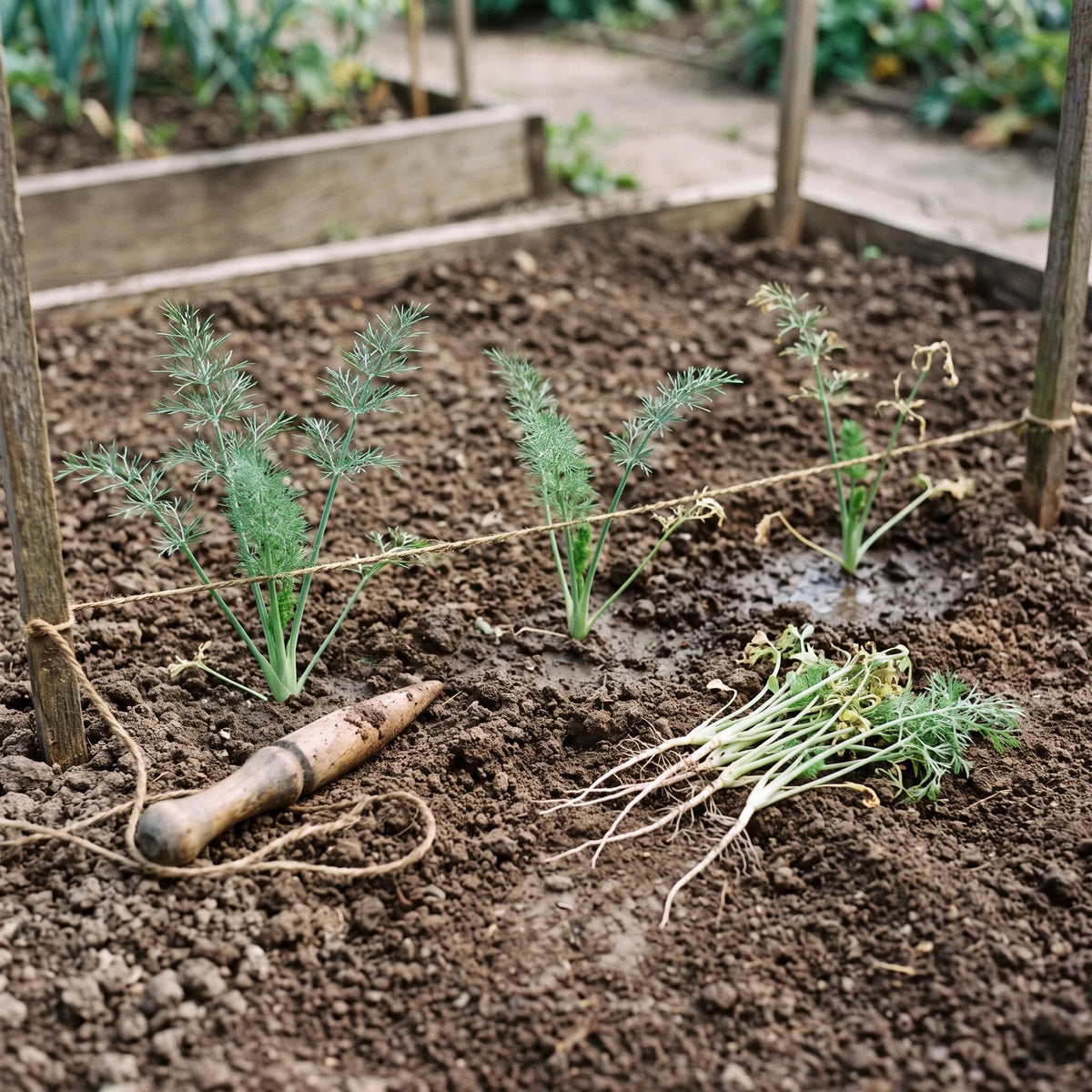
Method: sow outdoors from April in the southern half of the country and in May in the northern half, 1 cm deep, directly in place—it does not transplant well. To get an earlier start, sow in a heated greenhouse from February to March. See how to sow your seeds.
Care advice:
- Thin to 25 cm apart. Water regularly and evenly, applying a generous mulch.
-
The one step that makes all the difference: mound soil around the bulb when it reaches the size of an egg. It will grow larger and remain white and tender instead of turning green and tough.
Harvesting advice:
- Harvest the bulb when it reaches the size of a fist, cutting it off at ground level. The rootstock left in the ground often produces small, tender shoots.
- Pick the foliage as needed. For the seeds, cut the umbels when they turn brown.
Beneficial pairings:
- Be aware that fennel is known to inhibit the growth of many neighboring plants—especially tomatoes, beans, and cabbages. Place it away from other crops, along the edge of the vegetable garden or in a flower bed. See companion planting in the vegetable garden.
Benefits for biodiversity:
- Its large yellow umbels are among the most visited flowers in the garden: bees, hoverflies, and beneficial parasitic wasps flock to them all summer.
- It is a major host plant for Swallowtail caterpillars—if you find them on your fennel, let them be; the butterfly is well worth it.
Uses:
- Bulb finely sliced raw in salads, braised, roasted, or baked in a gratin; chopped foliage over fish; seeds in herbal tea, breads, or marinades. See our traditional plants to sow.
Harvesting your own seeds:
Let one plant flower: the flowers themselves are the harvest. Cut the umbels when the seeds turn brown and dry them upside down. Be aware that it can cross-pollinate with wild fennel, which is widespread in the south of France. See how to store your seeds.
Commitment to Quality: at SemiSauvage - Permaculture, we grow and select our seeds with respect for living things as our guiding principle. Based near the Auvergne Volcanoes, we choose reproducible, non-hybrid varieties, test them for germination rates, and carefully sort and package them without any chemical treatment. Our conviction: to give gardeners back the ability to reseed, year after year, with seeds that truly belong to them.
One plant, three harvests, and a pollinator magnet.