Psidium guajava
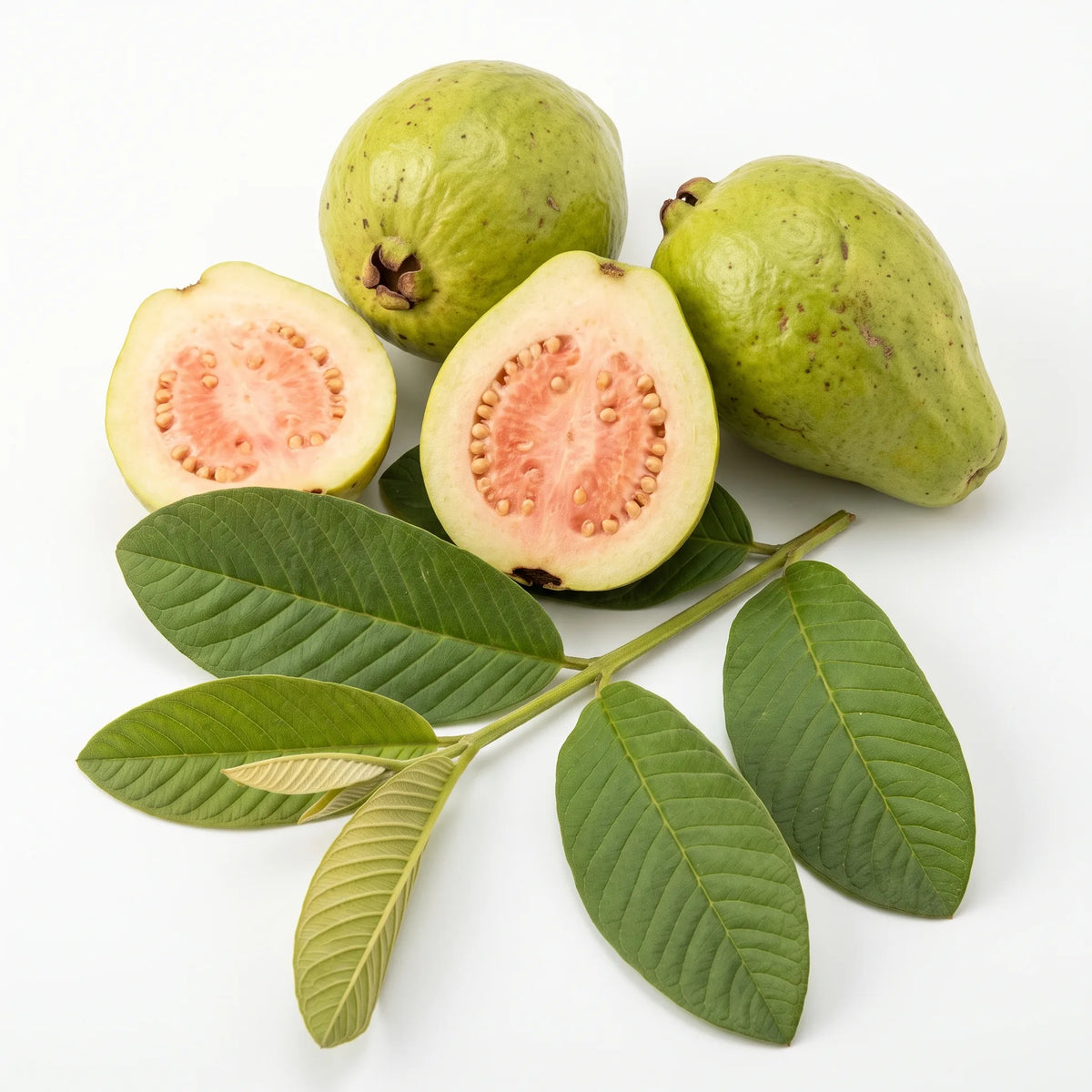
Guava, common guava, gouyavier: native to tropical America, it is now cultivated in all the warm regions of the world. Its pinkish flesh gives off an exceptionally intense fragrance — a single ripe fruit can scent an entire room. Good news for our climates: it fruits very well in a pot, from just two years old.
Characteristics:
-
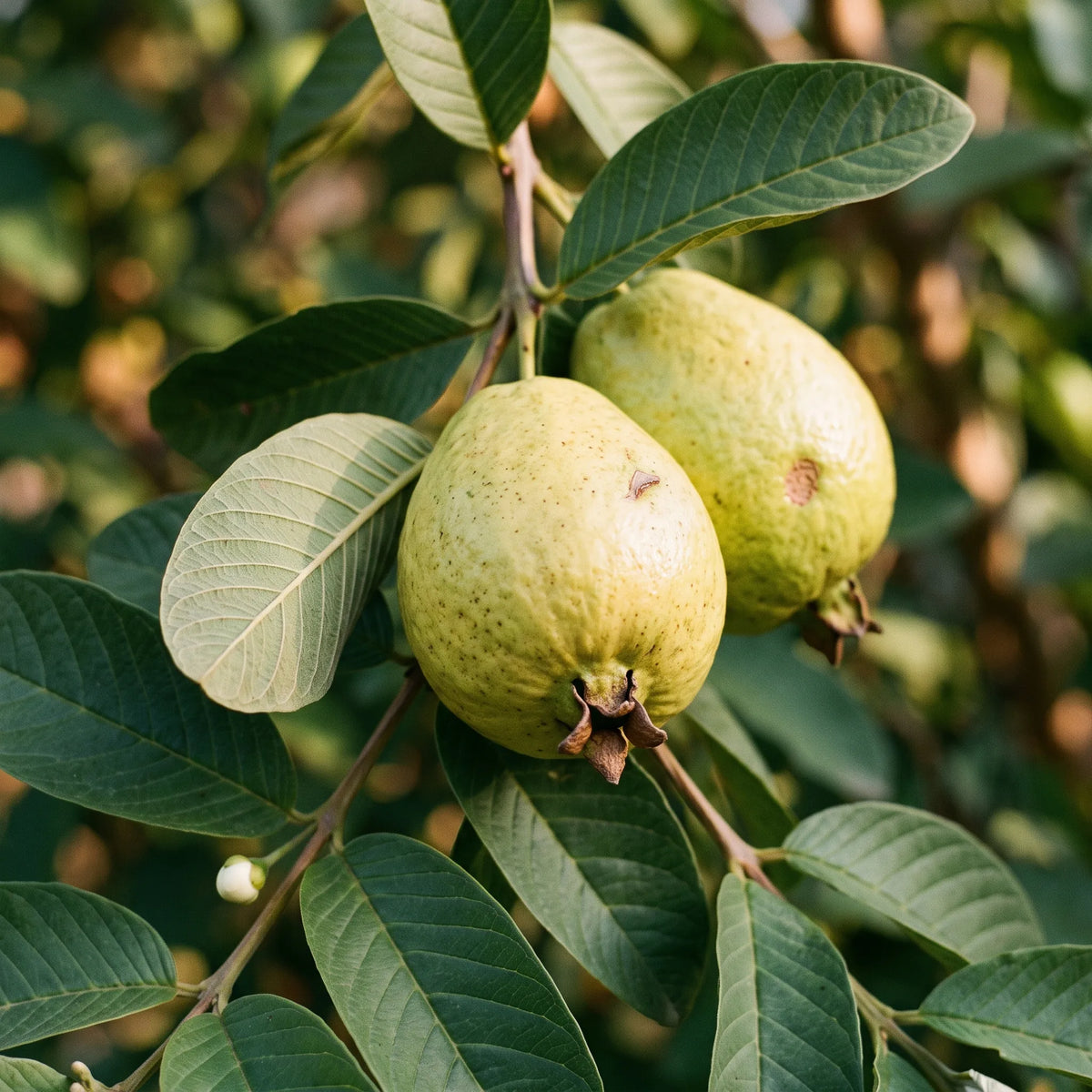
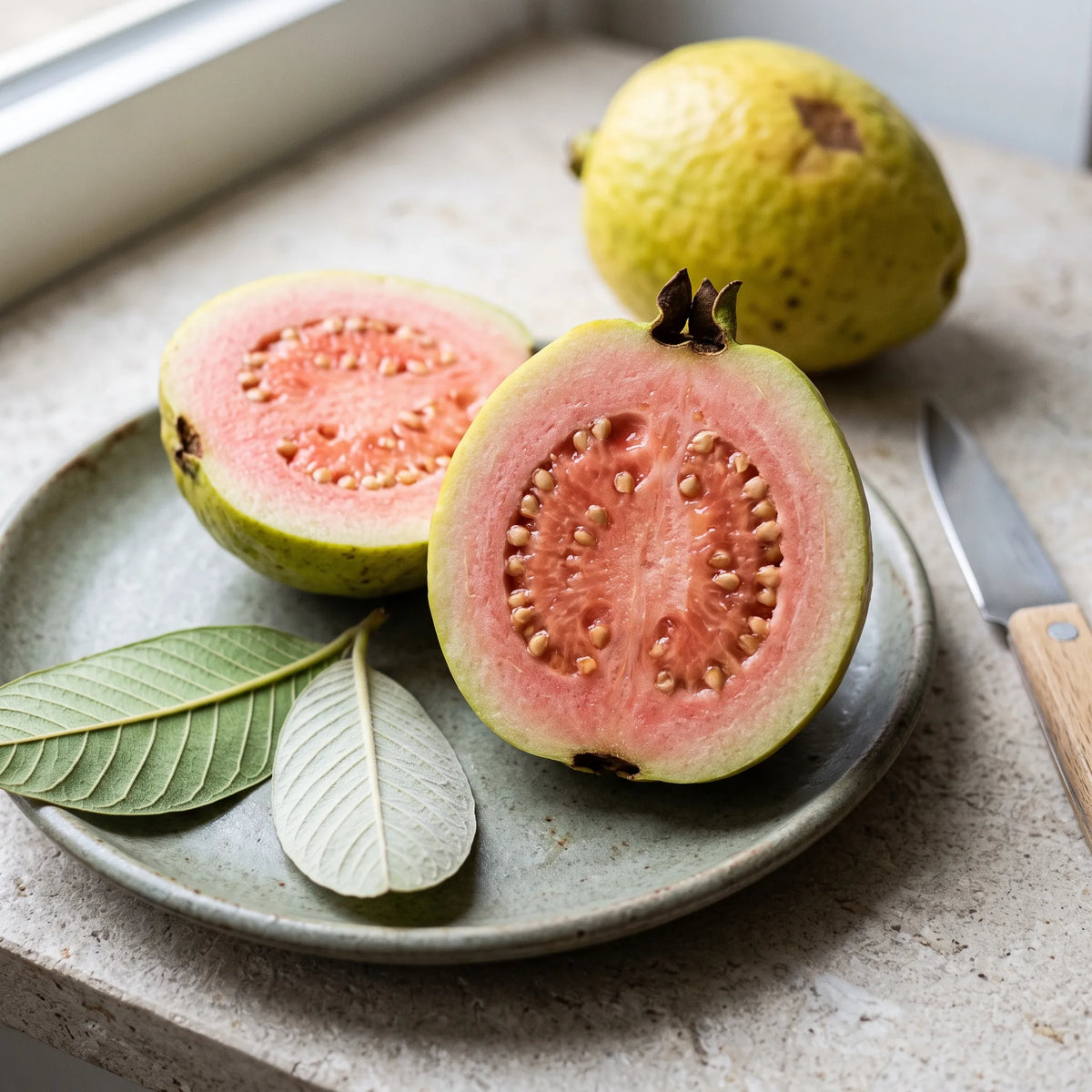
Highly aromatic fruits: thick yellowish skin and pinkish flesh with a powerful fragrance.
-
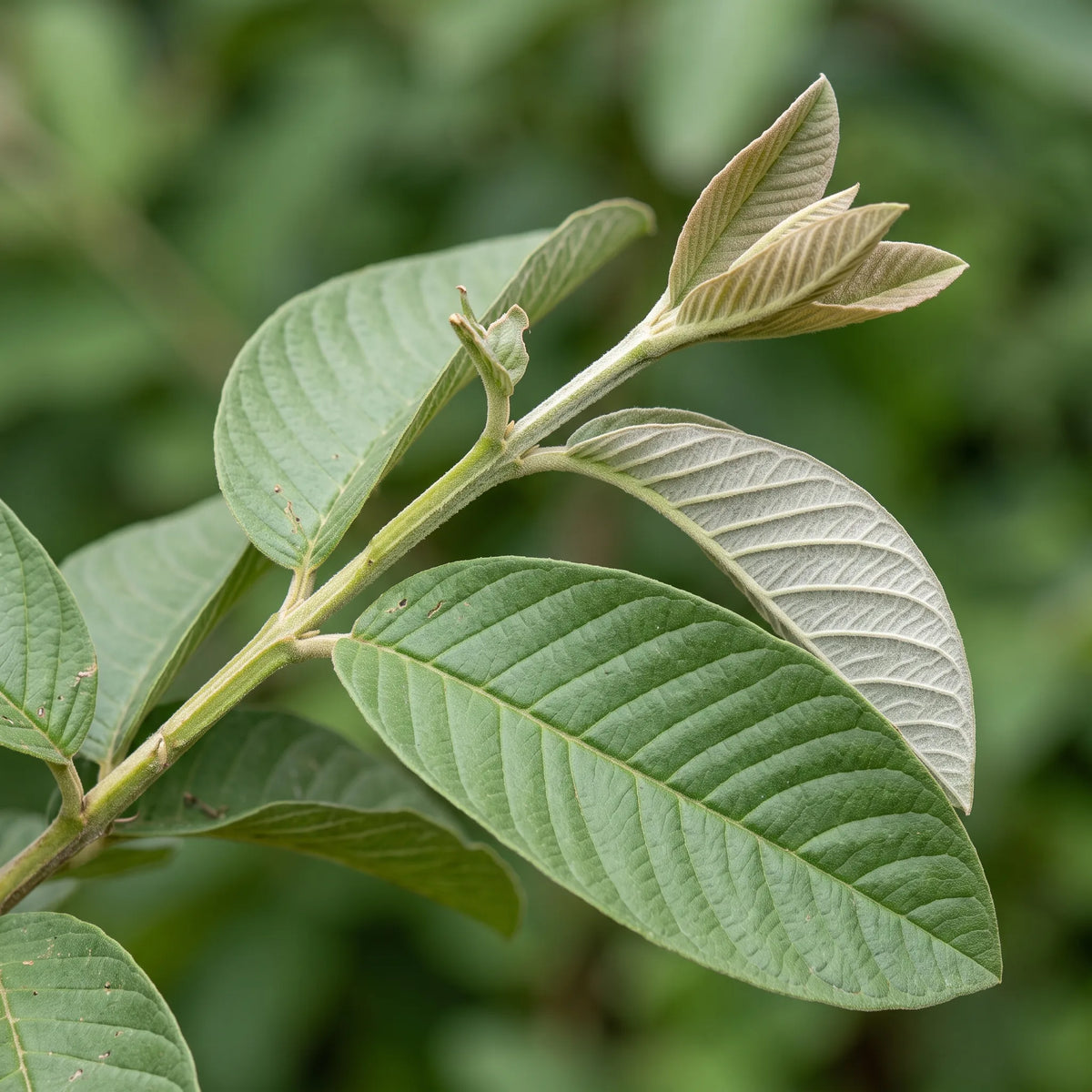
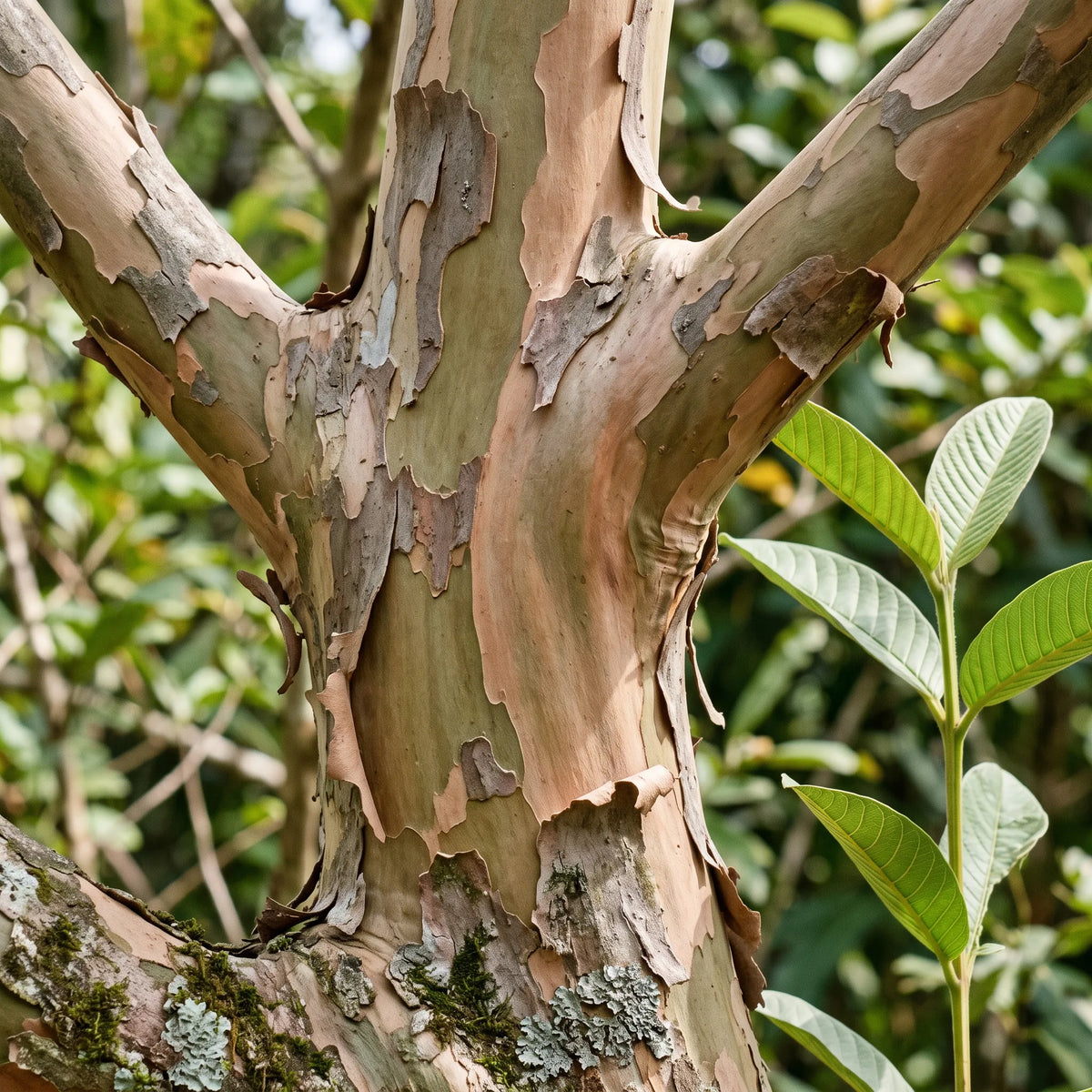
Evergreen foliage: dark green oval leaves with prominent yellow veins and a whitish, downy underside.
-
Early fruiting: from two years old in a pot, with fruits the same size as those grown in the ground.
-
Long production period: a well-maintained plant can produce for up to forty years.
Precautions:
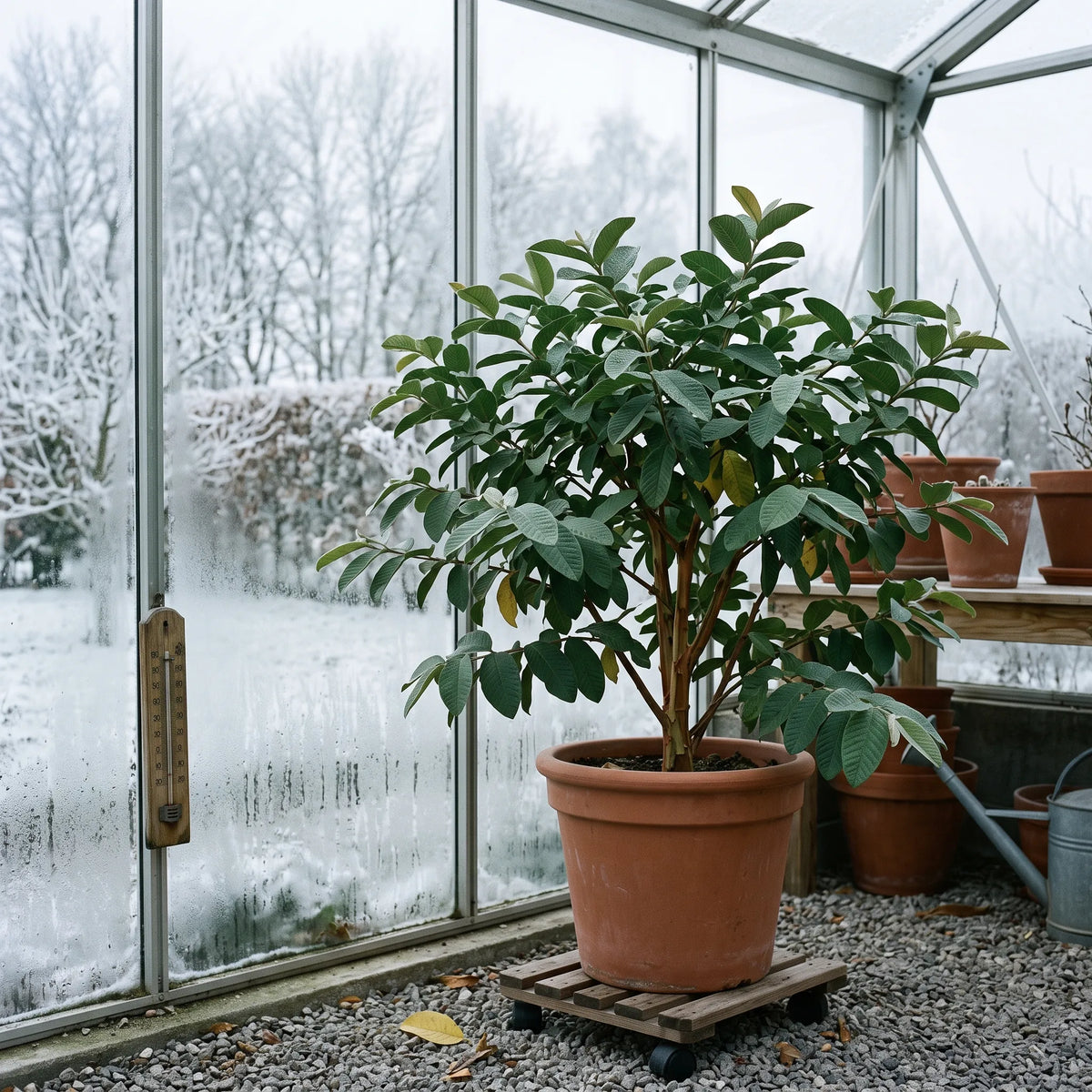
- It tolerates temperatures only down to -2 °C: in our climates, it must be grown in a pot to be overwintered in a conservatory or greenhouse. Only Corsica and sheltered areas in the far south allow it to be trialled in the ground.
- In temperate regions, flowering and fruiting remain unpredictable: a harvest is never guaranteed, even with good care. It is also a beautiful indoor plant with evergreen foliage.
Sowing advice:
-
Exposure: very bright and warm, in full sun behind glass or outdoors in summer.
-
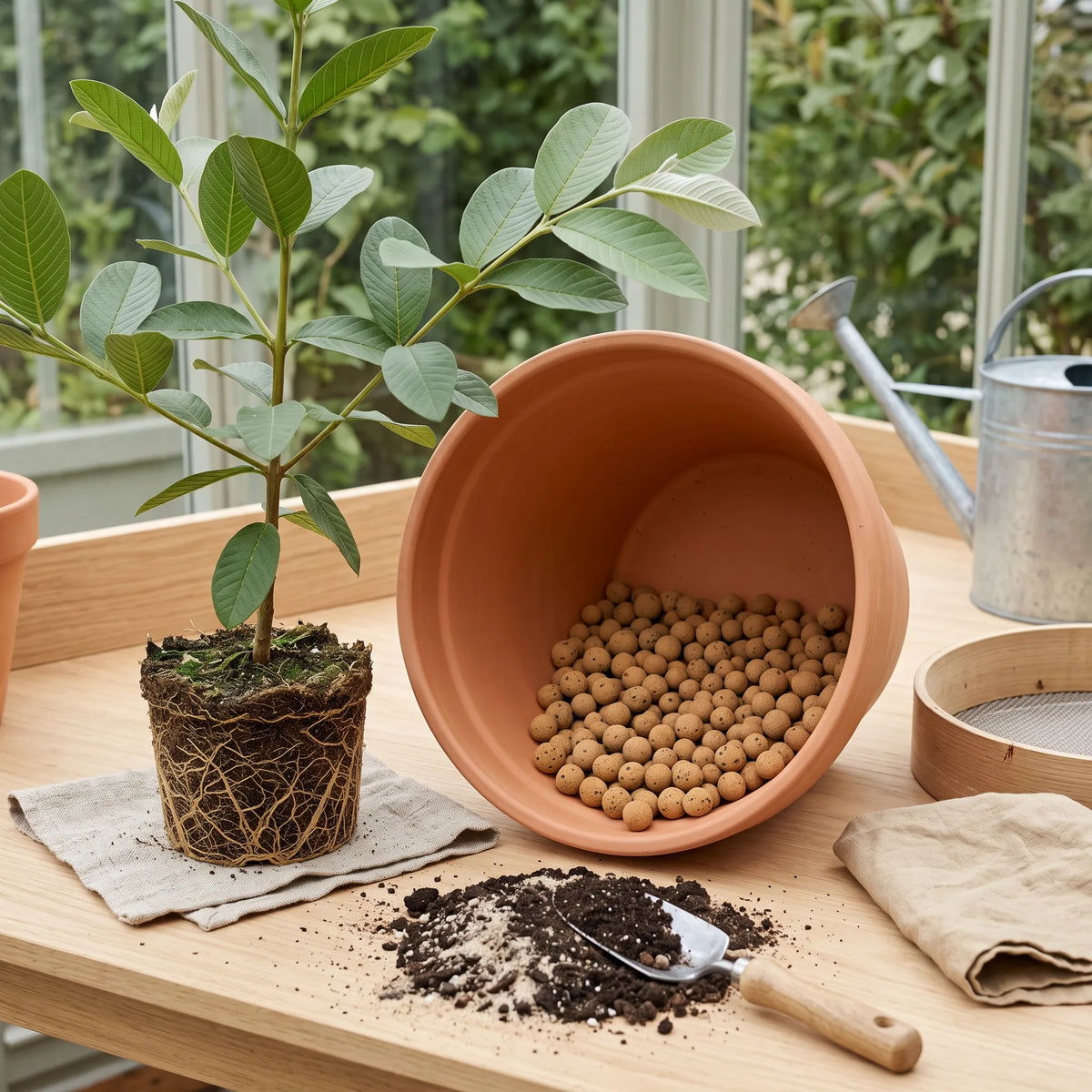
Soil: rich, light and well drained. In a pot, mix rich potting soil with sand and compost, and place a good layer of clay pebbles at the bottom: drainage is crucial.
-
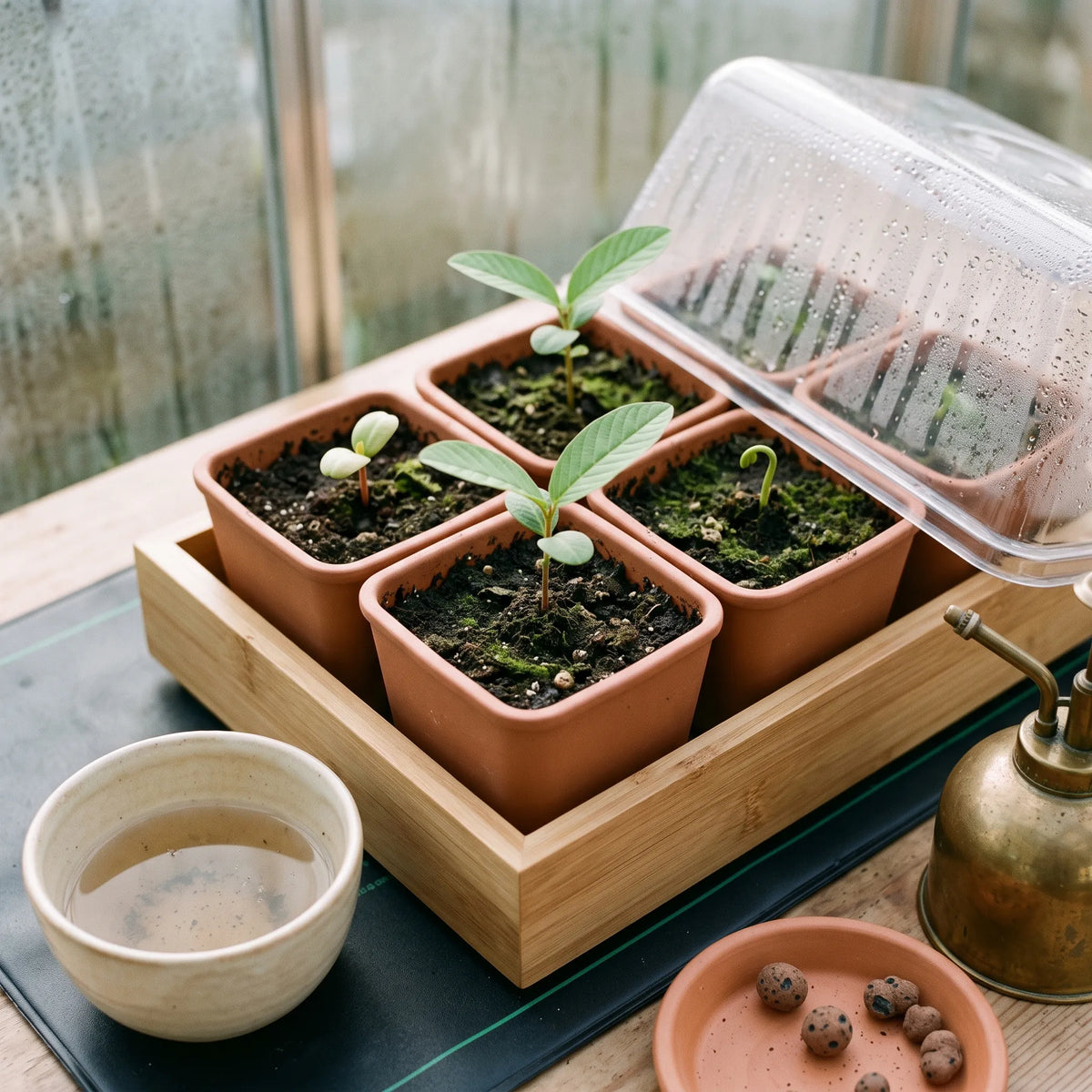
Method: no cold stratification — this tropical species requires warmth instead. Soak the seeds for 24 to 48 hours in lukewarm water to soften their hard coating, then sow them 1 cm deep in a substrate kept moist at 25–30 °C. Germination is slow and irregular: allow 3 to 8 weeks. See how to sow your seeds.
Planting advice:
- Transplant into a terracotta pot of at least 30 cm, which regulates moisture better than plastic. Repot every two or three years.
- It grows very well as a low bush rather than a tree: this is even recommended to make harvesting easier and to keep it contained in a pot.
Care advice:
- Water regularly during the growing season, reducing watering considerably in winter. Mist the foliage in dry air.
- Overwinter it in the light, never below 5 °C. Prune after fruiting to maintain a compact shape.
Harvesting advice:
- Pick the fruits when the skin changes from green to yellow and they yield slightly under your finger. The fragrance then becomes clearly noticeable from a distance: this is the best indicator of ripeness.
Benefits for biodiversity:
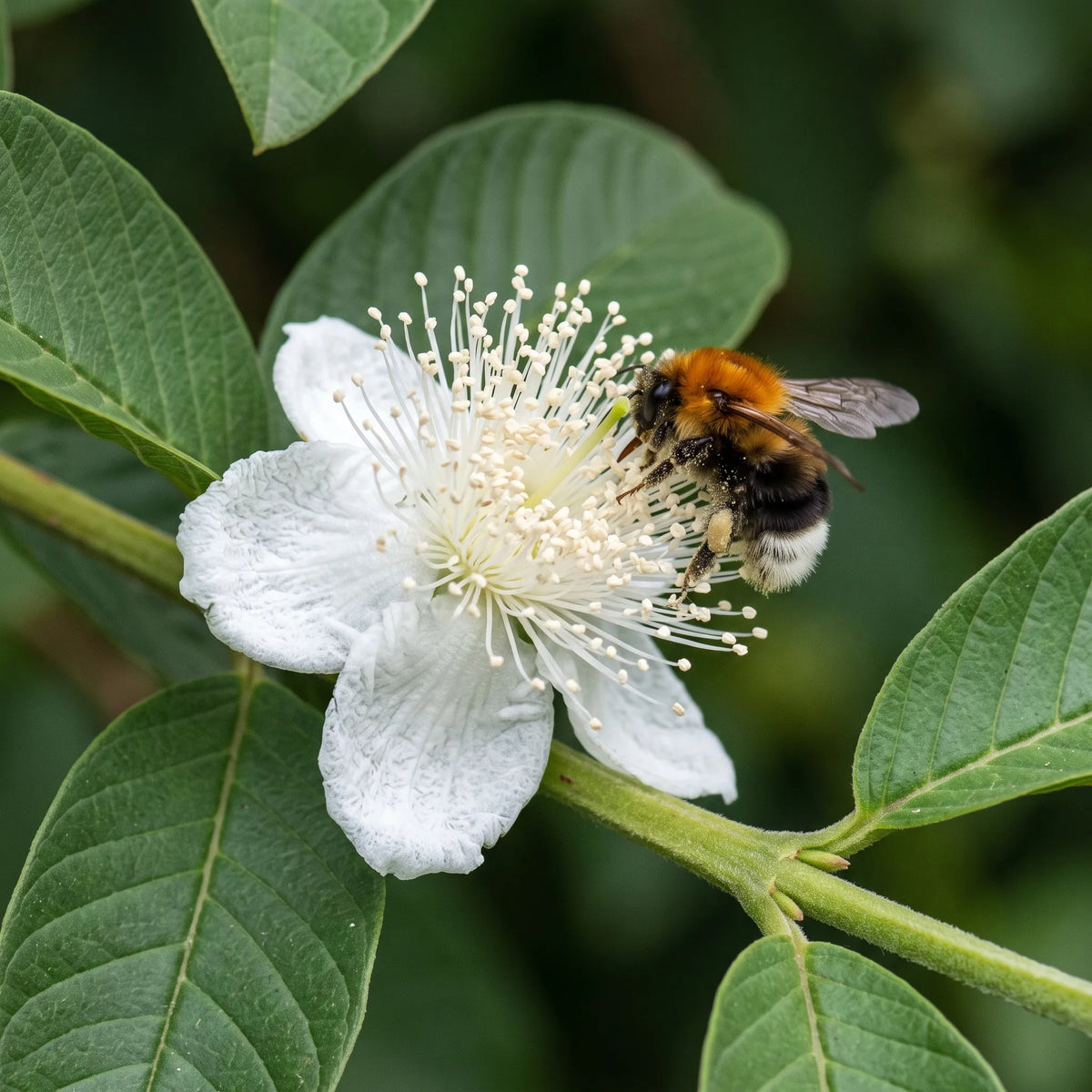
- Its white flowers, with numerous stamens, are very rich in pollen and attract bees and bumblebees during their summer activity.
- Grown in a pot without any treatment, it fits perfectly into a permaculture-managed terrace.
Uses:
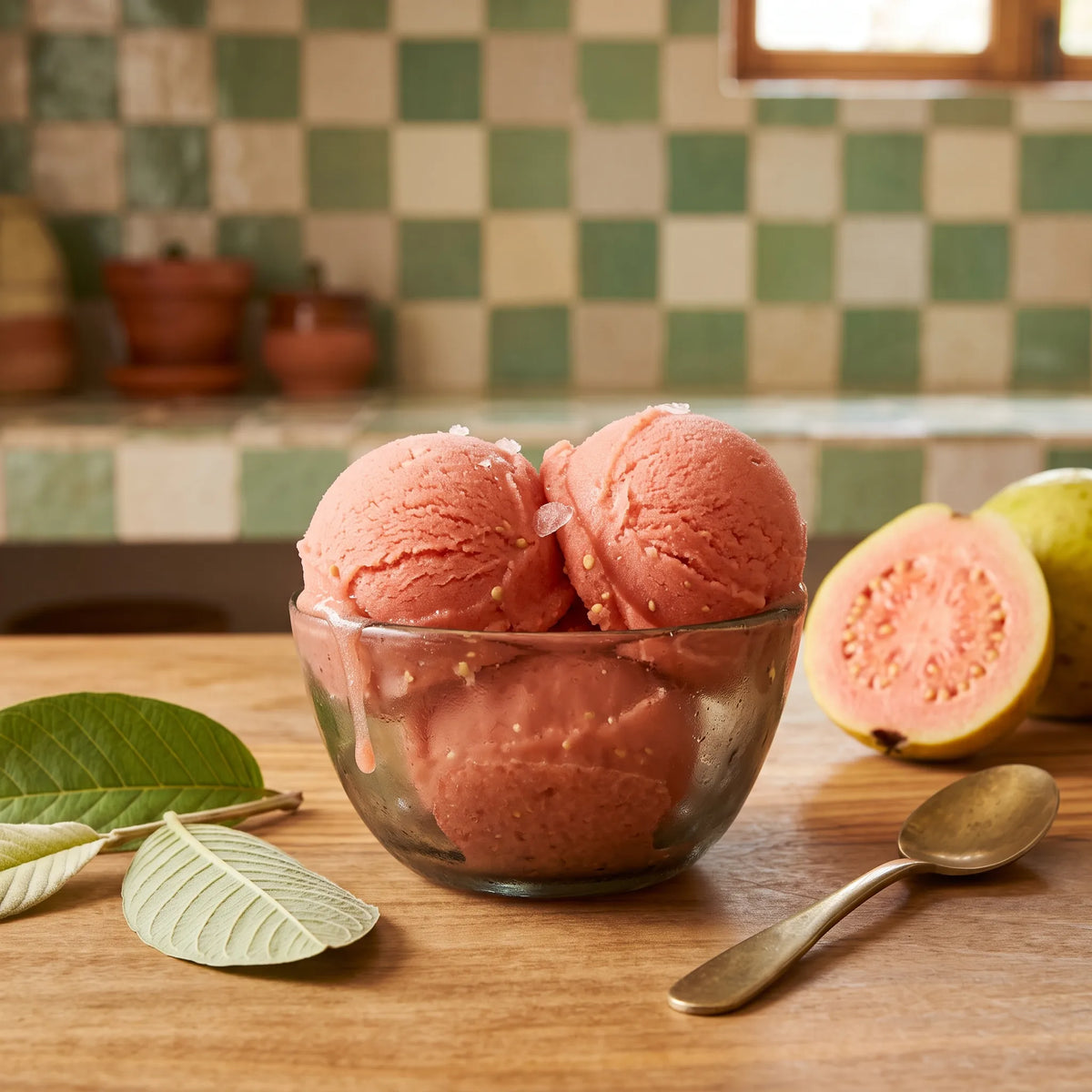
- Fresh fruit, juice, sorbet, jam or fruit paste — its fragrance withstands processing very well. It is also a beautiful ornamental plant with evergreen foliage.
Harvesting your own seeds:
Take the pulp from a fully ripe fruit, leave it to ferment for two to three days in a little water, then rinse it thoroughly: the numerous small, hard seeds will then separate from the flesh. Dry them before storing. See how to store your seeds.
Commitment to Quality: at SemiSauvage - Permaculture, we grow and select our seeds with respect for living things as our guiding principle. Based near the Volcanoes of Auvergne, we choose reproducible, non-hybrid varieties, tested for their germination rate, sorted and carefully packaged, without any chemical treatment. Our belief: to give gardeners back the ability to resow, year after year, seeds that truly belong to them.
A tropical fruit tree that produces from just two years old, even in a pot.