Cleome hassleriana
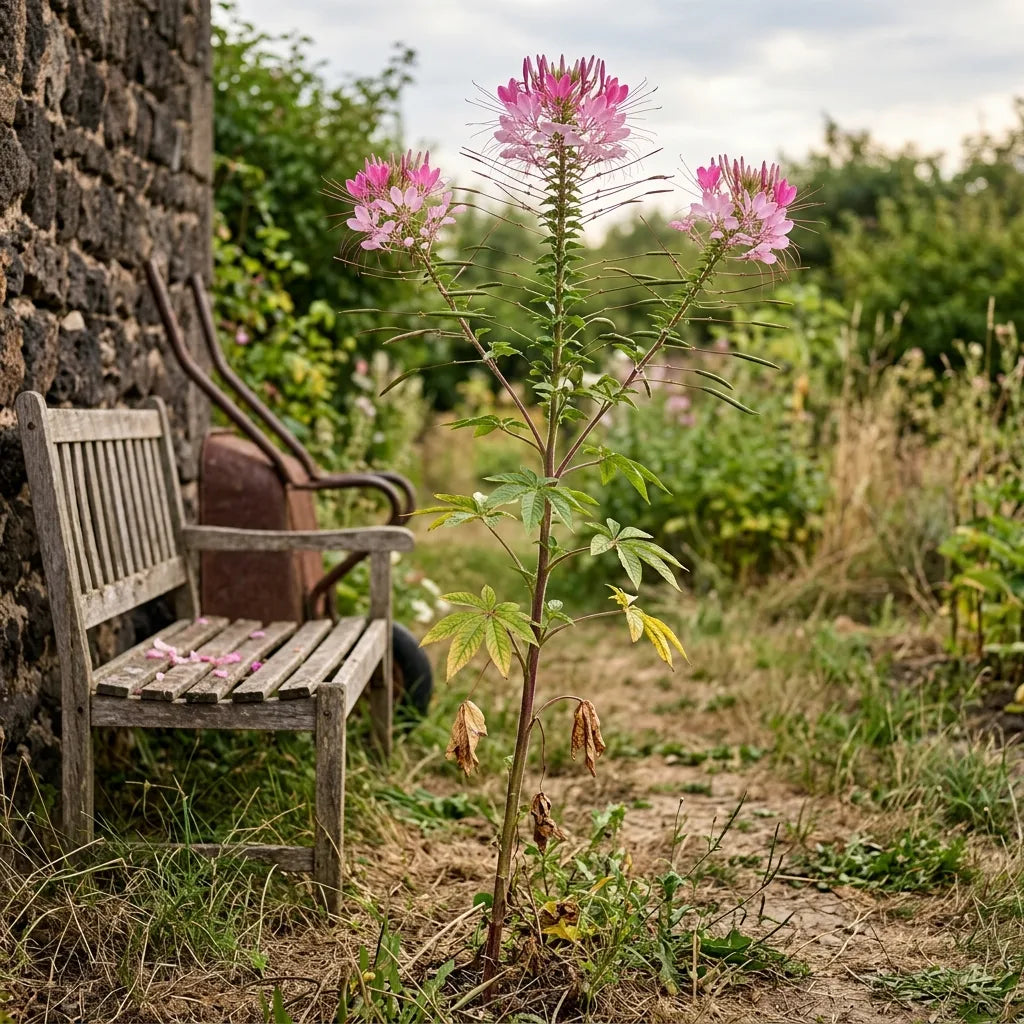
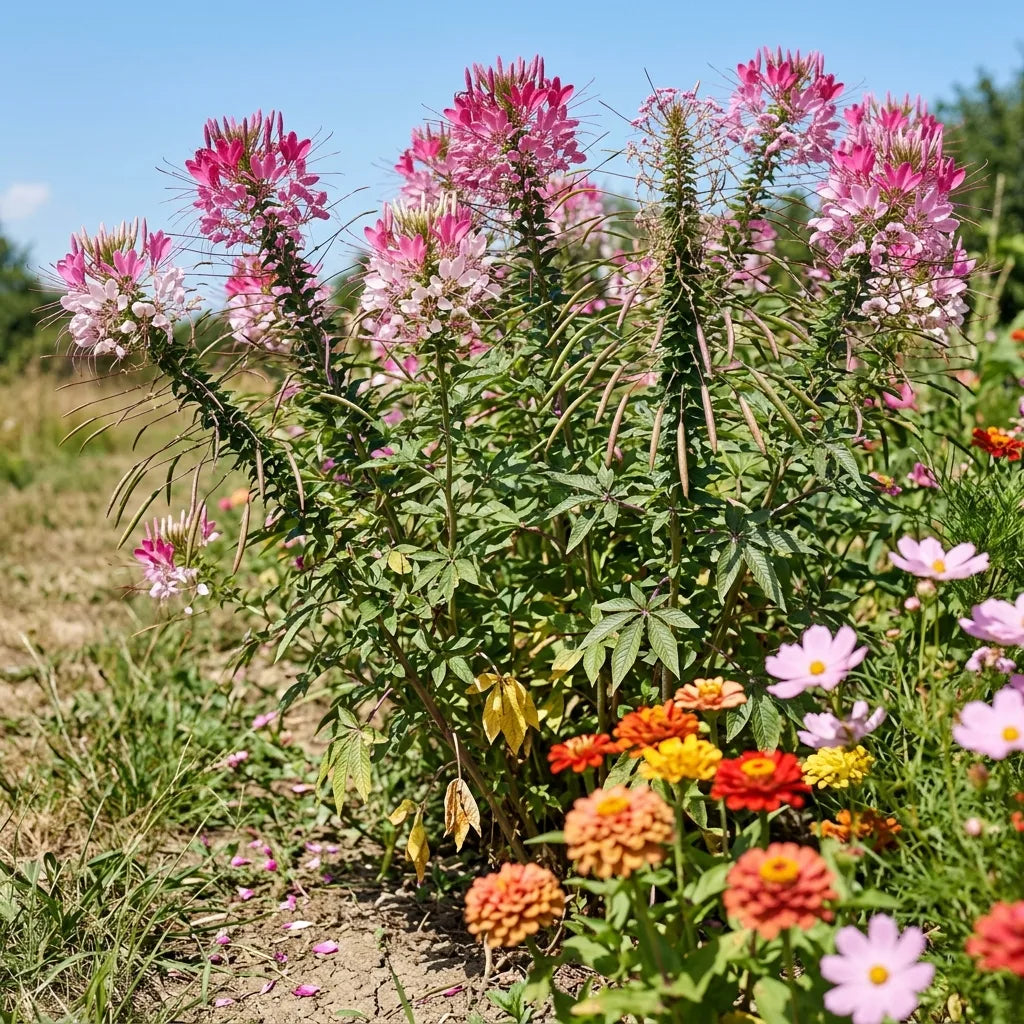
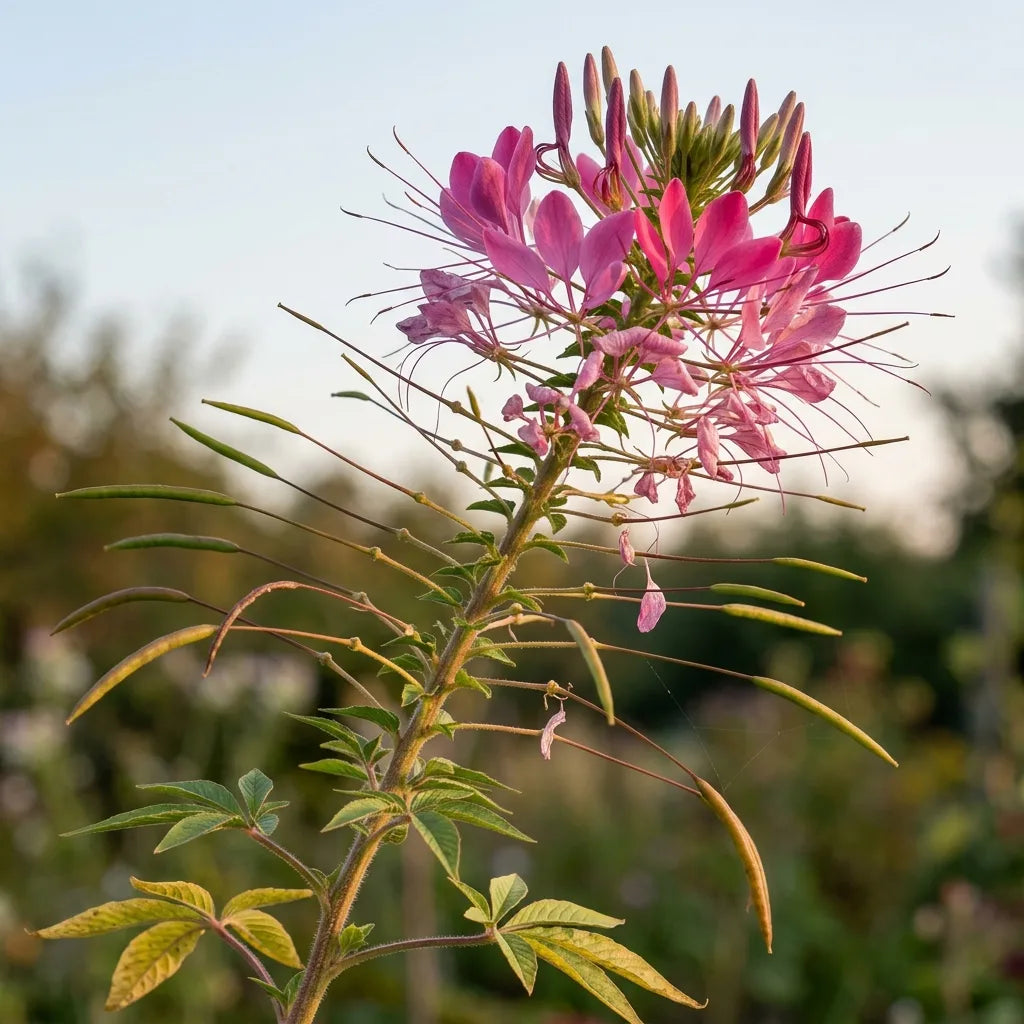
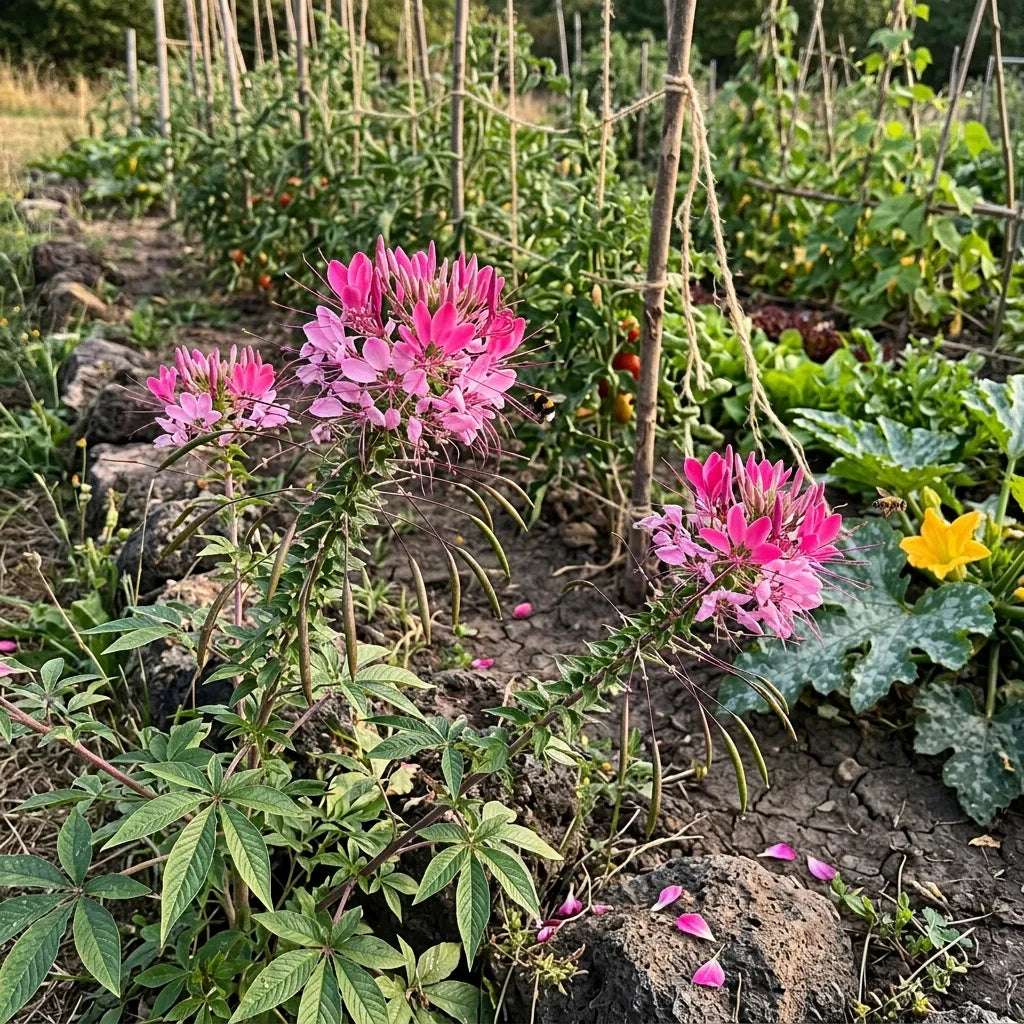
Cleome, spider flower, spider plant: these nicknames come from its long, threadlike stamens, which extend far beyond the petals and give each flower the appearance of a small spider hanging in midair. The inflorescence stretches upward all summer, with the lower flowers giving way to pods while new buds open at the top.
Characteristics:
-
Spectacular silhouette: a tall annual, often reaching 1.20 to 1.50 m, which adds height to flower beds.
-
Original flowers: pinkish clusters with long stamens, continuously renewed throughout the summer until the first frosts.
-
Rapid growth: from sowing to flowering in a single season, without difficulty.
Precautions:
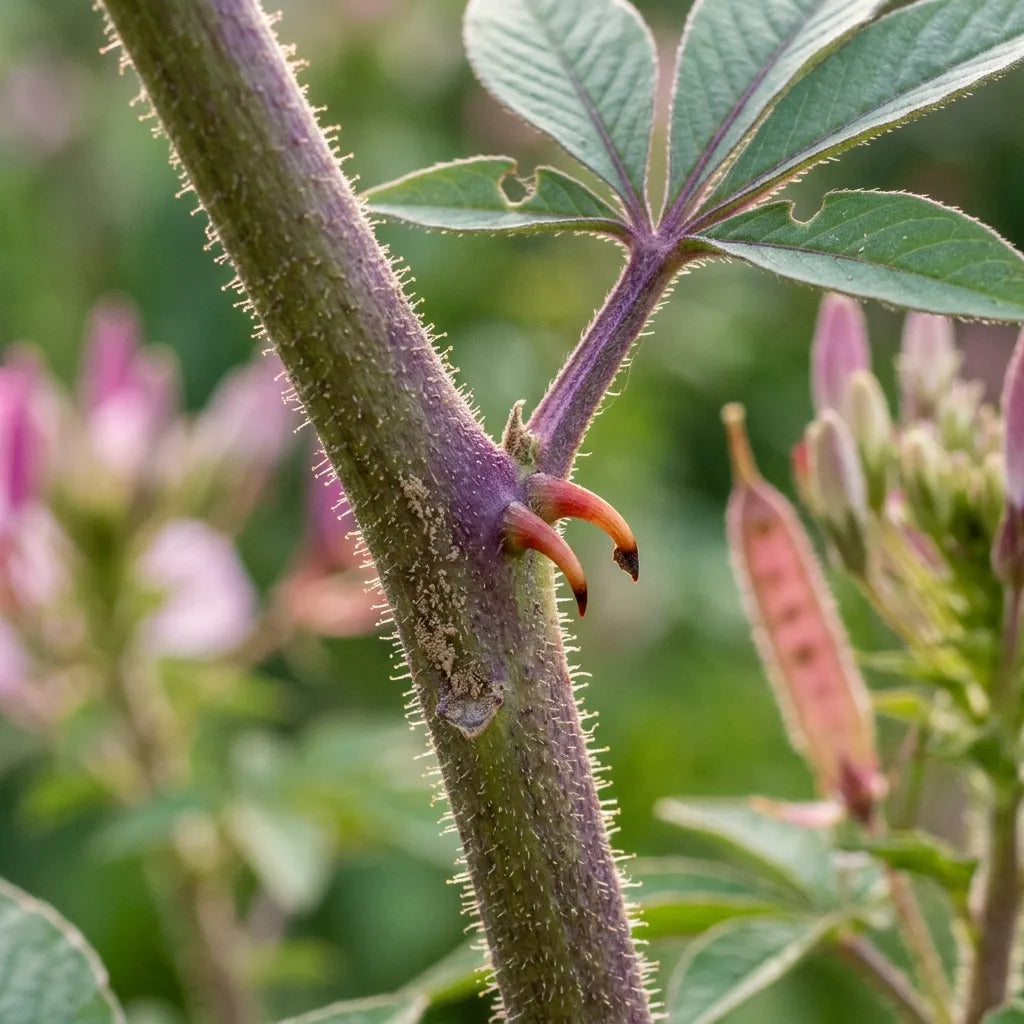
- Its stems bear small thorns and its foliage is slightly sticky to the touch: wear gloves when handling or pruning it.
Sowing advice:
-
Exposure: sunny and warm, essential for abundant flowering.
-
Soil: ordinary, loose and well-drained, preferably light. It tolerates poor soil and drought once established, but dislikes standing water. Soil that is too rich produces soft stems that flop: avoid excessive fertilization.
-
Method: sow in pots under cover from March onward (20 °C), or directly in the ground after the frosts. The seeds germinate better after a period of cold: keeping them in the refrigerator for a few days before sowing significantly improves germination. See how to sow your seeds.
Planting advice:
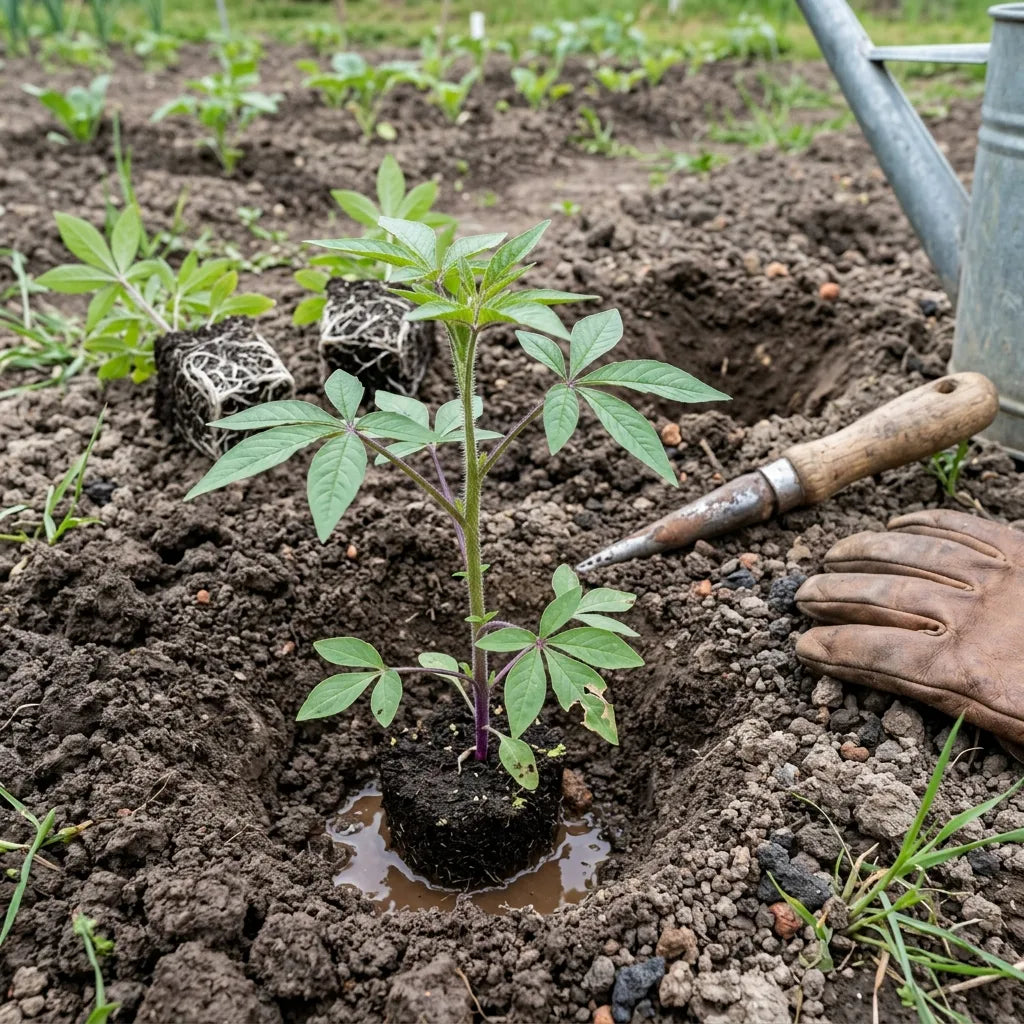
- Transplant after the last frosts, spacing plants 40 to 50 cm apart, at the back of a flower bed or along the edge of the vegetable garden, sheltered from strong winds.
Care advice:
- Water moderately. No staking is necessary if the soil remains poor and the position is sunny.
Beneficial combinations:
Benefits for biodiversity:
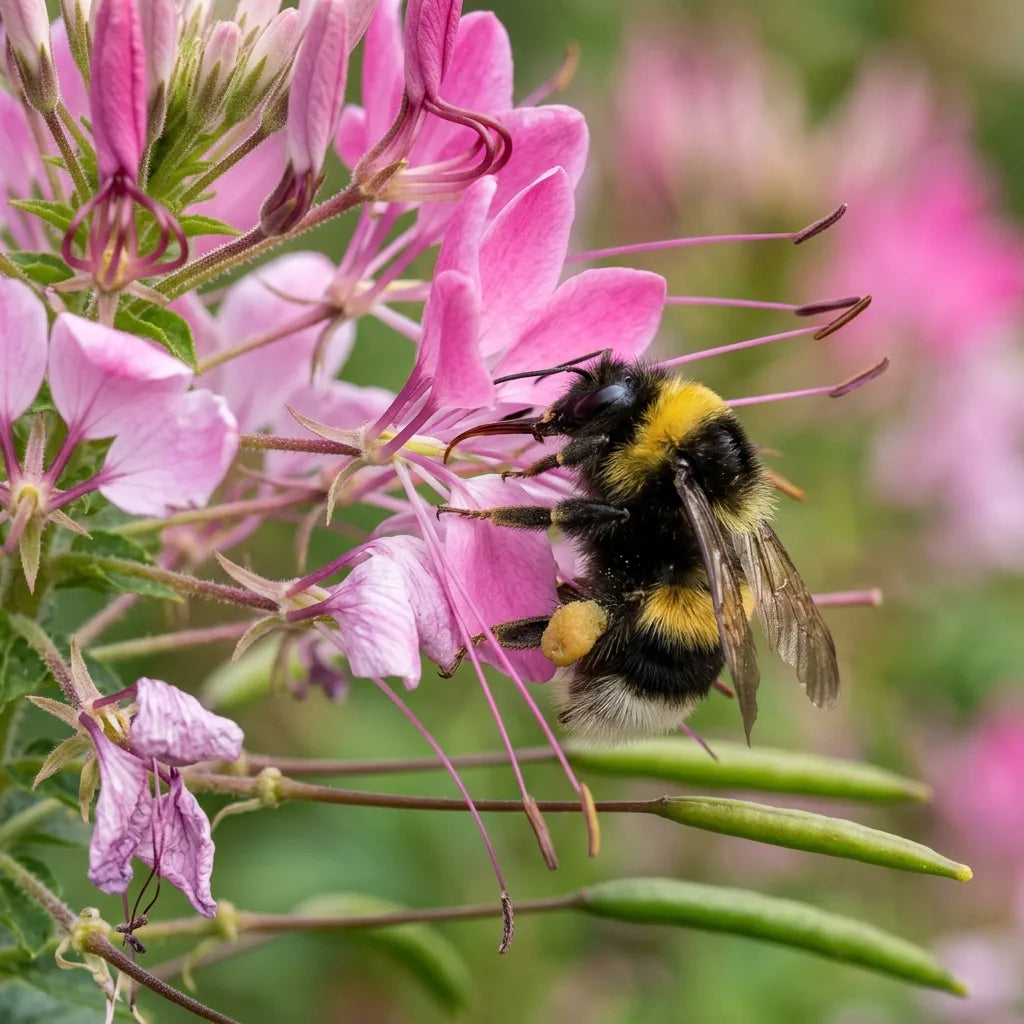
- Its long, nectar-bearing flowers are particularly visited by moths and hawkmoths at dusk, wildlife that is often overlooked in the garden.
- Long-tongued bumblebees and butterflies also flock to it throughout the summer.
Harvesting your own seeds:
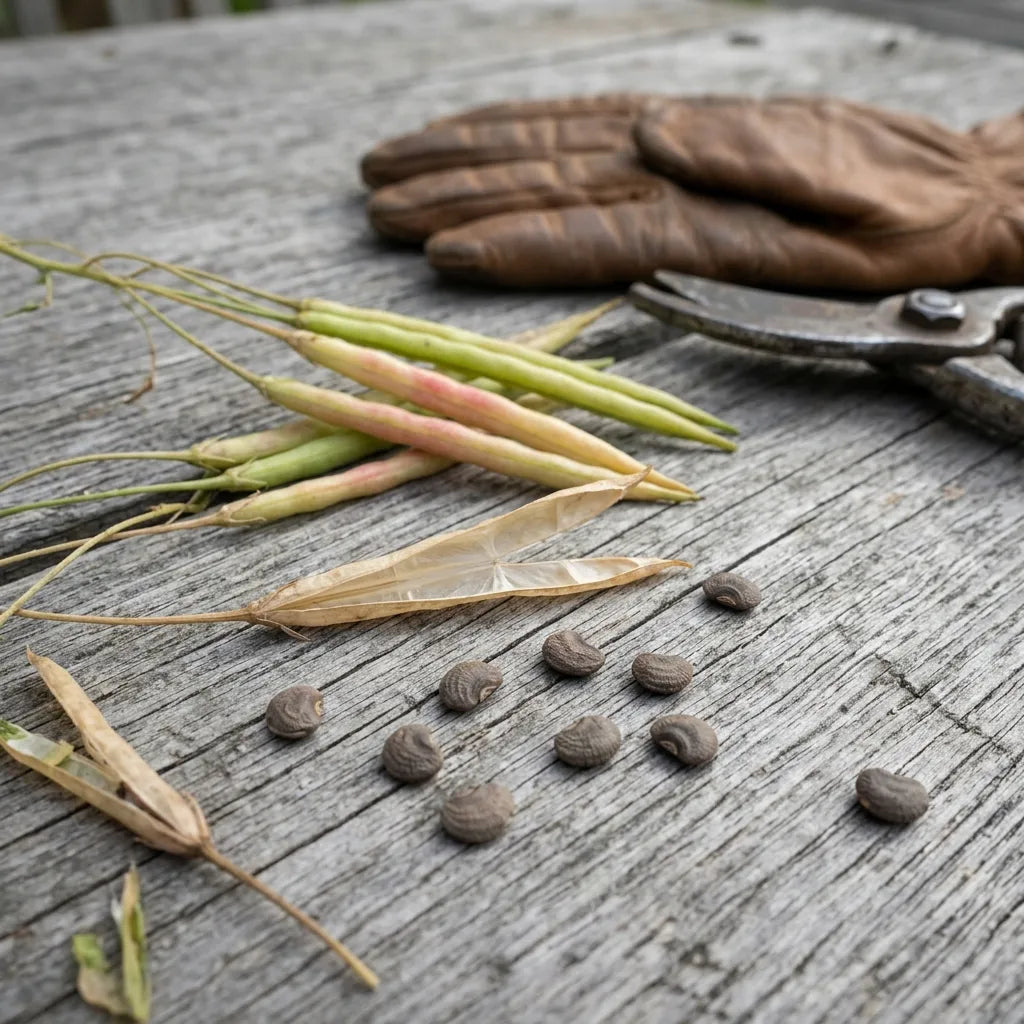
The long, slender pods that form beneath the flowers turn brown and split open when ripe: harvest them just beforehand, when they turn yellow, and let them dry in a paper bag. Cleome also readily self-seeds from one year to the next. See how to store your seeds.
Commitment to Quality: at SemiSauvage - Permaculture, we grow and select our seeds with respect for all living things as our guiding principle. Based near the Auvergne Volcanoes, we choose open-pollinated, non-hybrid varieties, test them for germination rates, and carefully sort and package them without any chemical treatment. Our belief: to give gardeners back the ability to sow, year after year, seeds that truly belong to them.
Add the original silhouette of pink cleome to your summer flower beds.