Raphanus sativus var. longipinnatus
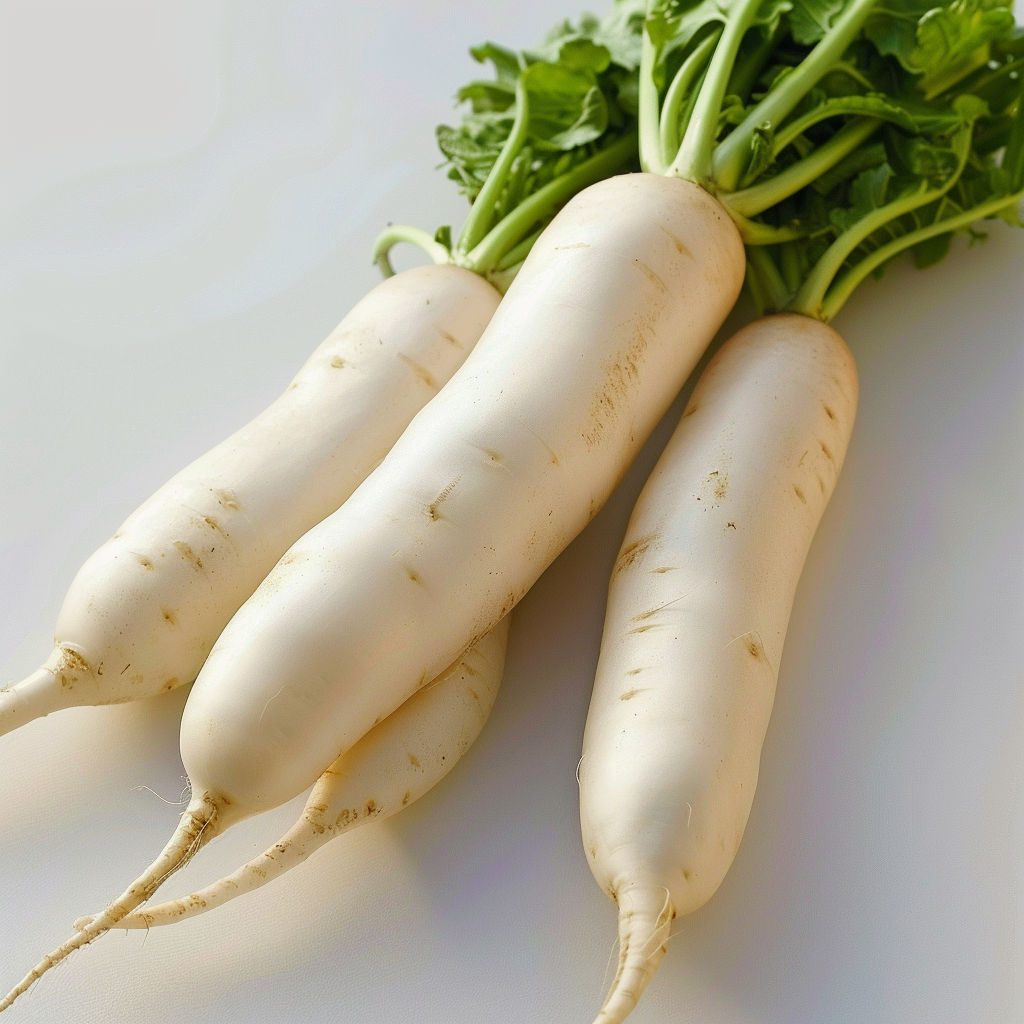
Japanese radish, daikon, winter white radish, Chinese radish: its name literally means “large root” in Japanese, and it certainly lives up to the name—up to 30 cm long. Unlike our small pink radishes, its flesh is mild, crisp, and barely spicy, allowing for much wider culinary uses.
Characteristics:
-
Large white root: up to 30 cm long, with firm, crisp flesh.
-
Mild flavor: much less spicy than spring radishes, it can be eaten raw or cooked.
-
Fall cultivation: sown in late summer, it makes useful use of beds that have become available.
-
Good storage: it keeps for several weeks in a cool place after harvesting.
Sowing advice:
-
Exposure: partial shade to full sun.
-
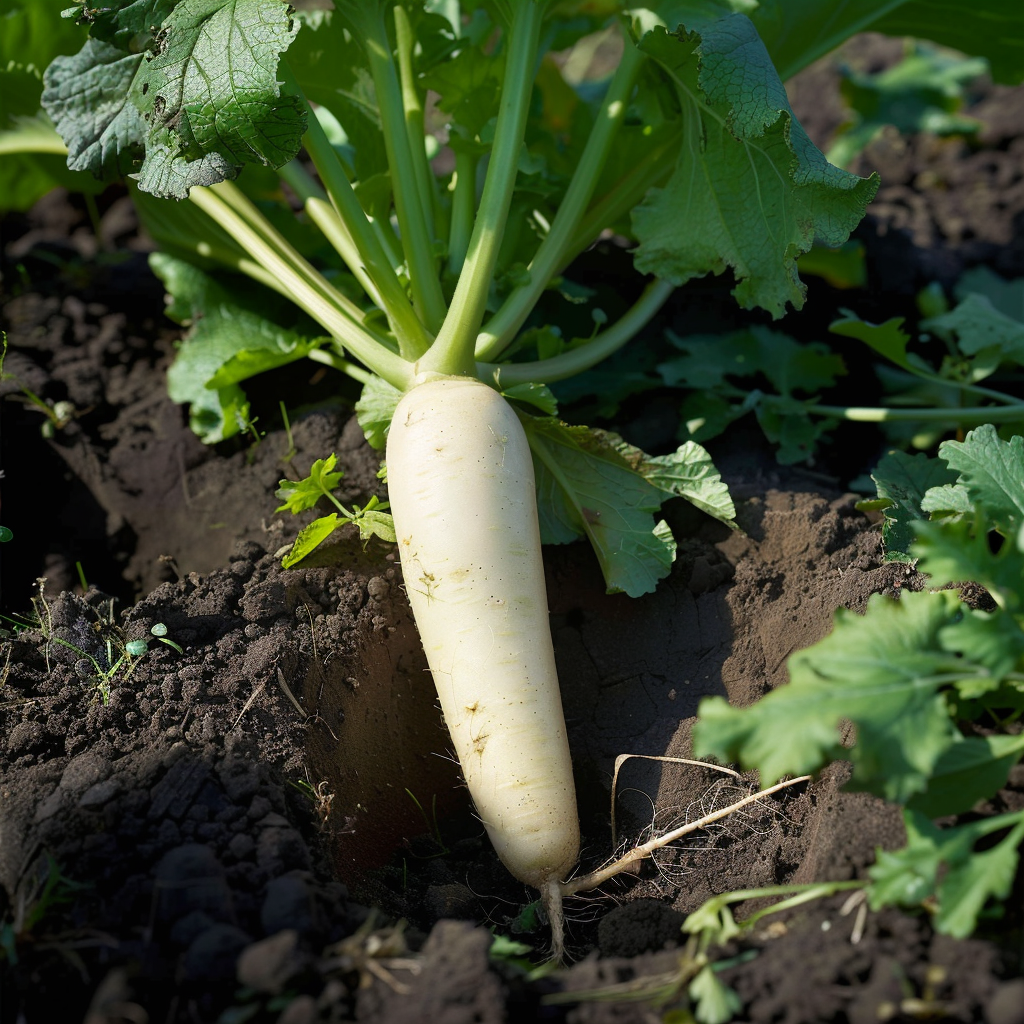
Soil: light, loose, deep, moist, and above all free of stones—this is crucial given the length of its root. Stony or compacted soil produces forked roots. Avoid fresh manure, which causes the same problem.
-
Method: sow directly in the ground from June to September, in groups spaced 25 cm apart, at a depth of 2 cm. Direct sowing is essential: it does not transplant well. See how to sow your seeds.
Care advice:
- Thin to one plant per group. Water regularly and evenly: alternating drought and watering makes the root hollow or spicy.
- Late-summer sowing is preferable: sown too early in spring, it bolts before forming its root.
Harvesting advice:
- Harvest before severe frosts, pulling gently after loosening the soil around the root. The leaves can also be eaten, sautéed or in soup.
Beneficial combinations:
- Its deep root naturally loosens compacted soil: as a green manure, it is even nicknamed the “soil-piercing forage radish.” It is a useful precursor to a demanding crop. See green manures and improving your soil.
Benefits for biodiversity:
- Its taproot creates channels that aerate the soil deep down and make it easier for earthworms to move through it.
- If allowed to flower, it produces white to lilac clusters that are highly visited by bees and hoverflies.
Uses:
- Grated raw in salads, Japanese-style pickled, simmered in broths, or stir-fried in a wok. It is the basic ingredient in Japanese pickles and miso soups.
Harvesting your own seeds:
Leave one plant in the ground over winter: it will bolt in spring and form swollen siliques to harvest once dry. Caution: Raphanus sativus plants cross-pollinate with one another, so isolate it from other radishes. See saving your seeds.
Our Commitment to Quality: at SemiSauvage - Permaculture, we grow and select our seeds with respect for all living things as our guiding principle. Based near the Auvergne Volcanoes, we choose reproducible, non-hybrid varieties, tested for their germination rate, carefully sorted and packaged, with no chemical treatments. Our conviction: to give gardeners back the ability to resow, year after year, seeds that truly belong to them.
A generous fall vegetable that also works your soil deep down.