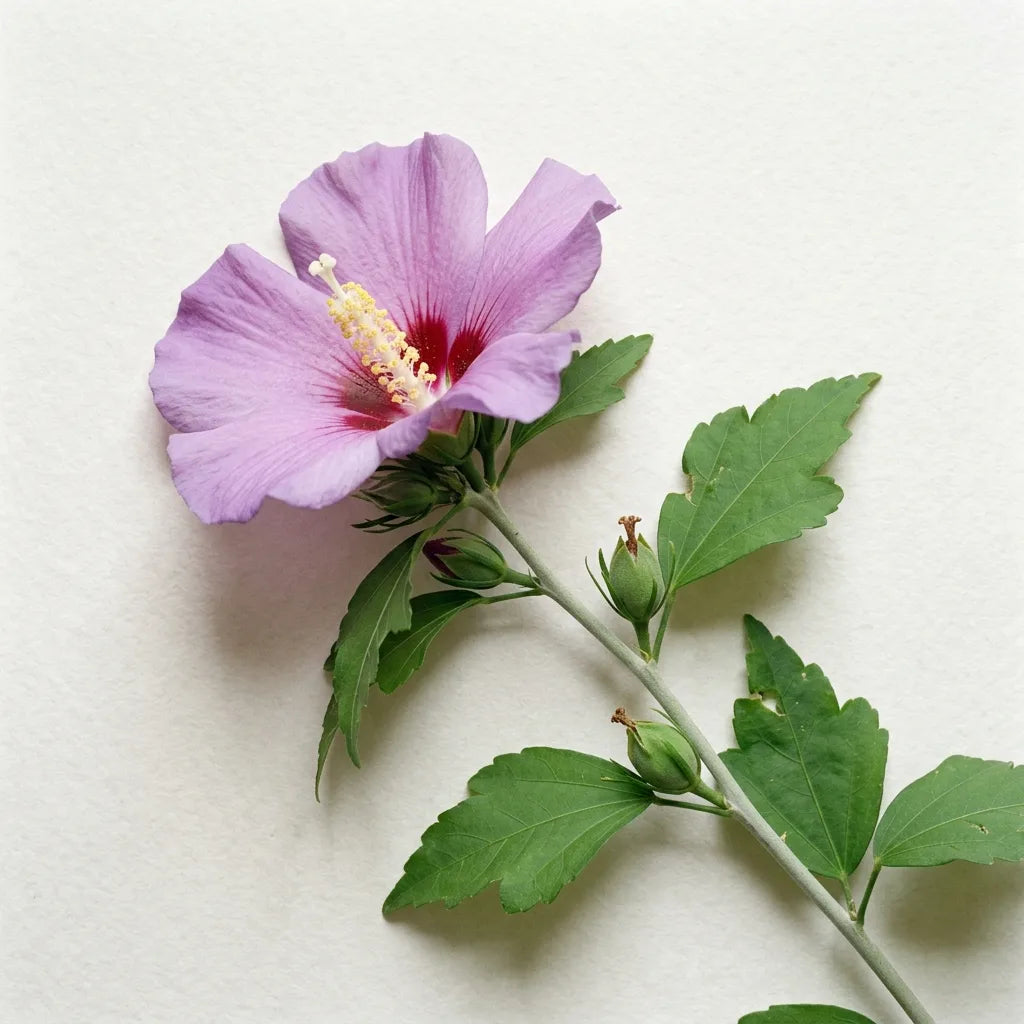
Hibiscus syriacus
Rose of Sharon, tree mallow, Syrian ketmia: despite its species name, this hibiscus does not come from Syria but from East Asia — a misattribution by Linnaeus that has remained in the nomenclature. It is the only truly hardy hibiscus in our climates, capable of producing tropical-looking flowers in the ground even in cold regions.
Characteristics:
-
Late and long flowering: from July to October, with single or double flowers in a variety of colors, at a time when most shrubs have finished flowering.
-
Hardy shrub: deciduous foliage; once well established, it withstands temperatures down to -15 °C.
-
Late leafing: its leaves do not appear until May — do not think it has died in spring; this is its nature.
Sowing advice:
-
Position: sunny, warm and sheltered from cold winds; this is essential for beautiful flowering.
-
Soil: ordinary, deep, moist and well drained. It tolerates lime but is equally sensitive to prolonged drought and stagnant moisture in winter. Adding compost at planting is beneficial.
-
Method: soak the seeds for 24 hours in lukewarm water, then sow them in pots under shelter in spring (20 °C). Germination requires patience; allow several weeks. See how to sow your seeds.
Planting advice:
- Transplant into the ground or into a large pot at least 40 cm deep, ideal for balconies and terraces.
- Seed-grown plants display variable colors, often different from the mother plant — this is the whole benefit of propagation by seed.
Care advice:
- Water generously during the first few years and during droughts, especially when grown in a pot.
- Prune at the end of winter: Rose of Sharon flowers on new wood, so hard pruning encourages flowering.
Benefits for biodiversity:
- Its large open flowers are frequently visited by bees and bumblebees, which burrow completely inside to reach the pollen.
- Its late-summer flowering fills a lean period for pollinators, when most shrubs have already finished blooming.
Uses:
- Flowering hedge, specimen plant, bed or container growing. Its flowers are edible and make an attractive decoration for salads.
Symbolism:
Hibiscus syriacus is the national flower of South Korea, where it is called mugunghwa, the “flower of eternity”: its endlessly renewed flowering symbolizes the perseverance and immortality of the Korean people.
Harvesting your own seeds:
Leave the capsules to turn brown and dry completely on the shrub in autumn, until they open into five valves, then collect the fuzzy brown seeds inside. See how to store your seeds.
Commitment to Quality: at SemiSauvage - Permaculture, we grow and select our seeds with respect for all living things as our guiding principle. Based near the Auvergne Volcanoes, we choose reproducible, non-hybrid varieties, tested for their germination rate, carefully sorted and packaged, with no chemical treatment. Our belief: to give gardeners back the ability to resow, year after year, seeds that truly belong to them.
Add an exotic and sustainable touch to your garden with these Hibiscus syriacus seeds.