Zea mays var. everta
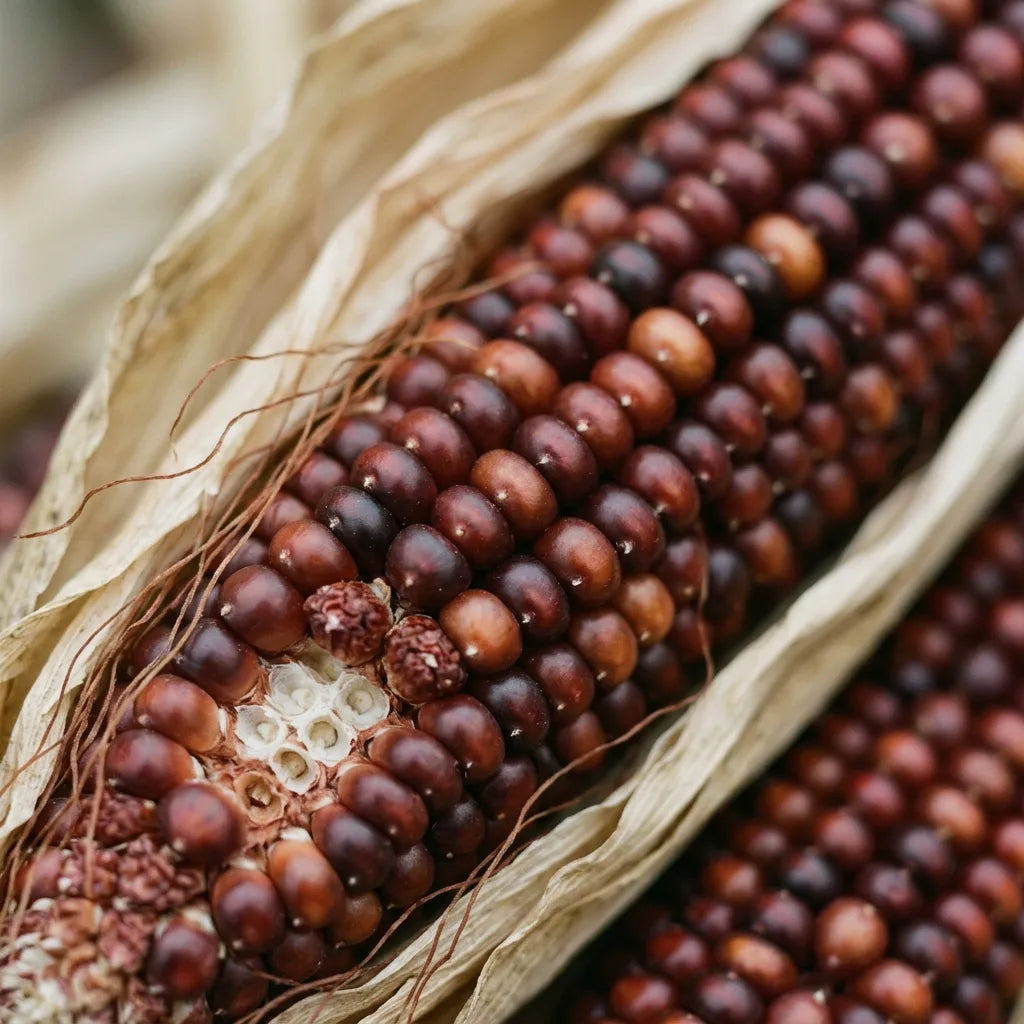
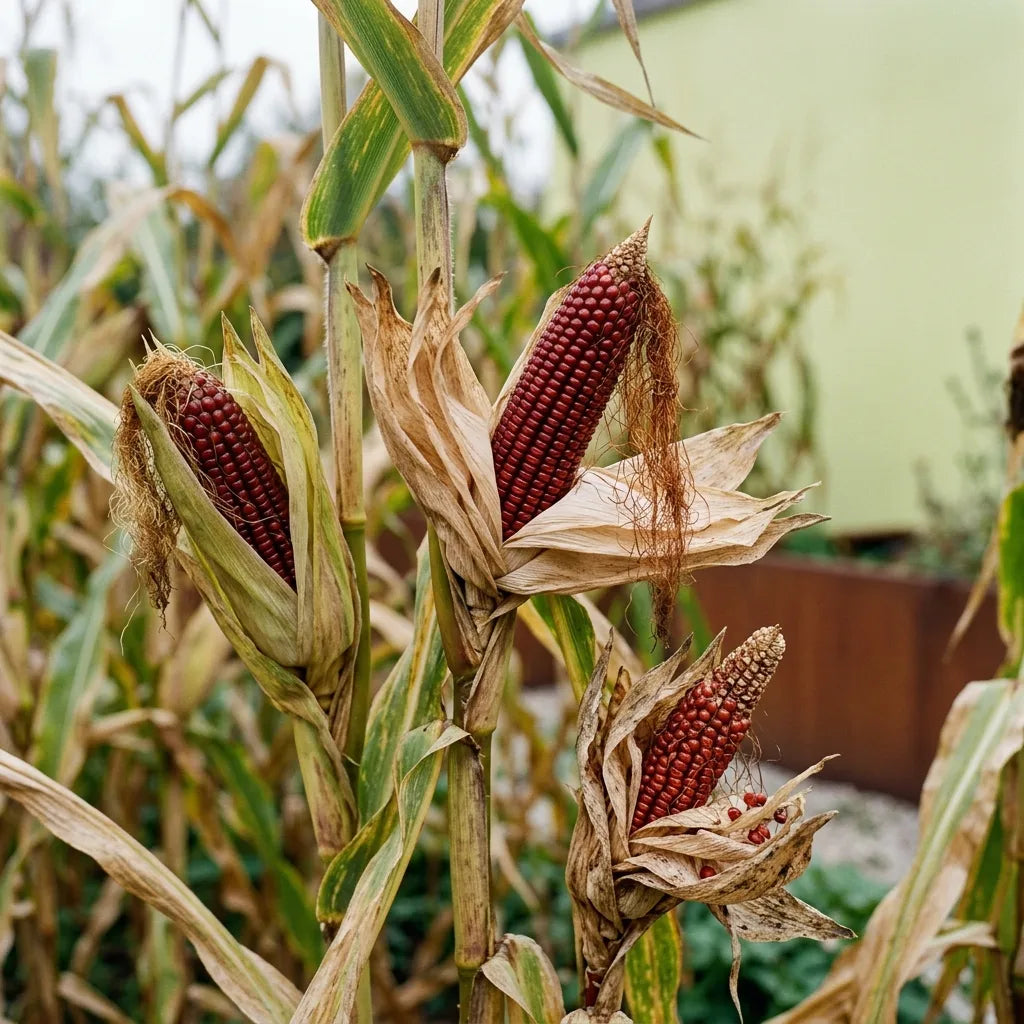
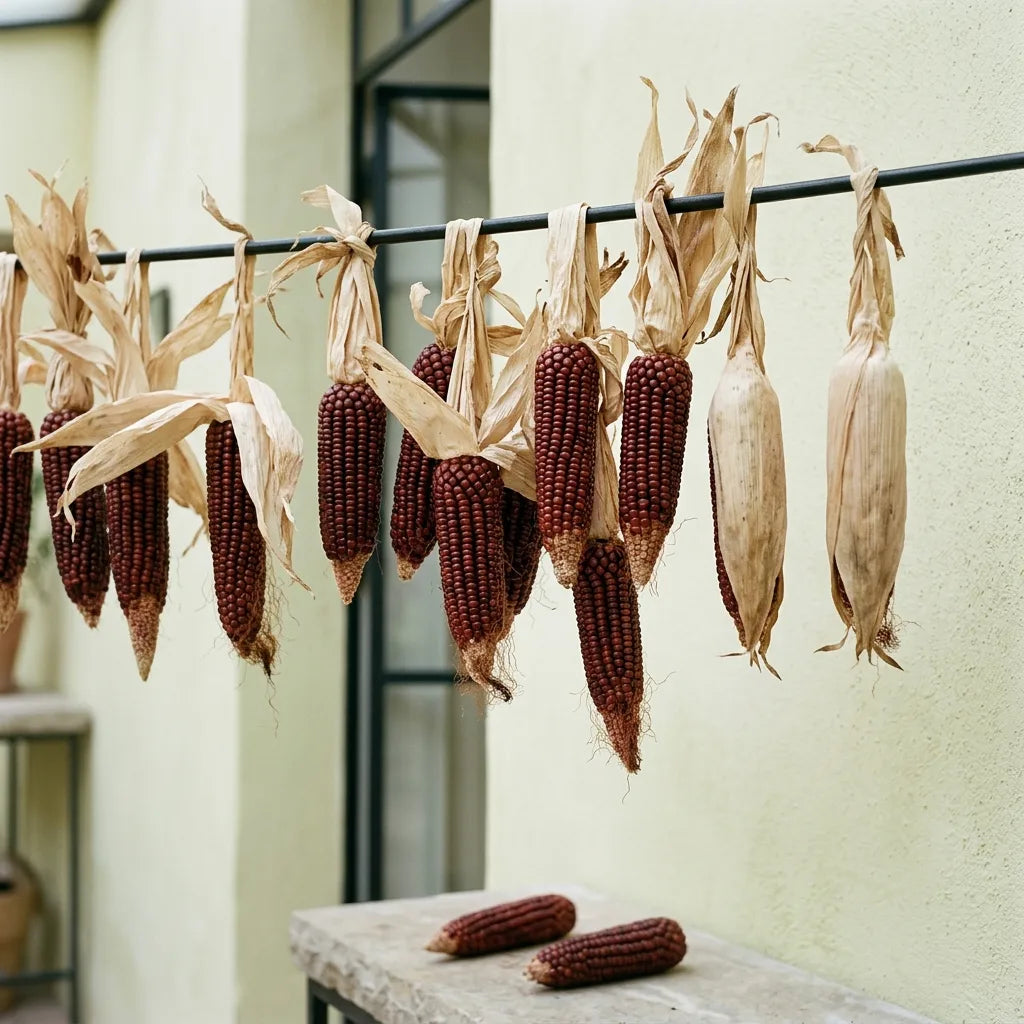
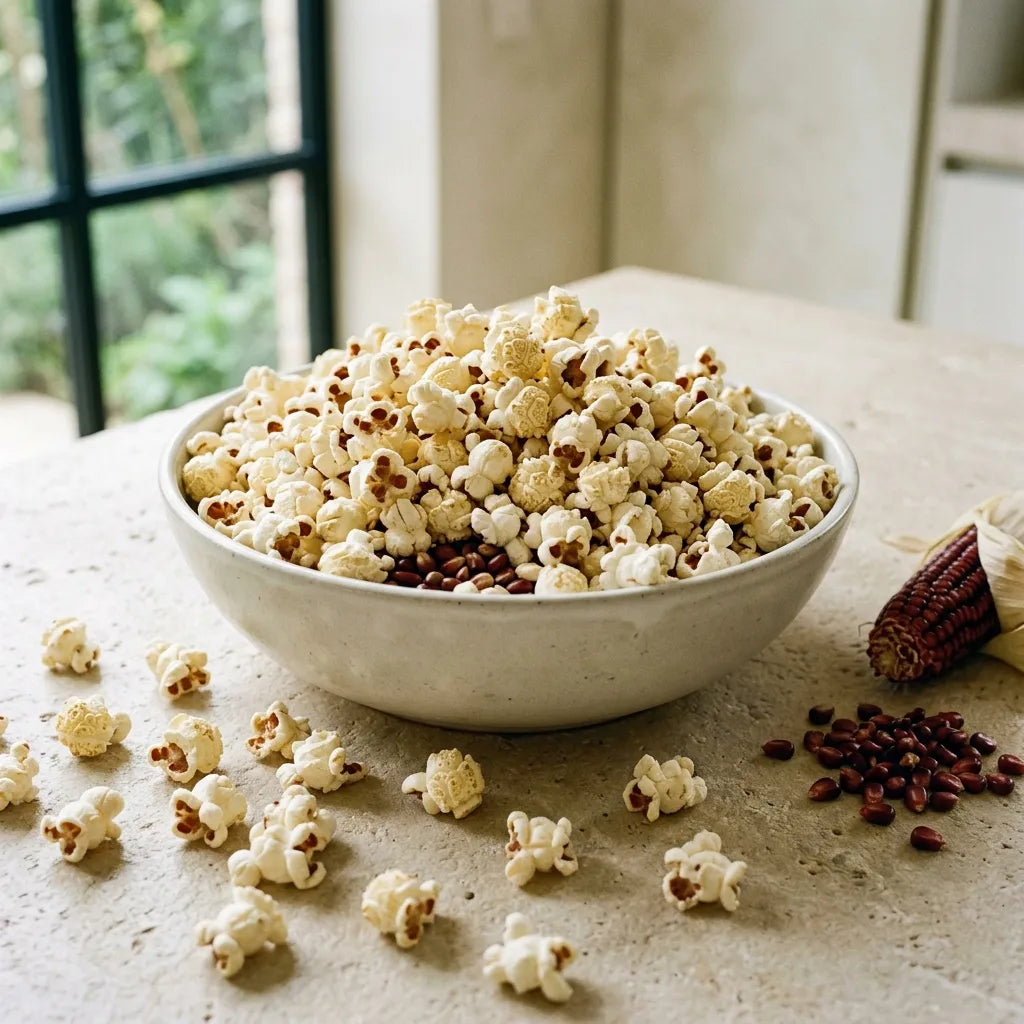
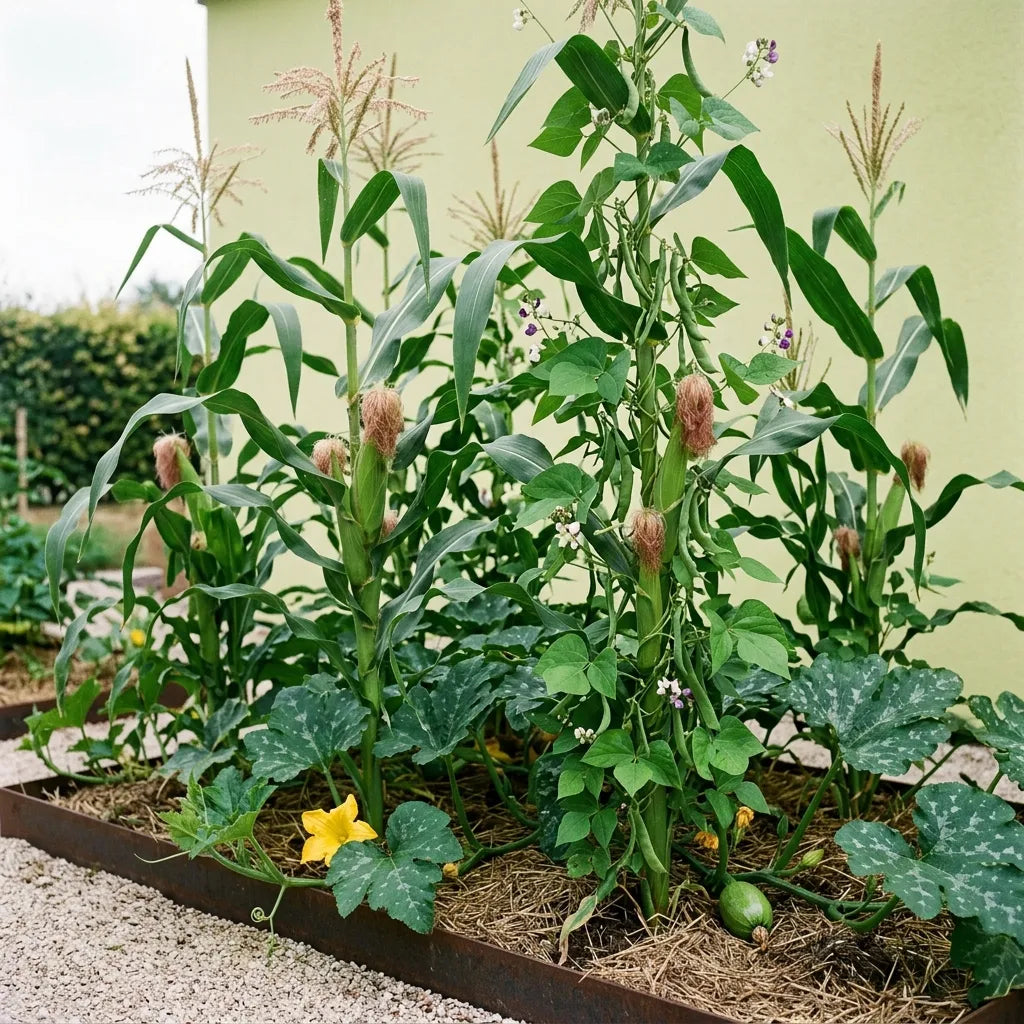
Strawberry Mahogany Corn, Strawberry popcorn corn, strawberry corn: its miniature, stocky, pointed ears look remarkably like large mahogany strawberries. But its main appeal is not decorative: this is popcorn corn, with every kernel turning into popcorn. A spectacular crop to grow with children, from seed to frying pan.
Characteristics:
-
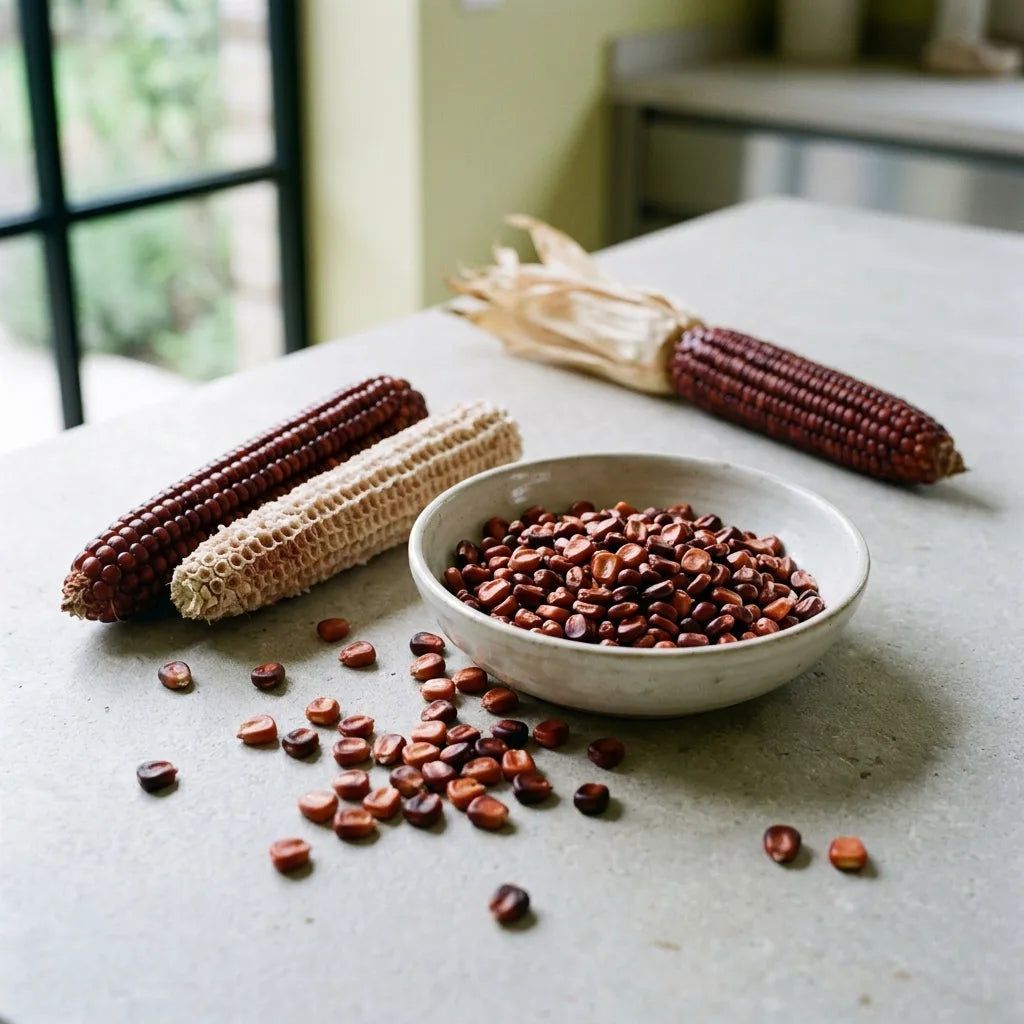
Miniature ears: 5 to 7 cm, strawberry-shaped, with a deep mahogany-red color.
-
Popcorn corn: its hard kernels turn into white popcorn.
-
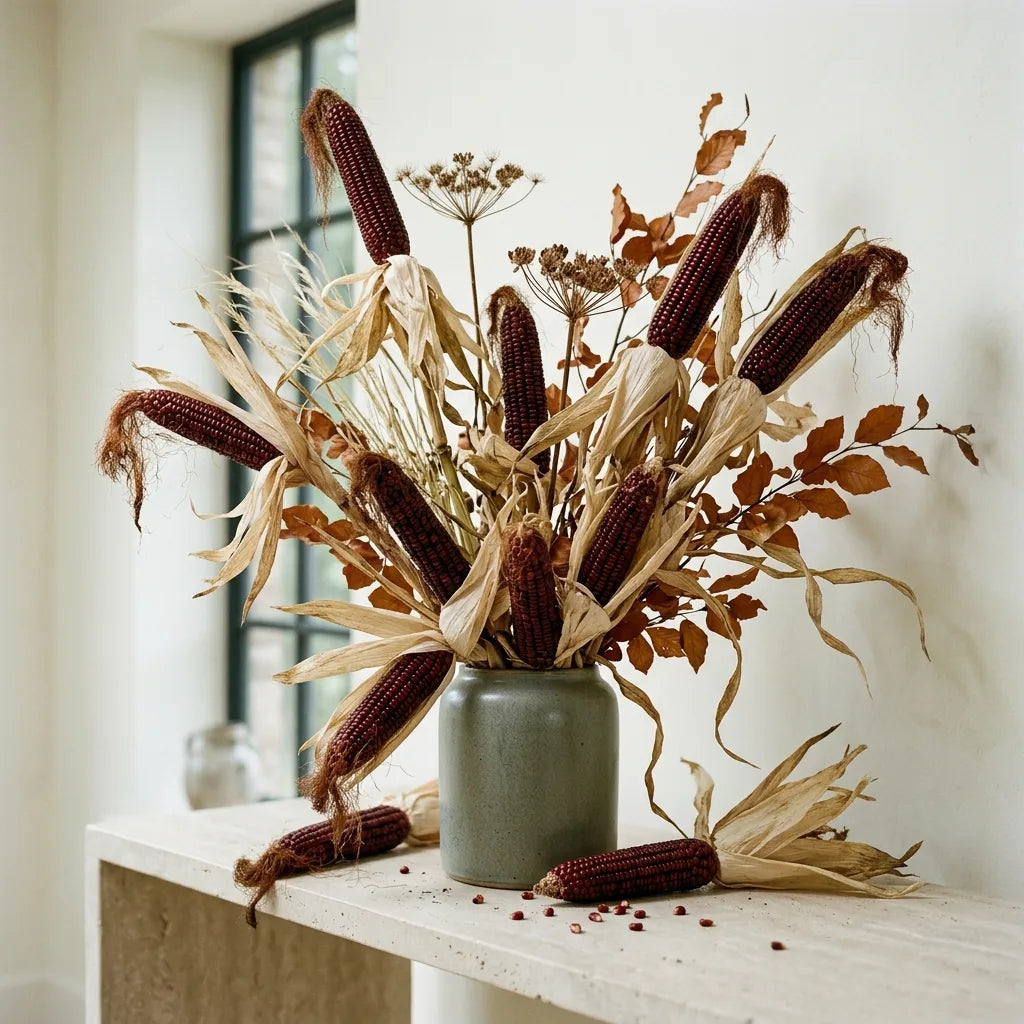
Dual purpose: decorative ears in dried bouquets, or kernels for eating.
-
Open-pollinated heirloom variety, highly productive, with numerous ears per plant.
Sowing advice:
-
Exposure: full sun, in a warm location.
-
Soil: deep, rich and well-drained, with a generous addition of compost — corn has a very high nitrogen requirement.
-
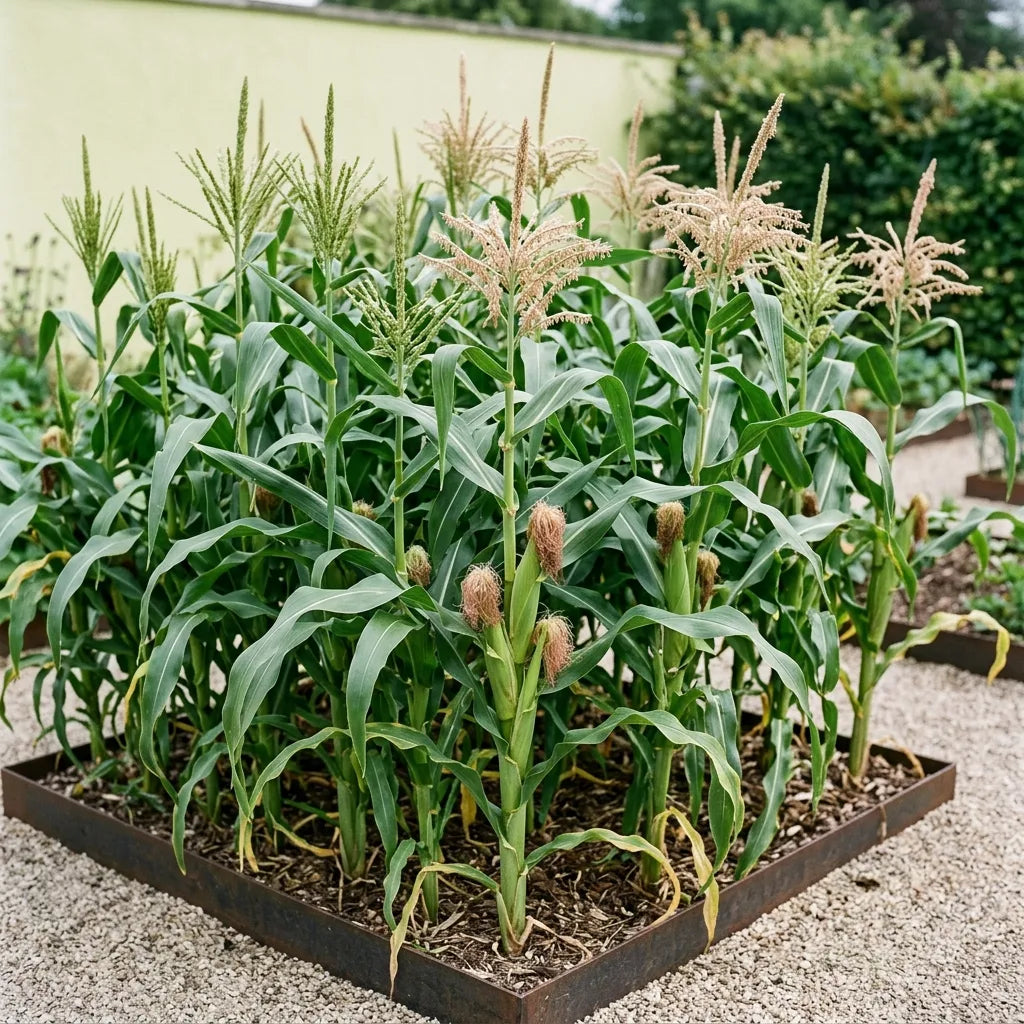
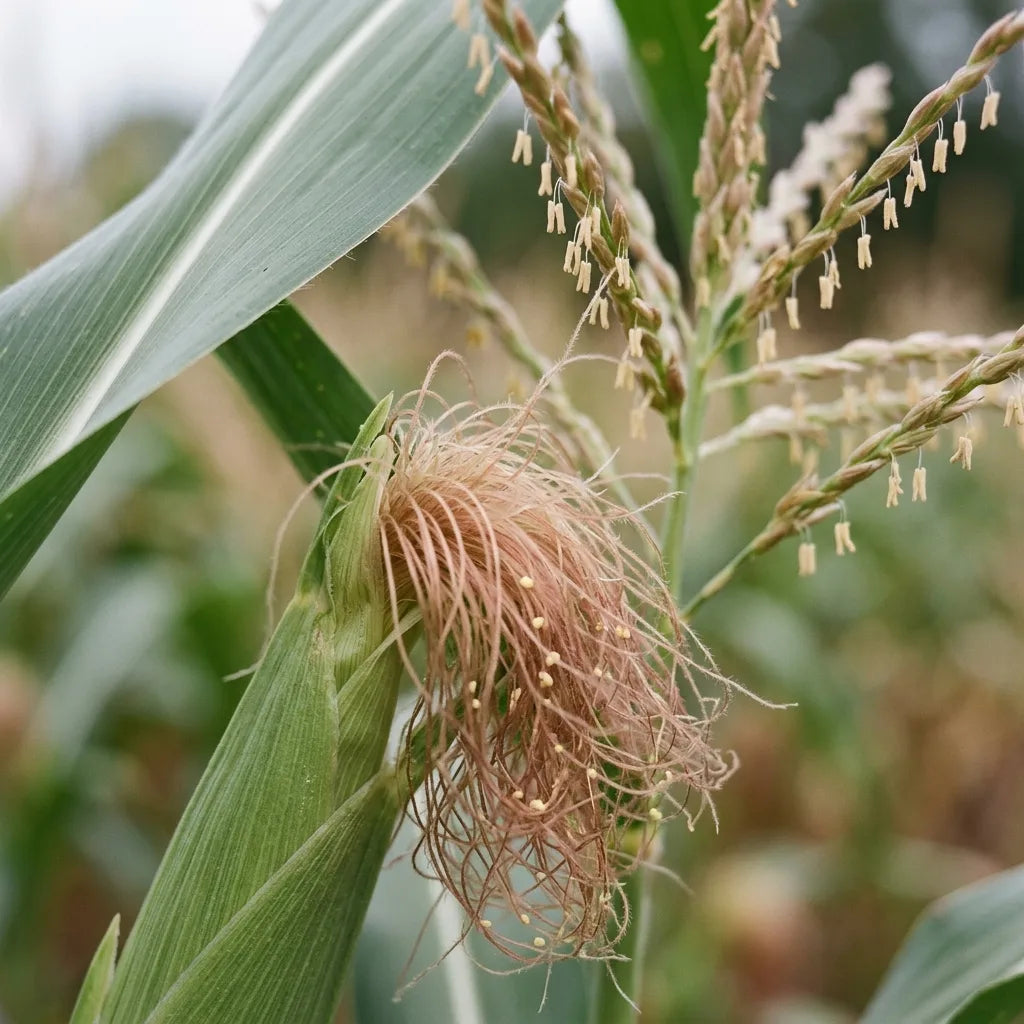
Method: sow in spring, directly in the ground after the last frosts, at a depth of 3 cm. Essential point: sow in a square block rather than a single row, in pockets spaced 40 cm apart. Corn is pollinated by the wind: an isolated row produces ears that are only half full. See how to sow your seeds.
Care advice:
- Water regularly, especially during flowering. Earth up the base to strengthen the root anchorage against the wind.
- Important point: keep it isolated from other corn. If crossed with sweet corn or ornamental corn, it loses its ability to pop from the first generation onward.
Harvesting advice:
- Unlike sweet corn, leave the ears to dry completely on the plant until the husks turn brown and the kernels are hard as glass.
- Finish drying them under cover for several weeks. Moisture content determines how well they pop: if the kernels are too dry, they will not pop; if they are too moist, they will not pop either. If popping fails, let the kernels rest for a few days in a sealed jar.
Beneficial companions:
- The traditional “Three Sisters” planting: corn serves as a support for climbing beans, which fix the nitrogen it needs, while squash covers the soil at their feet. See companion planting in the vegetable garden.
Benefits for biodiversity:
- Its height creates a microclimate sheltered from wind and evaporation for shorter neighboring crops.
- Its hollow stems, left in place over winter, provide nesting shelters for beneficial insects.
Uses:
- Kernels popped into plain, salted or caramelized popcorn. Whole ears in decorative autumn bouquets, where they retain their mahogany color for a very long time.
Harvesting your own seeds:
This is the harvest itself: shell a thoroughly dry ear and store the kernels in a dry place. You must keep your crop isolated from other corn varieties, at least 200 meters away or separated by planting times. See saving your seeds.
Commitment to Quality: at SemiSauvage - Permaculture, we grow and select our seeds with respect for all living things as our guiding principle. Based near the Auvergne Volcanoes, we choose open-pollinated, non-hybrid varieties, tested for their germination rate, carefully sorted and packaged, with no chemical treatments. Our belief: to give gardeners back the ability to resow, year after year, seeds that truly belong to them.
Grow your own popcorn: a crop that amazes children.