Jacaranda mimosifolia
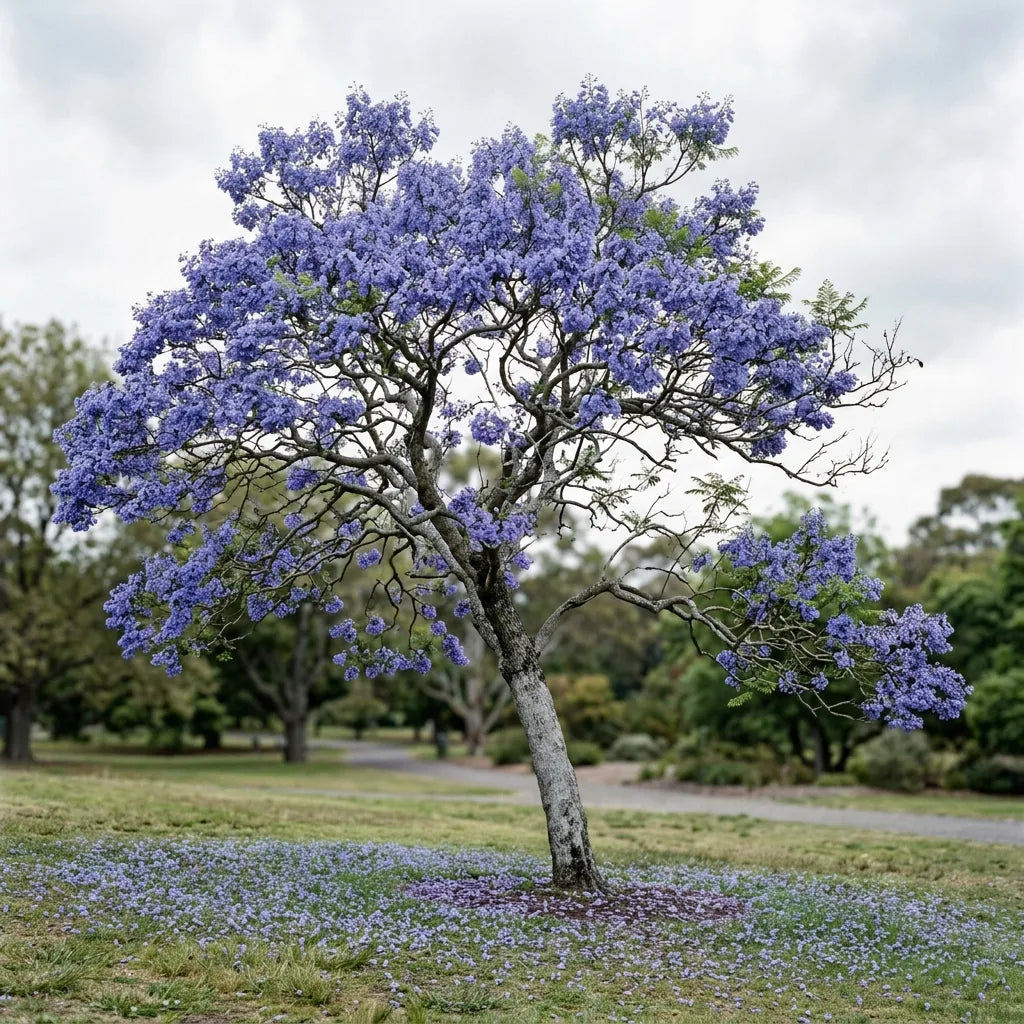
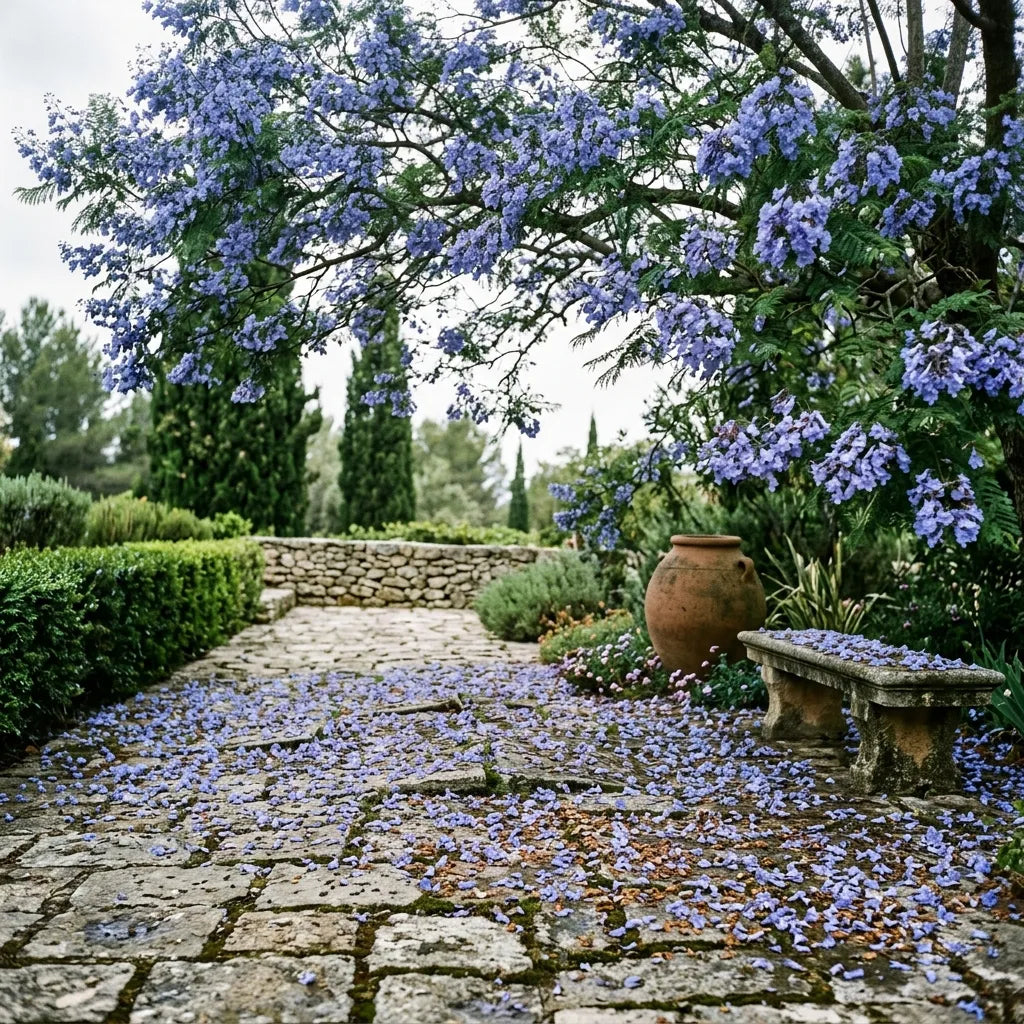
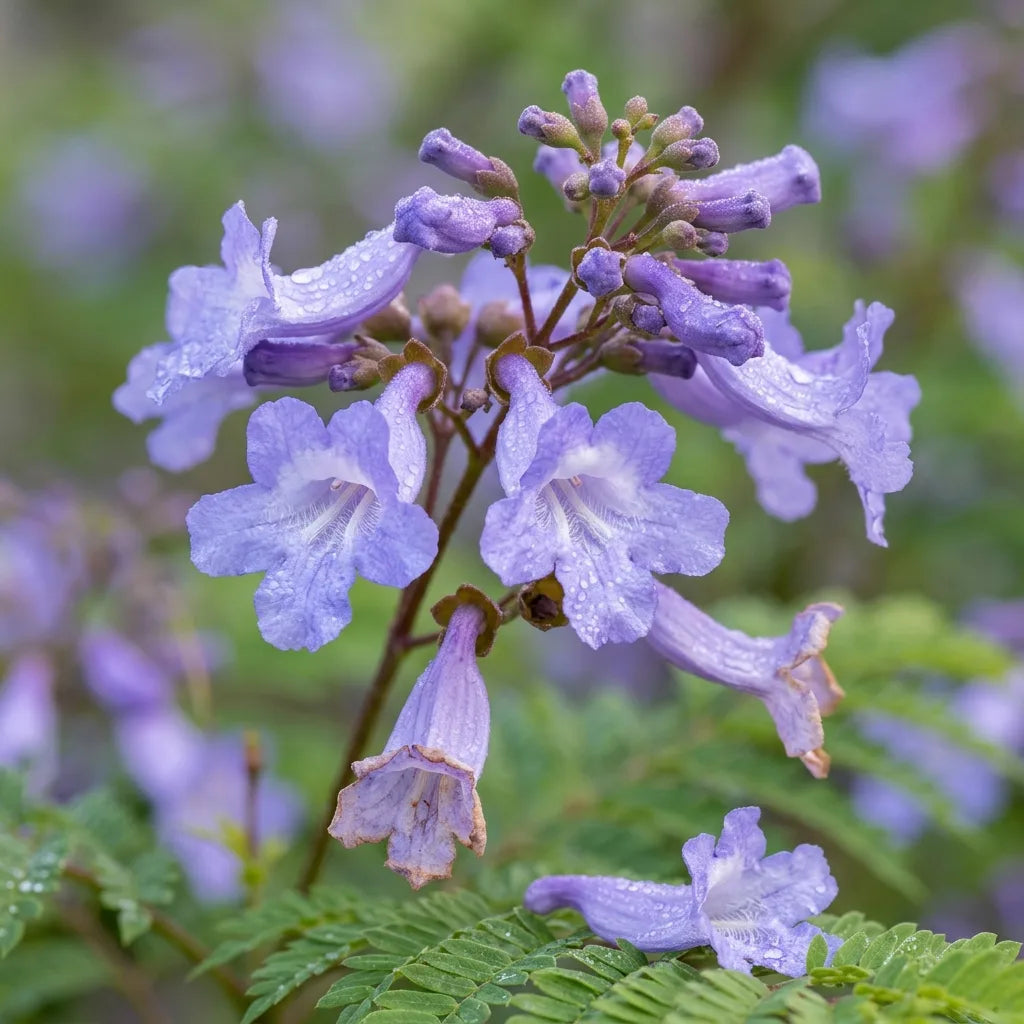
Blue flamboyant, jacaranda, oyster tree: when it blooms, this tree first loses all its leaves, keeping only its blue-violet clusters—a colorful cloud suspended in midair. In Pretoria and Buenos Aires, jacaranda flowering is an annual event that transforms entire avenues into mauve tunnels.
Characteristics:
-
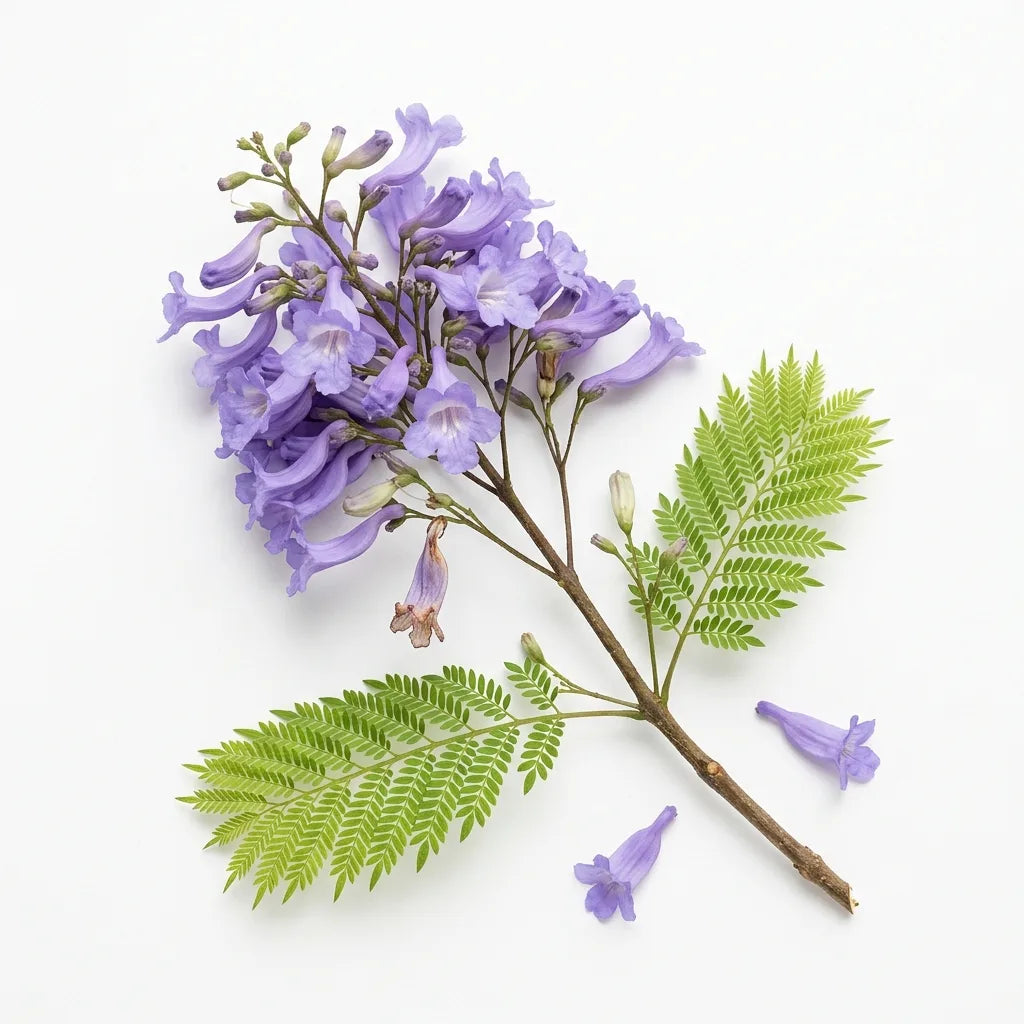
Spectacular flowering: large clusters of blue-violet flowers in spring and summer, often before the leaves appear.
-
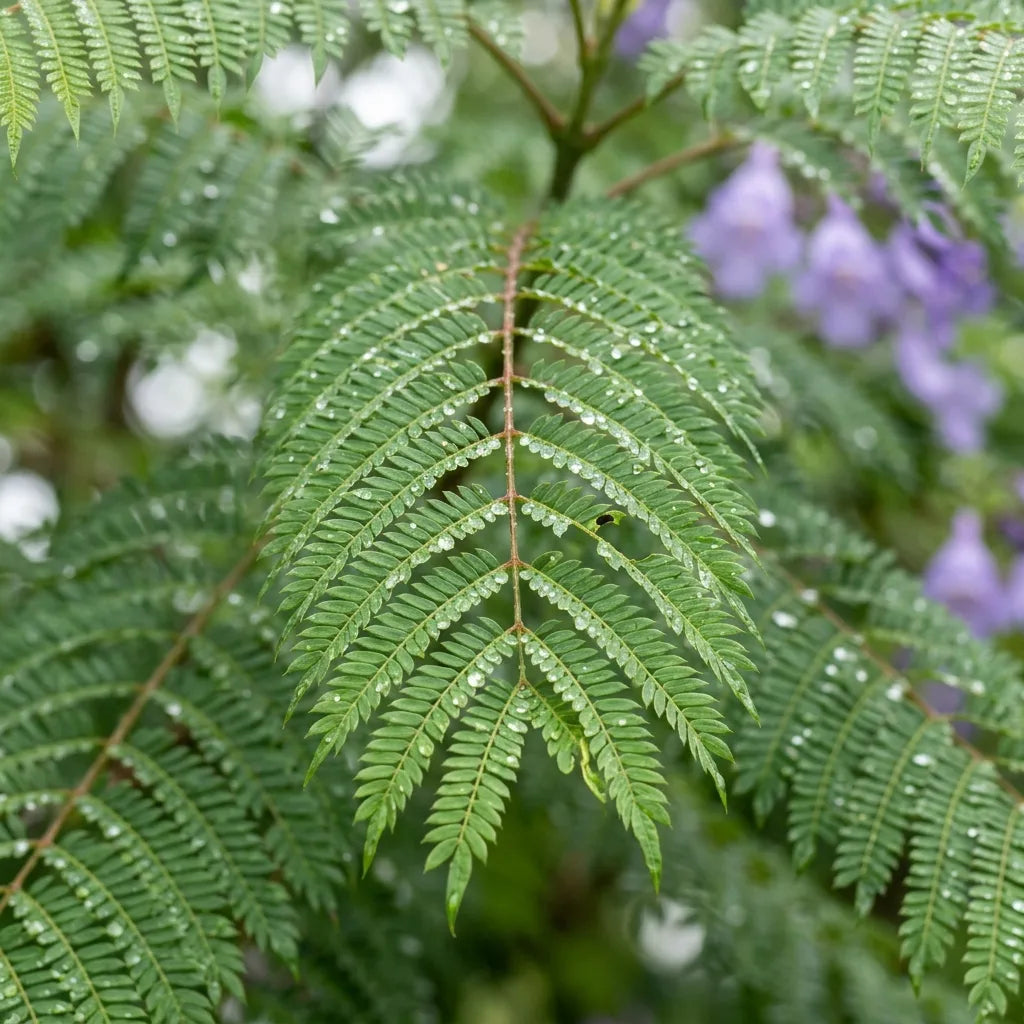
Fern-like foliage: finely divided bipinnate leaves, hence its epithet mimosifolia.
-
Large tree: 10 to 15 meters in warm climates, with a spreading, graceful habit.
Precautions:
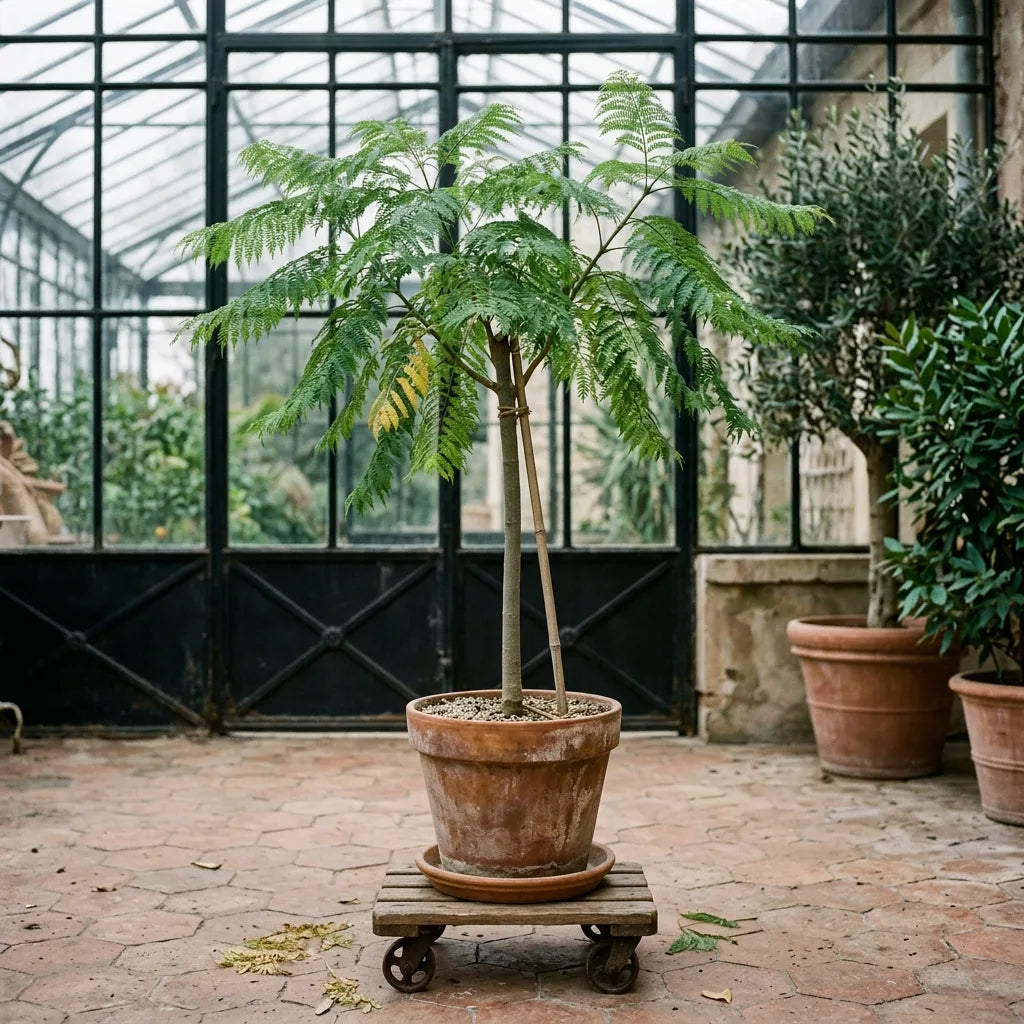
- A subtropical tree, it cannot tolerate prolonged frost: in mainland France, it is grown in a pot and overwintered frost-free, except on the French Riviera, where it can survive outdoors in a sheltered spot.
- Flowering in a pot is rare and requires several years of patience: under our climates, it is cultivated primarily for its decorative foliage.
Sowing advice:
-
Exposure: full sun, in an area sheltered from strong winds that damage its delicate foliage.
-
Soil: light, sandy, and well-drained. It tolerates poor soils but absolutely cannot withstand stagnant water around its roots. In a pot, a potting-soil and sand mixture works well.
-
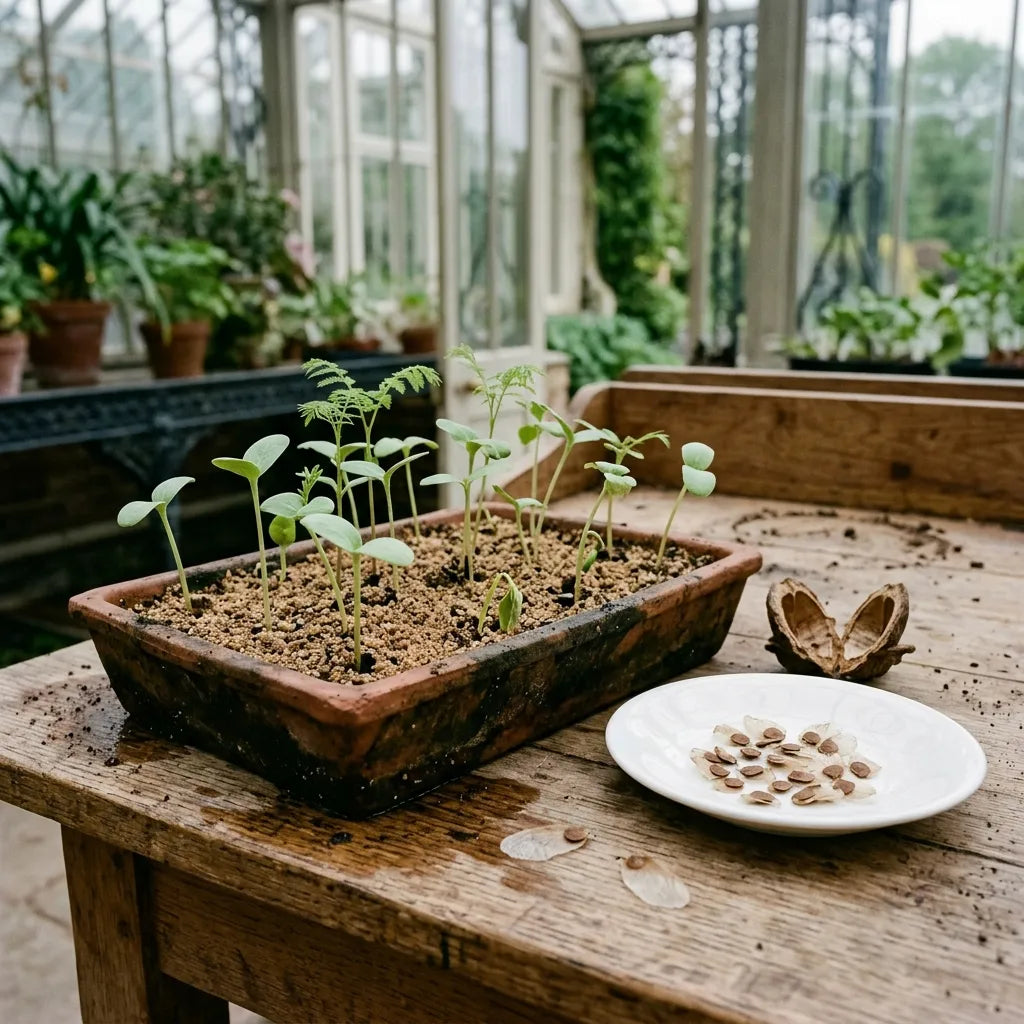
Method: no cold stratification—this subtropical species requires warmth. Soak the winged seeds for 24 hours in lukewarm water, then sow them on the surface or barely covered, in a substrate kept moist at 22–25 °C. Germination is generally quick and reliable. See how to sow your seeds.
Planting advice:
- In a deep pot to be brought indoors at the first chill, in a bright room above 10 °C. Plant outdoors only in a sheltered Mediterranean climate.
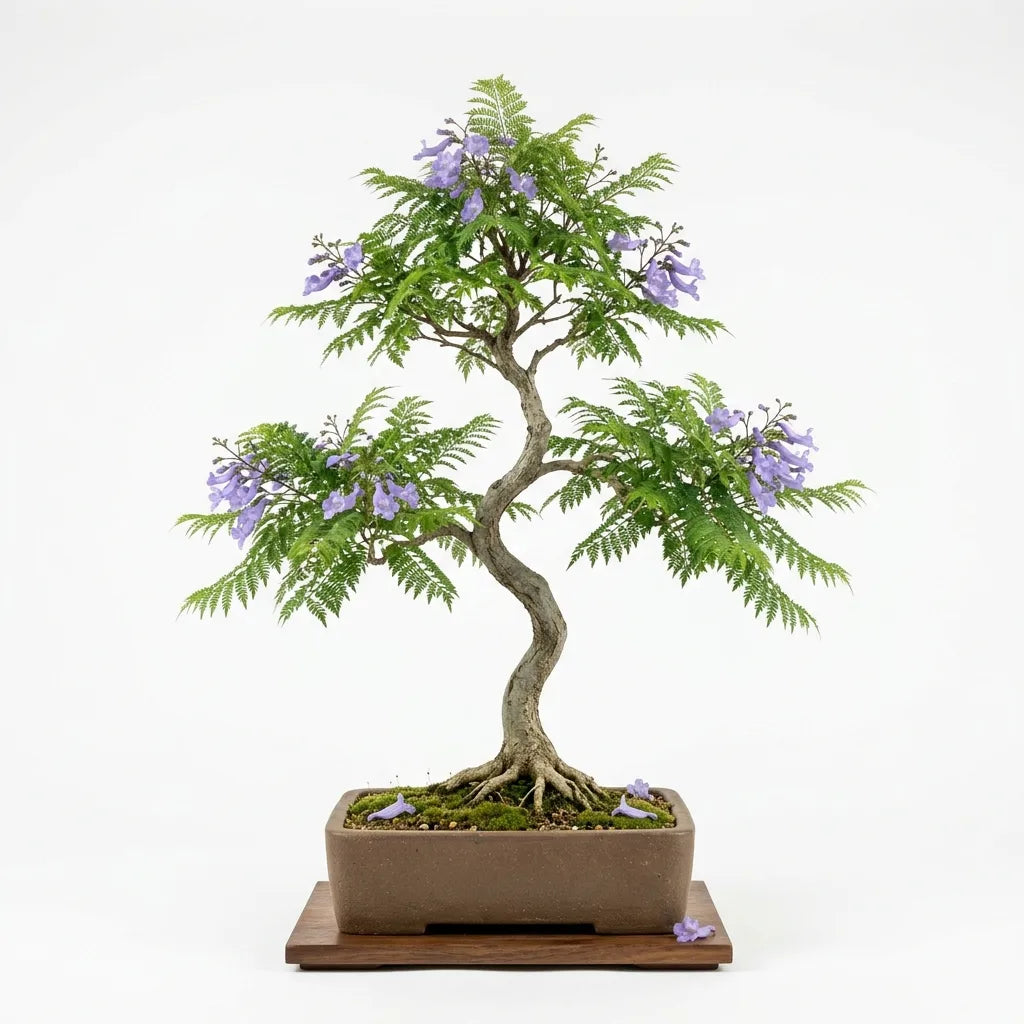
- Its fine foliage and quickly thickening trunk make it an excellent bonsai subject—see our guide creating a bonsai from a seed.
Care advice:
- Water regularly during the growing season, without excess, and reduce watering significantly in winter during dormancy.
Benefits for biodiversity:
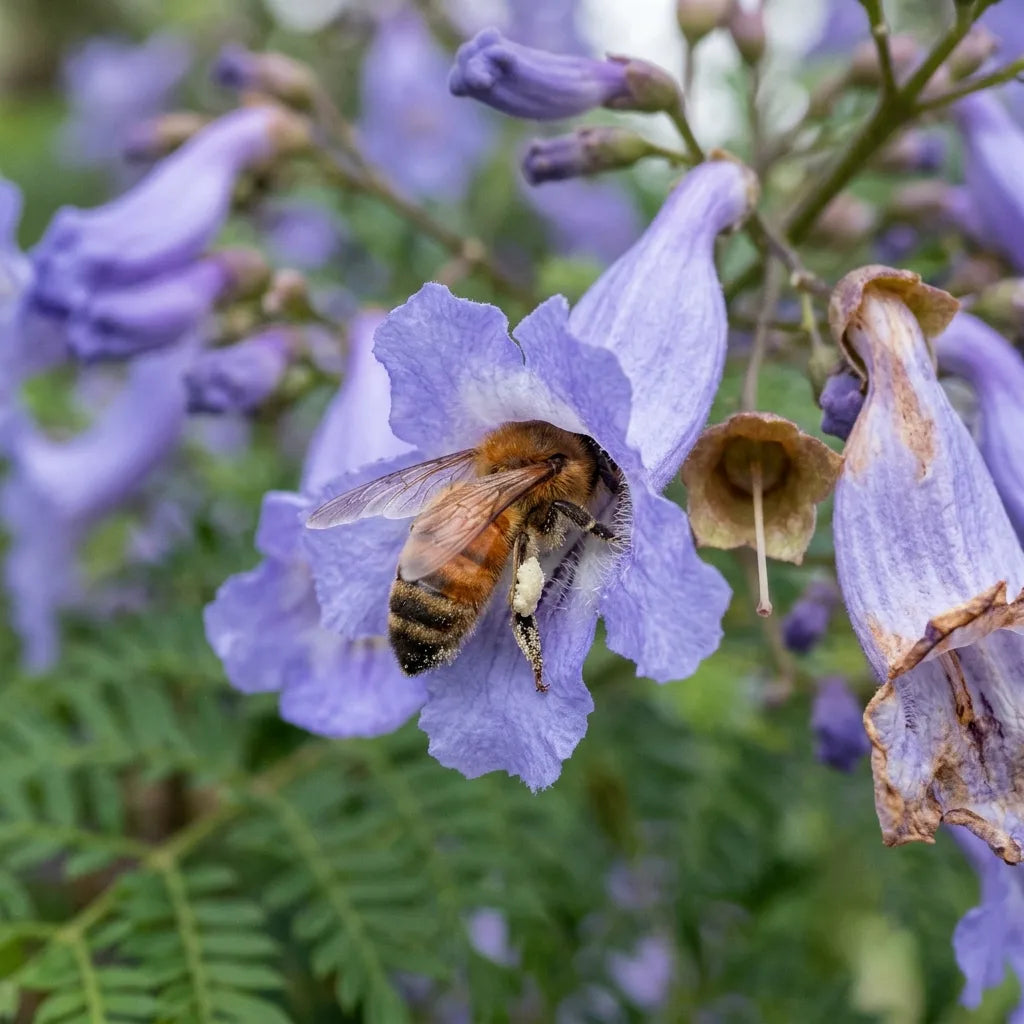
- In its native range, its nectar-rich tubular flowers are pollinated by bees and hummingbirds.
- Its light foliage allows sunlight through and makes it possible to grow plants at its base, unlike trees with dense canopies.
Uses:
- Ornamental tree for large gardens and avenues in warm climates; grown in pots or as a bonsai in our latitudes. Its dried flowers are suitable for floral arrangements.
Symbolism:
In South America and southern Africa, jacaranda flowering heralds the end of the academic year: students say that a flower falling on one’s head brings good luck in exams. It symbolizes renewal and wisdom.
Harvesting your own seeds:
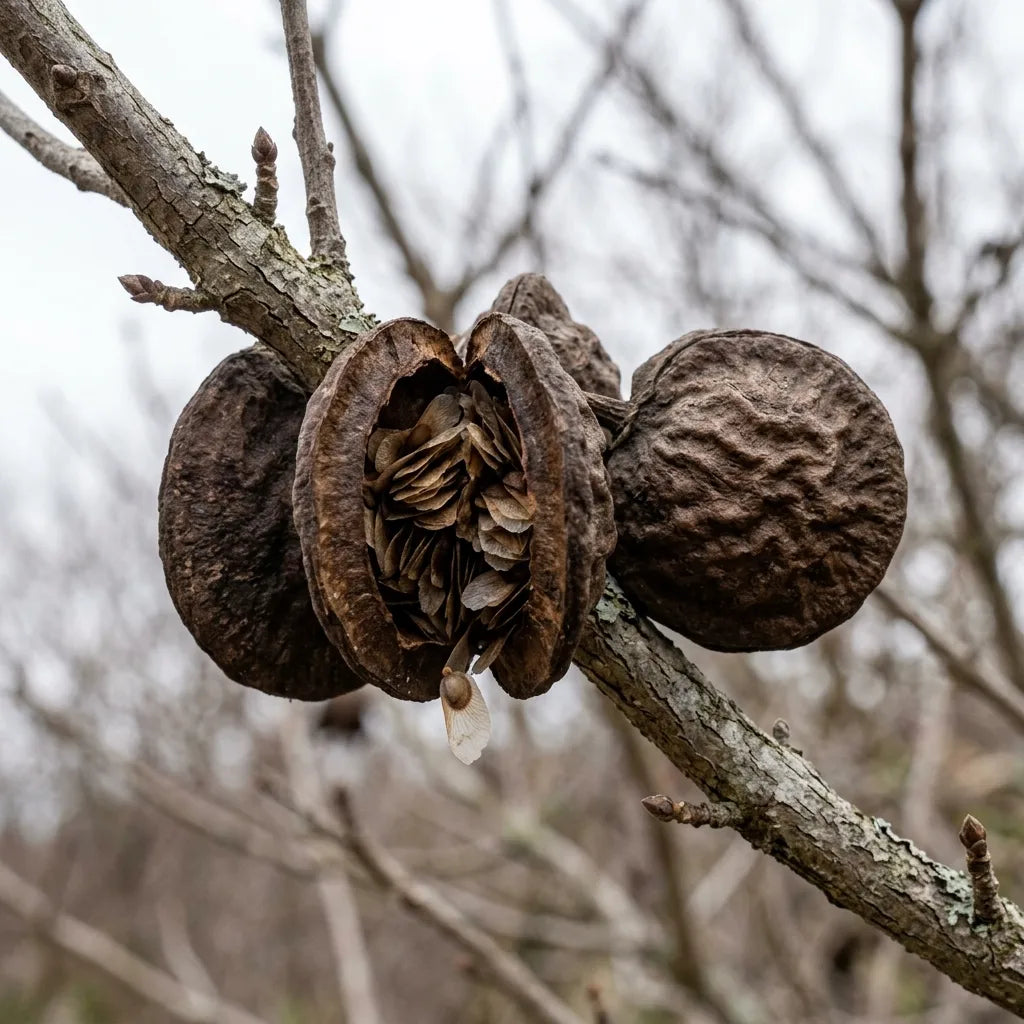
Its fruits are flat, round, woody capsules that are highly decorative and split into two valves when mature to release winged, papery seeds. Harvest the dry capsules from the tree. See how to store your seeds.
Commitment to Quality: at SemiSauvage - Permaculture, we grow and select our seeds with respect for all living things as our guiding principle. Based near the Volcanoes of Auvergne, we choose open-pollinated, non-hybrid varieties, tested for their germination rate, carefully sorted and packaged, with no chemical treatment. Our conviction: to restore gardeners’ ability to resow, year after year, seeds that truly belong to them.
Sales reserved for home gardeners seeking quality and authenticity.