

A handful of healthy soil contains more living organisms than there are humans on the planet. It is this population, invisible to the naked eye, that determines soil fertility—not the fertilizers added to it.
Understanding who lives down there, what each organism does, and what it needs completely changes the way we garden: we stop feeding plants and start feeding the soil, and the soil takes care of the rest. This guide describes the players, their interactions, and the practices that support or destroy them.
Bacteria: the foundation of the chain
They are the most numerous organisms in the soil. They hardly move and work where they are, decomposing the softest and easiest materials: sugars, proteins, and young plant residues.
What they actually do
- They mineralize. A plant cannot absorb a dead leaf: it absorbs ions. Bacteria transform organic matter into assimilable elements—nitrates, phosphates, and potassium. Without them, soil rich in organic matter remains sterile for plants.
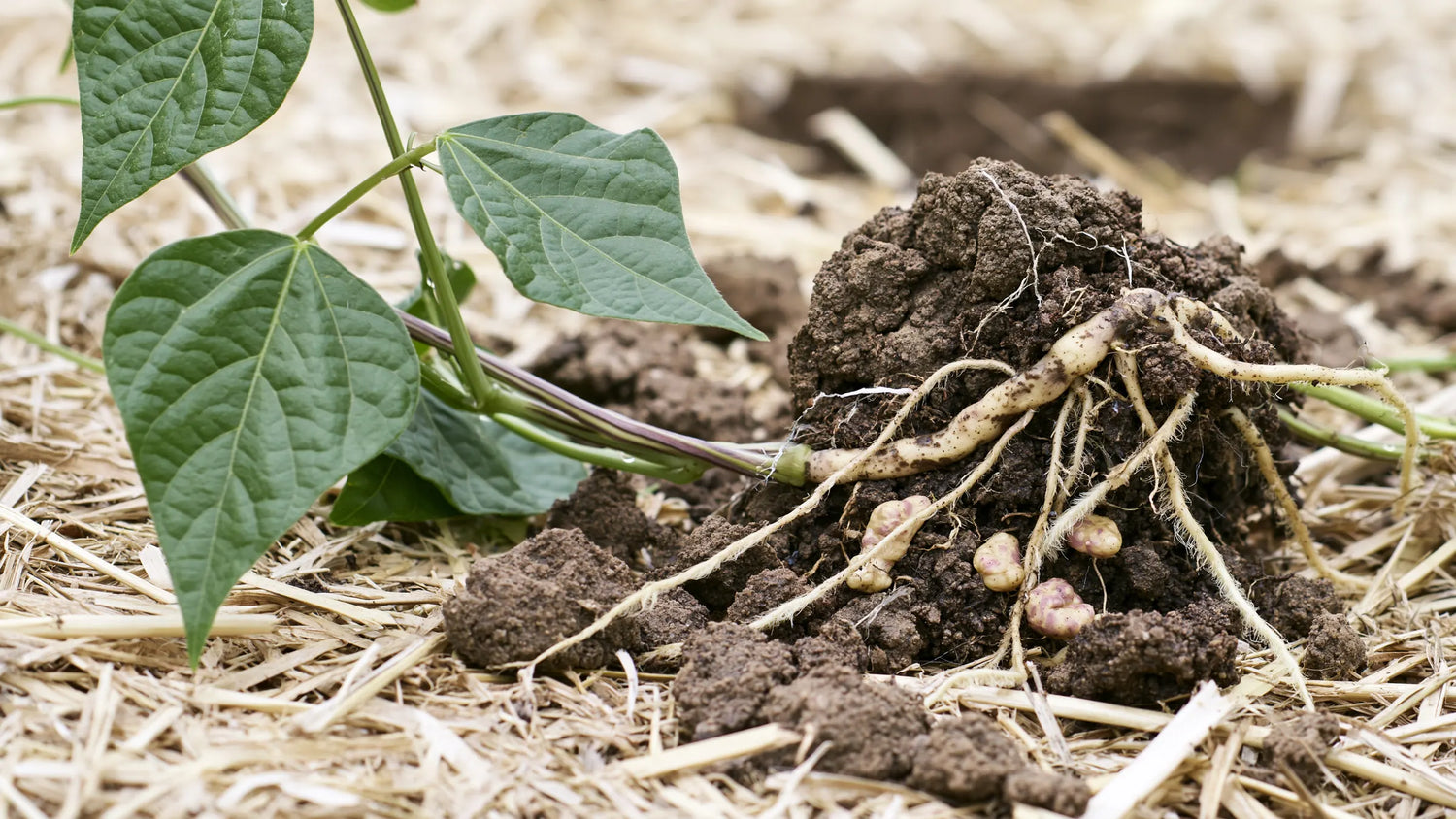
- Some fix nitrogen from the air. Rhizobium, in symbiosis with legumes, form root nodules visible to the naked eye on bean or clover roots. Other genera fix free nitrogen in the soil, in smaller quantities.
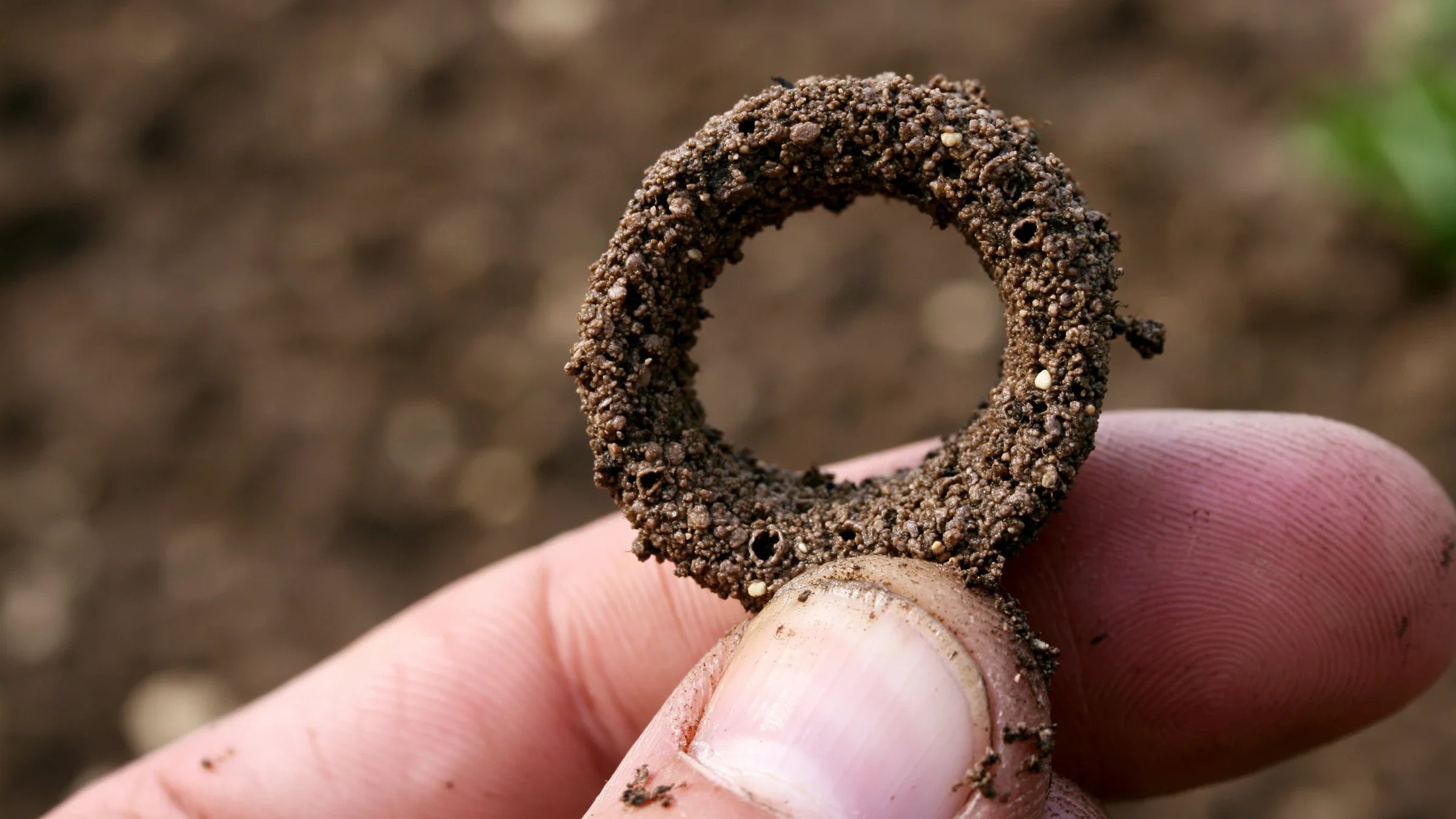
- They bind the soil together. Their sticky secretions aggregate mineral particles into clumps—this is one of the mechanisms that creates soil structure.
Bacteria dominate in soils rich in fresh, nitrogenous matter: vegetable gardens, grasslands, and young compost. They work quickly, and their activity rapidly releases nutrients—but these nutrients are also quickly leached away if the soil is bare.
Fungi: the network and patience
Soil fungi occur as filaments—the mycelium—capable of traversing the soil over considerable distances. Unlike bacteria, they go looking for resources.
Decomposers
They alone can break down cellulose and lignin, the tough molecules in wood, stems, and leathery leaves. Without fungi, a branch would take centuries to disappear. That is why forest soils, rich in wood, are dominated by fungi, whereas grasslands are dominated by bacteria.
Mycorrhizal fungi
This is the most important fact in this guide. A large majority of terrestrial plants live in symbiosis with mycorrhizal fungi that associate with their roots.
The arrangement is simple: the plant provides the sugars produced through photosynthesis—a significant portion of what it produces—and the fungus provides water and minerals, especially phosphorus, which it seeks far beyond the root zone. The mycelium greatly expands a plant’s absorption surface.
This network often connects several plants, enabling resource transfers and chemical signals from one plant to another. It takes years to build and only a few minutes with a rototiller to destroy—the filaments are severed and the network has to start again from scratch.
Practical consequence: abundant phosphorus fertilization discourages mycorrhization. If the plant finds phosphorus easily, it stops investing in the symbiosis. Soil that is modestly supplied and biologically active often feeds plants better than over-fertilized soil.
The fauna: fragmenting, mixing, digging
Between microorganisms and plants lies an abundant fauna whose role is as much mechanical as biological.
- Earthworms—the soil engineers. They ingest soil and organic matter, and excrete casts that are significantly richer in assimilable nutrients than the surrounding soil. Their vertical tunnels, sometimes more than a meter deep, drain water and aerate the soil. The mucus lining them binds the aggregates durably.
- Springtails and mites—microscopic and countless, they graze on fungi and bacteria. By consuming them, they release the nitrogen that the latter had immobilized: this is an essential link in the recycling process.
- Woodlice, millipedes, and larvae—the shredders. They reduce debris to fragments, multiplying the surface area available to microorganisms.
- Ground beetles, rove beetles, and spiders—the predators. They regulate populations, including those of the pests that concern you: a ground beetle eats slugs and their eggs.
Each one eats the one before it, and each step releases nutrients. It is this chain, rather than an external input, that truly feeds crops in living soil.
The rhizosphere: the plant is not passive
This is the point most presentations omit, and it overturns the image of a plant that passively “pumps.”
Roots continuously release root exudates—sugars, organic acids, amino acids—which represent a significant share of the carbon fixed through photosynthesis. This is not a loss: it is an investment. These exudates nourish a dense microbial population in the few millimeters around the roots, the rhizosphere.
Better still: the plant modulates these exudates according to its needs. When nitrogen is lacking, it favors the microorganisms that release it. When attacked by a pathogen, it can recruit protective bacteria. It literally cultivates its own microbiome.
Hence a direct consequence: bare soil, without living roots, is soil that is fasting. This is the biological argument behind the rule of green manures and permanent cover.
What destroys living soil
Four practices, in order of severity.
1. Deep tillage
Turning the soil with a spade or using a rototiller causes three kinds of damage simultaneously: aerobic surface organisms are buried and die, deep anaerobic organisms are brought up and die in the air, and the mycorrhizal network is severed. A sudden influx of oxygen also accelerates mineralization: the soil releases its reserves all at once, creating the illusion of a boost, followed the next year by real depletion.
2. Bare soil
Without cover, the surface is subjected to the impact of raindrops — which compact it — and temperature fluctuations. Without living roots, there are no more exudates: the microbial population collapses for lack of food.
3. Compaction
Walking on a cultivated area crushes its porosity. Aerobic microorganisms live in the spaces between aggregates. Compacted soil becomes anaerobic, and anaerobic conditions produce compounds that are toxic to roots. Hence the use of narrow beds and dedicated paths.
4. Synthetic inputs
Fungicides do not distinguish between a pathogen and a mycorrhizal fungus. Soluble nitrogen fertilizers bypass biological mineralization: the plant takes nutrients directly, stops investing in its symbioses, and excess nitrogen acidifies and leaches the soil. On this point, fungicide coating of seeds poses exactly the same problem at the most sensitive stage — see Organic seeds vs conventional seeds.
Five ways to nourish soil life
- Never turn the soil. Aerate it with a broadfork, which loosens it without inverting the layers. Scratch the surface lightly for sowing.
- Never leave the soil bare. Organic mulch, plant cover, or a crop in place — permanently, including in winter.
- Apply organic matter on the surface. That is where the organisms that use it live. Buried deeply, it ferments. See Composting.
- Diversify roots. Each species supports a different microbiome. Crop rotations, intercropping, and green manure mixes enrich soil life just as much as amendments.
- Be patient. Soil takes three to five years to recover. Worms return as early as the second year; the mycorrhizal network takes longer.
How to tell whether your soil is alive
Three free observations to make in spring or autumn when the soil is moist:
- The spade test — take a 20 cm cube of soil and count the earthworms. Ten or more is a very good sign; fewer than three indicates depleted or overworked soil.
- The structure — the soil should break apart into crumbs a few millimeters across, neither compact clods nor dust.
- The smell — a characteristic woodland-floor smell produced by certain soil bacteria. A sour or nonexistent smell indicates a problem.
A fourth, longer test: bury a piece of untreated cotton fabric 15 cm deep and dig it up two months later. The more degraded it is, the more biologically active your soil is.
Frequently asked questions
Should you add purchased microorganisms?
Rarely useful. Mycorrhizal inoculants are beneficial in highly degraded soils or new substrates, but in an ordinary garden the populations are already present: they are waiting for favorable conditions, not reinforcement. A handful of mature compost or forest soil provides a highly diverse inoculum for free.
Bacteria or fungi: which should you encourage?
It depends on what you grow. Annual vegetables, especially leafy ones, prefer bacteria-dominated soil — fresh organic matter, grass clippings, and young compost. Perennials, shrubs, and trees prefer fungi-dominated soil — chipped wood, fallen leaves, and woody mulch. Adapt the mulch to the crop.
Does living soil work in pots?
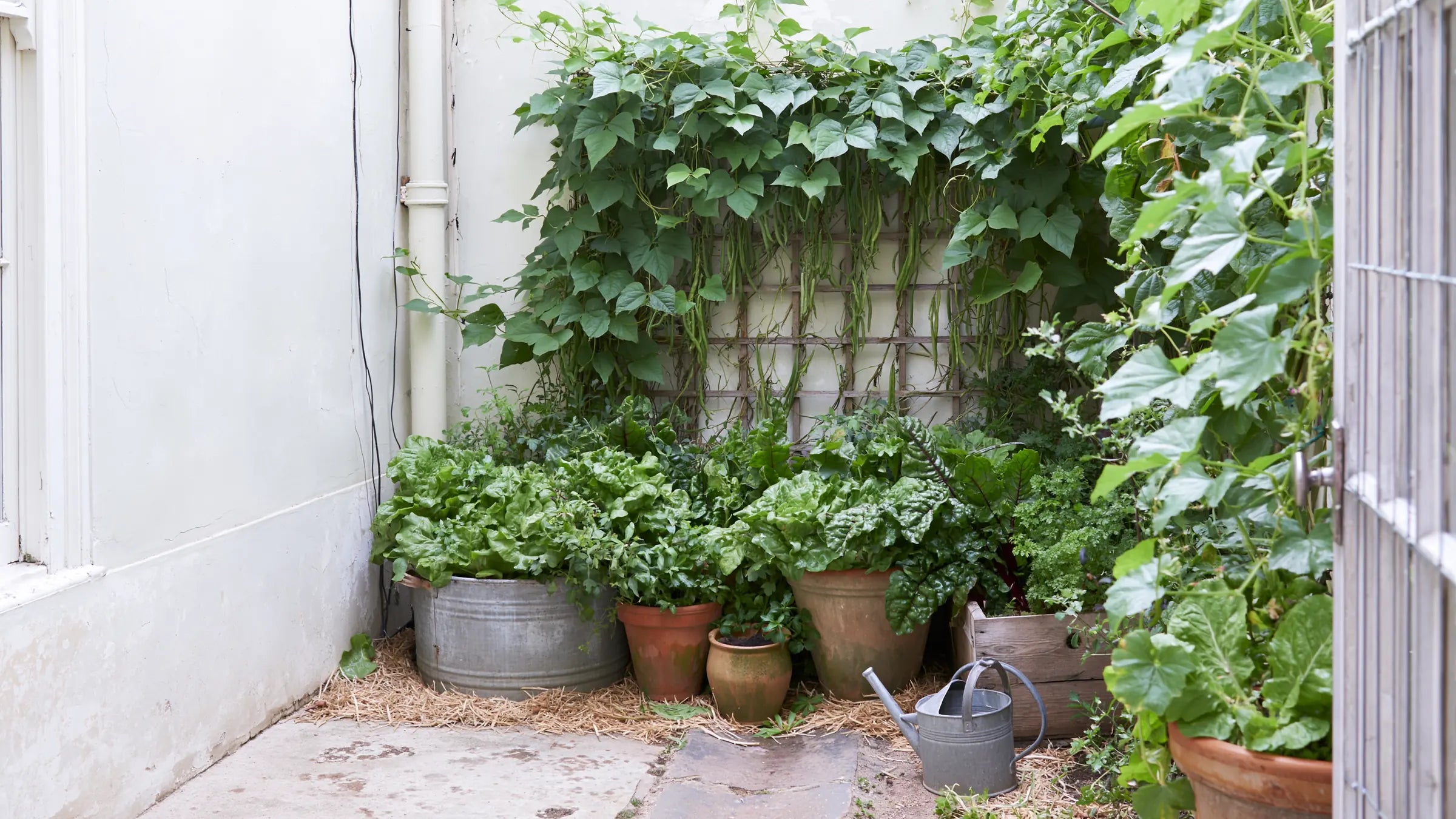
Partially. Limited volume and the lack of connection to the soil reduce diversity. Mature compost in the substrate, surface mulch, and a worm composter are useful ways to come close. See Balcony vegetable garden.
How long does it take to restore damaged soil?
The first signs — more worms, a crumbly structure, and a woodland-floor smell — appear as early as the second year of permanent cover without tilling. The organic matter content itself increases slowly: it is a long-term process, but it does not disappear.
Are “natural” weed killers harmless?
No. White vinegar and salt, often presented as gentle solutions, acidify or salinize the soil and kill the microfauna in the treated area. Mulching and covering remain the only methods truly compatible with living soil.
Key takeaways
Bacteria, fungi, and fauna form a chain in which each link makes available what the previous one has transformed. The plant is not a spectator: it nourishes this system through its roots and draws most of what it absorbs from it. Your role then comes down to three things: do not turn the soil, do not leave it bare, and do not compact it.
To go further
- The different types of soil: how to recognize and improve them
- Composting: nourishing the soil by imitating nature
- Sowing green manures: benefits, types, and timing
- How do you create a permaculture vegetable garden?
To nourish your soil: our green manure seeds, and our mycelia for those who want to explore the fungal side of living systems.

留下评论
此站点受 hCaptcha 保护,并且 hCaptcha 隐私政策和服务条款适用。