Graines et semences

Organic seeds vs conventional seeds: what do they really contain?

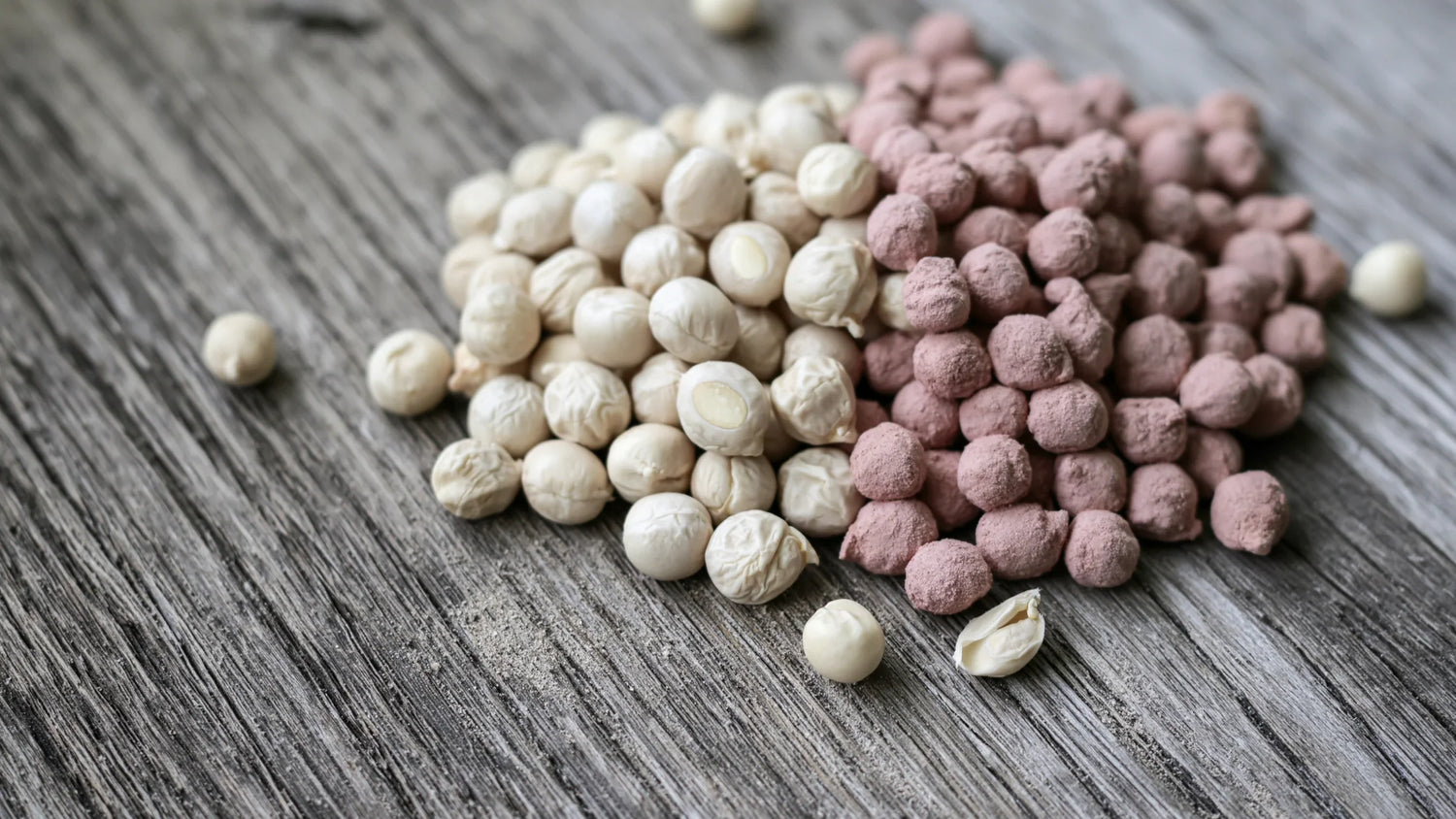
Deux tas de pois secs côte à côte sur une planche de bois gris : à gauche des graines nues de couleur naturelle, à droite les mêmes graines enrobées d'un rose crayeux de traitement

Two packets, with the same appearance, the same species, and sometimes even the same variety — yet two different histories. The “organic” label on a seed packet does not describe the seed itself, but the conditions under which the parent plant was grown and the seed treated after harvest.

This is an important distinction and one that is often misunderstood — partly because it overlaps with another question, that of reproducibility, which has nothing to do with it. This guide sorts it out, explains how to read a label, and clarifies when the choice really matters.

What a conventional seed actually contains

A conventional seed is not “chemical” in itself. Nevertheless, three things distinguish it.

The production method used for the parent plant

The seed was harvested from plants grown using inputs permitted in conventional agriculture: synthetic fertilizers, herbicides, fungicides, and insecticides. This difference mainly concerns the impact of production — on the soil, water, and the people producing them — rather than the contents of the seed you will buy.

That does not make it insignificant: seed production takes place over large areas, with crops grown to full maturity and therefore exposed for long periods.

Seed treatments

This is the most tangible point. Many conventional seeds receive, after harvest, a protective treatment intended to protect them during storage and germination — mainly fungicides, and sometimes insecticides. These treatments are regulated and must be indicated: this explains the pink, red, or blue seeds still found in some packets. The coloring is specifically intended to show that they have been treated and must not be eaten or given to animals.

Be careful not to confuse this with inert coating: some very small seeds — carrot, lettuce, herbs — are coated with clay or peat simply to make them easier to handle and sow evenly. This coating has nothing to do with plant protection, and it is available in an organic version.

Light beige clay balls held in a palm, one of them split open to reveal the dark, ridged seed inside, next to a few bare carrot seeds
The inert coating is no more than three to four millimetres thick. When cracked, it reveals the intact seed — and once in the soil, the coating breaks down with the first few waterings.
The sprouting trap

A practical consequence that is often overlooked: a treated seed cannot be used for sprouting or microgreens, since the seedling is consumed directly. For this purpose, the organic label is not a convenience but a necessity.

Selection criteria

Conventional seeds intended for professional production have been selected under conditions unlike those in a garden: fertilised soil, controlled irrigation, and plant protection. A variety selected this way has never had to develop root autonomy or its own tolerance — it may disappoint when grown without inputs, not because of poor quality but because it is unsuited to the context.

What the organic label really guarantees

The organic certification of seeds, governed by European regulations, covers three specific points:

  • The mother plant was grown according to organic farming standards — without synthetic fertilisers or synthetic pesticides, on a certified and inspected plot.
  • No synthetic treatment after harvest. No fungicidal coating, no indicator dye. The seed is harvested, cleaned, sorted, dried, and packaged.
  • No GMOs, which are excluded from the entire European organic farming framework.

What the label does not guarantee, and this is the most common source of confusion:

  • It does not guarantee reproducibility. An F1 hybrid can absolutely be certified organic if it was produced organically. That does not mean you will be able to resow it faithfully.
  • It does not guarantee that it is an heirloom variety, a local variety, or one adapted to your region.
  • It says nothing about the variety's genetic diversity or its origin.
  • It says nothing about the production chain: organic seed may have been multiplied thousands of kilometres away.
Two checkboxes, not one

Organic and reproducible are two independent criteria. You can have one without the other, and it is the combination of both that defines truly self-sufficient seed. See What is the difference between F1, hybrid, and reproducible seeds?.

The four possible combinations

Reproducible F1 hybrid
Organic The ideal: self-sufficiency + no treatments Untreated, but annual repurchase required
Conventional Can be resown, but comes from production using inputs and is sometimes treated The most common case in garden centers

How to read a label

Four things to look for on a packet, in order of importance:

  1. The treatment statement. This is mandatory. “Untreated seed,” or, conversely, the name of the active substance used. An unusually colored seed is an immediate visual signal.
  2. The F1 or hybrid designation. If it is absent and the price is low for a large number of seeds, it is very likely a stable variety.
  3. The exact variety name. A precise, often geographical name (“Merveille des Quatre Saisons,” “Noire de Crimée”) is characteristic of heirloom varieties. A purely commercial name points more toward a recent selection.
  4. The harvest year or the use-by date. This determines the germination rate—see How to store your seeds.

The European organic logo (the star-studded leaf) and the certification body’s number provide additional information when the seed is certified.

What this changes in the garden

For the soil

A fungicide-coated seed introduces, with each sowing, a small amount of active substance directly into contact with the root zone—precisely where mycorrhizal symbioses become established. In a garden cultivated in living soil, this contradicts all the rest of the work: we protect microbial life all year to introduce an antifungal precisely when the seedling is trying to connect to the network.

For adaptation

Seed produced without chemical support comes from plants that had to fend for themselves. This is an implicit but real selection criterion, particularly relevant if you grow without inputs—and cumulative if the variety is reproducible.

For direct food use

Germination jar overturned on a gray wooden board, with fenugreek sprouts spilling out, each white rootlet still carrying the seed at its tip
Each little root still has its seed attached: that is what you are eating. Allow three to five days for fenugreek and eight to ten for alfalfa.

Sprouted seeds, microgreens, and seeds eaten as they are (flax, sunflower, fenugreek, squash): organic is not debatable here, since the seed is the food. This is the only case where the question has a clear-cut answer.

For flavor

The method used to produce the seed does not directly affect the flavor of the vegetables you harvest — it is determined by the variety, soil, and cultivation practices. Beware of shortcuts on this point: they weaken an otherwise solid argument.

The price question

Organic seeds are often more expensive to buy: lower production yields, more demanding sorting, smaller volumes, and certification costs. The difference is real, but it should be considered in relation to how the seeds are used.

  • A packet generally covers several seasons — tomato or squash seeds remain viable for five to seven years when properly stored.
  • If the variety can be reproduced, the purchase is occasional and non-recurring: this is the only case where comparing prices really makes sense, and the comparison clearly favors reproducible varieties.
  • Per kilogram of vegetables produced, seed costs remain marginal in a family vegetable garden — far behind potting soil, water, or the time spent.

The real way to save money is therefore not the price of the packet, but the ability to harvest your own seeds.

Frequently asked questions

How can you tell whether a seed has been treated?

This information must appear on the packaging, and treated seeds are generally artificially colored so they can be identified at a glance. A naturally colored seed and a packet labeled “untreated seed” are a good indication — but only the label is authoritative.

Can an uncertified seed be untreated?

Yes, absolutely, and it’s common. Many small producers and seed associations work without treatment but without certification, whose cost is disproportionate to their scale. Certification is a formal guarantee, not the only proof of quality — ask them; the answer is generally precise.

Does organic certification guarantee the complete absence of residues?

It guarantees the absence of deliberate treatment. Environmental contamination remains possible—for example, spray drift from a neighboring plot. This is a known limitation, managed through isolation distances and inspections, but it exists.

Should you prefer organic or reproducible seeds if you have to choose?

It depends on the objective. For self-sufficiency and adaptation to your garden, reproducibility comes first. For sprouts and microgreens, organic takes priority without question. For a living-soil vegetable garden, the two complement each other—and that is the choice we have made for our entire catalog.

Do organic seeds germinate less well?

No. Germination rate depends on maturity at harvest, drying, and storage conditions—not on the production method. A well-managed organic seed germinates just as well as any other. However, untreated seed is more susceptible to damping-off if you sow in cold, waterlogged substrate: the solution is well-draining compost and a suitable temperature, not a fungicide.

What about farm-saved or peasant seeds?

These are seeds reproduced by the growers themselves, often locally selected open-pollinated varieties. They are not necessarily certified, but they generally meet the two criteria that matter: untreated and resowable.

Key points

The essentials in three lines

The organic label covers production and the absence of treatment, not reproducibility. These are two independent criteria, and it is their combination that matters: an untreated and resowable seed is the only case in which you are no longer dependent on anyone to sow the following year.

To go further

All our seeds are untreated and reproducible: discover our heirloom varieties and our vegetable seeds.

阅读更多

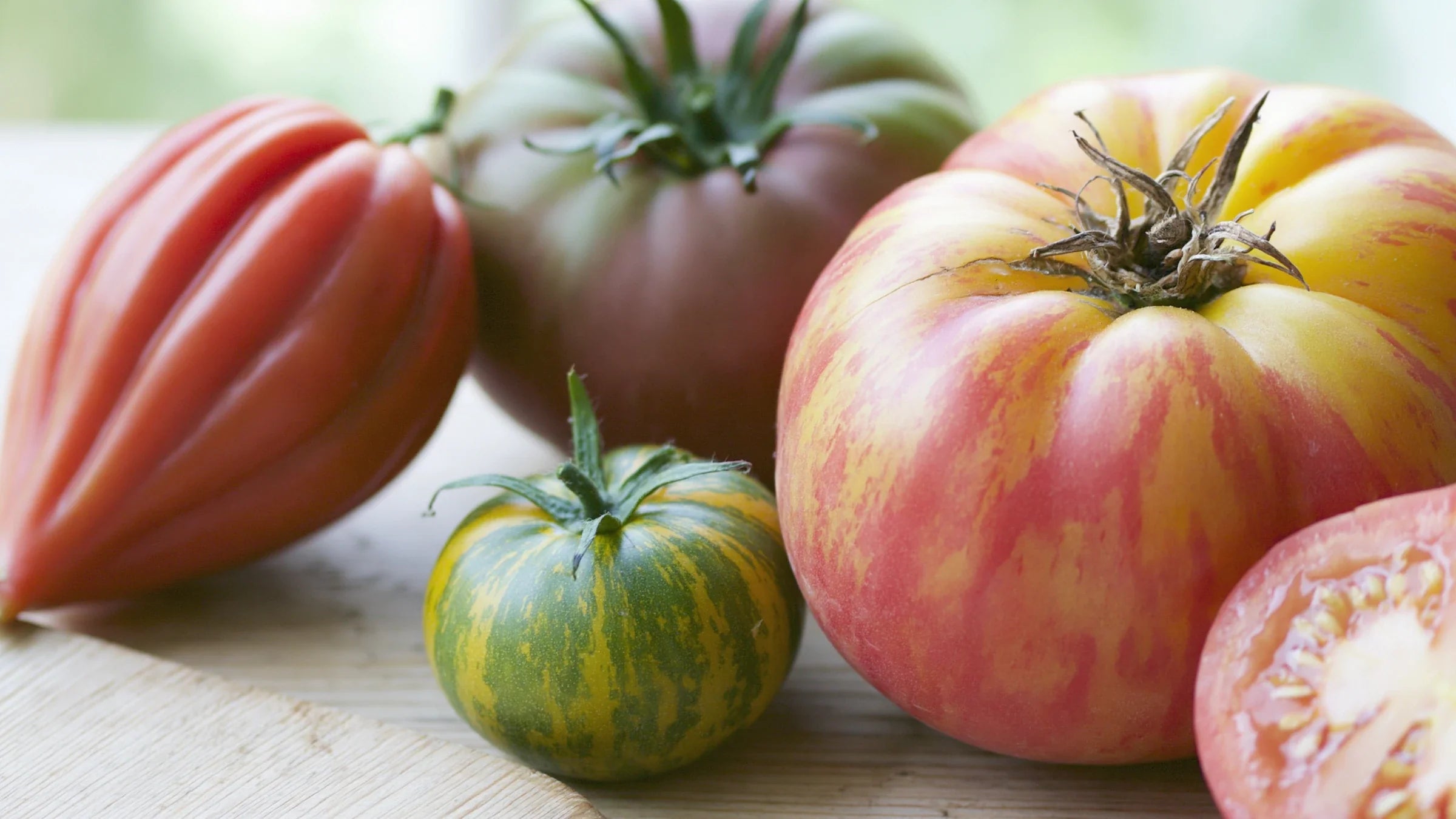
Quatre variétés de tomates anciennes aux formes et aux couleurs dissemblables, et un fruit coupé montrant ses loges pleines de graines plates.
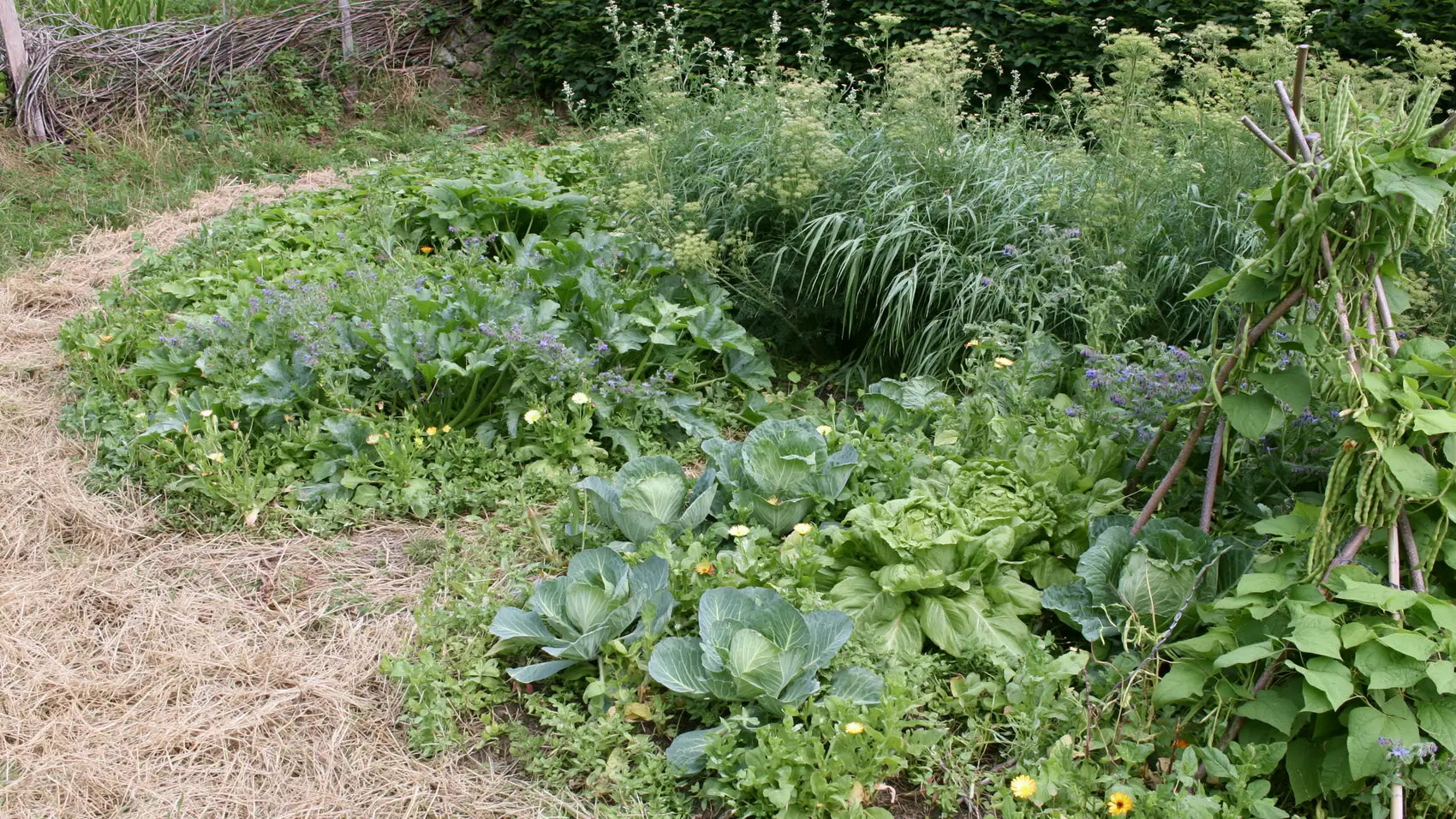
Potager semi-sauvage en été, planches aux contours irréguliers mêlant choux, laitues, soucis et bourrache, allée de paille au premier plan et coin laissé sauvage au fond

留下评论

此站点受 hCaptcha 保护,并且 hCaptcha 隐私政策服务条款适用。