

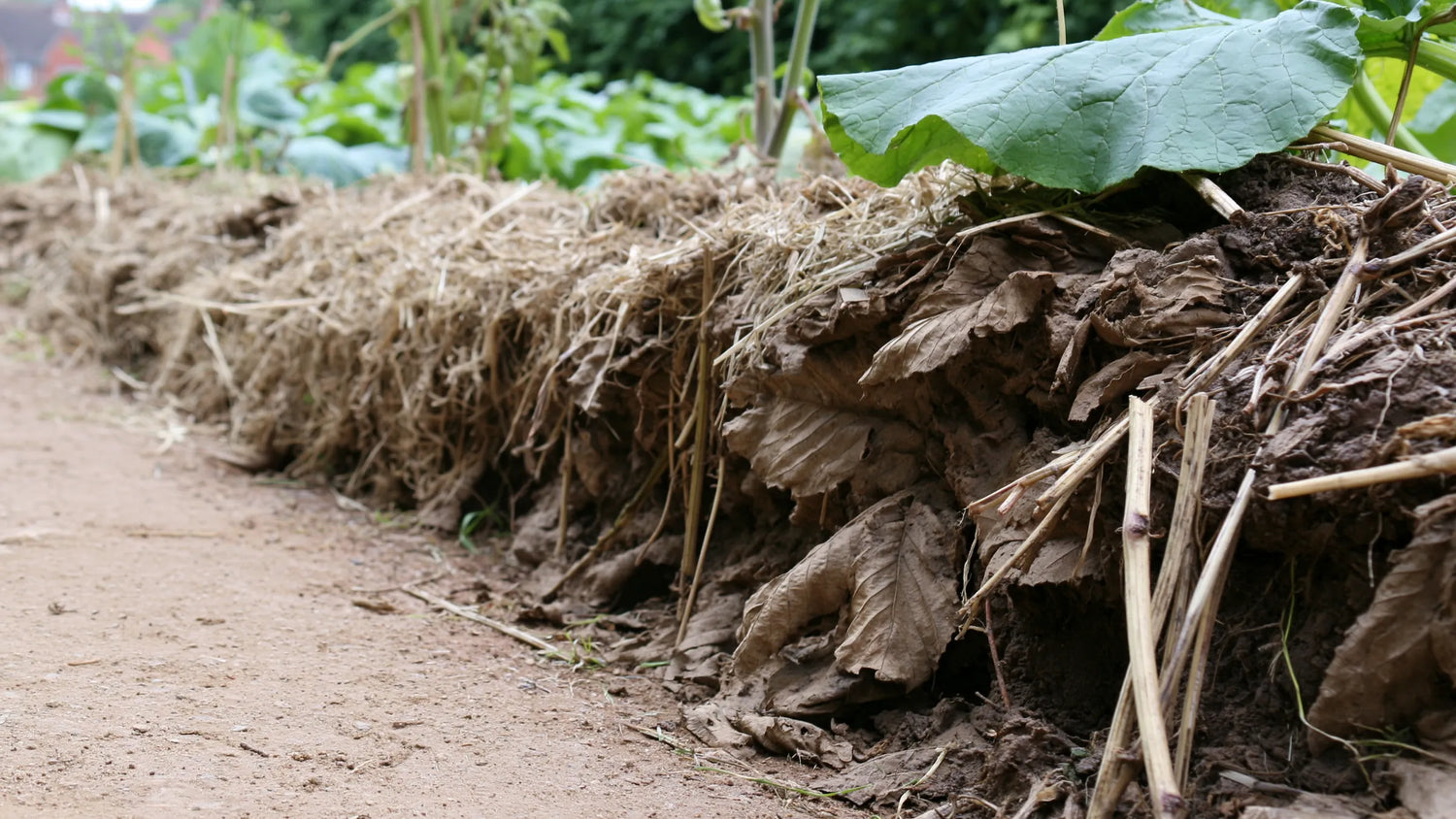
“Without irrigation” does not mean “without water”: it means that water comes from rain and stays in the soil, instead of evaporating or running off. A vegetable garden designed around this principle gets through a dry summer where a conventional garden requires daily watering.
The principle rests on a simple fact: bare soil loses most of its surface moisture through direct evaporation, without any plant benefiting from it. Covering the soil recovers this loss. Everything else — structure, variety selection, watering method — follows from this.
Start with the soil: it is the reservoir
Before discussing mulch, you need to know where water is stored. It is stored in two places: in the organic matter, and in the soil structure — the spaces between aggregates, where water is held by capillary action without being trapped.
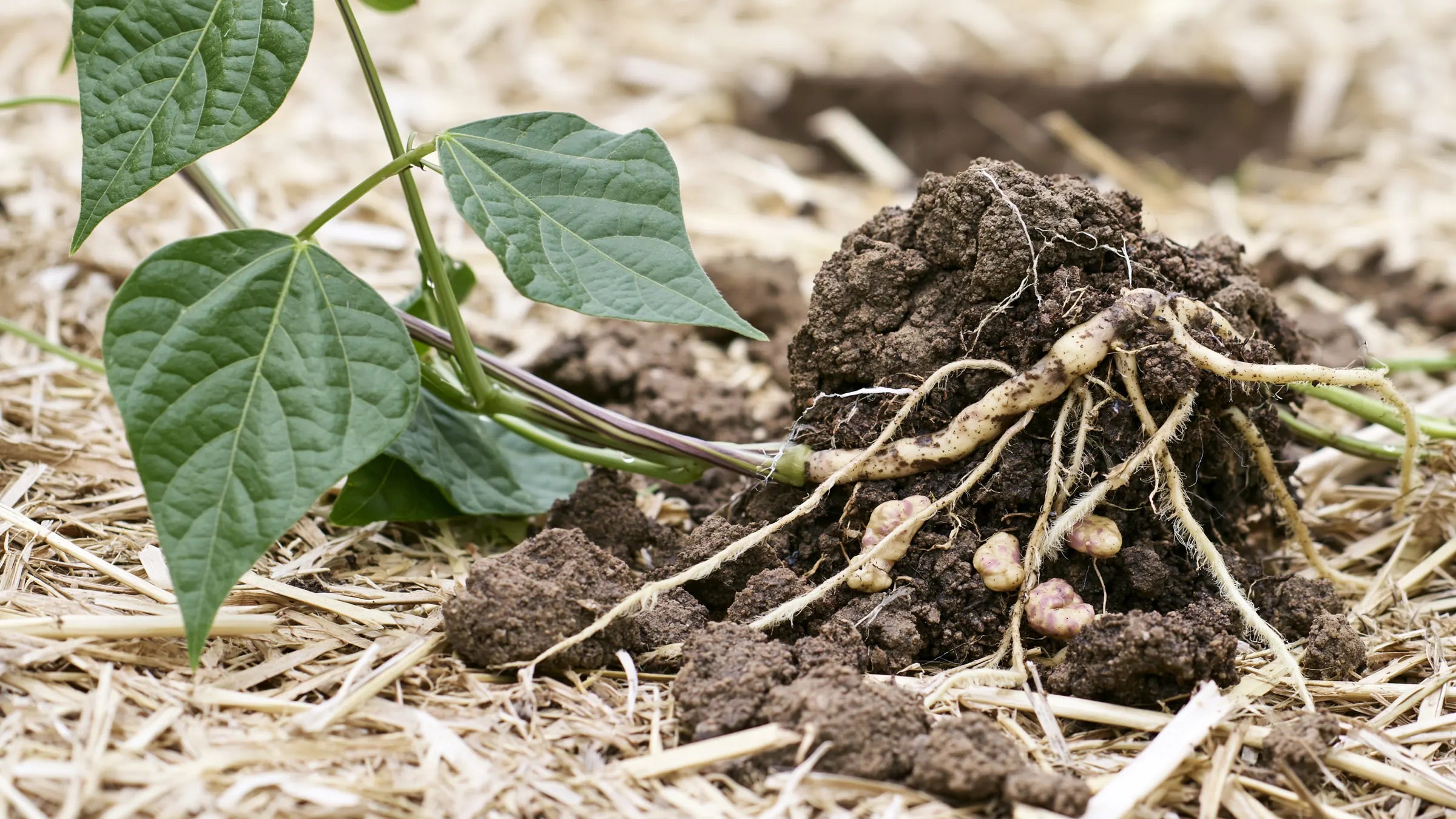
Humus acts like a sponge, capable of absorbing several times its weight in water. Organic-rich soil therefore retains considerably more than depleted soil with the same texture. That is why improving fertility and improving water retention are exactly the same task: every addition of compost, every green manure crop incorporated at the surface increases the available water reserve.
What destroys this reserve
- Compaction. Compacted soil has no porosity left: water runs off the surface instead of penetrating. Hence beds no wider than 1.20 m and dedicated paths — you never walk on a cultivated area.
- Ploughing. It destroys aggregates and accelerates the mineralization of organic matter, thereby reducing the reserve.
- Surface crusting. In silty soil, the impact of raindrops rearranges fine particles into an impermeable crust: water can no longer enter at all. See The different types of soil.
Three reasons why permanent cover is not just one technique among many, but the foundation for everything else.
Mulching: material and thickness
Thickness matters just as much as the material. Below 5 cm, the effect is marginal; the optimum is between 7 and 10 cm for straw, and more for less dense materials such as dead leaves, which compress by half within a few weeks.
| Material | Duration | Note |
|---|---|---|
| Cereal straw | One season | The standard for summer crops. Lightweight and easy to move aside for sowing, it breaks down cleanly. |
| Hay | One season | More nutritious because they are harvested before maturity, but they often contain seeds. Reserve them for areas where spontaneous seedlings are not a problem. |
| Dead leaves | 6 to 12 months | Free, abundant, and excellent. Rich in carbon: avoid incorporating them; leave them on the surface. |
| Grass clippings | 2 to 3 months | Always dry for 48 hours beforehand. Fresh and applied in a thick layer, it ferments, heats up, and forms an impermeable, foul-smelling crust. |
| BRF (ramial chipped wood) | 2 to 3 years | Excellent for perennial crops, soft fruit, and pathways. Leave strictly on the surface: incorporated into the soil, it causes nitrogen immobilization. |
| Hemp, flax, miscanthus | One season | Clean, seed-free, and easy to measure out. More expensive, but ideal for pots and small vegetable gardens. |
| Brown cardboard | 6 months | Under another material, to smother an overgrown area. Remove adhesives and staples, and overlap the sheets. |
Three mulching mistakes
- Mulching dry soil. This is the costliest mistake. Mulch preserves existing moisture; it does not create any—and it prevents light rain from reaching the soil. Water thoroughly, then mulch.
- Mulching too early in spring. Covered soil warms up more slowly. Move the mulch aside two weeks before sowing, then put it back after emergence.
- Mulching right up against the stems. Leave a few centimetres around the crown: constant contact with damp material encourages rot and provides shelter for slugs.
Living ground covers
A living mulch does everything straw does, and additionally produces food, flowers for beneficial insects, or nitrogen. It also has the advantage of renewing itself.
- Edible plants — golden purslane, Cuban claytonia, lamb's lettuce, New Zealand spinach. The latter is remarkable in summer: it spreads widely and tolerates heat where lettuces bolt.
- Plants for pollinators and nitrogen fixers — dwarf white clover, phacelia, calendula. White clover tolerates foot traffic, making it an excellent pathway cover. See our green manures.
- Trailing herbs — wild thyme, oregano, savory, along the edge of a bed on well-drained soil.
A common point often overlooked: a living ground cover also uses water. During very dry periods, it competes with the main crop. So install it once the latter is well rooted, never at sowing time—and don't hesitate to mow it if it starts to take over.
The practices that reduce water needs
- Plant densely and in a staggered pattern. The foliage joins together and shades the soil: mulch produced by the crop itself. Density is one of the few free levers.
- Water rarely, but deeply. Light daily watering keeps roots in the top five centimeters, where they are most vulnerable. Thorough watering once or twice a week makes them grow down in search of moisture deep in the soil.
- Water in the evening or early in the morning, at the base and never on the foliage — reduced evaporation losses and fewer foliar diseases.
- Sow and plant early. An autumn planting has the whole winter and spring to establish its root system; a May planting faces summer with shallow roots.
- Ollas and buried bottles — slow release directly into the root zone, with very little waste. Particularly effective for fruiting vegetables, which do not like fluctuations.
- Collect rainwater. A 50 m² roof collects around 30 liters per millimeter of rainfall. A few spring showers fill a 500-liter tank.
- Break the wind. A permeable hedge or reed screen along the edge of the vegetable garden makes a noticeable difference to the water balance.
Choosing the right crops
No design can make lettuce grow without water in the middle of August. Variety selection is therefore an integral part of the method.
Tolerate drought well once established: trailing squash (whose foliage covers the soil), dry beans, chickpeas, dry-farmed tomatoes, beets, Swiss chard, amaranth, Mediterranean herbs — thyme, rosemary, oregano, savory.
Do not tolerate drought: lettuce, celery, cucumber, radish, summer spinach. These are spring and autumn crops; forcing them in summer uses a lot of water for mediocre results.
Our complete selection is in Drought-resistant plants and Which seeds for poor, dry soil?.
A rarely mentioned argument: open-pollinated varieties resown each year in the same place gradually adapt to the site's water regime—the most tolerant individuals produce the seeds for the following season. An F1 hybrid repurchased identically every spring will never develop this adaptation.
Frequently asked questions
Does a vegetable garden without irrigation really mean zero watering?
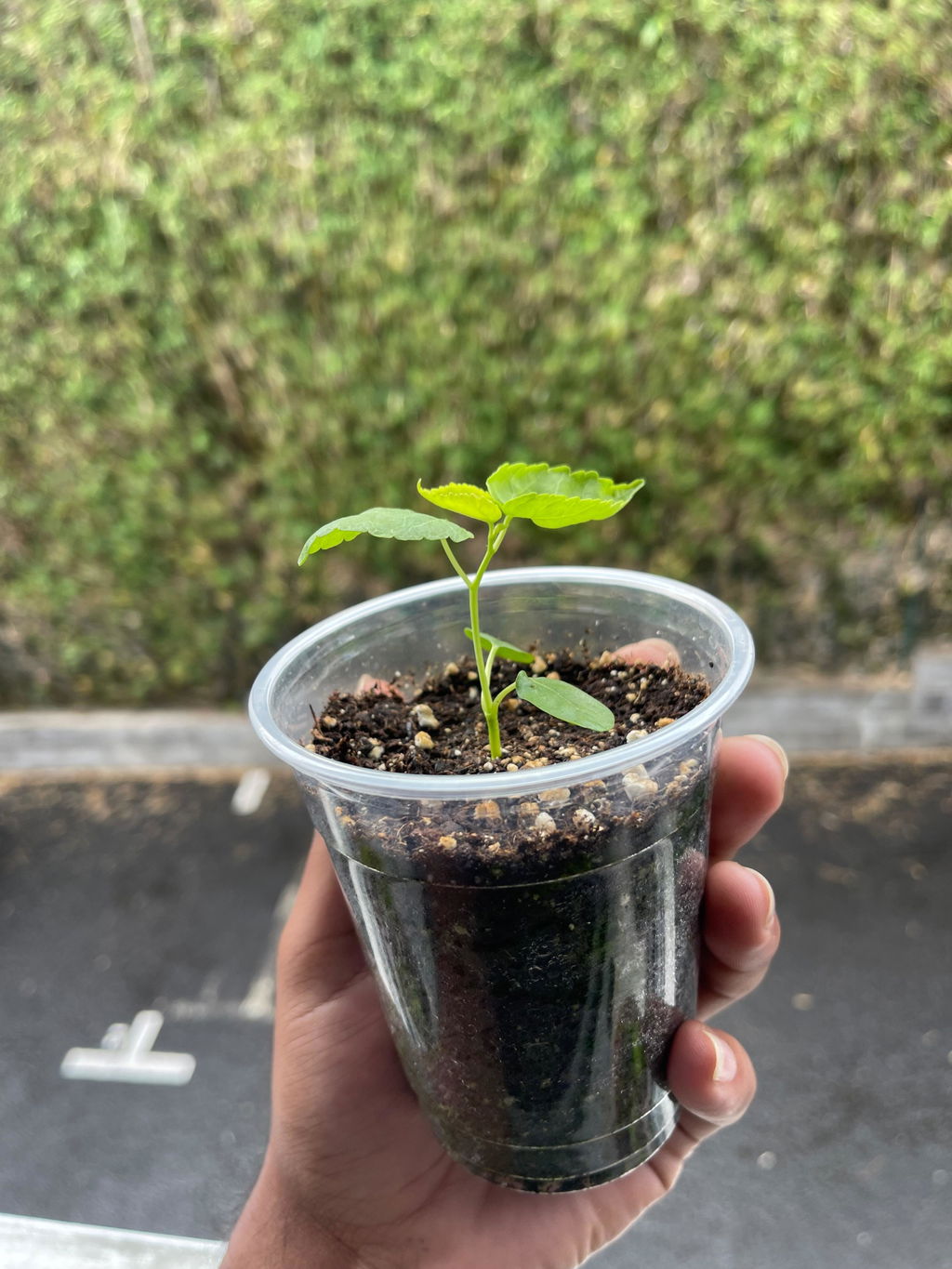
No, and it shouldn't be promised. Seedlings and young plants still need water: their roots are near the surface, where the soil dries out first. The goal is to eliminate maintenance watering once the crops are established, which already accounts for most of the consumption.
Does mulch attract slugs?
It does indeed provide them with a cool, damp shelter. Three countermeasures: keep the mulch about ten centimeters away from young plants, favor dry, coarse materials (straw, BRF) over soft materials in spring, and delay mulching delicate seedlings until they have four or five leaves.
How long before it works?
The effect of mulching is immediate, from the very first season. The effect of the soil—the one that really matters—builds over three to five years of permanent cover and regular organic inputs. It is a slow but cumulative process that is not lost.
Should you hoe?
The old saying “one hoeing is worth two waterings” applied to bare soil: breaking the surface crust interrupted capillary rise. With permanent mulch, hoeing becomes unnecessary—and counterproductive, since it disrupts soil life.
Does it work in pots?
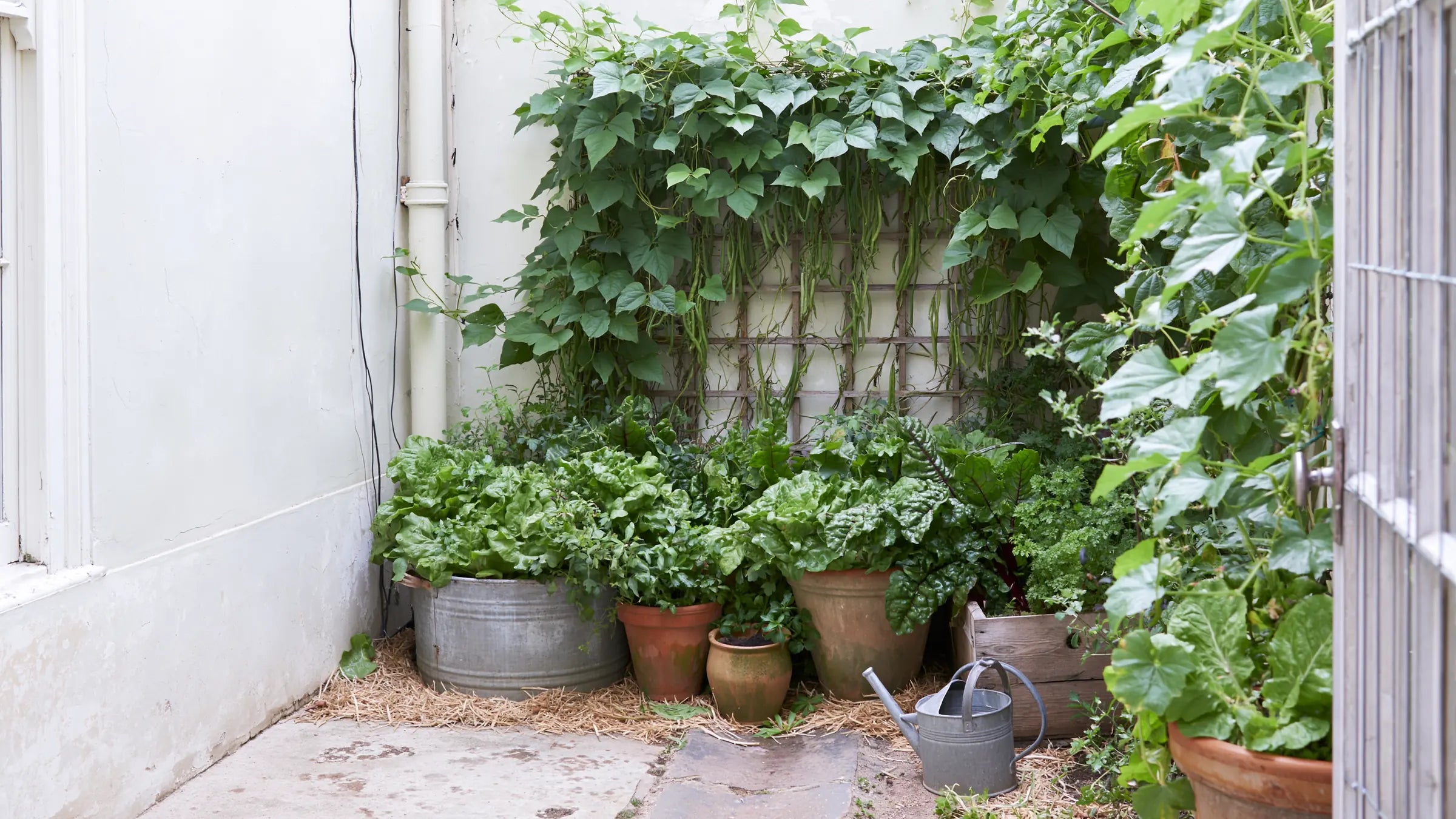
Partly. A pot has a reserve limited by its volume and dries out through its sides. Surface mulch, a deep, light-colored container genuinely help, but watering is still necessary. See Balcony vegetable garden.
Key points
The reservoir is the soil—not the tank. Feed it, don't compact it, and never leave it bare. Mulch is simply the layer that prevents this reservoir from emptying, while varietal selection is how you avoid asking it to do the impossible.
Going further
- Composting: nourishing the soil by imitating nature
- Sowing green manures
- The different types of soil
- How do you create a permaculture vegetable garden?
Our vegetable seeds and our green manures for creating a water-efficient vegetable garden.

Jätä kommentti
Tämä sivu on suojattu hCaptcha-tunnistuksella, ja hCaptchan tietosuojakäytäntöjä ja käyttöehtoja sovelletaan.