Thymus serpyllum
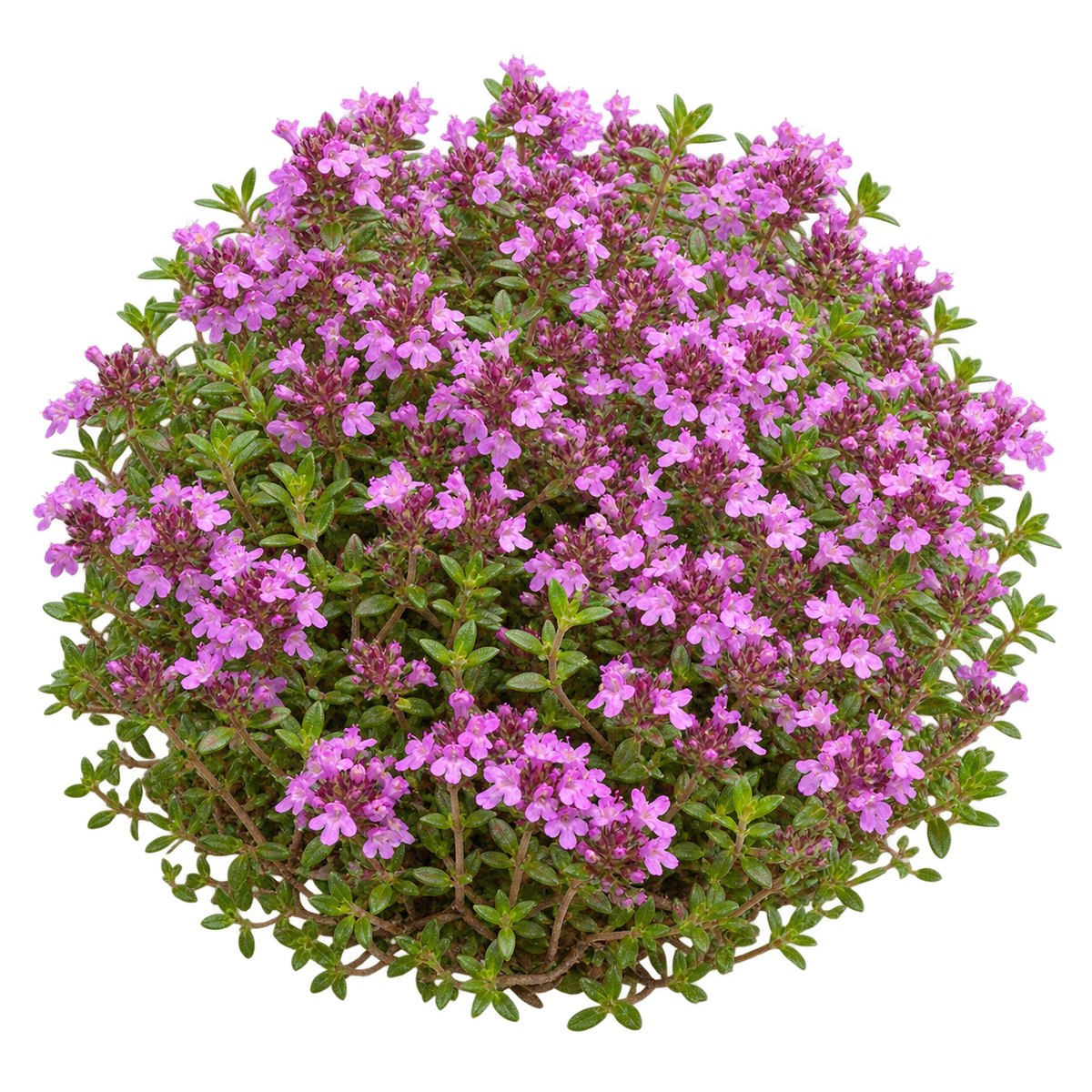
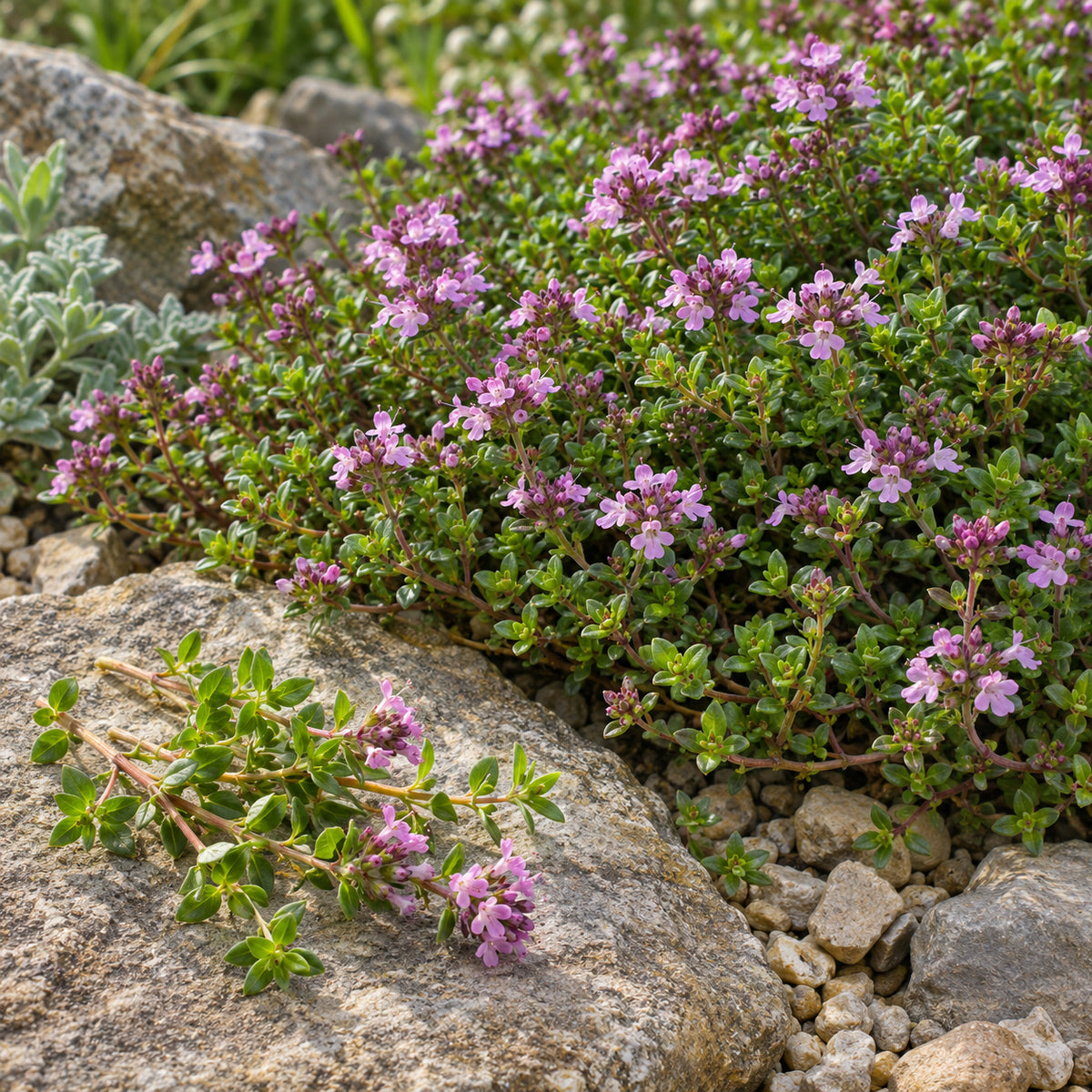
Wild thyme is a creeping thyme that fills dry borders and gaps in rock gardens. Its small, aromatic leaves form a low carpet dotted with pink to mauve flowers. Its appeal lies as much in its shape as in its flowering: it complements stones without obscuring neighboring plants. For long-lasting growth, choose soil that drains freely rather than rich, constantly moist soil.
Characteristics:
- Low-growing perennial with a creeping habit and stems that become woody at the base.
- Very small, opposite, aromatic leaves.
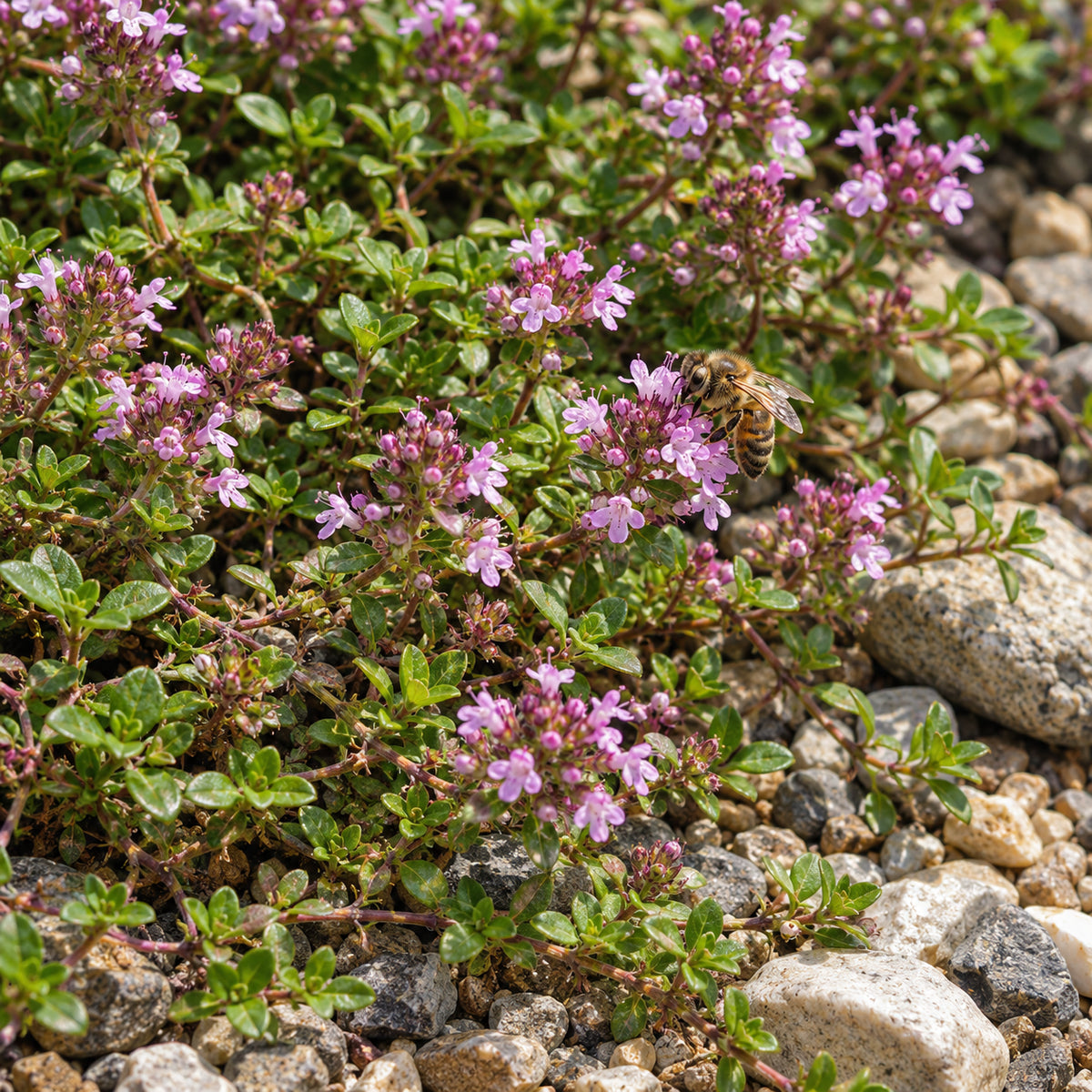
- Pink to mauve flowers visited by pollinating insects.
- For rock gardens, mineral borders, and well-drained containers.
Sowing tips:
-
Timing: sow in spring under cover, at around 15–20 °C.
-
Method: scatter the tiny seeds over a fine, well-draining growing medium; barely cover them. Water gently to avoid washing them down into the pot.
-
Care: keep the soil evenly moist while the seeds germinate, without letting the container sit in water. Our seed-sowing guide for pots explains how to prepare.
Planting tips:
Gradually acclimate young plants to outdoor conditions. Plant them in full sun in very well-drained soil, spacing them about 20 to 30 cm apart to give the cushions room to spread. A gravelly border or rock garden is more suitable than a hollow where water collects. In pots, check for drainage holes and do not leave a full saucer after watering.
Care tips:
Monitor watering during establishment, then space out applications according to the weather and actual soil moisture. Good drainage remains essential in winter, when the plant’s needs decrease. Hand-weed between young cushions to prevent taller plants from smothering them. After flowering, light pruning helps maintain a compact shape; do not cut back hard into old, leafless wood.
Flowering and garden placement:
Flowering takes place from late spring through summer, depending on the climate and how well the plant establishes. Pair wild thyme with other low-growing plants suited to dry conditions, leaving room for it to spread. Avoid subjecting it to the frequent watering needed by a mint planted right beside it in the same container. It can edge a path or flower bed, away from areas where its stems would be constantly crushed.
Benefits for biodiversity:
The small flowers provide a resource for bees and other insects. Let some of the cushions flower before pruning for maintenance. Its main appeal here is as a flowering, aromatic ground cover; do not automatically attribute to this species all the uses of a selected culinary thyme.
Harvesting your own seeds:
Set aside a few flowering stems that you do not prune right away. After flowering, tiny dry fruits form in the calyces; they split into small sections containing the seeds. When the flower heads are ripe and dry, cut them on a dry day over a sheet of paper. Let them finish drying, then rub them gently to collect the seeds and remove the debris. Work out of the wind: the seeds are very small. See our tips on storing seeds.
Commitment to Quality:
At SemiSauvage, we offer true-to-type seeds to cultivate diversity in the garden. This packet contains at least 1,000 seeds, packaged in France. The timing given is a guide and should be adapted to your climate, soil and seasonal conditions.
Wild thyme complements stones and dry borders with a low-growing, fragrant, flowering carpet.