Scabiosa atropurpurea
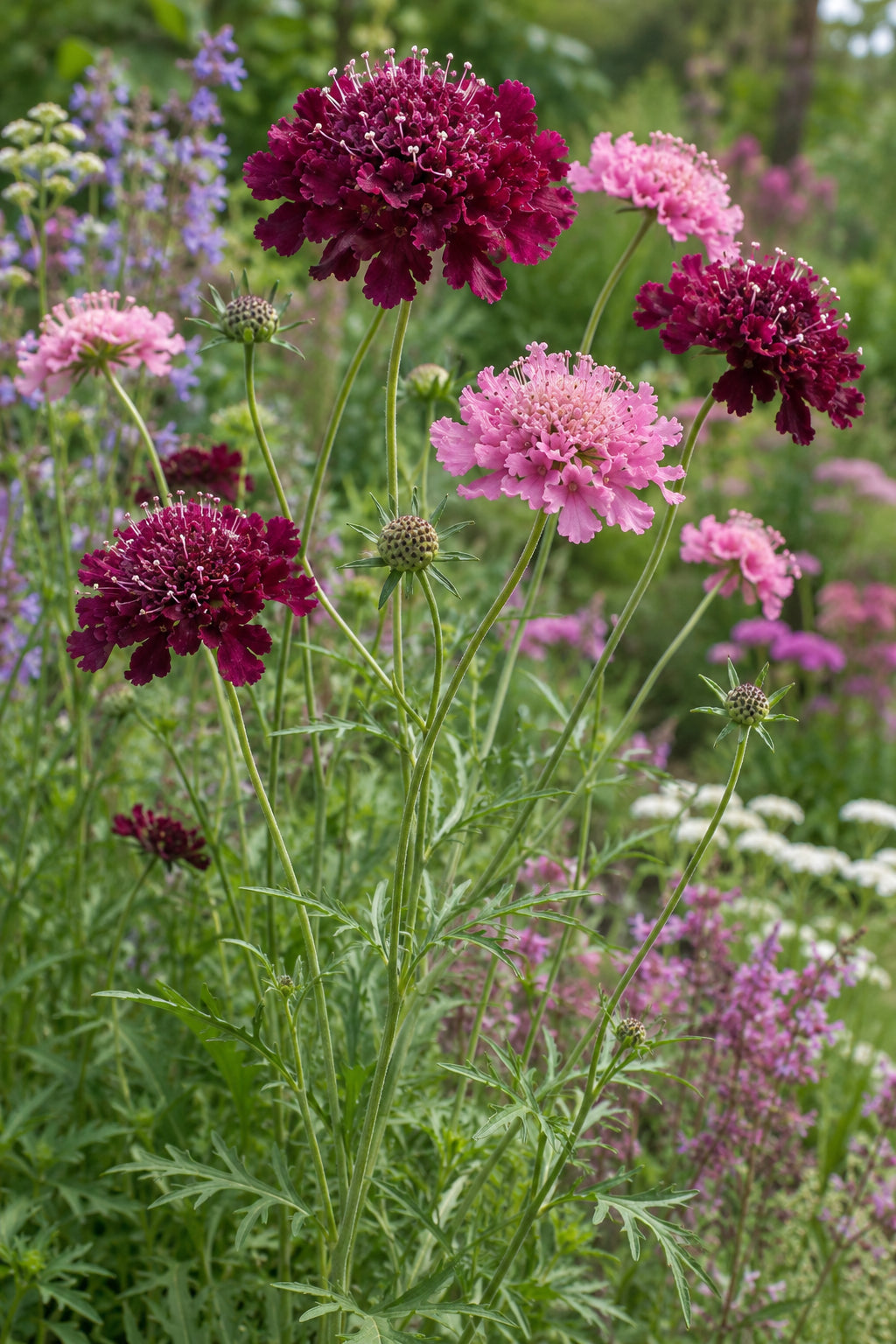
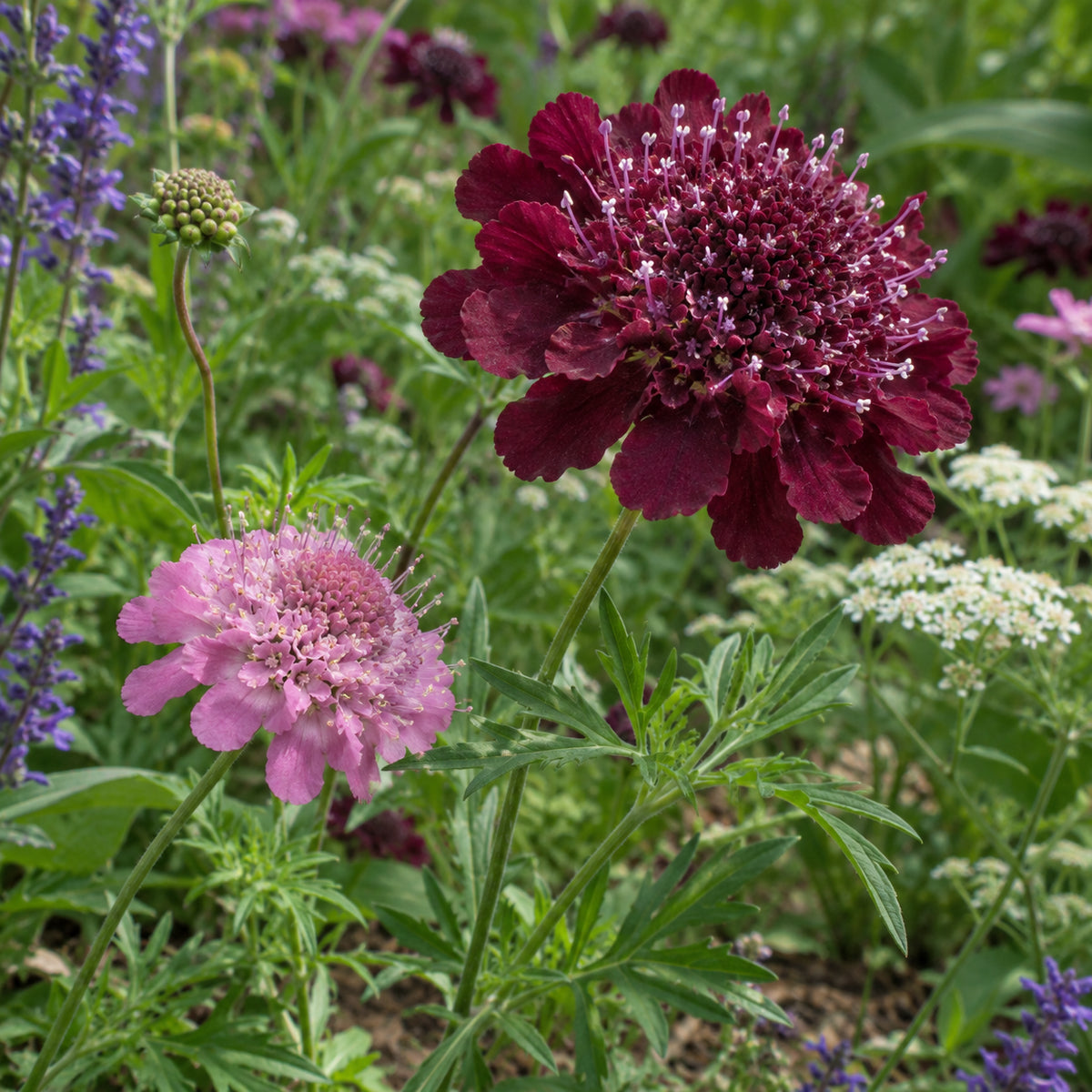
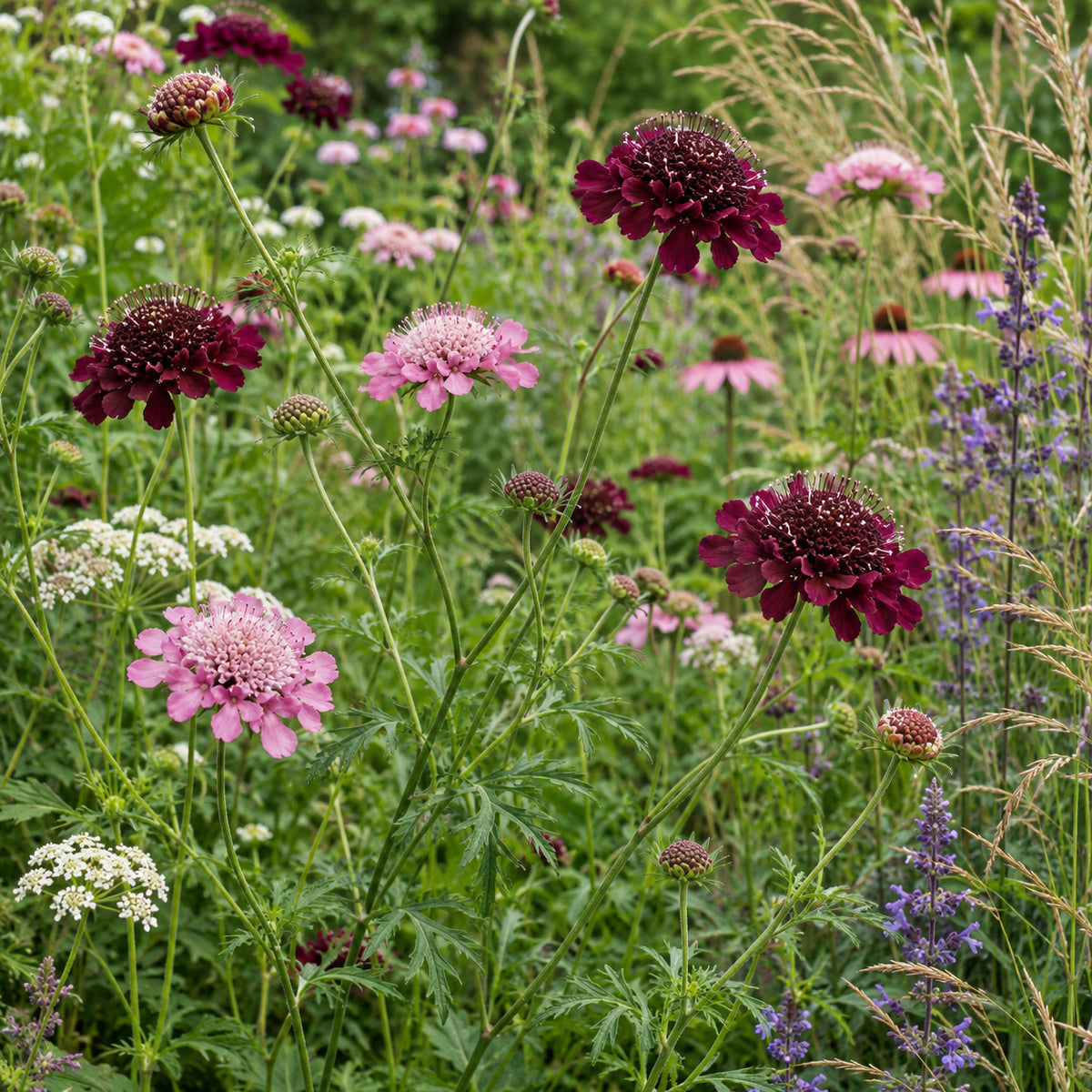
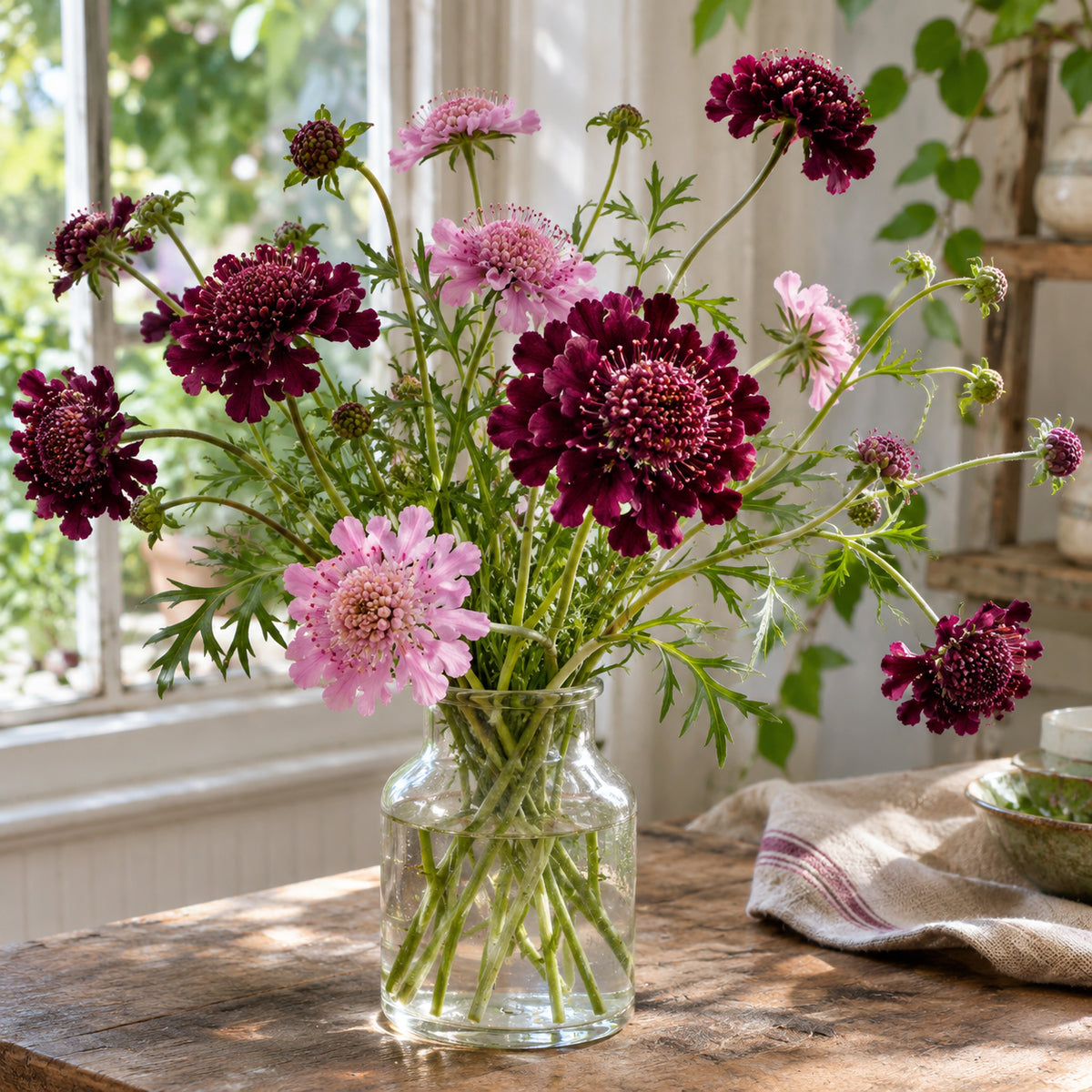
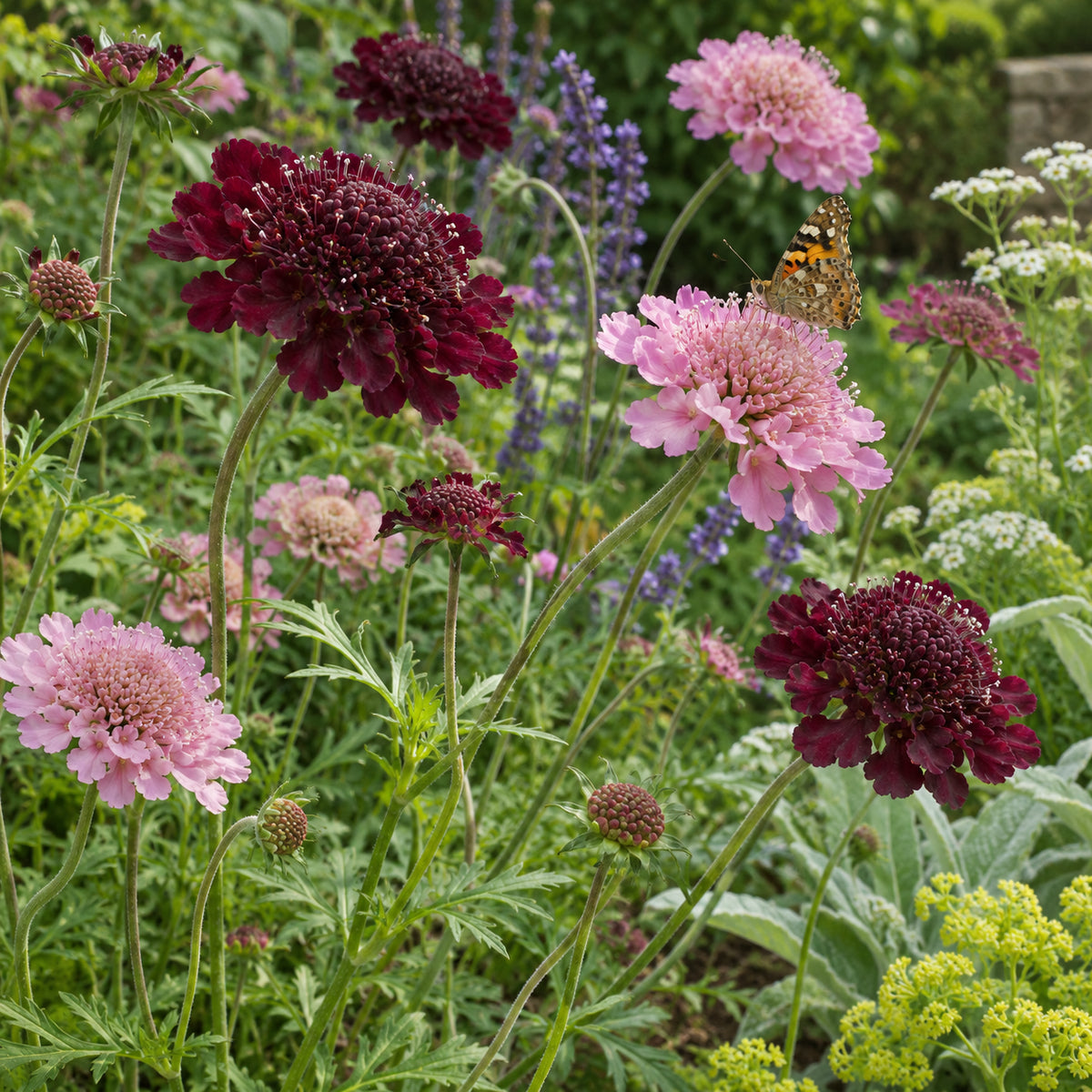
Papillon scabious bears its flowers at the top of long, flexible stems, above more subtle foliage. The outer flowers broaden the head, while the center forms a tight cushion: this structure adds texture to bouquets as well as borders. Grown as an annual in cold climates, Scabiosa atropurpurea blooms in summer and attracts insects, especially butterflies.
Characteristics:
- Rounded flower heads carried on slender stems.
- Summer flowering, extended by deadheading.
- A flower for borders and bouquets, visited by pollinating insects.
Sowing tips:
-
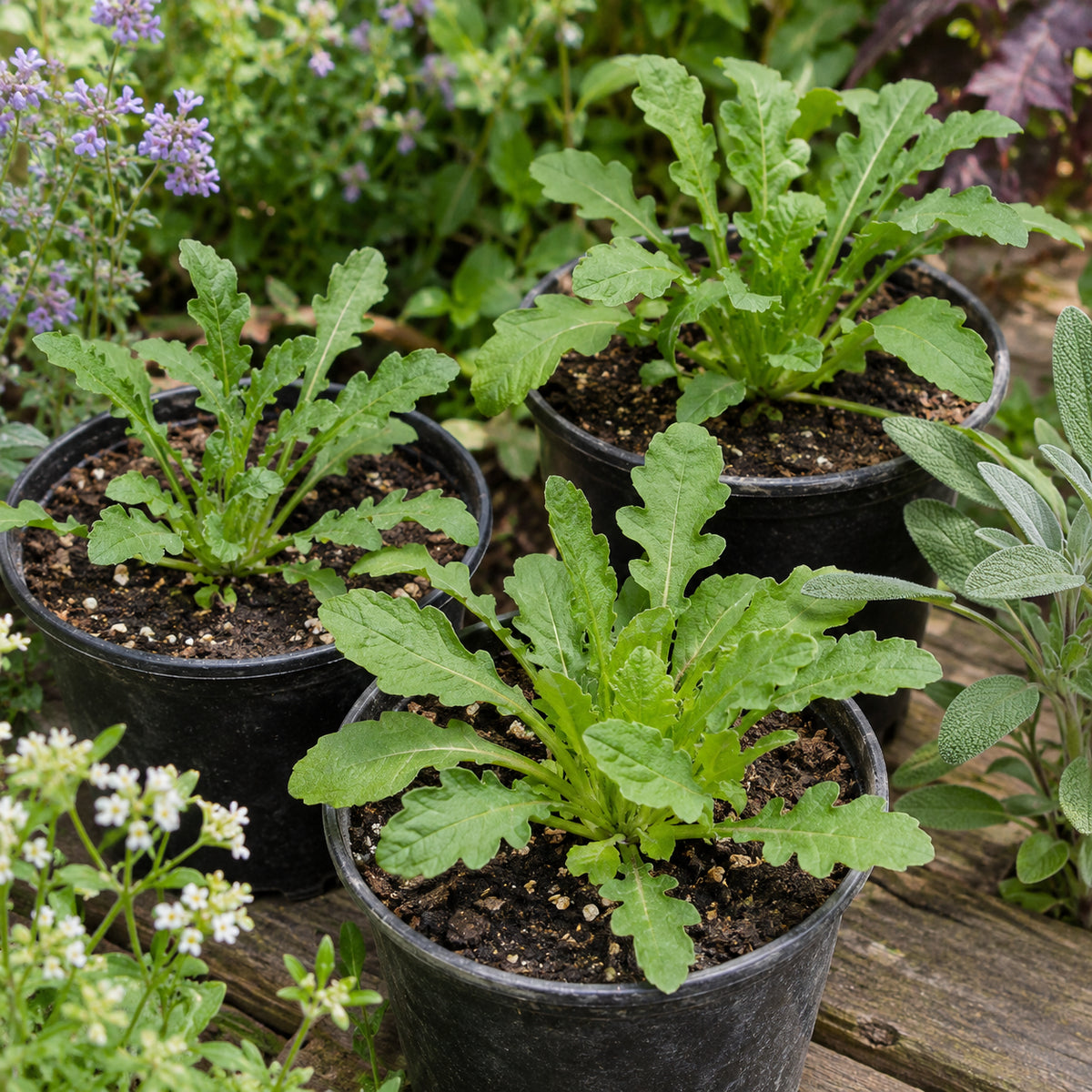
Timing: Sow in spring under cover or directly outdoors when conditions allow; transplant seedlings outdoors after the last frosts.
-
Method: Use fine soil, sow thinly, then cover lightly. Keep the growing medium evenly moist during germination without saturating it.
-
Spacing: Thin or plant about 25 cm apart so the stems can develop without becoming too crowded.
Find out about preparation in our guide to sowing methods.
Growing and care tips:
Scabious likes sun and rich but well-drained soil. Water after planting, then keep an eye on dry spells while the buds are forming. Constantly waterlogged soil is unsuitable. In a windy spot, discreet support installed early prevents the long stems from flopping onto their neighbors. Regularly cut off spent flowers to keep the blooms coming. Set aside a few heads on healthy plants from the start if you want to harvest seeds.
Flowering and harvesting:
Flowering takes place from summer to fall, depending on the climate and sowing date. For fresh bouquets, choose open, well-formed, still-firm flower heads. Cut with a clean tool, preferably when the stems are well hydrated, then place them in water promptly. Remove any leaves that would be submerged. The shape changes after flowering: the seed head becomes more ovate and is no longer at the right stage for a flower bouquet.
Garden uses:
In a soft, flowing flower bed, the stems can weave between shorter plants without covering them with bulky foliage. In a bouquet, a few scabious flowers create a light line around larger blooms. Butterflies and other visitors can access flowers left in the garden, so leave some blooms in place if welcoming them is part of your plan. A diverse flower border also offers more shapes and flowering times.
Harvesting your own seeds:
Allow the reserved flower heads to develop after the blooms fade, until they turn brown and dry. The fruits form in these heads as they become oval. Cut them in dry weather before they fall off, then dry them under cover. Remove the seeds over a tray and discard stem pieces and debris. Label the harvested plant and note the year, then keep the seeds dry. Store harvests separately if you grow several scabious plants. See our tips for storing harvested seeds.
Commitment to Quality:
At SemiSauvage, we offer seeds that grow true to type to cultivate diversity in the garden. This packet contains at least 50 seeds, packaged in France. The timings given are guidelines to adapt to your climate, soil, and seasonal conditions.
A flower that brings a soft, flowing look to flower beds and provides light stems to cut for the home.