A few terracotta pots, a window box by the window, a corner of the terrace waiting for its first colors… Sometimes it takes very little to bring the garden into everyday life. One morning, the first shoots appear. Then the foliage takes its place, the stems reach upward and the flowers open, each at its own pace.
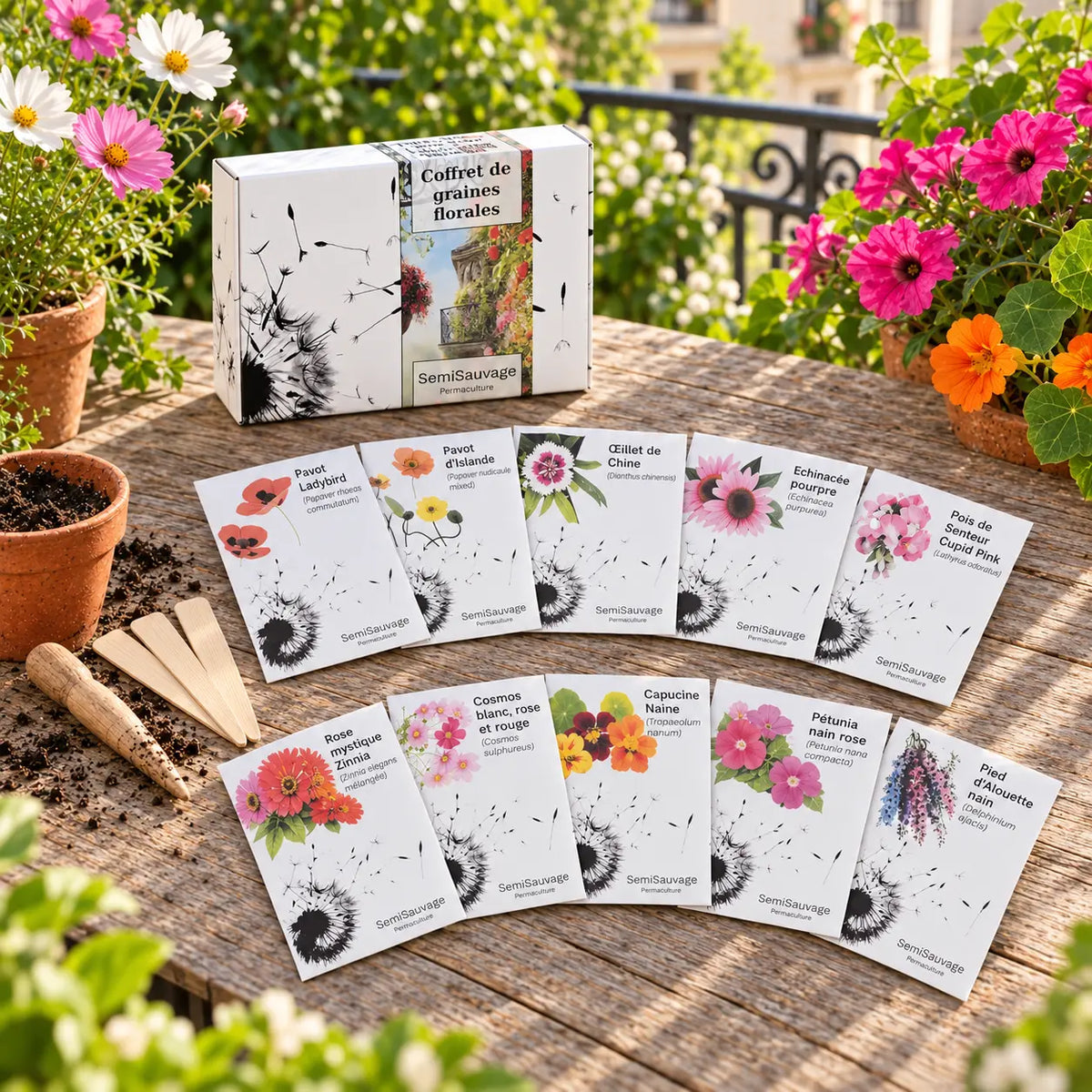
This flower seed collection for balconies and terraces brings together ten varieties to create a lively, colorful and slightly wild little garden. Cosmos add lightness, poppies bring delicate petals, and nasturtiums add warm colors. Alongside them, petunias, carnations, zinnias and other flowers let you play with shapes and heights.
Whether given as a gift or enjoyed yourself, it is a pleasure to choose your combinations, sow the seeds yourself and watch a familiar space transform over the weeks.
Getting started
Exposure: choose a sunny location, adapting it to the needs of each variety.
Sowing: mainly in spring, under cover or directly outdoors depending on the species and your climate. Instructions are provided on the back of the packets.
Germination: varies according to the flowers; sow each variety separately to monitor its development.
Growing medium: containers with drainage holes and suitable potting soil, with good drainage.
Hardiness: varies by species; protect sensitive young plants from frost.
Life cycle: a selection combining annual flowers and perennial species, including purple coneflower.
Ten varieties to create your display
Each flower brings its own personality. You can distribute them among several window boxes, create a succession of planters, or give them a place in the garden.
Variety
Quantity
Its place in the arrangement
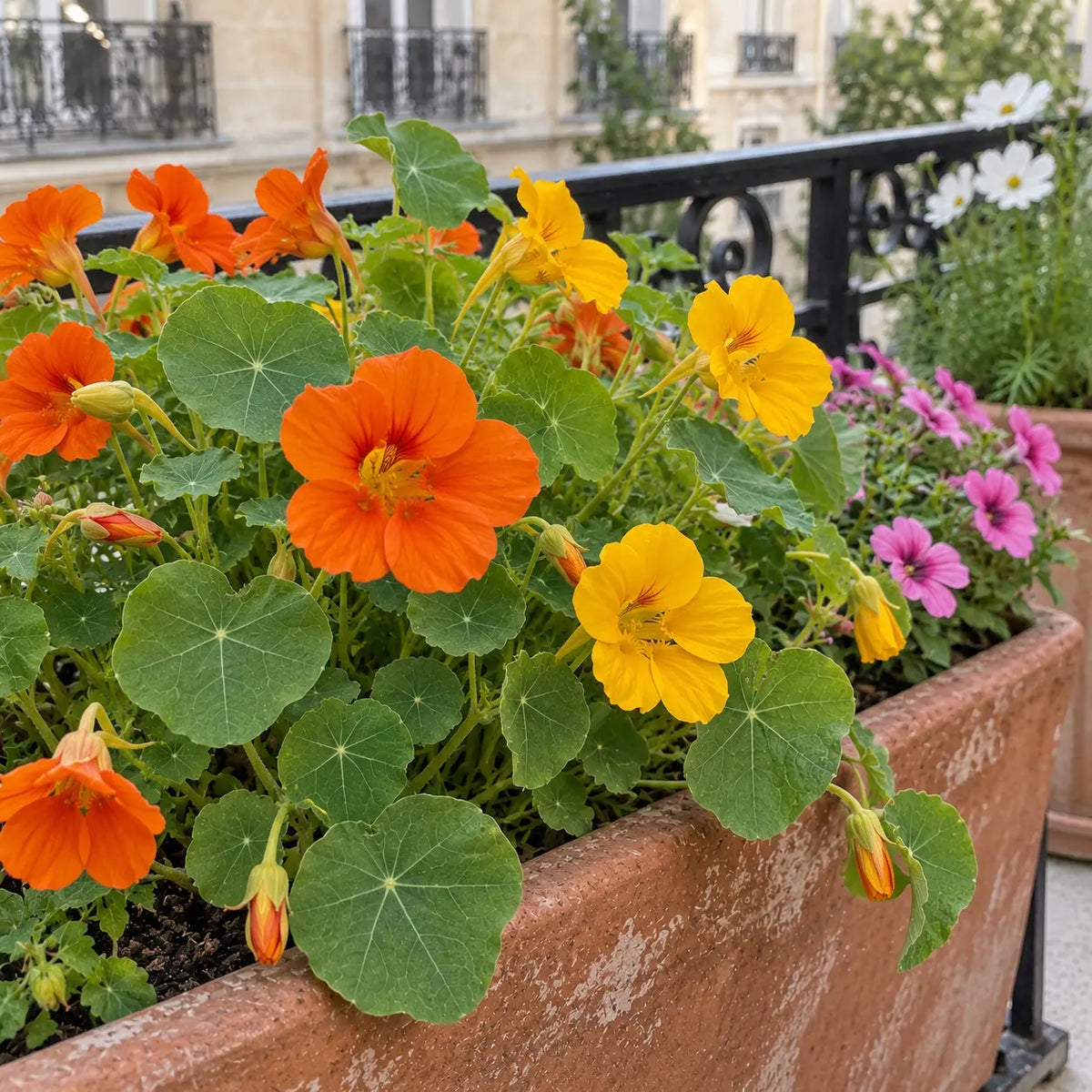
Dwarf nasturtium
15 seeds
Bright flowers and rounded foliage to add fullness to the edges of planters.
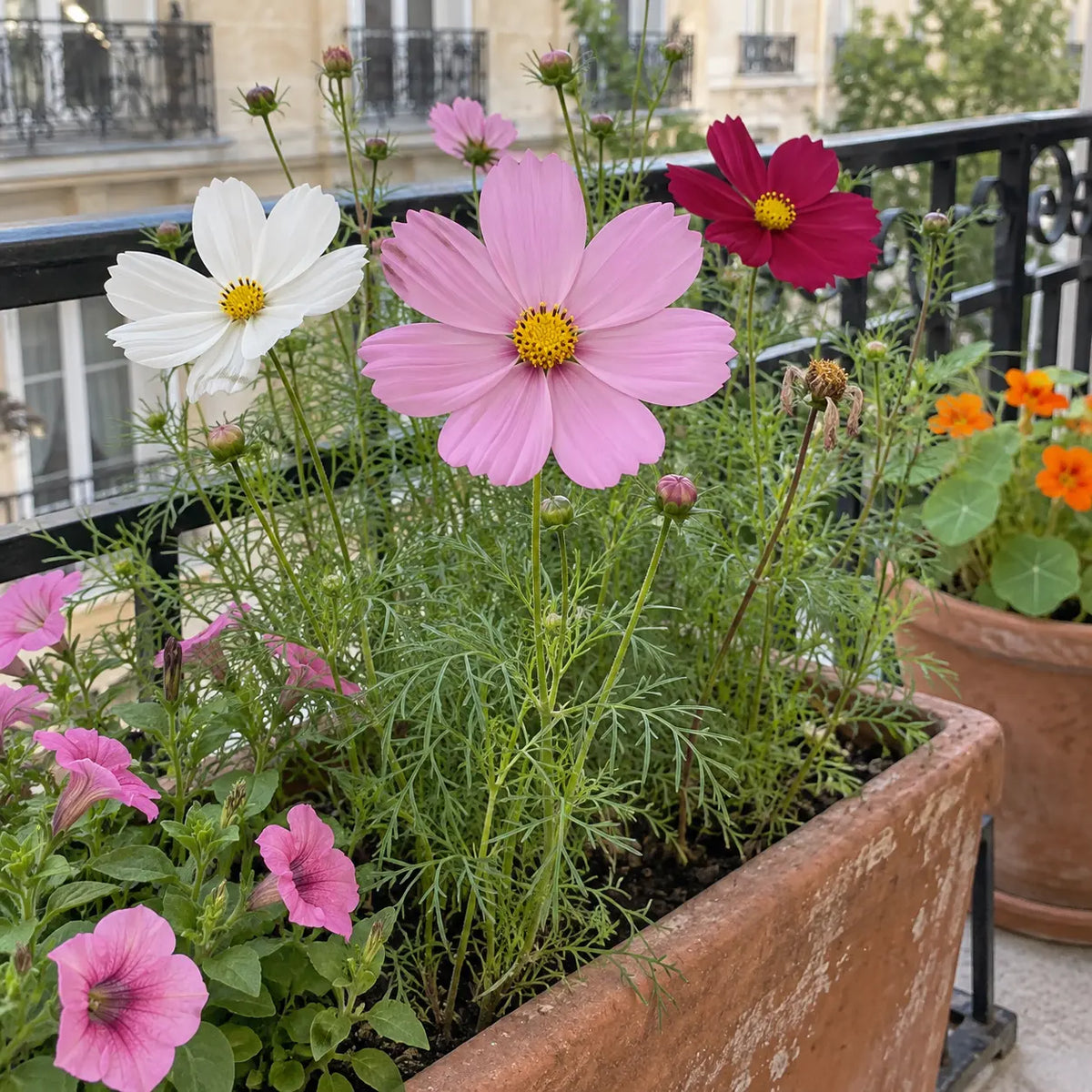
White, pink and red cosmos
100 seeds
Light flowers and fine foliage to bring movement and height.
Purple coneflower
100 seeds
Flowers with a pronounced center to give structure to a large planter and accompany the garden through several seasons.
Chinese carnation
150 seeds
Delicately shaped flowers to enliven the foreground of arrangements.
Iceland poppy
500 seeds
Delicate blooms on slender stems, for a touch of softness.
Ladybird Poppy
200 seeds
Red flowers marked with black, adding bold splashes of color to containers.
Dwarf Pink Petunia
500 seeds
Trumpet-shaped flowers that bring a generous pink presence to window boxes.
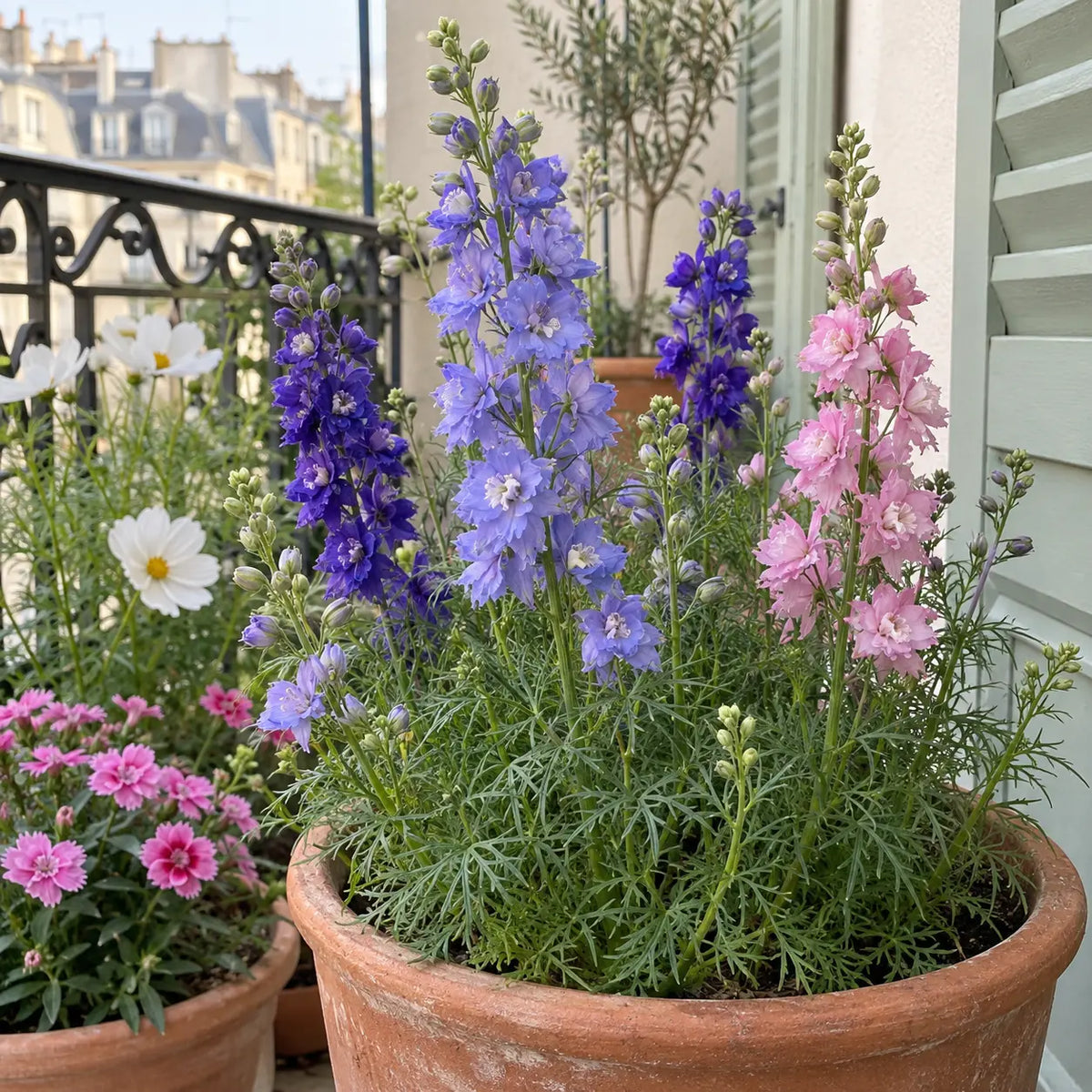
Dwarf Larkspur
100 seeds
Flowering spikes to vary the silhouettes and add dimension to the display.
Mystique Rose Zinnia
500 seeds
Expressive flowers to enrich summer containers and create a few bouquets.
Cupid Pink Sweet Pea
15 seeds
A dwarf variety with delicate flowers, bringing a tender touch to small spaces.
The set contains 2,180 seeds, divided among ten packets, along with wooden labels to identify your sowings. Sowing advice can be found on the back of each packet. The set is presented in a 15 × 10 × 3 cm box.
A flower-filled balcony, your way
For a window box, start with a simple arrangement: a few low-growing plants, foliage to soften the outlines, and enough space for each plant to develop. Dwarf petunias, Chinese carnations, or Cupid Pink sweet peas can inspire these small flowering displays.
On a terrace, use several containers. Reserve the largest pots for more vigorous plants, especially cosmos and echinaceas. Place taller plants at the back and shorter flowers in front, without aiming for perfect symmetry.
The ten varieties are a selection to distribute, not a mixture to sow all together in a single planter. A few carefully chosen combinations help maintain a natural, elegant result suited to the available space.
Sowing tips: enjoy watching them grow
Open the packets, choose the first varieties to sow, and prepare their labels. Each species has its own preferences: sowing depth, temperature, light, and germination time may vary.
Follow the instructions for each packet, sow without overcrowding, and keep the soil consistently moist without waterlogging it. For seedlings grown under cover, gradually acclimate the young plants to outdoor conditions before planting them in their final location.
Just starting out? Our guide How to sow your seeds will guide you through the first steps.
Caring for your flowers week by week
In pots, potting soil dries out faster than soil in the ground. Monitor moisture, especially in hot or windy weather, and water at the base as needed. Let the water drain away to prevent it from pooling around the roots.
Give each plant the space it needs and adjust nutrient inputs: not all flowers thrive in very rich soil. Remove faded flowers when this encourages continued blooming, while keeping a few flower heads if you would like to collect seeds.
Flowers bloom in succession depending on the species, sowing date, and growing conditions. Some perennials, such as echinacea, may first devote time to becoming established before flowering fully.
A little space for living things
Watching a bee visit a cosmos or a butterfly land on a flower is also part of the pleasure of gardening. By diversifying flowers and their blooming periods, you can provide resources for different insects, even in a small urban space.
Let a few flowers develop until they form seeds: the scene changes, and the garden continues to tell a story after the last petals have fallen.
Saving your seeds and continuing the story
The pleasure can continue beyond a single season. On mature plants, let a few flowers develop seeds, then harvest them when they are sufficiently dry. Label your harvests and store them away from moisture, heat, and light.
Depending on the species and pollination, future generations may reveal variations in color or shape. It is also a way to discover your garden and help it evolve.
At SemiSauvage, we champion a form of gardening that respects living things, using open-pollinated, non-hybrid, untreated seeds. This kit brings that idea to balcony scale: making sowing accessible, leaving room for diversity, and rediscovering the pleasure of growing things yourself.
A window, a few pots, a little care: your next green corner starts with a seed.