Mimosa pudica
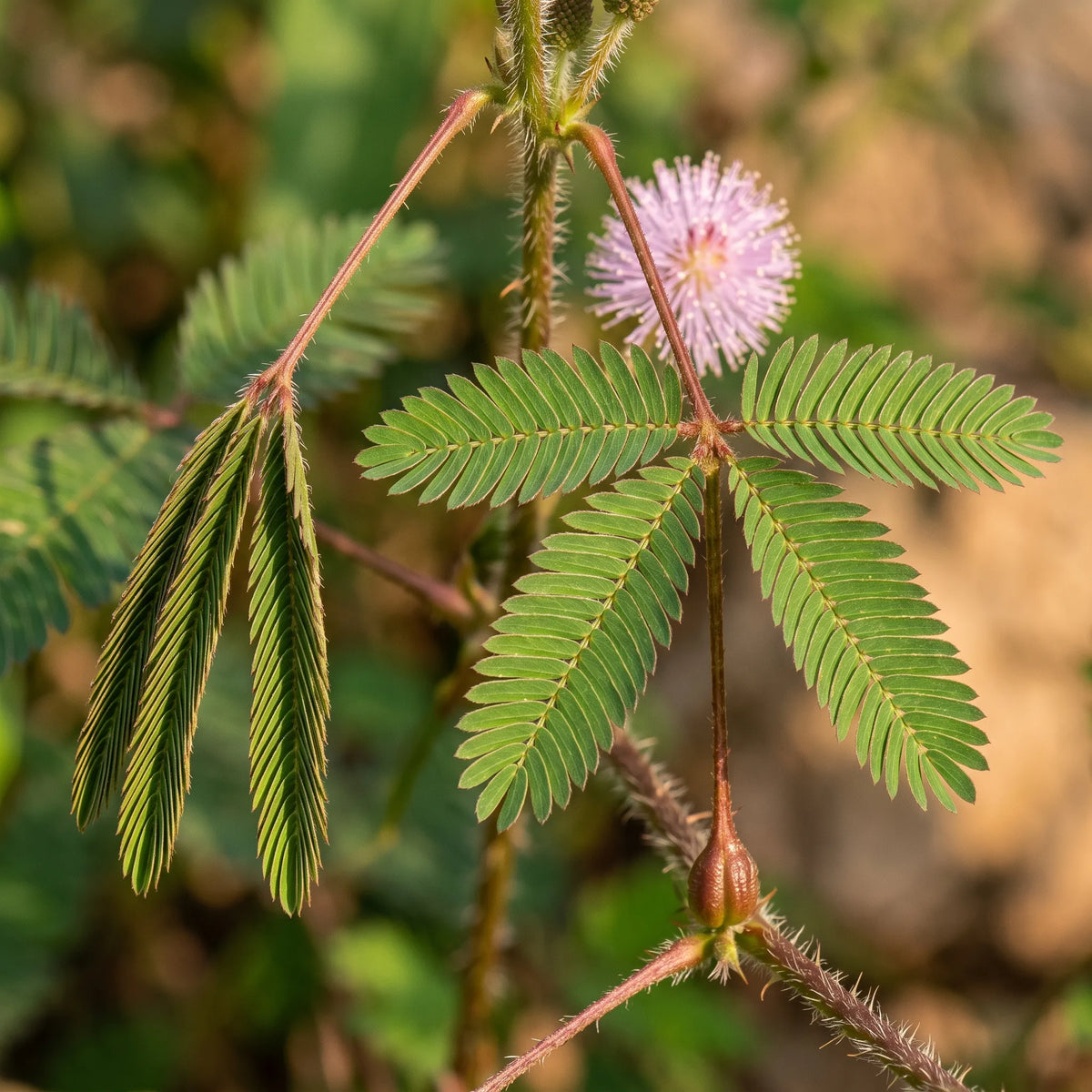
Sensitive plant, shameplant, touch-me-not: all these names describe the same wonder. Brush against a leaf and it folds up in a second, through a mechanism called thigmonasty—an exceptionally rapid movement in a plant, achieved without muscles or nerves, simply through changes in pressure within its cells. It is the ultimate educational plant for delighting children and adults alike.
Characteristics:
-
Responsive foliage: the leaflets fold up at the slightest touch, in the heat, or as night falls, then reopen a few minutes later.
-
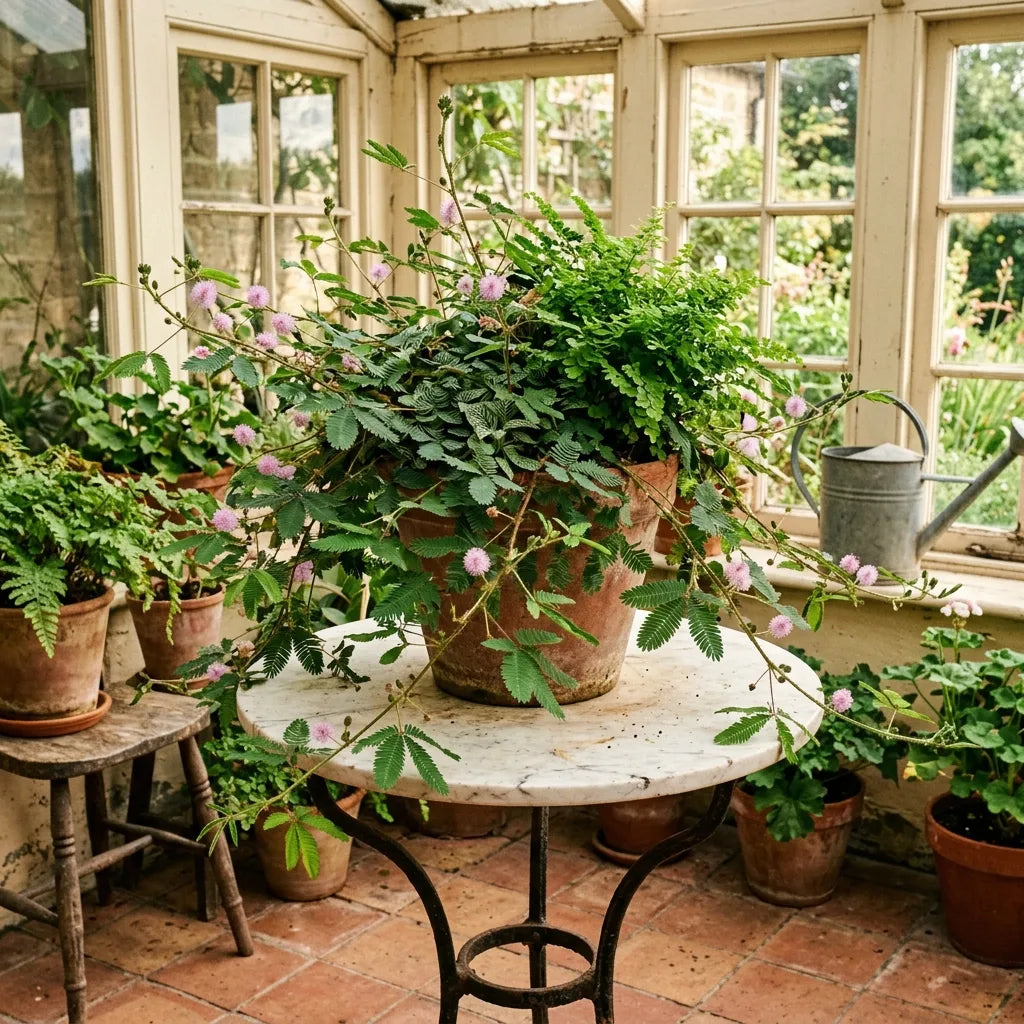
Pom-pom flowers: small pink to lilac spheres, highly decorative, from mid-spring to early autumn.
-
Tropical perennial: it lives for several years but becomes sparse as it ages; many people prefer to sow it again each year.
Precautions:
- A tropical plant, it cannot survive frost: in France, grow it in a pot indoors or in a conservatory, placing it outside only in summer.
- Its stems bear fine prickles; handle it with care.
- Do not consume any part of the plant, and keep it out of reach of young children and pets.
Sowing advice:
-
Position: very bright, in direct sunlight or light partial shade, with warmth (20–25 °C).
-
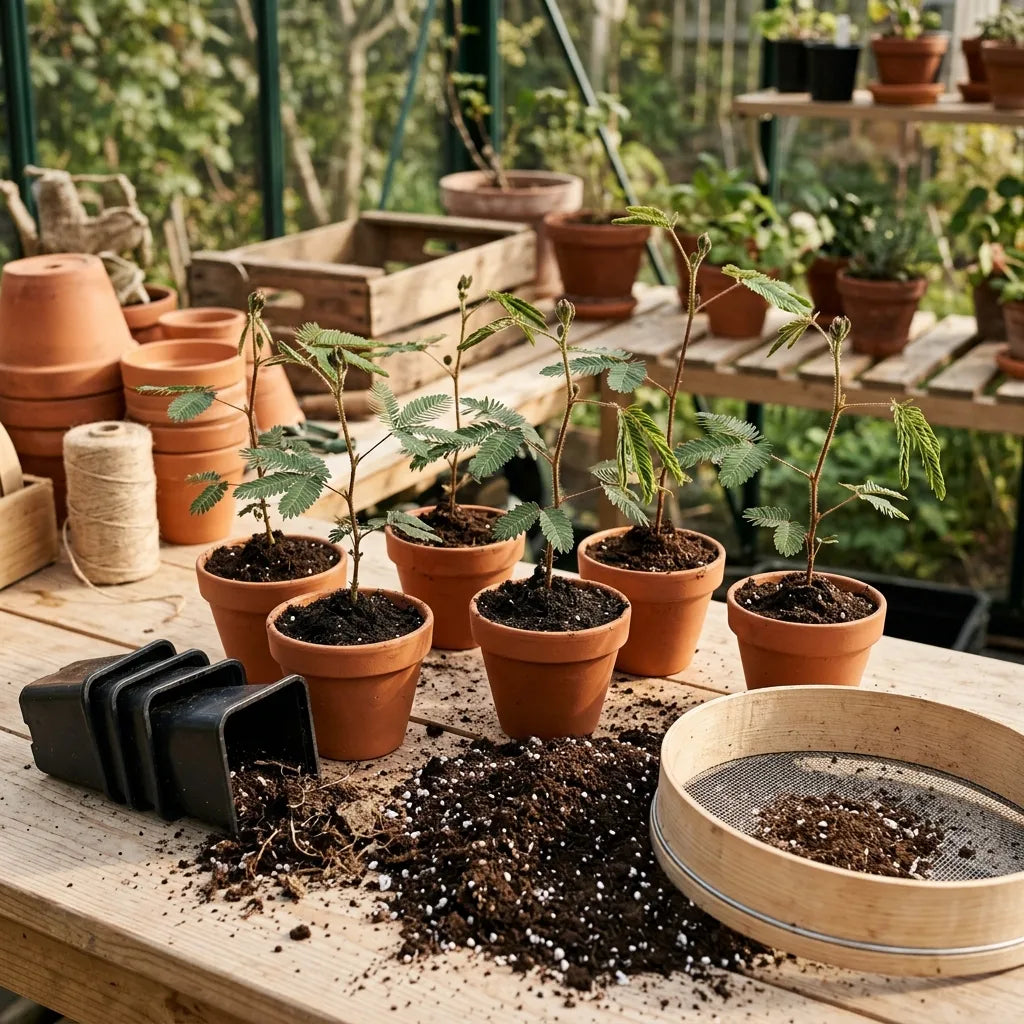
Soil: light, rich in organic matter, and well drained. A potting-soil and sand mixture is ideal for growing in a pot. It appreciates ambient humidity but dislikes stagnant water in the saucer.
-
Method: the seeds have a hard coat: soak them for 24 hours in lukewarm water before sowing, which significantly improves germination. Sow in spring in individual pots, 1 cm deep, keeping them warm and moist. See how to sow your seeds.
Care advice:
- Water regularly to keep the growing medium slightly moist, without excess. Mist the foliage in dry conditions.
- Avoid handling it too often: each folding movement costs the plant energy, and it becomes exhausted if stimulated continuously.
Benefits for biodiversity:
- Like all legumes, it fixes atmospheric nitrogen through bacteria in its root nodules and naturally enriches its growing medium.
- When grown outdoors in summer, its pink pom-poms attract bees and butterflies.
Harvesting your own seeds:
After flowering, the plant produces small, flat pods grouped in clusters. Leave them to turn brown and dry on the plant, then open them to collect the hard seeds, which can be stored for a very long time. See how to store your seeds.
Commitment to Quality: at SemiSauvage - Permaculture, we grow and select our seeds with respect for all living things as our guiding principle. Based near the Volcans d'Auvergne, we choose reproducible, non-hybrid varieties, tested for their germination rate, carefully sorted and packaged, without any chemical treatment. Our conviction: to give gardeners back the ability to resow, year after year, seeds that truly belong to them.
Add a touch of magic to your home and marvel at this plant that reacts to touch.