Ginkgo biloba
Forty-écu tree, fossil tree, silver apricot, Yin Xing: a true living relic, the ginkgo is the only surviving species of an entire family that has existed on Earth for more than 270 million years—it lived alongside the dinosaurs. Its French nickname comes from an 18th-century botanist who is said to have paid forty écus to acquire a sapling.
Characteristics:
-
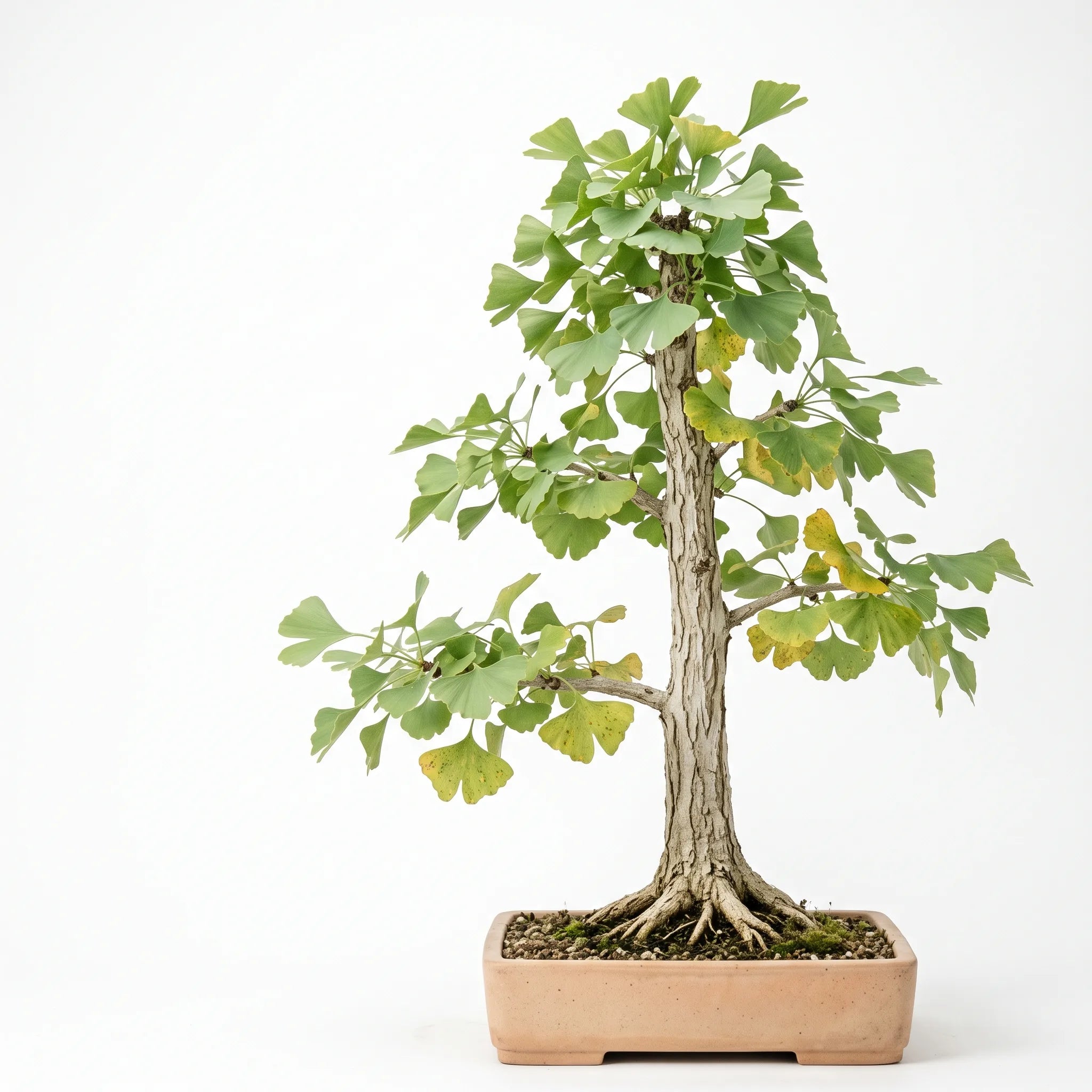
Unique foliage: fan-shaped leaves, unlike any others in the plant kingdom, turning a brilliant golden yellow in autumn.
-
Extremely hardy: it withstands temperatures down to -30 °C and tolerates urban pollution remarkably well.
-
Slow growth: ultimately reaching 15 to 25 meters when planted in the ground, but requiring several decades of patience.
Precautions:
- The ginkgo is dioecious: female trees produce fleshy fruits with a highly unpleasant smell as they decompose. Seed-grown plants cannot be sexed for many years—avoid planting one along a walkway if this potential inconvenience concerns you.
- The fruit pulp can irritate the skin: handle it with gloves.
Sowing advice:
-
Exposure: full sun or partial shade.
-
Soil: light, deep, and well drained. It adapts remarkably well to poor, compacted, and even urban soils, which explains its presence in so many cities. It is particularly sensitive to waterlogged conditions. No fertilization necessary.
-
Method: moist cold stratification for 60 to 90 days is necessary. Then sow in spring, in a pot or directly in the ground, at a depth of 2–3 cm. Germination is slow: allow 1 to 2 months, sometimes longer.
Planting advice:
- Plant it as a standalone specimen in a large space, or grow it in a container: the ginkgo is one of the most appreciated species for bonsai, thanks to its distinctive foliage. See our guide creating a bonsai from a seed.
Care advice:
- Water regularly during the first few years; afterward, the tree becomes very self-sufficient. No pruning is necessary when planted in the ground.
Beneficial pairings:
- Its light shade and slow growth make it suitable for pairing with shade-loving perennials or autumn-flowering plants at its base. It is also magnificent as a standalone specimen.
Benefits for biodiversity:
- Its exceptional tolerance of pollution makes it a valuable tree for greening degraded urban environments, where few species thrive.
- Its foliage is attacked by virtually no pests—a resistance inherited from 270 million years of evolution.
Uses:
- Ornamental as a standalone specimen, for urban avenues, or as bonsai. A major traditional medicinal plant in Chinese medicine. See our medicinal plants to sow.
Symbolism:
A sacred tree in Asian tradition, the ginkgo symbolizes longevity, resilience, and inner peace. Six ginkgo trees survived the Hiroshima bomb less than two kilometers from the epicenter and are still alive today, making the species a universal emblem of hope.
Harvesting your own seeds:
Collect fallen fruits in autumn—with gloves—carefully remove the pulp, and rinse the seed, which resembles a small beige pistachio. Keep it cool until stratification. See storing your seeds.
Commitment to Quality: at SemiSauvage - Permaculture, we grow and select our seeds with respect for living things as our guiding principle. Based near the Volcans d'Auvergne, we choose reproducible, non-hybrid varieties, tested for their germination rate, carefully sorted and packaged, with no chemical treatment. Our belief: to give gardeners back the ability to resow, year after year, seeds that truly belong to them.
Plant a fragment of natural history with these ginkgo biloba seeds.