Stachys byzantina (syn. Stachys lanata)
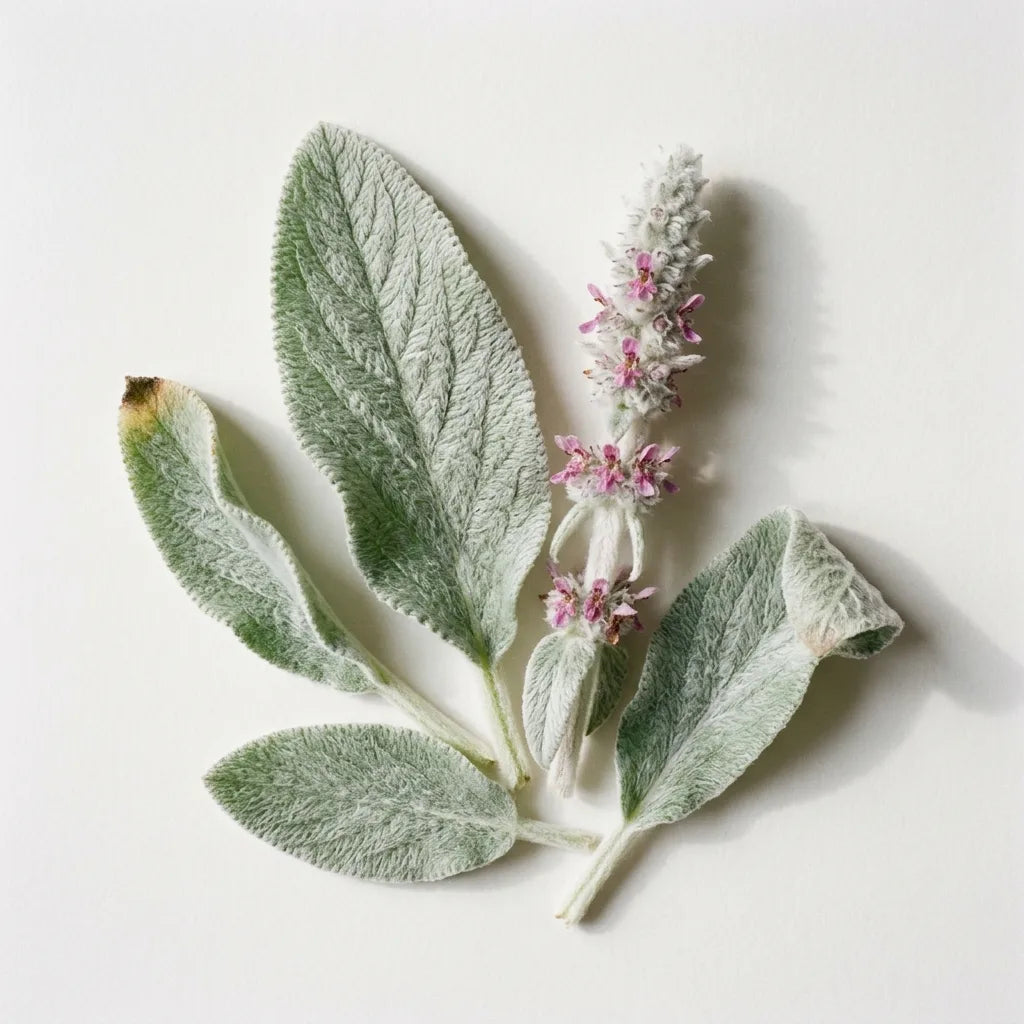
Woolly hedgenettle, rabbit’s ear, lamb’s ear: its foliage is covered in such dense, soft white fuzz that it irresistibly makes you want to run your hand over it. This is more than just ornamental: these hairs reflect light and limit evaporation, explaining its remarkable drought resistance.
Characteristics:
-
Soft, silvery foliage: soft to the touch, it brightens flower beds all year round.
-
Rosy flower spikes: summer flower stalks that contrast beautifully with the pale foliage.
-
Dense ground cover: low-growing and spreading, it quickly fills out and suppresses weeds.
-
Very hardy: down to -20 °C.
Sowing advice:
-
Exposure: full sun to partial shade.
-
Soil: light, well-drained, even poor and stony. Crucial point: its downy foliage holds water and rots in damp conditions — winter moisture, much more than cold, is what causes it to disappear. Avoid any organic mulch around its base and use gravel instead.
-
Method: no stratification required. Sow in spring, in pots or directly in the ground, at a depth of 1 cm in well-drained soil. Germination in 2 to 3 weeks. See how to sow your seeds.
Planting advice:
- Transplant along borders or in rock gardens, spacing plants 30 cm apart: it spreads quickly and will fill the space.
Care advice:
- Almost no watering once established, and above all, never water the foliage.
- Remove damaged leaves at the end of winter to restore its attractive appearance. Some gardeners cut off the flower stalks to prioritize the more decorative foliage.
Beneficial combinations:
Benefits for biodiversity:
- Remarkably, a wild bee, the wool-carder bee, specifically collects the fuzz from its leaves to line its nest. Sowing this plant provides building material for a particular species.
- Its flower spikes are heavily visited by bumblebees in summer.
- Its dense cover protects the soil from drying out and provides shelter for microfauna.
Uses:
- Borders, rock gardens, decorative ground cover, dry and Mediterranean gardens. A must-have for sensory gardens, where it is as much touched as admired.
Symbolism:
As a symbol of softness and protection, lamb’s ear is associated with calming spaces and gardens designed for children and touch.
Harvesting your own seeds:
Leave a few flower spikes to dry completely on the plant, then crumble them over a container: the small brown seeds settle at the bottom of the calyces. See how to store your seeds.
Commitment to Quality: at SemiSauvage - Permaculture, we grow and select our seeds with respect for all living things as our guiding principle. Based near the Auvergne Volcanoes, we choose reproducible, non-hybrid varieties, tested for their germination rate, carefully sorted and packaged, with no chemical treatment. Our conviction: to give gardeners back the ability to resow, year after year, seeds that truly belong to them.
A plant you simply cannot resist stroking as you pass by.