Passiflora edulis
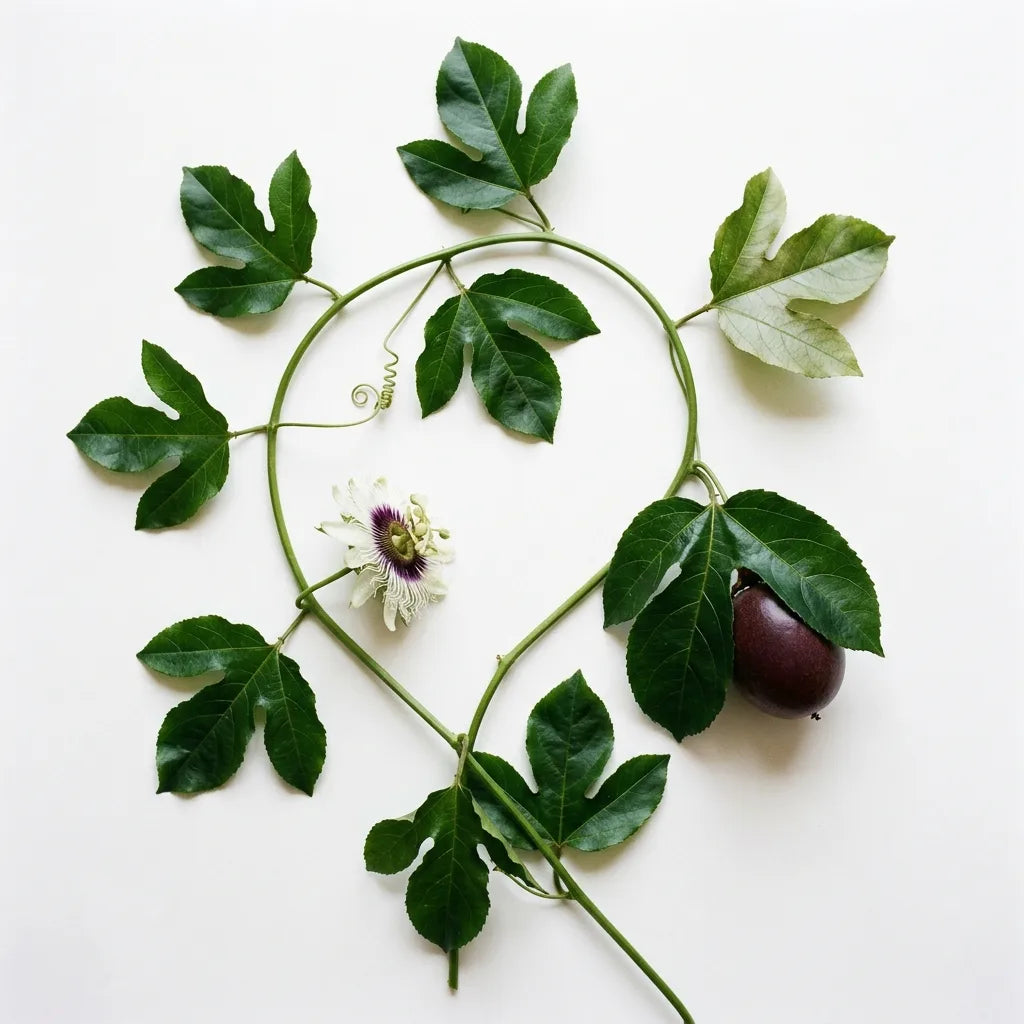
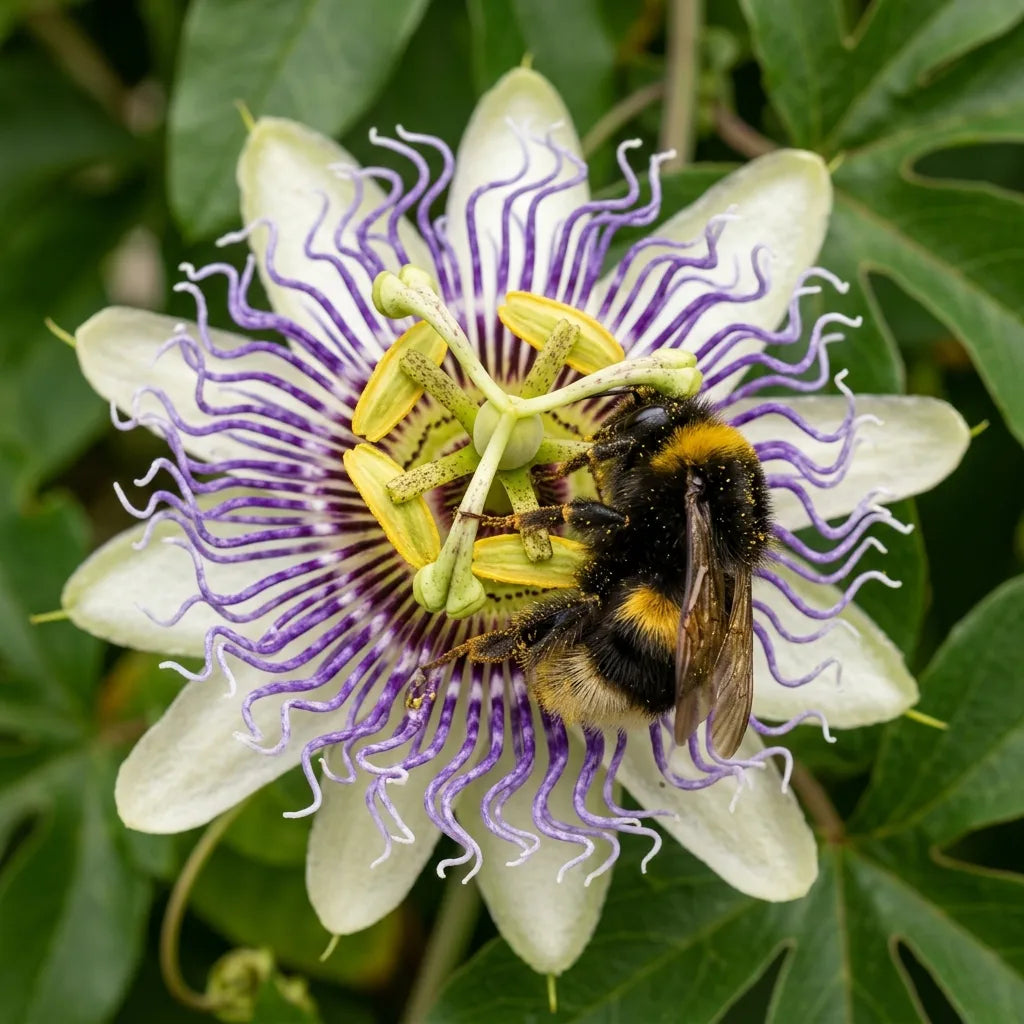
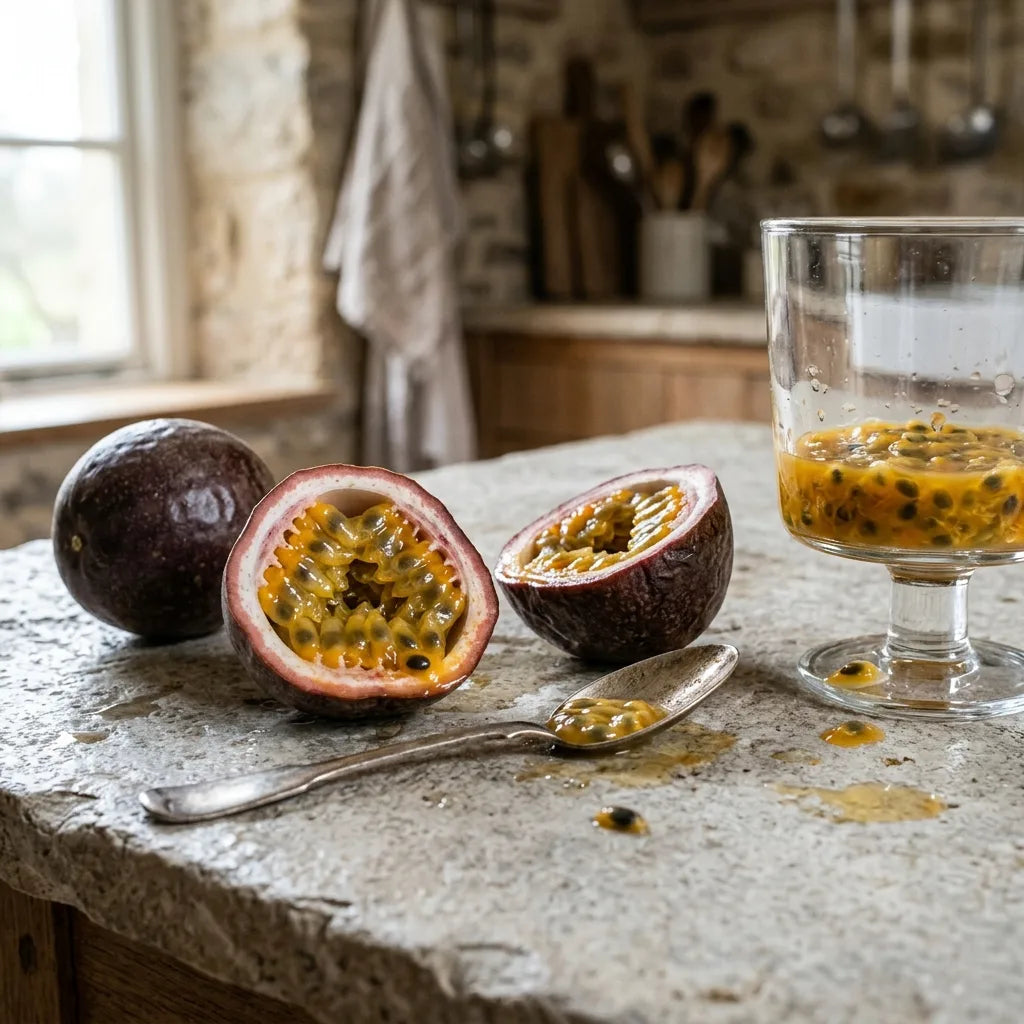
Granadilla, passion fruit, maracuja, edible passionflower: the name “passion flower” does not come from romance but from the 16th-century Jesuit missionaries, who saw in its complex flower the symbols of the Passion of Christ—the crown of thorns in its filaments and the three nails in its stigmas. An extraordinary flower, followed by an equally remarkable fruit.
Characteristics:
-
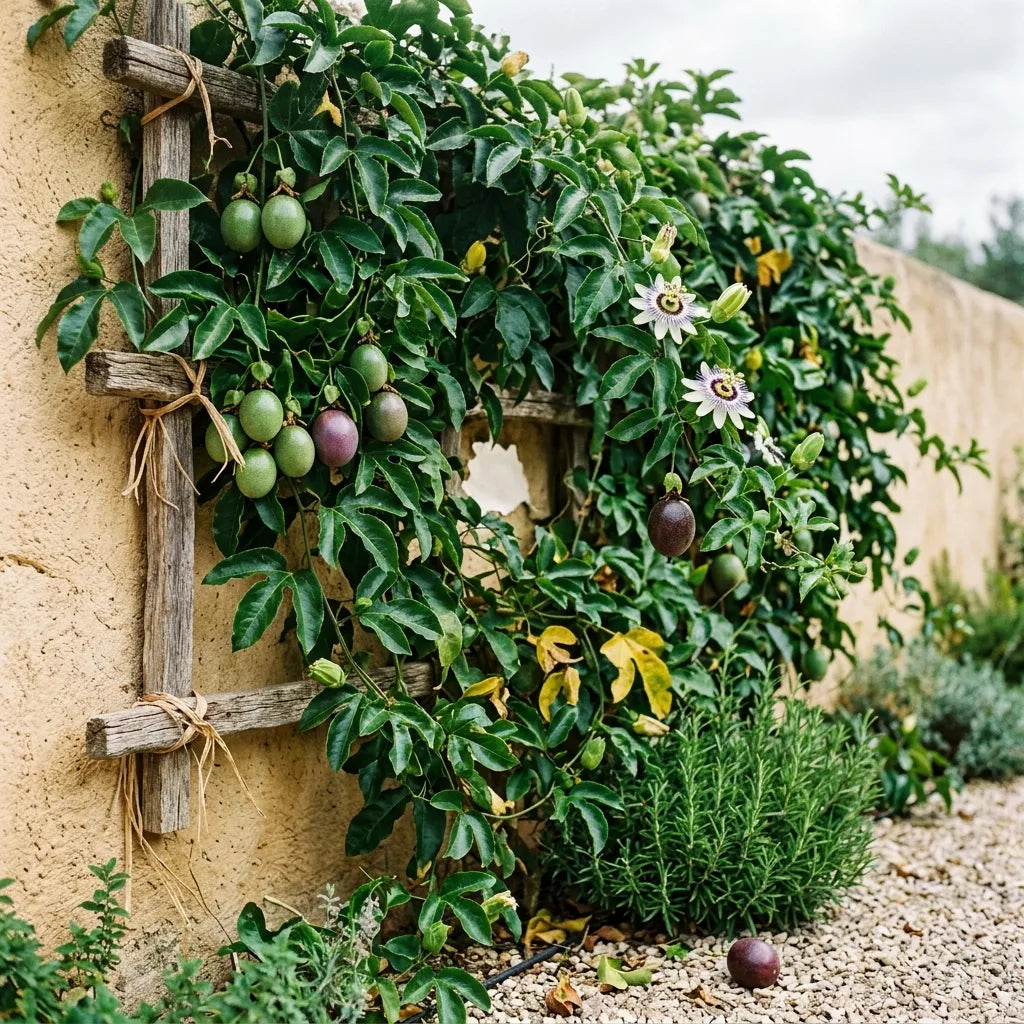
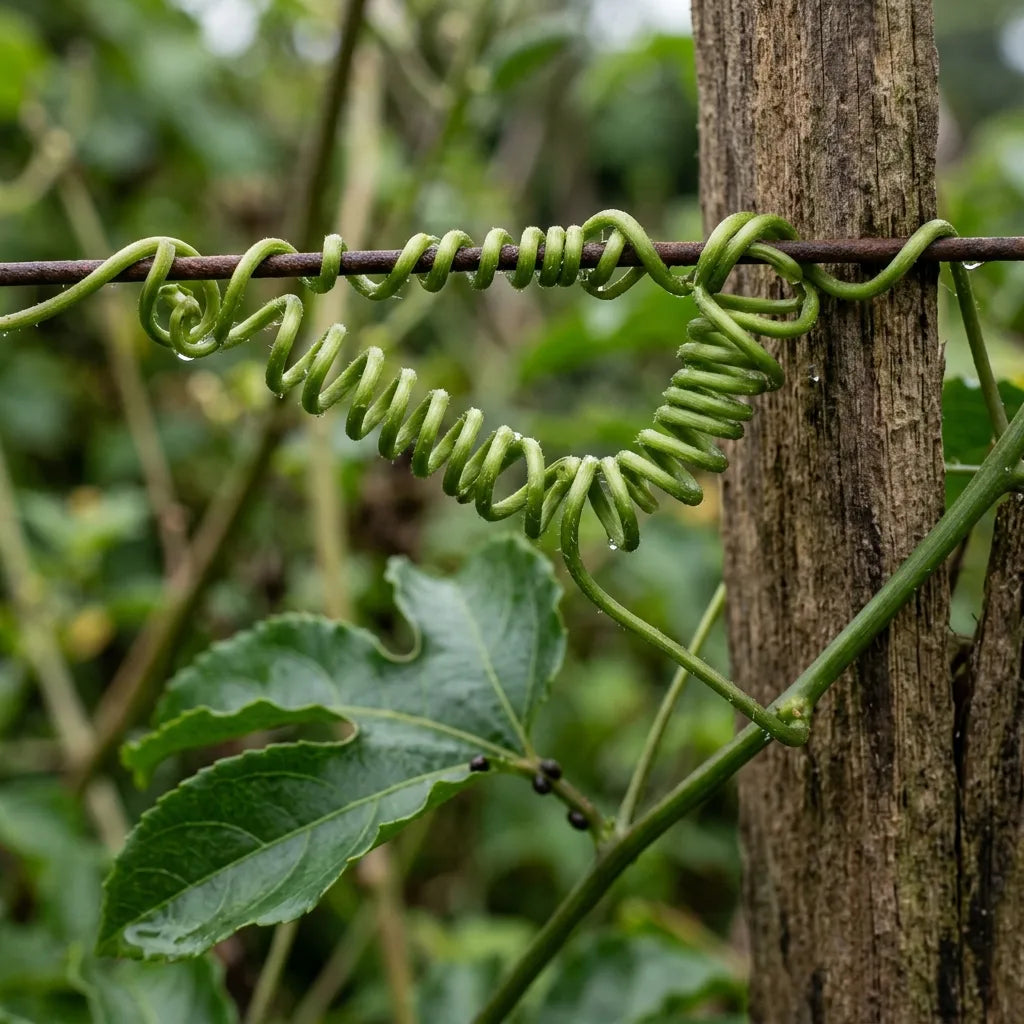
Vigorous vine: a climbing plant with tendrils, it reaches 5 to 6 metres and quickly covers a support.
-
Spectacular flowers: a unique structure with a crown of filaments, fragrant and fascinatingly complex.
-
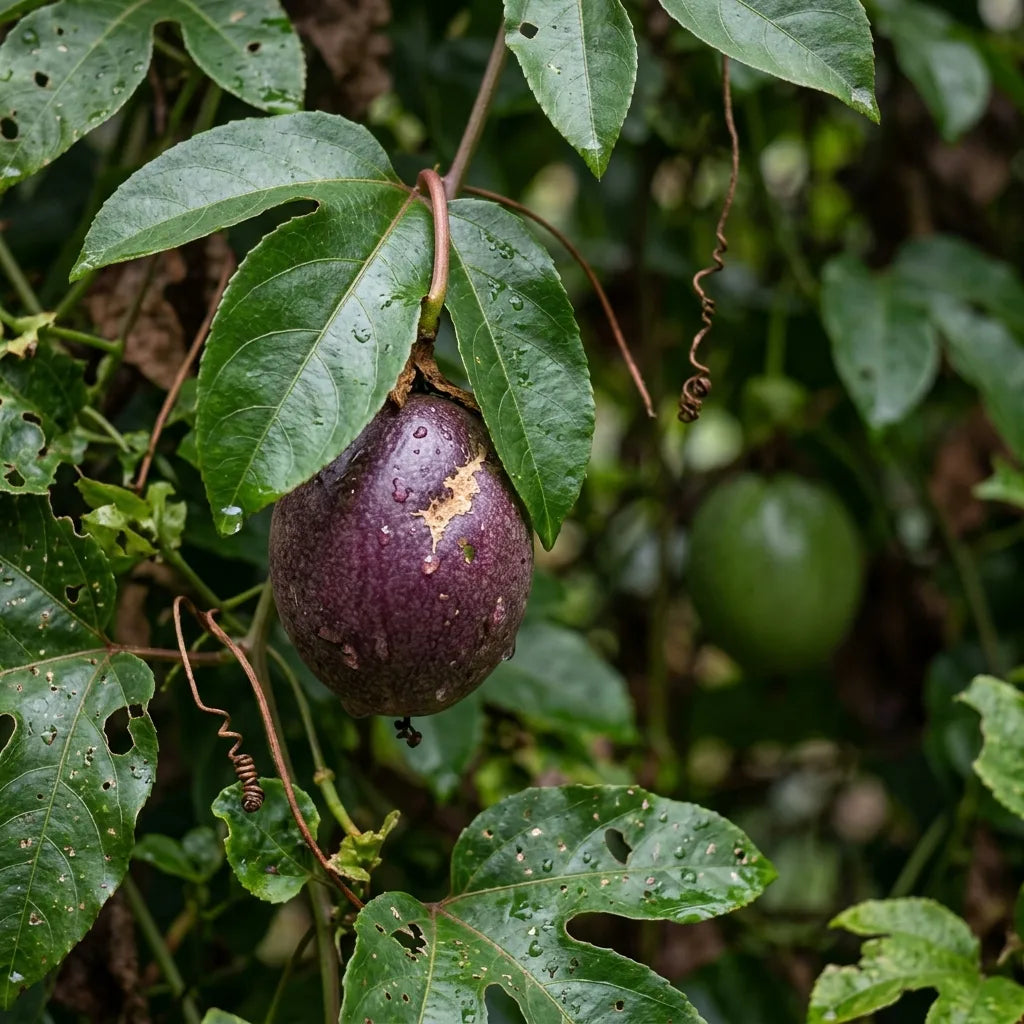
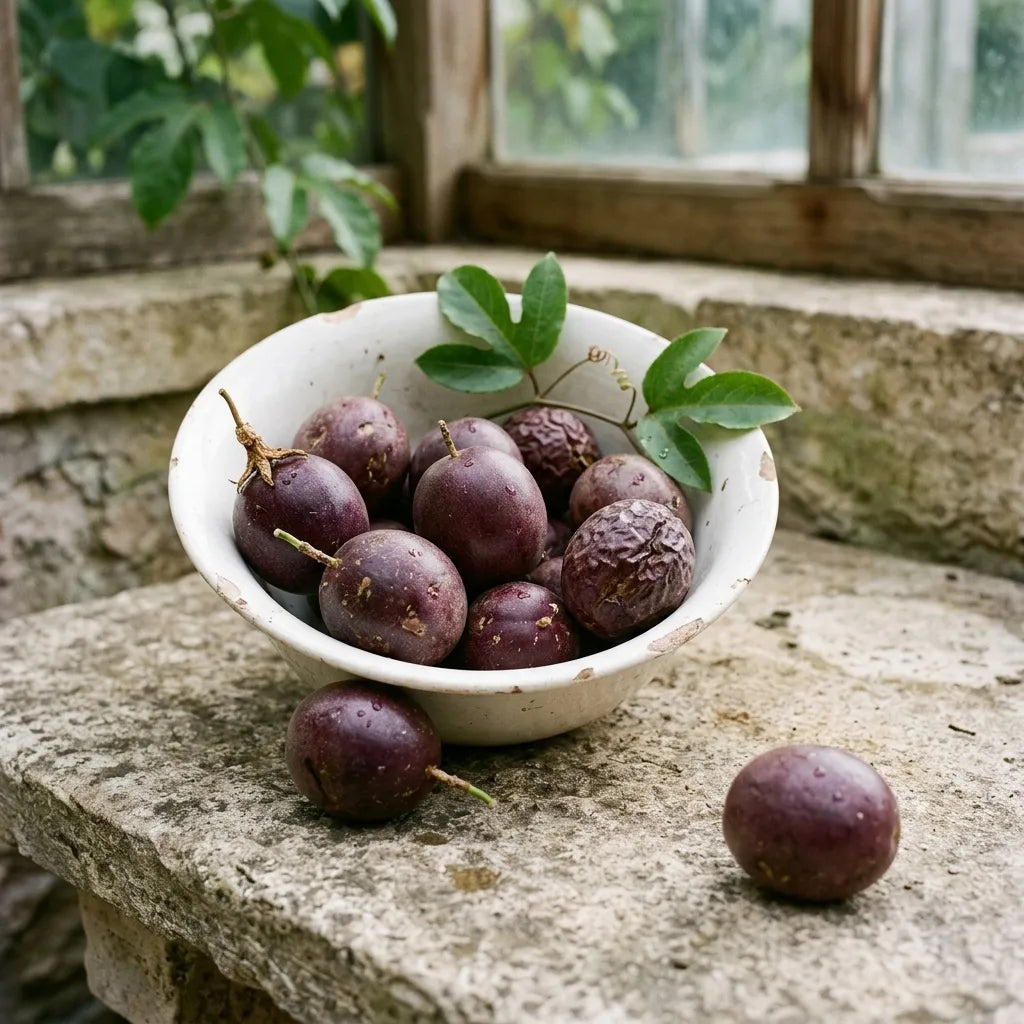
Edible fruits: the maracujas, with fragrant, tangy pulp, are eaten with a teaspoon.
Precautions:
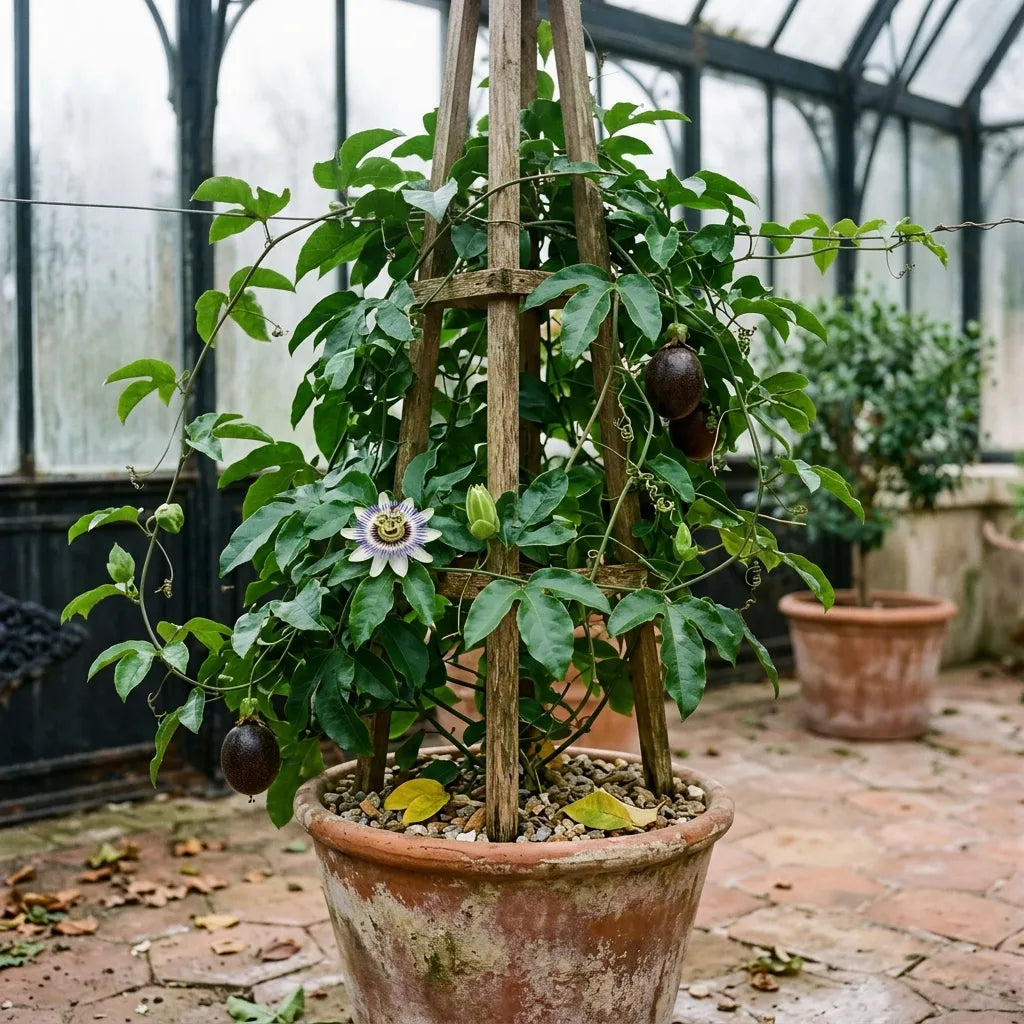
- Frost-tender plant: it cannot tolerate frost and can only be grown outdoors in the ground in Mediterranean regions. Elsewhere, grow it in a large pot to overwinter in a conservatory or greenhouse.
- Only eat perfectly ripe fruits, when the skin begins to wrinkle slightly: this is when they taste best. Do not eat green fruits.
Sowing advice:
-
Position: full sun, in a warm location sheltered from cold winds.
-
Soil: rich in humus, light and well drained, while retaining moisture during summer—this is the balance to achieve. Adding compost is beneficial; however, the plant is sensitive to stagnant water around its roots.
-
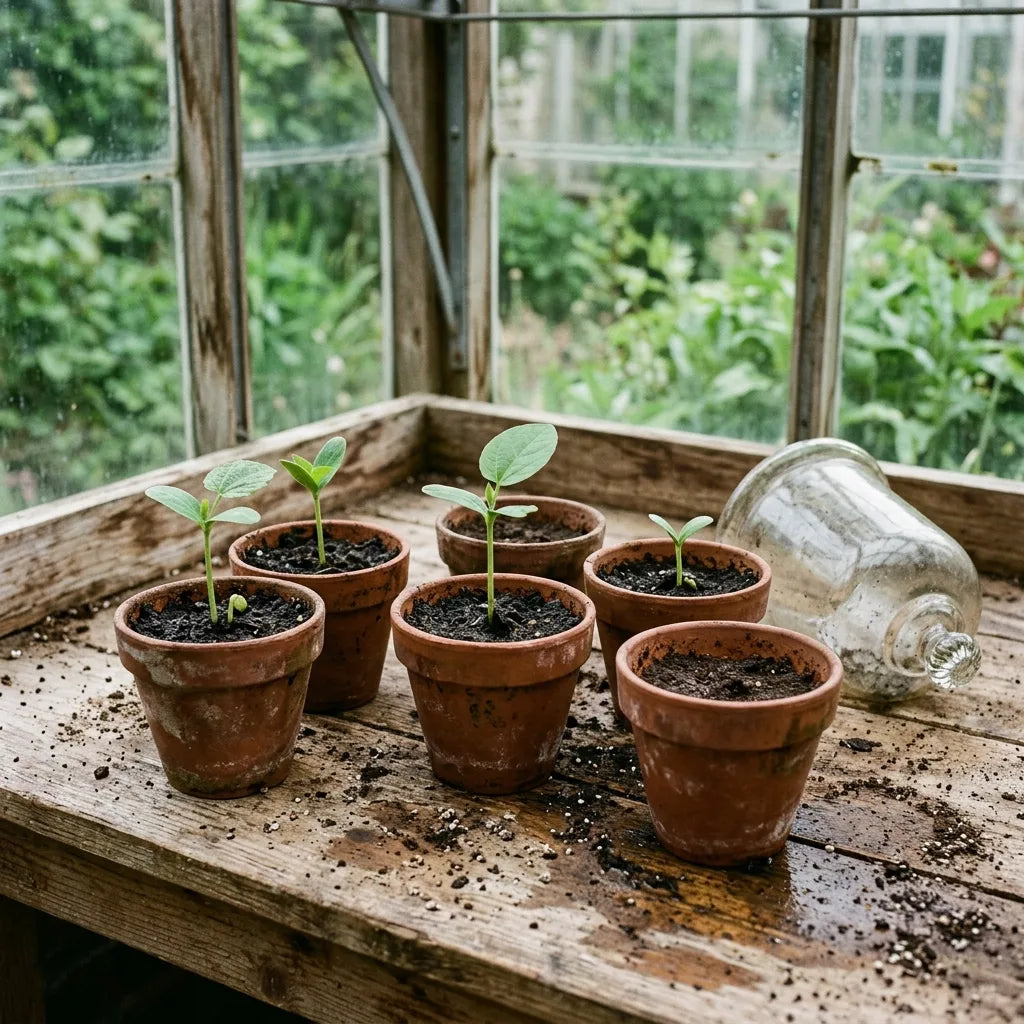
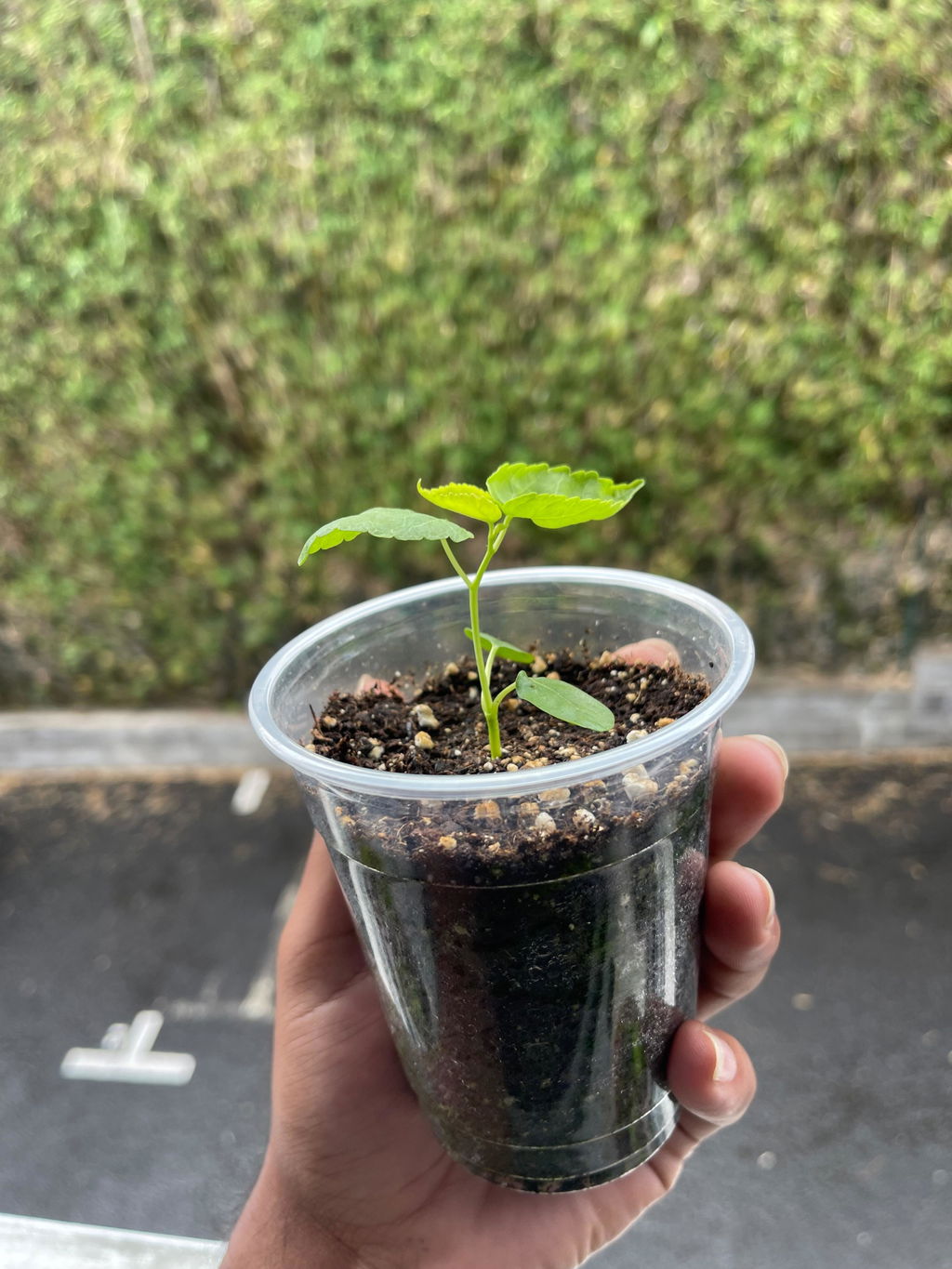
Method: no cold stratification—this tropical species requires warmth. Soak the seeds in lukewarm water for 24 to 48 hours, then sow them 1 cm deep in a substrate kept moist at 25 °C. Germination is erratic and unpredictable: allow 2 weeks to 2 months. See how to sow your seeds.
Planting advice:
- Plant in spring, in the ground in Mediterranean regions or in a large pot elsewhere, on a sunny balcony or terrace.
- Train it from planting onwards along a wall, trellis or pergola: its tendrils need a support to cling to.
Care advice:
- Water regularly in summer, especially when grown in a pot. Mulch around the base to retain moisture.
- Prune at the end of winter to aerate and contain the vine: it fruits on the current year's wood.
Harvesting advice:
- Wait until the fruits fall by themselves or their skin wrinkles: at this stage, the pulp reaches its maximum flavour. A smooth, firm fruit is still too acidic.
Benefits for biodiversity:
- Its complex, nectar-rich flowers are highly sought after by large bumblebees, the only insects powerful enough to force their way in.
- Its dense foliage on a support provides shelter appreciated by insects and birds.
Uses:
- Eat the fruits fresh with a spoon, or use them in juice, coulis or baking. The vine is also remarkably ornamental on a pergola.
Symbolism:
The passion flower takes its name from the symbolic interpretation given to it by missionaries: the crown of thorns, nails and wounds of the Passion. It remains associated with faith and spirituality.
Harvesting your own seeds:
Remove the pulp from a fully ripe fruit, let it ferment for two to three days in a little water, then rinse it carefully: the black seeds will separate from the aril. Dry them and sow them promptly, as their germination capacity decreases over time. See how to store your seeds.
Commitment to Quality: at SemiSauvage - Permaculture, we grow and select our seeds with respect for all living things as our guiding principle. Based near the Auvergne Volcanoes, we choose open-pollinated, non-hybrid varieties, tested for their germination rate, carefully sorted and packaged, with no chemical treatment. Our conviction: to give gardeners back the ability to resow, year after year, seeds that truly belong to them.
Add an exotic touch to your garden with these granadilla seeds.