Cucurbita pepo “Spaghetti”
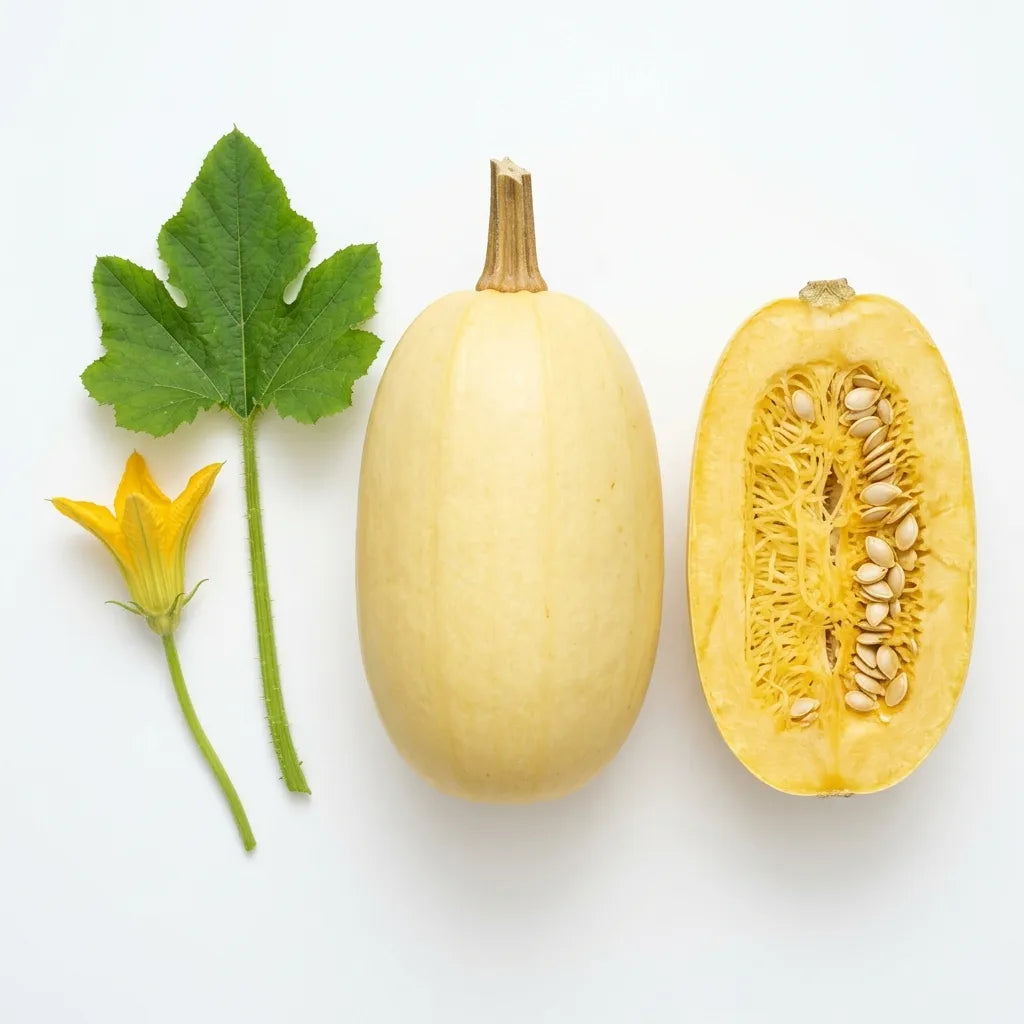
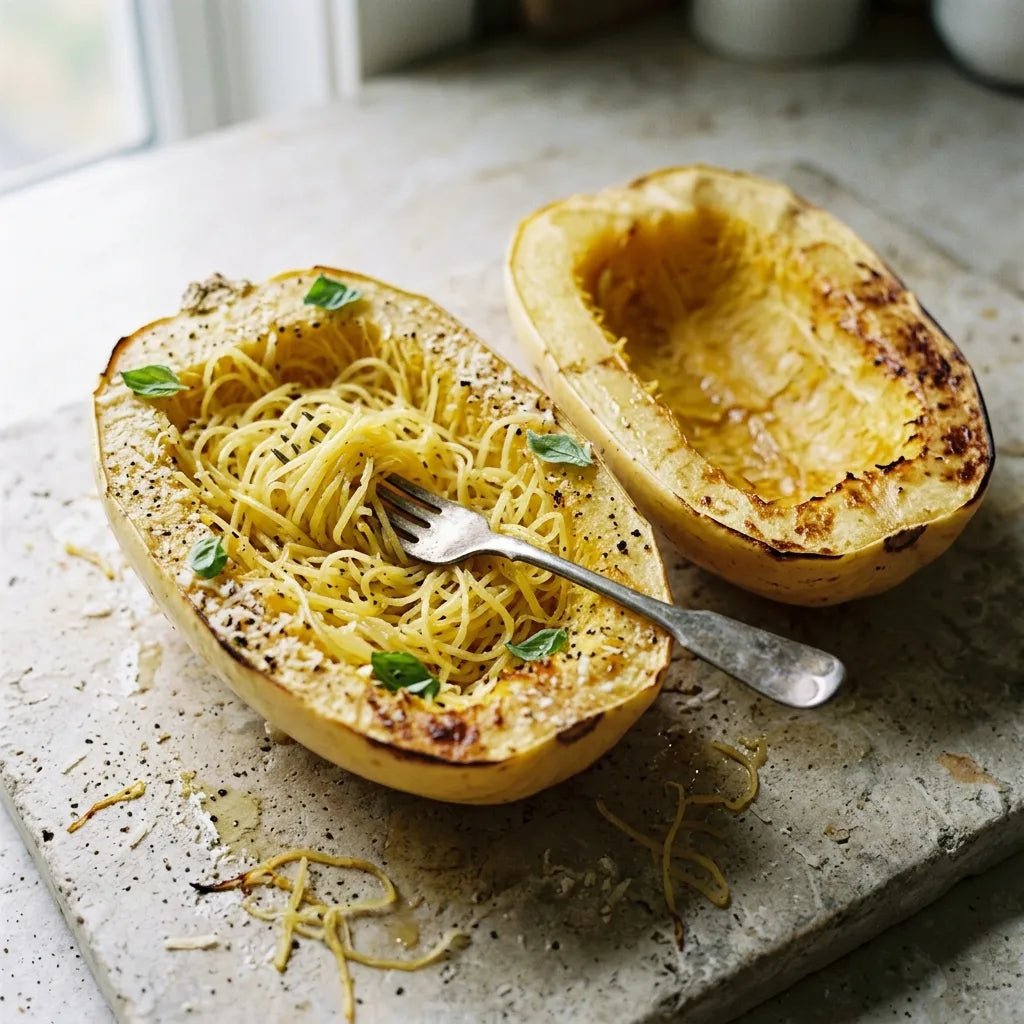
Spaghetti squash, vegetable squash, angel hair: its name is not a marketing image. Once cooked, its flesh naturally separates into long golden strands that look remarkably like pasta — simply scrape it with a fork. A vegetable sleight of hand that never fails to amaze at the table.
Characteristics:
-
Stringy flesh: it separates into golden spaghetti after cooking.
-
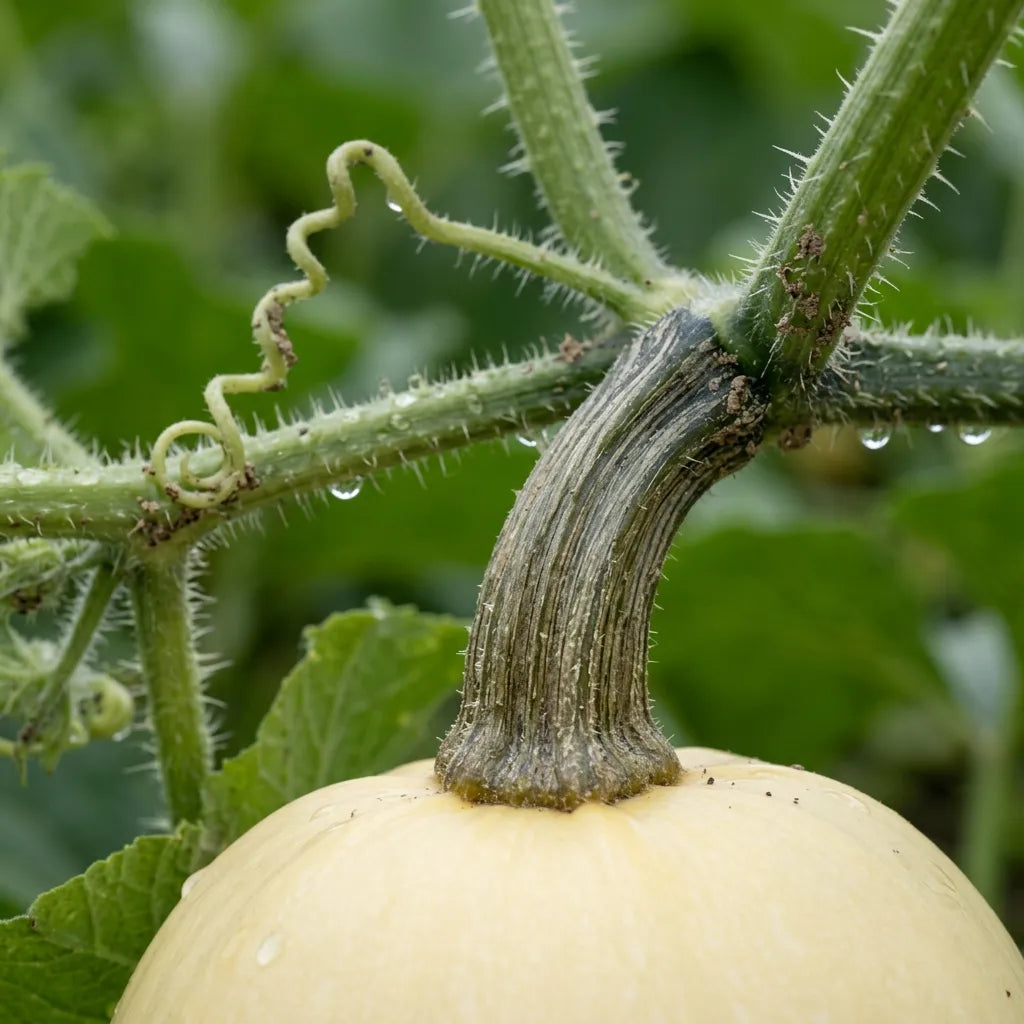
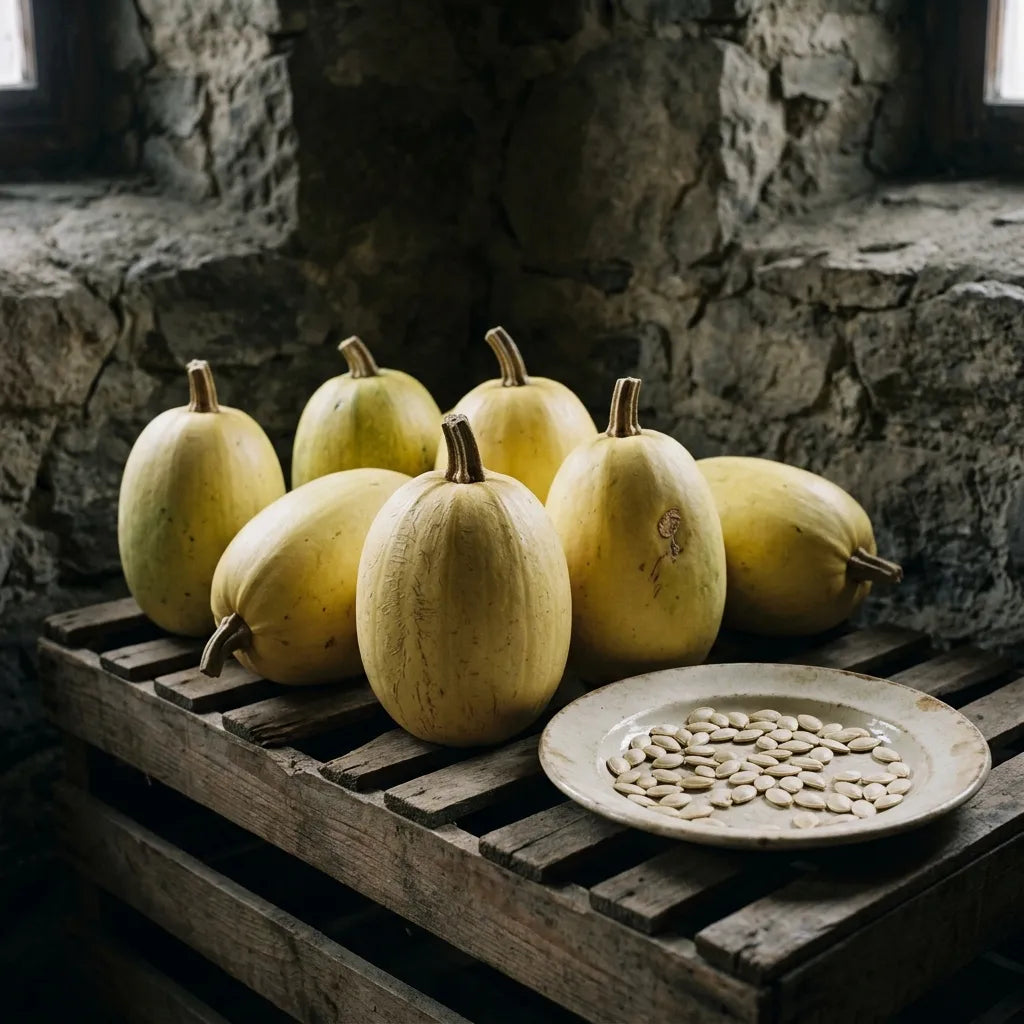
Winter squash: pale yellow skin, oval fruits weighing 1 to 2 kg, with a long shelf life.
-
Mild, neutral flavor: it goes just as well with savory sauces as with sweet ones.
-
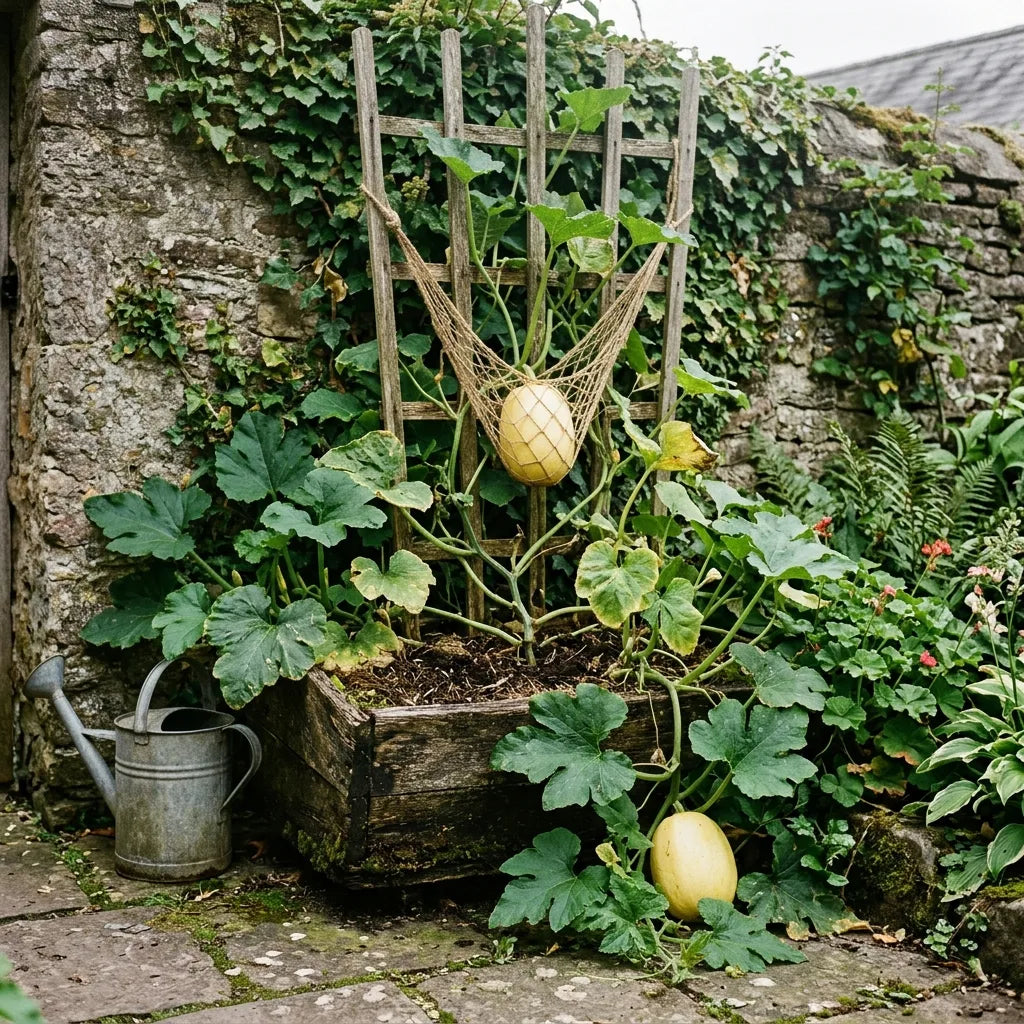
Less sprawling than most trailing squash varieties.
Precautions:
- As with all cucurbits, a fruit with a very bitter taste may contain cucurbitacins, which can irritate the digestive system. Always taste a small piece: if the bitterness is pronounced, discard the entire fruit.
Sowing advice:
-
Exposure: full sun, warm conditions.
-
Soil: rich in humus, deep and well drained, with a generous supply of mature compost — this is a very hungry plant. It is sensitive to stagnant water around the crown.
-
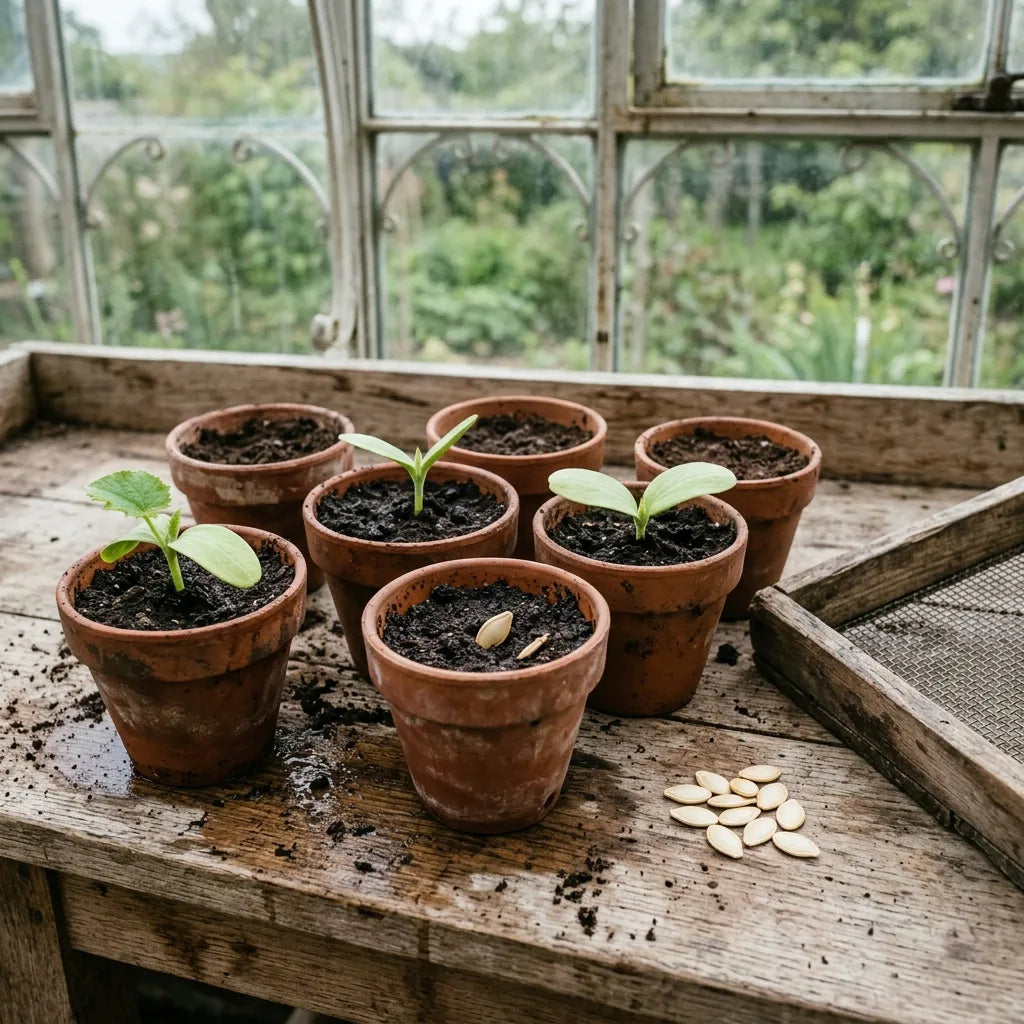
Method: sow in spring, in pots under cover at 20–25 °C from April onward, or directly in the ground after the last frosts, 2–3 cm deep, with the seed placed on its edge. See how to sow your seeds.
Planting advice:
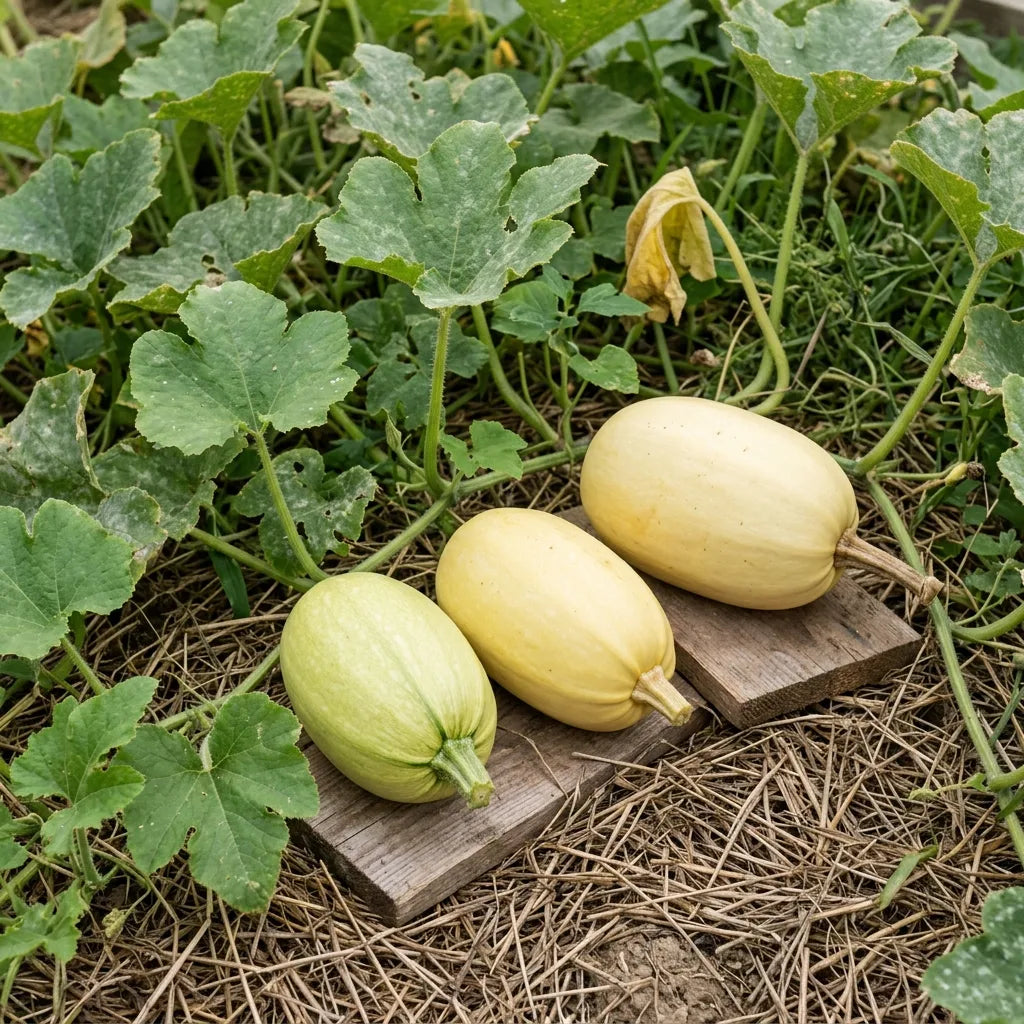
- Transplant after the frosts, spacing plants 1 meter apart. Apply a thick mulch to retain moisture and keep the fruits clean.
Care advice:
- Water generously at the base, without wetting the foliage, to help limit powdery mildew.
- Place a board beneath each fruit to keep it off the damp soil.
Harvesting advice:
- Harvest before the frosts, when the skin is fully yellow and can no longer be scratched with a fingernail. Leave 5 cm of stem: if cut flush, it rots quickly.
- If harvested too early, the flesh remains compact and does not form strands — this is the most common mistake with this variety.
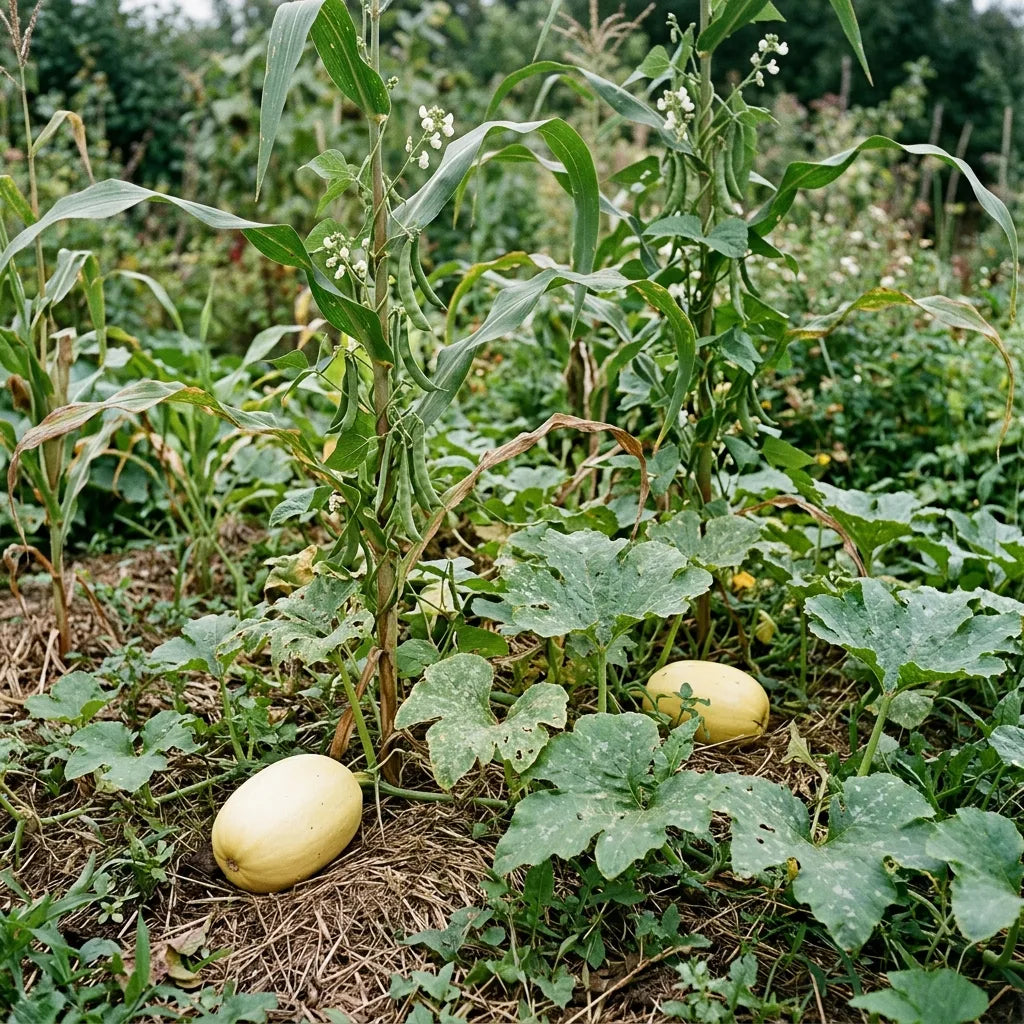
Beneficial companions:
Benefits for biodiversity:
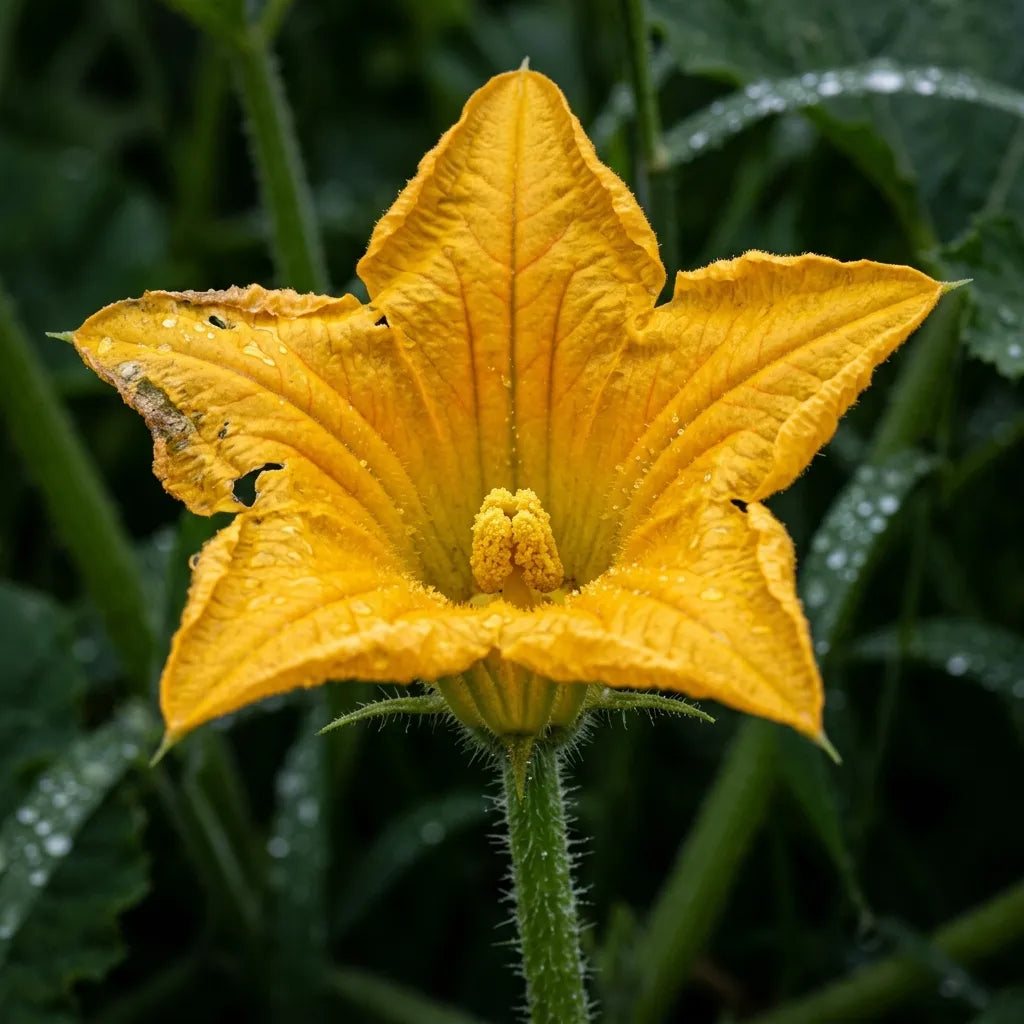
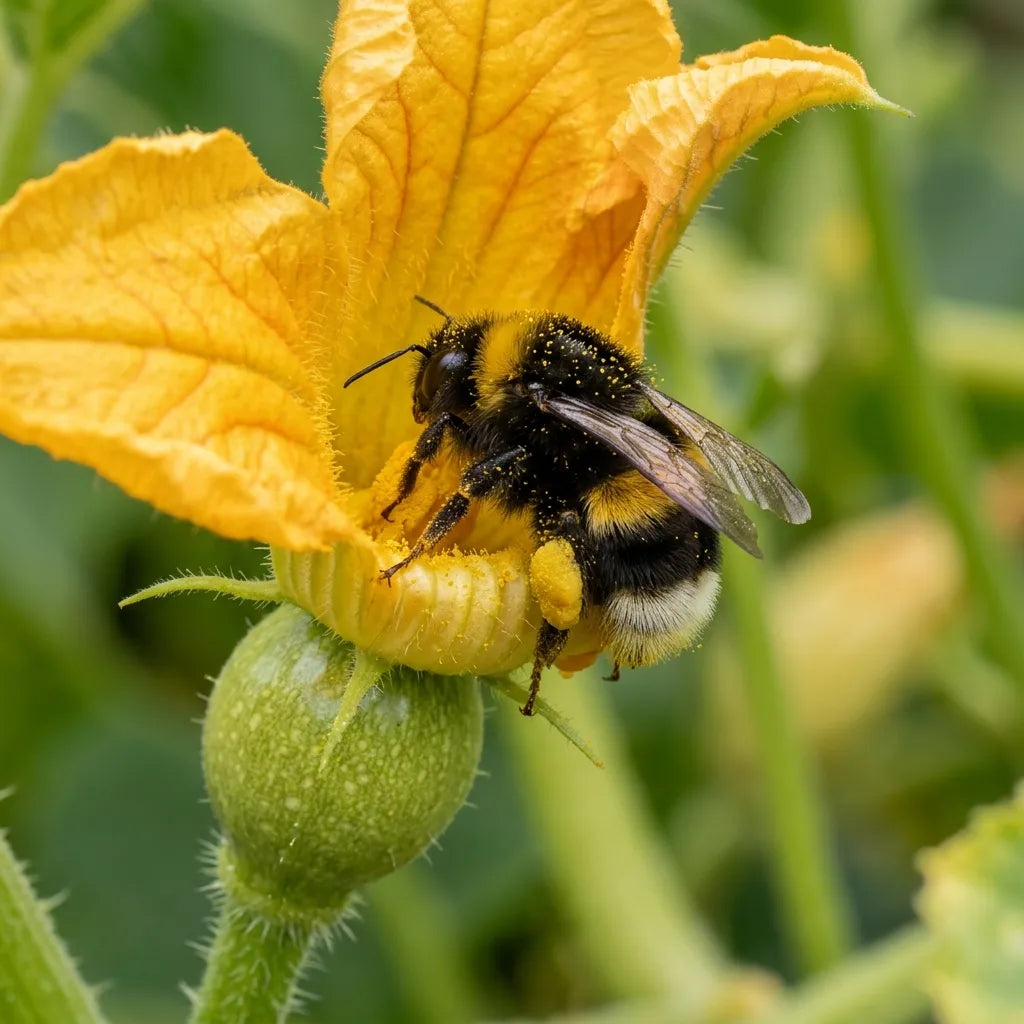
- Its large yellow flowers provide abundant pollen and nectar for bees and bumblebees from sunrise onward.
- Its spreading foliage covers the soil, smothers weeds and protects it from drying out in summer.
Uses:
- Cut it in half, bake it for about forty minutes, then scrape out the flesh with a fork: you will have strands to serve like pasta, with tomato sauce, pesto, or simply butter and Parmesan. The halved skins can be used as serving bowls.
Harvesting your own seeds:
Take the seeds from a fully ripe fruit, rinse them and dry them flat for several days. Caution: Cucurbita pepo cross-pollinate very easily with one another (zucchini, pattypan squash and ornamental squash) — isolate your seed plant. See saving your seeds.
Commitment to Quality: at SemiSauvage - Permaculture, we grow and select our seeds with respect for all living things as our guiding principle. Based near the Volcans d'Auvergne, we choose open-pollinated, non-hybrid varieties, tested for germination rates, carefully sorted and packaged, with no chemical treatment. Our belief: to give gardeners back the ability to resow, year after year, seeds that truly belong to them.
Spaghetti growing in the vegetable garden: autumn’s magic trick.