Acer palmatum
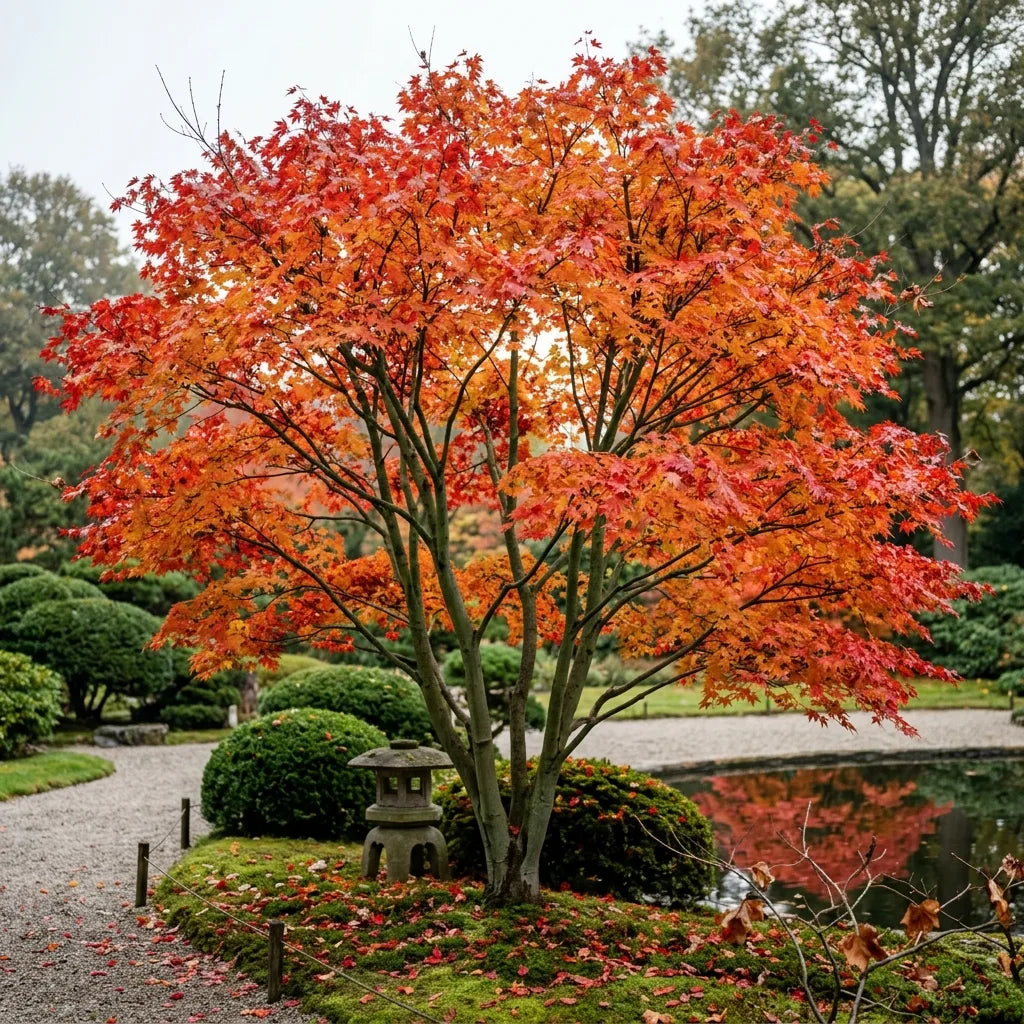
In Japan, admiring the maple’s blazing autumn foliage has a name of its own: momijigari, or “maple hunting,” a centuries-old tradition on a par with admiring cherry blossoms in spring. The Japanese maple, or palmate maple, owes its fame to foliage that spans the entire color palette, from tender green to deep purplish red.
Characteristics:
-
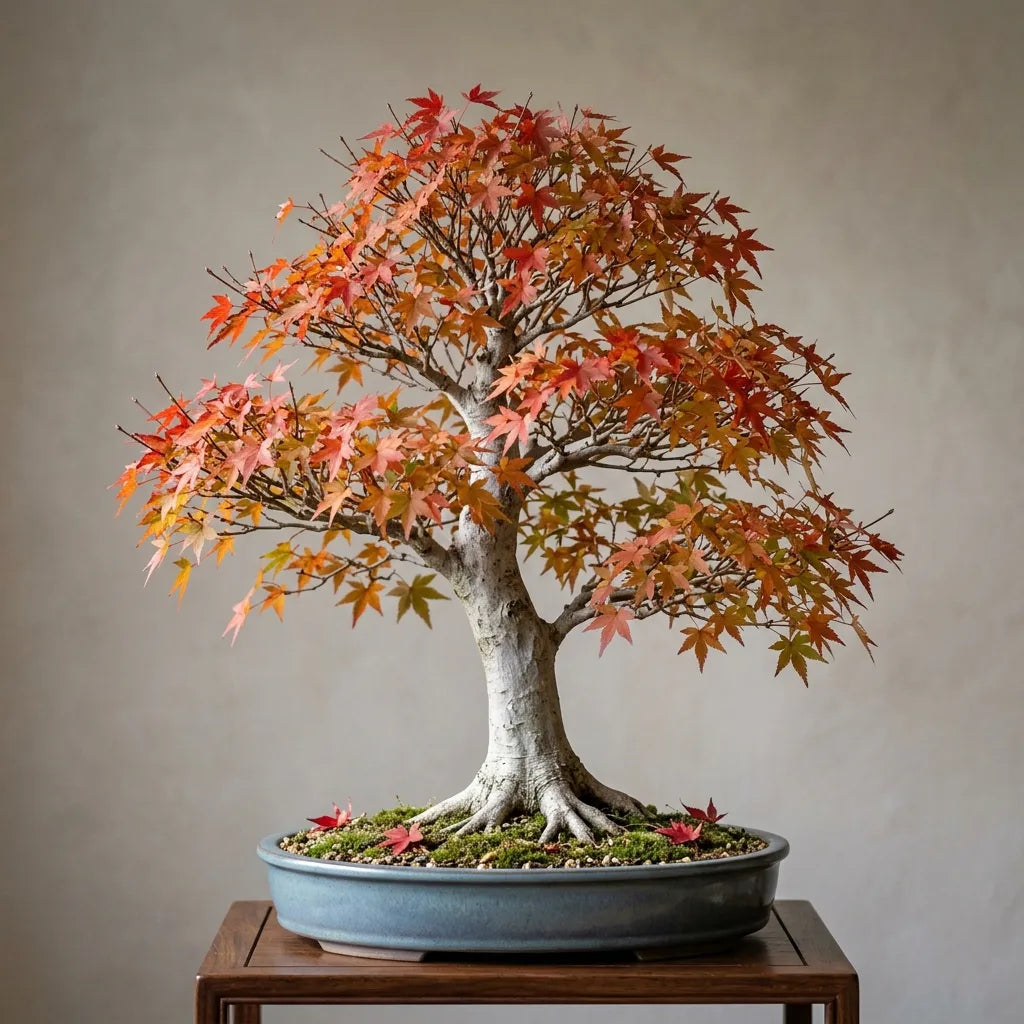
Graceful form: it can reach 15 meters when grown in the ground, but is equally well suited to being trained as a shrub or bonsai.
-
Spectacular foliage: the palmate leaves, borne on long petioles, change from green to golden yellow and then purplish red as the seasons progress.
-
Slow growth: patience is required, but its lifespan is measured in decades.
Sowing advice:
-
Exposure: partial shade is essential, sheltered from drying winds and the scorching afternoon sun, which scorches the foliage.
-
Soil: moist, well-drained, rich in organic matter, and above all slightly acidic to neutral — this is the decisive factor. It declines in chalky soil, where its foliage turns yellow (chlorosis). In chalky soil, grow it in a pot in a suitable substrate, such as ericaceous soil.
-
Method: soak the samaras for 24 to 48 hours in lukewarm water, then apply cold stratification for 2 to 3 months: this two-step process mimics the natural alternation of the seasons and breaks seed dormancy. Then sow in pots, under cover.
Planting advice:
- Transplant the following spring into deeply worked soil, taking care not to bury the root collar. Mulch generously to keep the surface roots cool and moist.
Care advice:
- Water regularly during the first few years, never allowing the soil to dry out completely.
- Prune minimally, only at the end of winter to remove dead wood: the maple does not tolerate severe pruning well. For bonsai training, see our guide creating a bonsai from a seed.
Benefits for biodiversity:
- The maple’s flowers, inconspicuous but early in spring, provide one of the season’s first sources of nectar and pollen for bees emerging from overwintering.
- Its dense crown shelters nesting birds, while its leaf litter feeds soil life — see the basics of living soil.
Symbolism:
In Japanese culture, the maple is associated with the passage of time and the impermanence of things (mono no aware): its autumn splendor, as intense as it is brief, makes it a poetic symbol widely present in Japanese art and poetry.
Harvesting your own seeds:
From autumn onward, collect the samaras from the tree as soon as they turn brown and detach easily. Note that maples readily cross-pollinate: seedlings may produce foliage different from that of the parent plant, which is part of the charm of growing from seed. See storing your seeds.
Commitment to Quality: at SemiSauvage - Permaculture, we grow and select our seeds with respect for all living things as our guiding principle. Based near the Volcanoes of Auvergne, we choose reproducible, non-hybrid varieties, tested for their germination rates, carefully sorted and packaged, with no chemical treatments. Our conviction: to give gardeners back the ability to resow, year after year, seeds that truly belong to them.
Acquire these Japanese maple seeds to add a touch of autumnal splendor, whether grown in the ground or as a bonsai.