

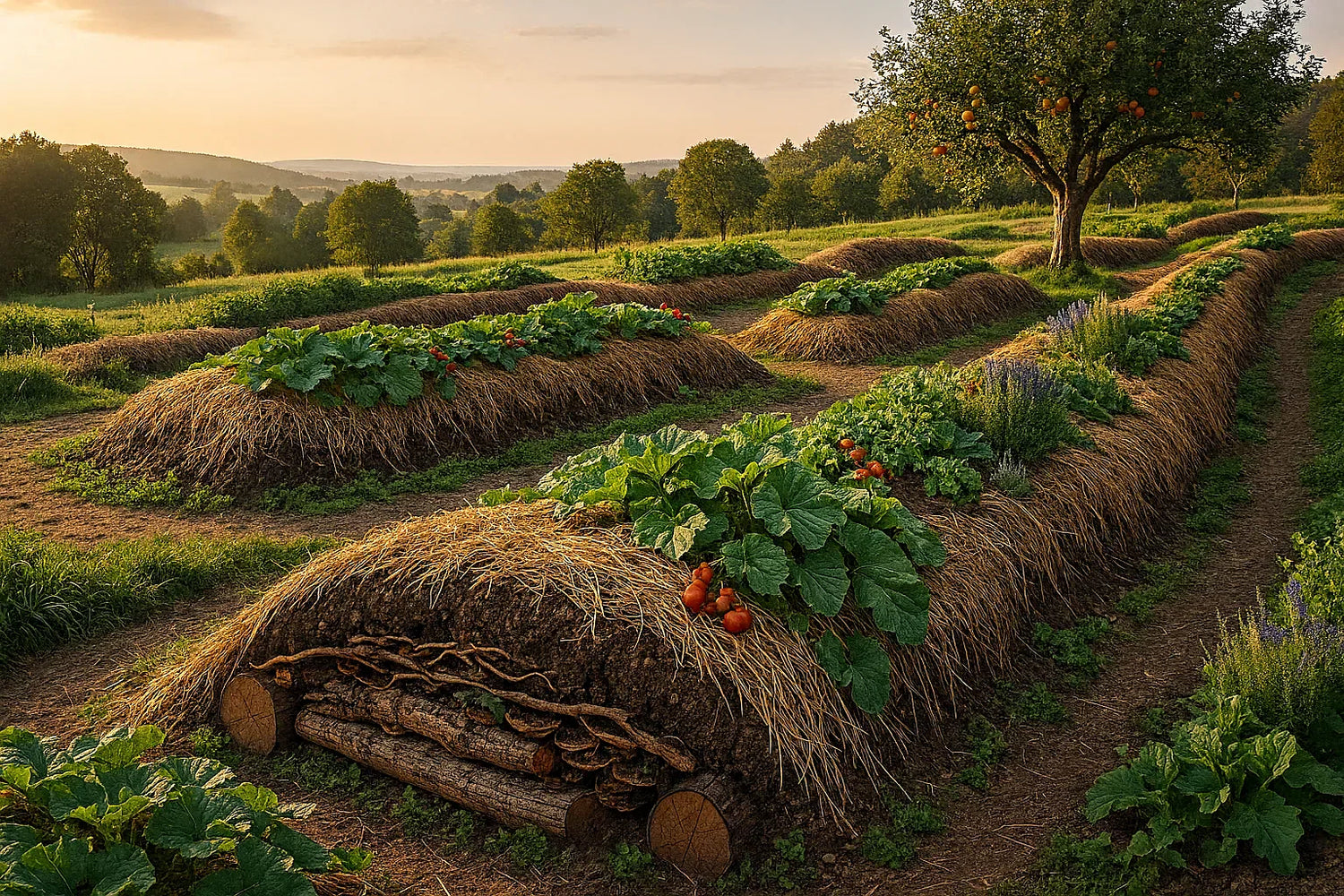
🌿 Raised bed gardening: an ancestral technique for living, self-sustaining soil
Raised bed gardening is an ancient technique revived thanks to permaculture. It creates rich, structured, and fertile soil while significantly reducing labor, watering, and external inputs.
It is a simple approach, accessible to all, that transforms the plant materials available in the garden into a true miniature food forest.
🌱 A no-till method, respectful of soil life
Unlike conventional gardening, raised bed gardening requires no tilling or soil turning.
👉 By allowing the natural layers to establish themselves, we preserve the living structure of the soil and all the microorganisms residing there.
Under the raised bed, life gradually settles in:
-
The mycelium of fungi colonizes the wood and connects the roots together through its underground network.
-
The earthworms dig tunnels that naturally aerate the raised bed and improve drainage.
-
The decomposer insects (beetles, woodlice, ground beetles…) find refuge in the wood and organic layers.
-
The bacteria and microfauna slowly transform the matter into rich humus.
➡️ This invisible little world creates a self-sustaining biotope, in which each organism plays an essential role in the fertility and resilience of the raised bed.
🌳 The spongy wood, the living heart of the raised bed
At the center of the raised bed is a layer of decomposing wood (trunks, large branches, stumps).
Over time, this wood becomes a true natural sponge:
-
It absorbs excess water during wet periods.
-
It slowly releases this reserve during dry periods.
-
It houses fungi and insects that actively participate in the transformation of organic matter.
👉 Thanks to this underground “reservoir,” raised beds require much less watering, even in summer. This ability to buffer water variations makes raised bed gardening particularly suited to climates subject to droughts or heavy rains.
🔁 A circular and local logic
One of the great advantages of raised bed gardening is that it relies on resources already present in the garden.
Rather than taking branches, prunings, and plant material to the dump, you can valorize them directly on site:
-
Wood and prunings become the internal structure.
-
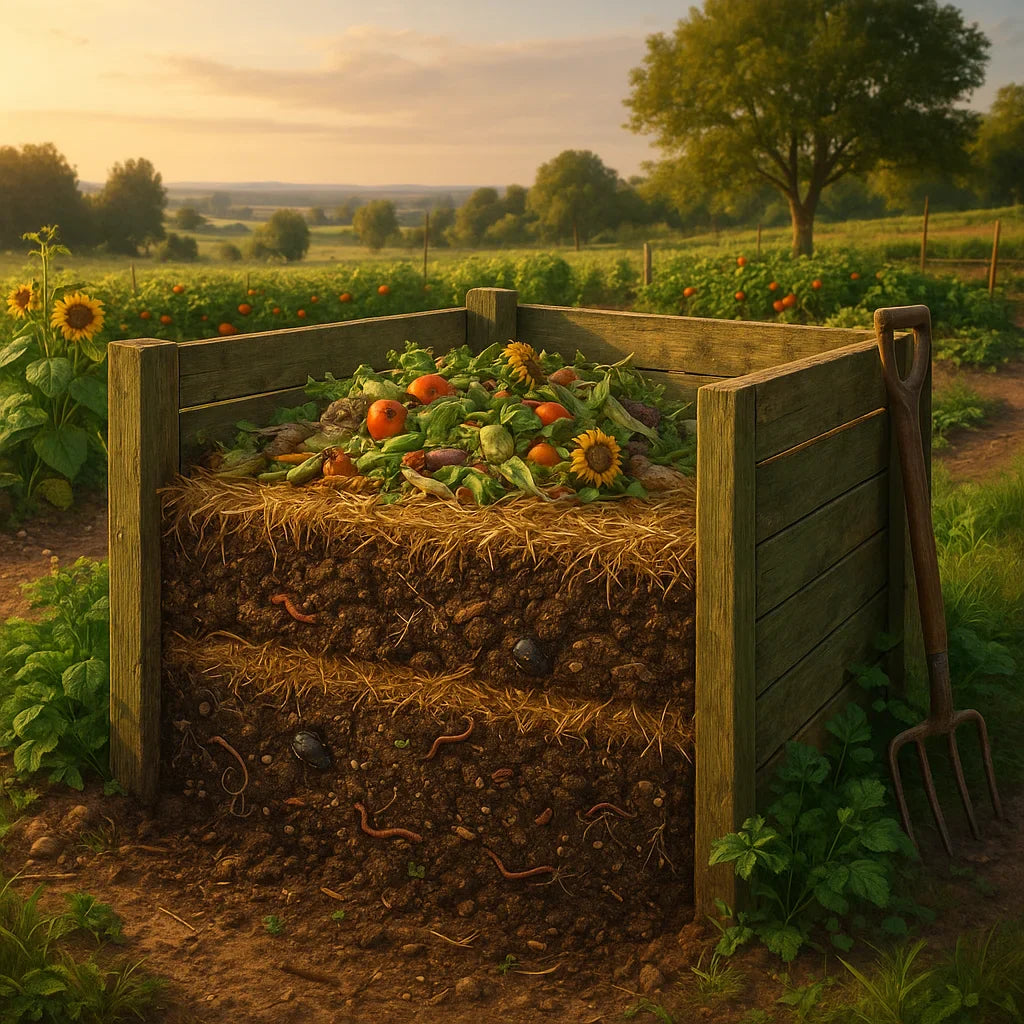
Dead leaves, clippings, and compost pile up to feed the mound.
-
Mulches (straw, wood chips, shreddings…) protect the surface and maintain fertility.
➡️ This shifts from a linear model (“produce → throw away”) to a circular model where every waste becomes a resource, without unnecessary transport or loss of organic matter.
🛠️ Key construction steps
1. Choose the location
-
Prefer a sunny or slightly shaded spot depending on the crops.
-
Mark the outlines (about 1.2 m wide).
2. Install the wooden base
-
Place trunks, large branches, or stumps in a slight depression.
-
Pack them well to avoid air pockets.
3. Add organic layers
-
Fine branches, prunings, dead leaves, grass clippings, coarse compost.
-
Finish with a layer of mature compost or good topsoil.
4. Form the mound
-
Shape a rounded mound (50 to 80 cm high), slightly compacted but not compressed.
5. Protect with mulch
-
Straw, wood chips, dead leaves, or shavings to protect the surface and feed the soil life.
🌾 A living, productive, and sustainable soil
The cultivation mound evolves over the years:
-
Year 1: very productive thanks to fresh inputs — ideal for hungry vegetables.
-
Years 2 to 3: wood decomposition is in full swing, the structure becomes stable, and water retention is optimal.
-
Following years: the mound slowly settles but remains very fertile. Simply add mulches and organic matter on the surface to extend its life.
🌻 A technique suited for all gardens
Whether it’s a small urban vegetable garden, a sloped plot, or a large area to rehabilitate, mound cultivation adapts easily.
It combines generous production, natural resilience, and respect for living things, without relying on chemical inputs or heavy machinery.
🌿 In conclusion
Mound cultivation is much more than a technique: it’s a gardening philosophy in harmony with nature.
It recreates a living, rich, and self-sustaining soil by turning our “green waste” into a valuable resource.
Without tilling, without excessive watering, and with abundant biodiversity, the mound becomes a true nourishing ecosystem, serving both plants and gardeners 🌱✨


Leave a comment
This site is protected by hCaptcha and the hCaptcha Privacy Policy and Terms of Service apply.