

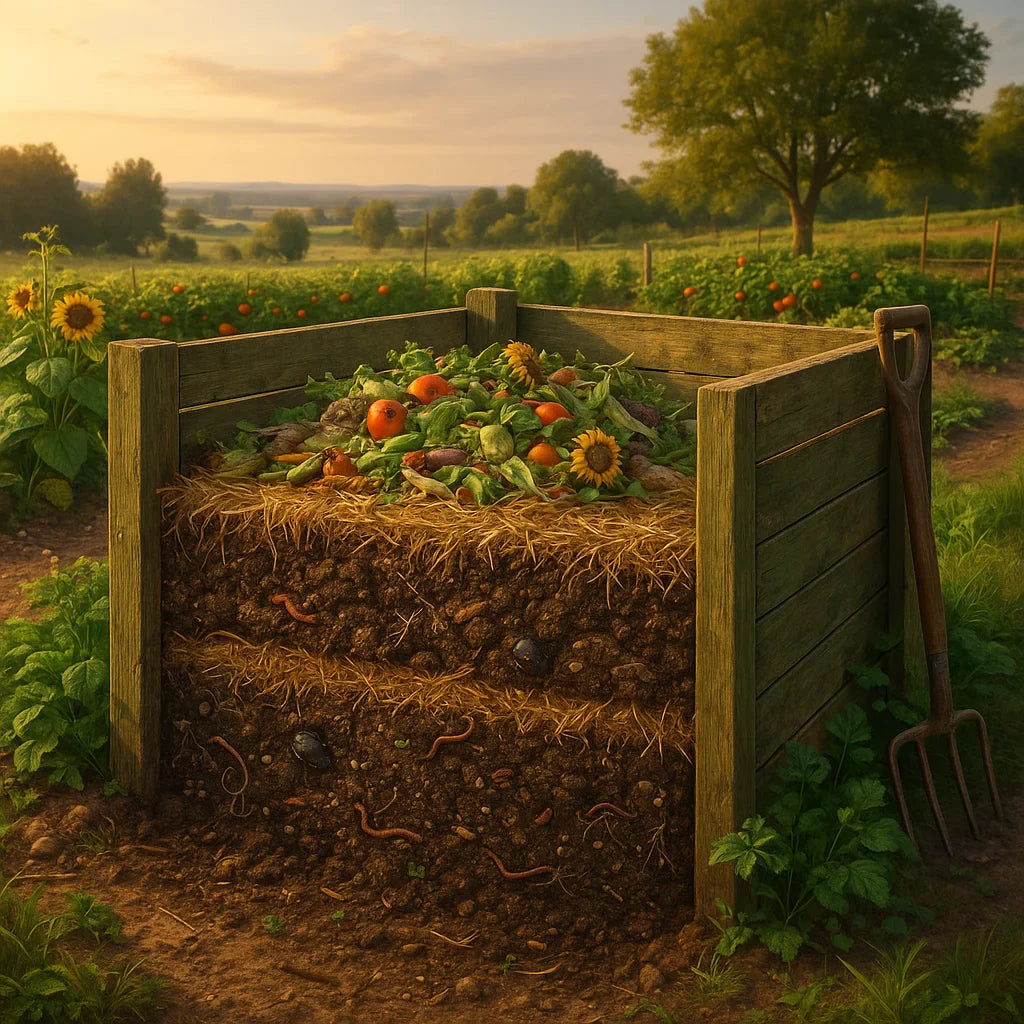
Composting is both an ancient and modern practice, based on a natural biological process: the controlled decomposition of organic matter.
It is a key step in permaculture to close the cycles, reduce waste, and sustainably enrich soils without chemical inputs.
Properly done, composting produces a rich, stable material called humus, which improves soil fertility, structure, and resilience.
🌿 Why compost? A simple act with profound effects
-
🌍 Waste reduction: up to 30% of household waste can be composted, significantly lightening the trash bins.
-
🌱 Soil improvement: compost increases organic matter content, stimulates microfauna, and improves water retention.
-
🪱 Biological activation: compost feeds underground life — fungi, bacteria, insects — which then work for the plants.
-
💰 Local economy: less fertilizer to buy, less waste transport.
-
🌳 Carbon stability: compost stores carbon in a stable form in the soil, helping to combat erosion and climate change.
🧪 The biological process of composting
Composting is an aerobic decomposition, meaning it occurs in the presence of oxygen.
Three main phases follow one another:
1. 🌡️ Thermophilic phase (heating)
During the first weeks, aerobic microorganisms rapidly break down sugars and proteins.
The temperature can rise up to 60 °C, which allows:
-
to eliminate the majority of unwanted seeds,
-
to neutralize many pathogens.
👉 This phase is essential for obtaining healthy compost.
2. 🍂 Active decomposition phase
As the material breaks down, the temperature gradually decreases.
Fungi and invertebrates take over: worms, woodlice, springtails…
They transform the residues into a finer, darker, and more homogeneous material.
3. 🌳 Maturation phase
The material becomes stable, and the mineralization and humification processes are completed.
The compost takes on a crumbly texture, a dark brown color, and a forest floor smell.
Microorganisms slow their activity: the compost is mature.
⚖️ Material balance: key to good compost
Good compost relies on a balance between two main families:
-
Green materials (rich in nitrogen)
→ peelings, fresh grass clippings, vegetable kitchen waste, young weeds, coffee grounds. -
Brown materials (rich in carbon)
→ dead leaves, straw, shredded material, small branches, unprinted brown cardboard.
👉 Ideal ratio: about ⅓ green to ⅔ brown.
-
Too much nitrogen = smelly, anaerobic compost.
-
Too much carbon = compost too dry, slow to decompose.
Aeration is also essential: compost must “breathe.” Fine branches or shredded material ensure good structure for air circulation.
💧 Managing moisture and air
Compost should be moist like a wrung-out sponge.
-
Too dry → light watering or add green materials.
-
Too wet → add dry browns or turn.
Regular mixing (every 2 to 4 weeks) restarts microbial activity and prevents anaerobic pockets that cause bad odors.
🧰 Different composting methods
-
Compost pile: traditional, simple, and free method, suitable for large gardens.
-
Closed composter (wood or plastic): ideal in urban areas, limits nuisances and protects from weather.
-
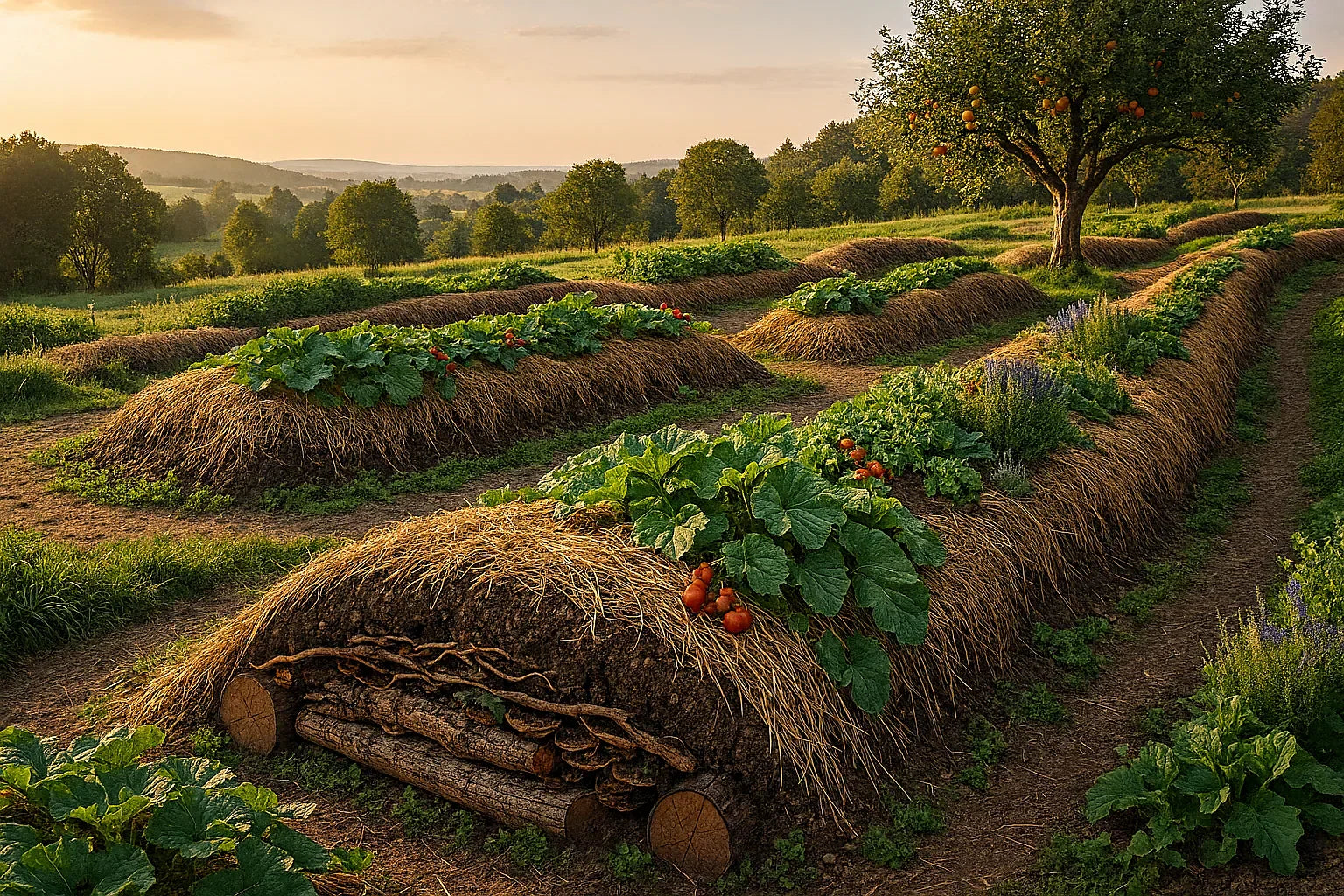
Surface composting (mulching compost): waste is left to decompose directly on the soil under a layer of mulch — a method widely used in permaculture.
-
Compost integrated into mounds: waste is directly incorporated into the structure of the mounds (see mound gardening).
-
Vermicomposting: worm-based composting in bins, often used in apartments or as a supplement.
🪱 Life in compost: a miniature ecosystem
Good compost hosts a complex food chain:
-
Bacteria and fungi break down simple molecules.
-
Insects and worms break the material into small fragments.
-
Other organisms (mites, springtails) finish the work and stabilize the material.
👉 The greater the diversity, the richer and more balanced the compost.
🌻 Using compost in the garden
🌾 When to incorporate it
-
Autumn 🍂 → as a general soil amendment, to nourish underground life during winter.
-
Spring 🌸 → before sowing or planting, to boost soil fertility.
-
In season → as a light mulch around established crops (ripe compost only).
✋ How to incorporate it
-
On the surface (permaculture method): spread 2 to 5 cm of compost over the area to enrich, then cover with mulch.
-
Light incorporation: lightly scratch the surface without turning the soil.
-
At the bottom of furrows or planting holes: for nutrient-demanding crops (tomatoes, squash, cabbage…).
👉 No need to bury it deeply — compost works best in contact with the root zone and active microfauna.
🔬 Recognizing ripe vs unripe compost
| Criterion | Ripe compost ✅ | Unripe compost ⚠️ |
|---|---|---|
| Appearance | Dark brown, homogeneous, crumbly | Heterogeneous mix, recognizable pieces |
| Smell | Fresh, forest floor | Sour, ammoniacal, fermented |
| Temperature | Ambient temperature | Still hot inside |
| Microbial life | Stabilized | Intense activity (smoke, heat) |
| Effect on plants | Favorable | Risk of root burn |
👉 Unripe compost may still contain unstable elements: used directly on young plants, it can cause temporary nitrogen deficiencies (the "nitrogen hunger" effect) or undesirable fermentation.
⚠️ To avoid in compost
-
Meats, fish, dairy products (attract pests)
-
Oils, chemicals, treated wood, plastics
-
Diseased plants or those that have gone to seed (except controlled hot composting)
-
Citrus in large quantities (excessive acidity)
📝 In summary
Composting is much more than recycling organic waste: it is a complex biological transformation that, when properly managed, produces a stable and valuable material for the soil.
👉 Integrated at the right time and in the right way, compost becomes a strategic resource to sustainably nourish crops, improve soil structure, and promote underground biodiversity.

Leave a comment
This site is protected by hCaptcha and the hCaptcha Privacy Policy and Terms of Service apply.