

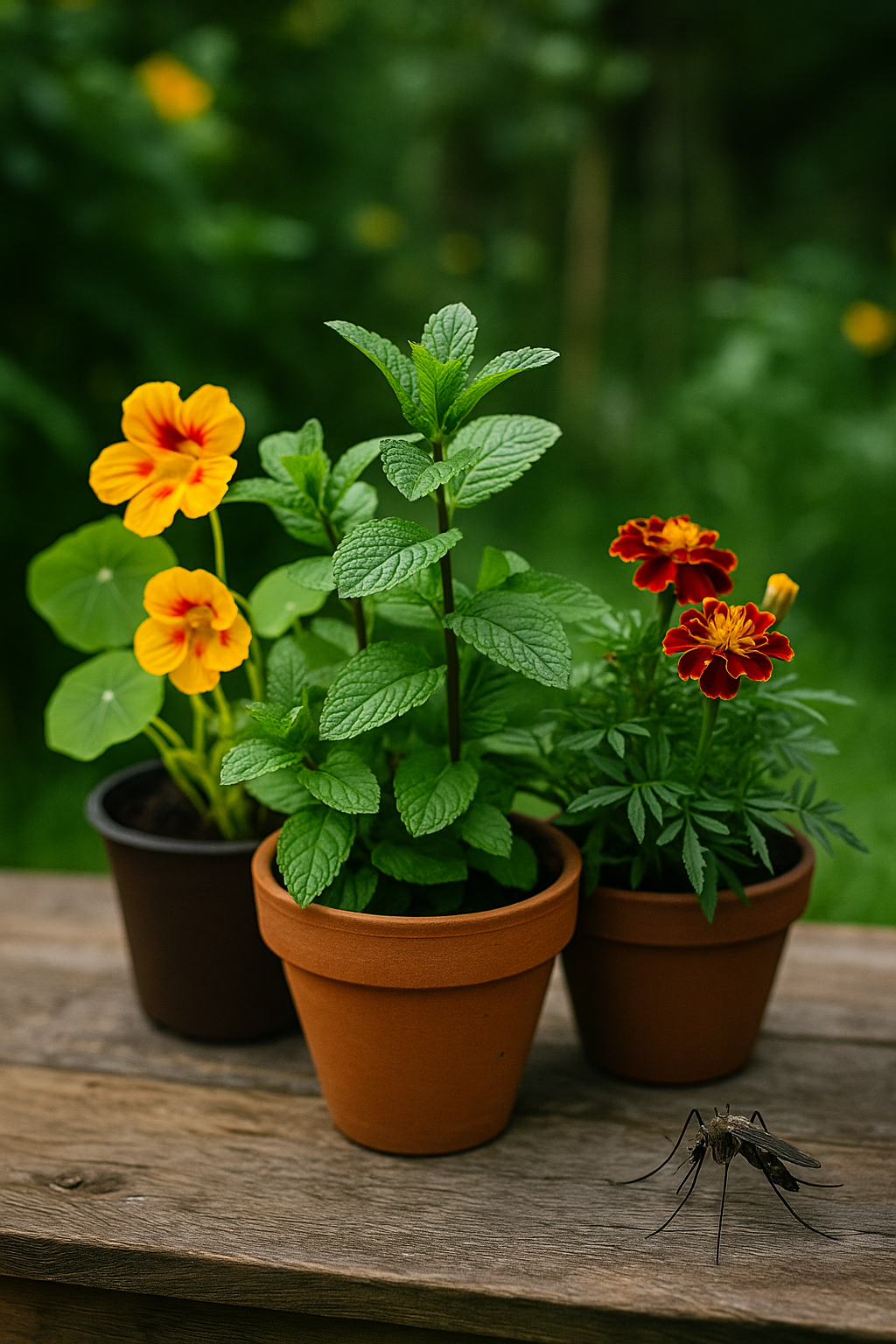
“Plant citronella and you will have no more mosquitoes.” You read that everywhere, and it is false — not because the plant contains nothing active, but because an intact plant releases almost nothing into the air.
Repellent compounds are enclosed in microscopic glands on the surface of the leaves. They are released only when the foliage is crushed. A pot of citronella placed on a patio, without anyone touching it, has virtually no effect.
This does not mean these plants are useless — they are, but in a different way. Here is what really works, and how to use it.
How a repellent plant really works
Three distinct mechanisms, with different levels of effectiveness.
- Passive diffusion — the plant spontaneously emits volatile compounds. The effect is very weak and highly localized, extending only a few dozen centimeters at best, and disappearing with the slightest draft. This is what we tend to overestimate.
- Release through crushing — crushing the leaves ruptures the glands and releases the essential oils all at once. The effect is clear, but it lasts only a few dozen minutes.
- Masking host-plant detection — in the vegetable garden, an aromatic plant masks the chemical signal by which an insect identifies its host plant. This is the most useful mechanism, and it works without intervention.
Remember the distinction: against mosquitoes, crushing is essential; in the vegetable garden, masking works on its own — provided the plant is truly next to the crop being protected.
Against mosquitoes, on a patio
Plants that contain something
- Citronella and lemon-scented geranium — rich in citronellal and geraniol. These are the molecules actually used in commercial repellents, but at concentrations vastly greater than anything a plant releases.
- Lemon balm — very rich in citronellal, and by far the easiest of the lot to grow. When crushed against the skin, it produces a real, albeit brief, effect.
- Pennyroyal — traditionally considered the most effective against insects. Warning: its essential oil is toxic; do not use it internally or on children's skin.
- Catnip (catmint) — its nepetalactone is being studied for its repellent properties. It has one notable drawback: it attracts every cat in the neighborhood.
- Lavender — a moderate but real effect, and also an excellent nectar plant.
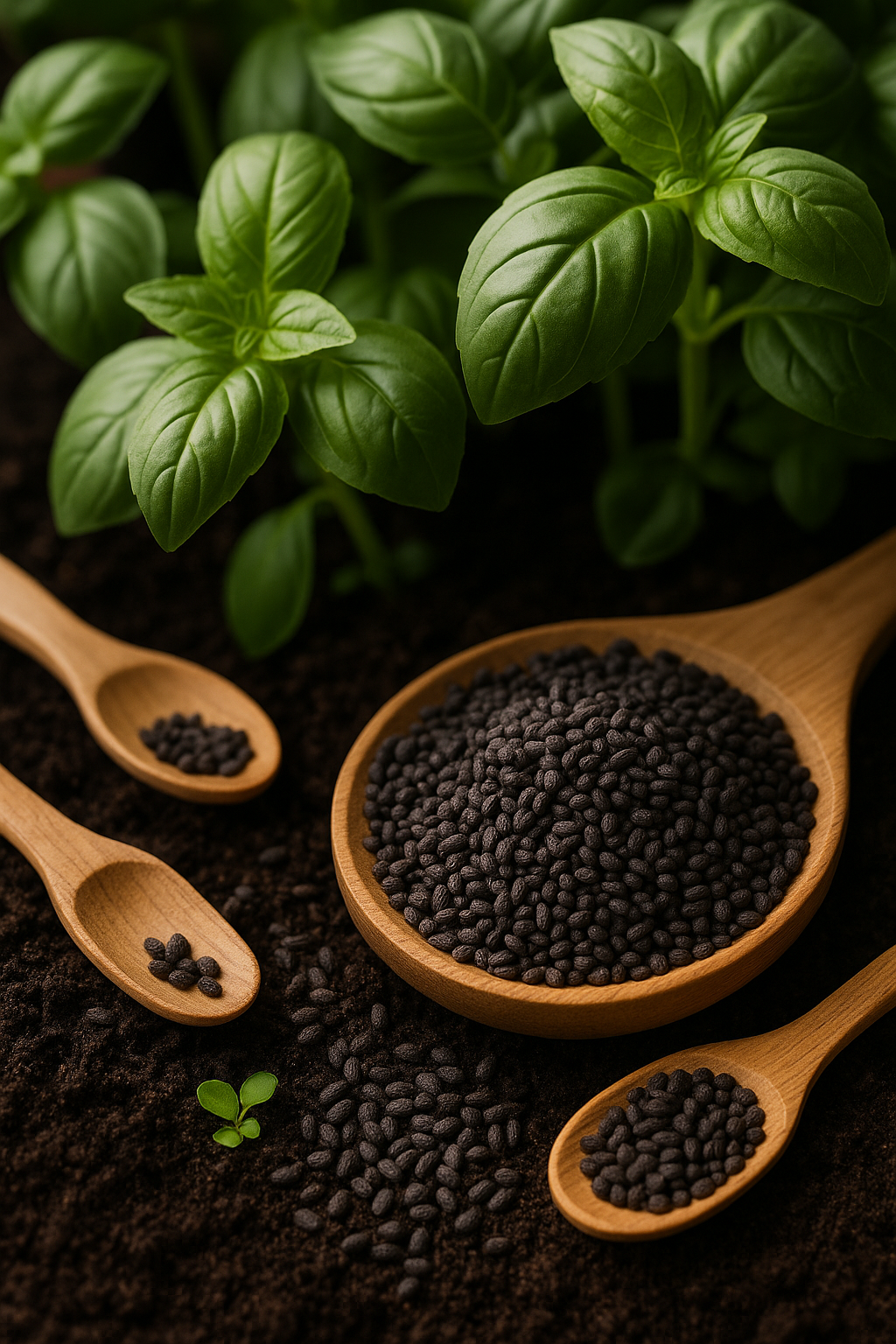
- Basil — on a terrace table, a pot whose leaves you crush from time to time does more than a decorative pot.
How to use them so they work
- Place them within reach — on the edge of a table, along a path, or by the entrance. A plant you never touch is useless.
- Crush a few leaves before settling in, and rub them on your wrists and ankles if the plant is not irritating.
- Group several pots together rather than keeping one isolated — the mass of foliage matters.
- Combine this with a fan if you have a terrace: mosquitoes are poor fliers, and a light breeze is more effective than any plant.
The measure that really matters: eliminate standing water. Plant saucers, buckets, gutters, watering cans, tarps. A tiger mosquito can develop in a bottle capful of water, and no plant can compensate for a larval breeding site ten meters away.
Against aphids in the vegetable garden
Here, the approach changes completely: the goal is not to repel, but to divert and regulate. And it is much more effective.
What really works
- Nasturtiums, as trap plants — they massively attract black aphids, which leave nearby crops alone. Plant them along the edge, upwind of the prevailing wind. They are not repellent: they are sacrificed, and you have to accept seeing them covered in aphids.
- Flowers for beneficial insects — this is the main lever. Dill, coriander, yarrow, borage, marigold. Hoverfly and ladybug larvae consume aphids by the hundreds — but adults feed on nectar. Without flowers, there are no larvae.
- Summer savory near broad beans — a traditional pairing against black bean aphids, with a moderate but documented effect.
- Interplanted herbs — thyme, sage, basil, mint. A genuine confusion effect, provided they are in the row, not two meters away.
Other pests
| Pest | What helps | Mechanism |
|---|---|---|
| Carrot fly | Leeks, onions, and chives in alternating rows | Crossed olfactory confusion — the best-established effect of all |
| Cabbage white butterfly | Mint, thyme, sage, tomatoes nearby | Confusion |
| Flea beetles | Mustard as a trap crop, away from cabbages | Diversion |
| Whiteflies | Basil at the base of tomato plants | Confusion, partial effect |
| Nematodes | Dense-cover marigolds | Substances released by the roots — a few plants are not enough |
| Ants | Tansy, mint | Contact repellent, to be placed along their paths |
| Slugs | Nothing plant-based, in reality | Ground beetles and hedgehogs are what regulate them |
What does not work — and why it must be said
- A single pot on a terrace. Without interplanting, diffusion is negligible.
- A repellent plant two meters from the crop. Odor confusion works over a short distance. Two beds side by side have no effect; plants must be alternated within the row.
- Relying on them against an established infestation. These mechanisms reduce pest pressure upstream; they do not treat an infestation.
- Expecting them to prevent diseases. Downy mildew, powdery mildew, and rust are fungi: they arrive by wind and rain, indifferent to odors. Against them: spacing, ventilation, watering at the base, and mulching.
- Plant teas as miracle repellents. Nettle tea is an excellent growth stimulant, not an insecticide. Tansy decoction has a genuine but brief repellent effect, and it does not distinguish between an aphid and a ladybug.
The underlying reason: an overabundance of pests mainly signals a lack of regulators. A garden that hosts ladybugs, hoverflies, ground beetles, hedgehogs, and tits regulates itself after two or three years — and no repellent plant can deliver that result.
Build a system that lasts
Three levels, from most effective to most supplementary.
- Eliminate the causes — standing water for mosquitoes, excess nitrogen for aphids (lush, nitrogen-rich foliage attracts them), plants spaced too closely for diseases.
- Install the regulators — flowers with staggered blooming from March to October, wild areas, shelters. See Combining flowers with the vegetable garden.
- Add repellent plants — as a supplement, interspersed among the rows and within reach on the terrace.
In this order. Many gardeners start with the third point and are surprised that it is not enough.
Frequently asked questions
Does lemongrass really do anything?
Its compounds are genuinely repellent — they are used in commercial products. But the intact plant releases almost none of them. It becomes useful when you crush its leaves and rub them on your skin, with an effect lasting twenty to forty minutes.
Can you make your own repellents?
A concentrated infusion of lemon balm or lavender, cooled and sprayed, produces a mild, short-lived effect. For topical use, essential oils require genuine precautions — dilution, contraindications, and allergies. Ask a pharmacist for advice rather than following a recipe found online.
Do these plants also repel pollinators?
No, quite the opposite: lavender, lemon balm, savory, catnip, and mint are excellent bee-friendly plants when left to flower. Masking scents makes it harder to locate a specific host plant, but it does not prevent nectar collection.
Should repellent plants be pruned or left to flower?
Both, on different plants. The foliage is richer in essential oils before flowering, but the flowers feed beneficial insects. Keep a few plants for each purpose.
Does it work in a pot on a balcony?
For masking scents at the base of a crop, yes — basil in a tomato planter. For mosquitoes, the same rule applies as elsewhere: keep it within reach and crush it. See Balcony vegetable garden.
Key takeaway
A repellent plant releases almost nothing until you crush it. To deter mosquitoes, place it within reach — and above all, empty any standing water. In the vegetable garden, masking scents can help, but only at close range, and it always comes a distant second to the real solution: feeding the creatures that eat pests.
To take things further
- The best vegetable combinations for the garden
- Combining flowers with your vegetable garden
- Medicinal plants to sow yourself
- Basil seeds: how to sow and combine them
Discover our culinary and medicinal herb seeds and our bee-friendly plants — the best allies for a self-regulating garden.

اترك تعليقًا
This site is protected by hCaptcha and the hCaptcha Privacy Policy and Terms of Service apply.