
في هذا المقال 9
نادرًا ما يفشل البذر بسبب نقص العناية. بل يفشل لأننا اخترنا الطريقة الخاطئة للنوع، أو زرعنا بعمق أكبر من اللازم، أو زرعنا في تربة شديدة البرودة. تفسّر هذه الأسباب الثلاثة الغالبية العظمى من حالات الفشل — ويمكن تصحيحها بمعرفة ثلاث قواعد.
يقارن هذا الدليل بين الطرق الثلاث — القطن، والأصيص الصغير، والأرض مباشرة — ويشرح أي نوع يناسب كل طريقة، ويفصّل عملية نقل الشتلات، وهي المرحلة التي نفقد فيها الشتلات التي نجحنا في إنباتها.
ما تحتاج إليه البذرة
ثلاثة شروط، وشرط واحد فقط اختياري.
- الماء — يطلق عملية الامتصاص التي توقظ الجنين. يجب الحفاظ على رطوبة ثابتة: فالبذرة التي تنتفخ ثم تجف تموت.
- الحرارة — حرارة التربة، لا الهواء. لكل نوع حدّه الخاص: 5 درجات مئوية للبازلاء، و8-10 درجات مئوية للجزر، و18-20 درجة مئوية للطماطم أو الريحان.
- الأكسجين — إنه العامل المنسي. فالوسط الزراعي المشبع بالماء أو المضغوط يخنق البذرة، فتعفن بدلًا من أن تنبت.
- الضوء — اختياري ومتفاوت الأهمية. تنبت معظم البذور في الظلام؛ لكن بعضها يحتاج إليه، مثل الخس والكرفس ولسان الثور، ولذلك تُزرع مع تغطيتها تغطية خفيفة جدًا.
تحتوي البذرة على احتياطياتها الخاصة، ولا تحتاج إلى أي سماد كي تنبت. لذلك تكون تربة البذر عمدًا فقيرة وناعمة، بخلاف تربة نقل النباتات.
الزرع على القطن
قطعة من القطن أو ورق ماص أو قماش يُحافَظ على رطوبته داخل علبة أو صحن صغير.

ما فائدتها الحقيقية؟
ليست هذه طريقة للزراعة، بل طريقة لـالتحقق والإنبات المسبق. ولها ثلاثة استخدامات فعلية:
- اختبار الإنبات — التحقق من صلاحية دفعة قديمة قبل زرع حوض كامل. عشر بذور وأسبوعان، وستعرف ما يمكنك توقّعه.
- الإنبات المسبق — كسب بضعة أيام مع الأنواع البطيئة أو المتقلّبة، عبر زرع البذور التي بدأت تنبت بالفعل.
- الملاحظة التعليمية — تظلّ حبة الفاصولياء في مرطبان التجربة الأكثر رسوخًا في ذاكرة الطفل: نرى الجذير، ثم الساق، ثم الفلقتين.
الطريقة
- رطّبوا القطن دون إغراقه بالماء — يجب أن يكون رطبًا لا مغمورًا: فالبذرة تحتاج إلى الأكسجين.
- وزّعوا البذور مع ترك مسافات بينها، وغطّوها بطبقة خفيفة ثانية.
- أغلقوا العلبة دون إحكام عزلها، عند درجة حرارة تقارب 20 °م، بعيدًا عن أشعة الشمس المباشرة.
- تحققوا كل يومين وأعيدوا ترطيب القطن عند الحاجة.
- انقلوا الشتلات فور ظهور الجذير، عندما يبلغ طوله 2 إلى 5 مم.
بعد هذه المرحلة، يتغلغل الجذر في ألياف القطن وينكسر عند نقله. هذا هو الخطأ الشائع — ننتظر حتى تصبح النبتة الصغيرة جميلة، ثم نفقدها أثناء فصلها. القطن لا يحلّ محل التربة أبدًا.
البذر في الأصيص
الطريقة المثالية للأنواع ذات الدورة الطويلة، التي يجب البدء بزراعتها في مكان محمي لكسب أسابيع من الموسم.

لأي أنواع النباتات
الطماطم، والفلفل الحلو، والفلفل الحار، والباذنجان، والملفوف، والكراث، والكرفس، والريحان. واختياريًا: القرع، والكوسا، والخيار، والخس — بشرط نقل الشتلات وهي صغيرة.
الطريقة
- املؤوا الأصيص بتربة مخصّصة للشتلات، واضغطوا برفق بأطراف الأصابع، واسقوا قبل البذر: يجب أن تكون التربة رطبة ومستقرة.
- ضعوا بذرتين إلى ثلاث بذور في كل أصيص، لتعويض البذور التي لا تنبت. ثم خفّفوا الشتلات.
- غطّوا البذور وفق قاعدة العمق أدناه، ثم اضغطوا برفق شديد — فتماس البذرة مع التربة يحدد امتصاصها للماء.
- رطّبوا بالرذاذ بدلًا من الري، حتى لا تحرّكوا البذور.
- غطّوا الشتلات بغشاء أو بغطاء حتى ظهورها، للحفاظ على الرطوبة.
- بمجرد ظهور الشتلات، أزيلوا الغطاء واعكسوا الأولويات: حرارة أقل وضوء أكبر قدر ممكن.
الدفء ضروري للإنبات، والضوء ضروري للنمو. إبقاء الشتلات دافئة بعد ظهورها يؤدي إلى نمو ممدود وضعيف — سيقان طويلة شاحبة وأوراق متباعدة — ولن تتمكن من تعويض تأخرها أبدًا.
التخفيف
عند ظهور الأوراق الحقيقية الأولى، اتركوا الشتلة الأقوى في كل أصيص. اقصوا الشتلات الأخرى بالمقص عند مستوى سطح التربة بدلًا من اقتلاعها، حتى لا تمزقوا جذور الشتلة التي ستحتفظون بها.
الزراعة في الأرض مباشرة
الطريقة الافتراضية، والطريقة الوحيدة الممكنة لكل ما لا يحتمل النقل أو الإزعاج.
لأي أنواع النباتات — ولماذا
جزر، فجل، جزر أبيض، لفت، شمندر، خسّ الحمل، سبانخ، بازلاء، بازلاء عريضة، فاصولياء. لكل هذه النباتات جذر وتدي لا يتكوّن مجددًا بعد إصابته أثناء الشتل: فيتشعب الجزر ويتشوه الجزر الأبيض. ازرعها في مكانها الدائم، دون استثناء.
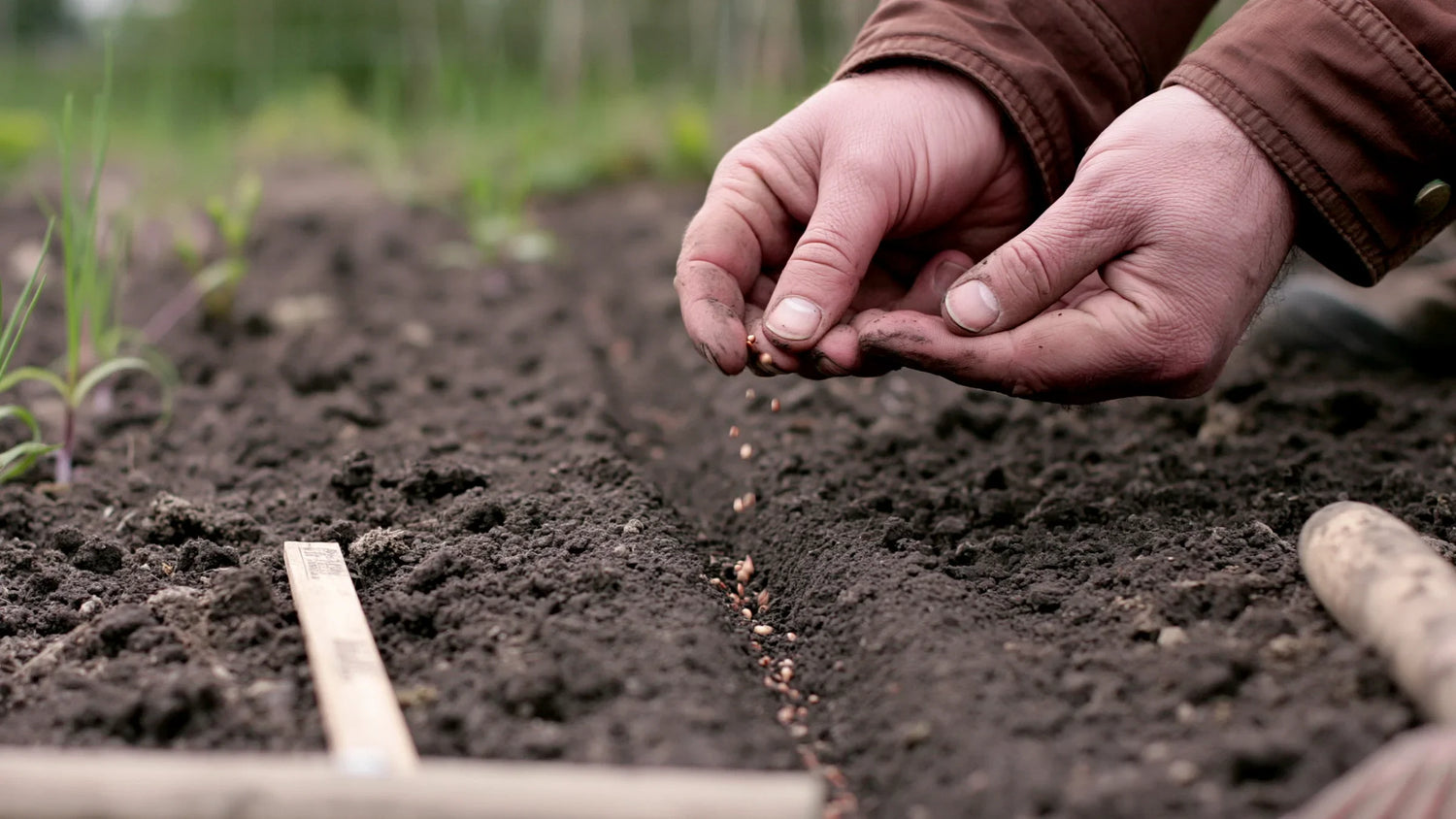
الزراعة في صفوف
- نعّم السطح بالمشط — إذ تكفي كتلة ترابية بحجم 3 سم لمنع بذرة صغيرة من الإنبات.
- احفر أخدودًا منتظمًا، واسقِ قاع الأخدود قبل الزراعة.
- ازرع بتباعد — فنحن نزرع دائمًا بكثافة أكبر من اللازم، ما يفرض ترقيقًا شاقًا ويُضعف النباتات المتبقية.
- أعد تغطية الأخدود، واضغط التربة بظهر المشط، واسقِ برذاذ ناعم.
- حدّد الصف بفجل مزروع في الأخدود نفسه: فهو ينبت خلال ثلاثة أيام ويجنبك اقتلاع مزروعاتك عن طريق الخطأ أثناء إزالة الأعشاب.
الزراعة نثرًا
للأسمدة الخضراء، وخسّ الحمل، وخليط السلطات. وزّع البذور بأكبر قدر ممكن من الانتظام، ثم اطمرها بتمريرة واحدة خفيفة بالمِشط. فالزراعة نثرًا بشكل متباعد جدًا لا تحقق هدف التغطية.
الزراعة في جُوَيْب
ثلاث إلى خمس بذور متجمعة في حفرة واحدة، للبذور الكبيرة: القرع، والفاصولياء، والذرة، والبازلاء. ثم نُبقي على أقوى نبتة أو نباتتين.
قاعدتان تحسمان كل شيء
العمق
غطِّها بطبقة من التربة تساوي سماكتها ضعفي قطر البذرة أو ثلاثة أضعافه. هذه هي القاعدة الشاملة، وهي تفسّر تقريبًا جميع حالات فشل الإنبات.
| نوع البذرة | العمق | أمثلة |
|---|---|---|
| دقيقة جدًا | تُغطّى بالكاد، أو تُترك على السطح | خس، ريحان، كرفس، نباتات عطرية |
| صغيرة | 5 مم | طماطم، ملفوف، جزر، فجل |
| متوسطة | 1 إلى 2 سم | شمندر، سبانخ، سلق |
| كبيرة | 3 إلى 5 سم | فاصولياء، بازلاء، قرع، ذرة |
تستنفد البذرة المدفونة بعمق أكبر من اللازم مخزونها قبل أن تصل إلى الضوء. أما البذرة الموضوعة على السطح فتجف بين مرات الري. في الصيف، ازرع على عمق أكبر قليلًا من الربيع — نحو مرة ونصف — لأن السطح يجف بسرعة أكبر.
درجة حرارة التربة
يُعطي مقياس حرارة مغروسًا بعمق 5 سم في التربة صباحًا الإجابة خلال عشر ثوانٍ. هذا هو خطأ أول عطلة نهاية أسبوع مشمسة في مارس: يكون الهواء معتدلًا، وتبلغ حرارة التربة 8 °م، فتتعفن الفاصولياء.
- 5 °C — بازلاء، بازلاء خضراء، سبانخ، خسّ الحمل، فجل
- 8-10 °C — الجزر، الخس، الشمندر، البصل، الملفوف
- 12-15 °C — الفاصولياء، الذرة، القرع، الكوسا
- 18-20 °C — الطماطم، الفلفل، الباذنجان، الريحان، الشمام
راجعوا تقويم البذر شهرًا بشهر.
إعادة تفريد الشتلات دون فقدانها
هنا تفشل الشتلات التي أُنجز بذرها بنجاح.

- في المرحلة المناسبة — ورقتان حقيقيتان عند أول تفريد. أما الفلقات المستديرة فلا تُحتسب: إنها مخزونات البذرة.
- اسقوا قبل ذلك بساعة من المناولة. فالكتلة الجافة تتفتت وتقتلع الجذيرات.
- أمسكوا الشتلة من ورقة، وليس من الساق أبدًا. فالورقة المتضررة تُستبدل، أما الساق المسحوقة فضائعة.
- ادفنوا الطماطم بعمق — حتى الفلقات. فهي تُكوّن جذورًا على امتداد الساق المدفونة. وهذه أيضًا طريقة لإنقاذ الشتلات الممدودة أصلًا.
- عوّدوا الشتلات تدريجيًا قبل أسبوع من الزراعة النهائية: أخرجوا الشتلات بضع ساعات يوميًا، في مكان محمي من الرياح، مع زيادة المدة تدريجيًا. فالشتلة التي تنتقل مباشرة من الدفيئة إلى الرياح العاتية تحتاج إلى أسبوعين لاستعادة نموها.
- ازرعوا مساءً أو في طقس غائم، واسقوا بغزارة لتثبيت التربة حول الجذور.
لماذا يفشل البذر
| العَرَض | السبب المحتمل | التصحيح |
|---|---|---|
| عدم الإنبات | تربة شديدة البرودة، أو بذرة عميقة جدًا، أو دفعة منتهية الصلاحية | التحقق من درجة الحرارة، وإجراء اختبار على القطن قبل إعادة البذر |
| إنبات غير منتظم | رطوبة متقطعة، وبذر غير متساوٍ في العمق | تغطيتها حتى الإنبات، وتسوية السطح |
| بادرات منهارة عند منطقة التاج | موت البادرات — فطر يساعد عليه البرد وفرط الماء | وسط زراعي جيد التصريف، تهوية، تقليل الري والري من الأسفل |
| سيقان طويلة وشاحبة | الاستطالة: حرارة مفرطة، وضوء غير كافٍ بعد الإنبات | خفض درجة الحرارة، تقريبها من الضوء، وإعادة زرعها على عمق أكبر |
| بذور تحرّكت، صفوف متقطعة | ريّ مفرط | تفاحة رفيعة متجهة إلى الأعلى، أو الرش بالرذاذ |
| بذور مأكولة | الطيور، البزاقات، النمل | غطاء أو شبكة حتى ظهور البادرات |
الأسئلة الشائعة
هل ينبغي نقع البذور قبل زراعتها؟
مفيد للبذور الكبيرة ذات الغلاف السميك — البازلاء والفول والفاصوليا والكَبوسين — إذ تُنقع لبضع ساعات في ماء فاتر، لا أكثر؛ فبعد ذلك تختنق. وهو غير ضروري ومحفوف بالمخاطر للبذور الصغيرة، إذ تصبح من المستحيل مناولتها.
هل يمكن الزراعة مباشرةً في تربة الأصص؟
ينجح الأمر لكنه أقل جودة: فهو غني أكثر من اللازم، وينتج شتلات رخوة، كما أن قوامه الخشن يعيق البذور الصغيرة. تربة إنبات البذور قليلة التكلفة وتُحدث فرقًا واضحًا في النتيجة.
كم من الوقت ينبغي الانتظار قبل القلق؟
احسبوا 3 إلى 5 أيام للفجل، و6 إلى 10 أيام للخس، و8 إلى 15 يومًا للطماطم، وحتى 3 أسابيع للبقدونس أو الجزر في التربة الباردة. إذا تجاوزت المدة الضعف، فاستخرجوا بذرة: إن كانت طرية ومتحللة فقد تعفنت؛ وإن كانت سليمة فهي تنتظر ببساطة ظروفًا أكثر دفئًا.
هل تحتاج بعض البذور إلى معالجة خاصة؟
نعم، تلك التي تدخل في طور السكون: فكثير من الأشجار والشجيرات والنباتات المعمّرة تحتاج إلى تعريضها للبرد. راجع التنضيد البارد.
هل يمكن زراعة البذور التي حصدناها بأنفسنا؟
نعم، إذا كانت من أصناف قابلة لإعادة الإنتاج وجُففت وحُفظت على نحو صحيح. راجع كيفية حفظ البذور من عام إلى آخر.
ما يجب تذكّره
القطن للاختبار، والأصيص الصغير للتقدّم في الموعد، والزراعة في الأرض مباشرةً لكل ما له جذر وتدي. بعد ذلك، يكفي رقمان: عمق يساوي ضعفين إلى ثلاثة أضعاف قطر البذرة، ودرجة حرارة التربة المناسبة للنوع. وبمجرد ظهور البادرات، اعكسوا القاعدة: حرارة أقل وضوء أكثر.
للمزيد
- تقويم مواعيد الزراعة شهرًا بعد شهر
- كيفية حفظ البذور من عام إلى آخر
- التنضيد البارد: لماذا وكيف نُنبّت البذور؟
- ما المعدات التي ينبغي اختيارها لبدء زراعة حديقة خضروات طبيعية؟
لأولى عمليات الزراعة: بذور الخضروات وزراعات الربيع والزراعات على مدار العام.

اترك تعليقًا
This site is protected by hCaptcha and the hCaptcha Privacy Policy and Terms of Service apply.