Nigella damascena
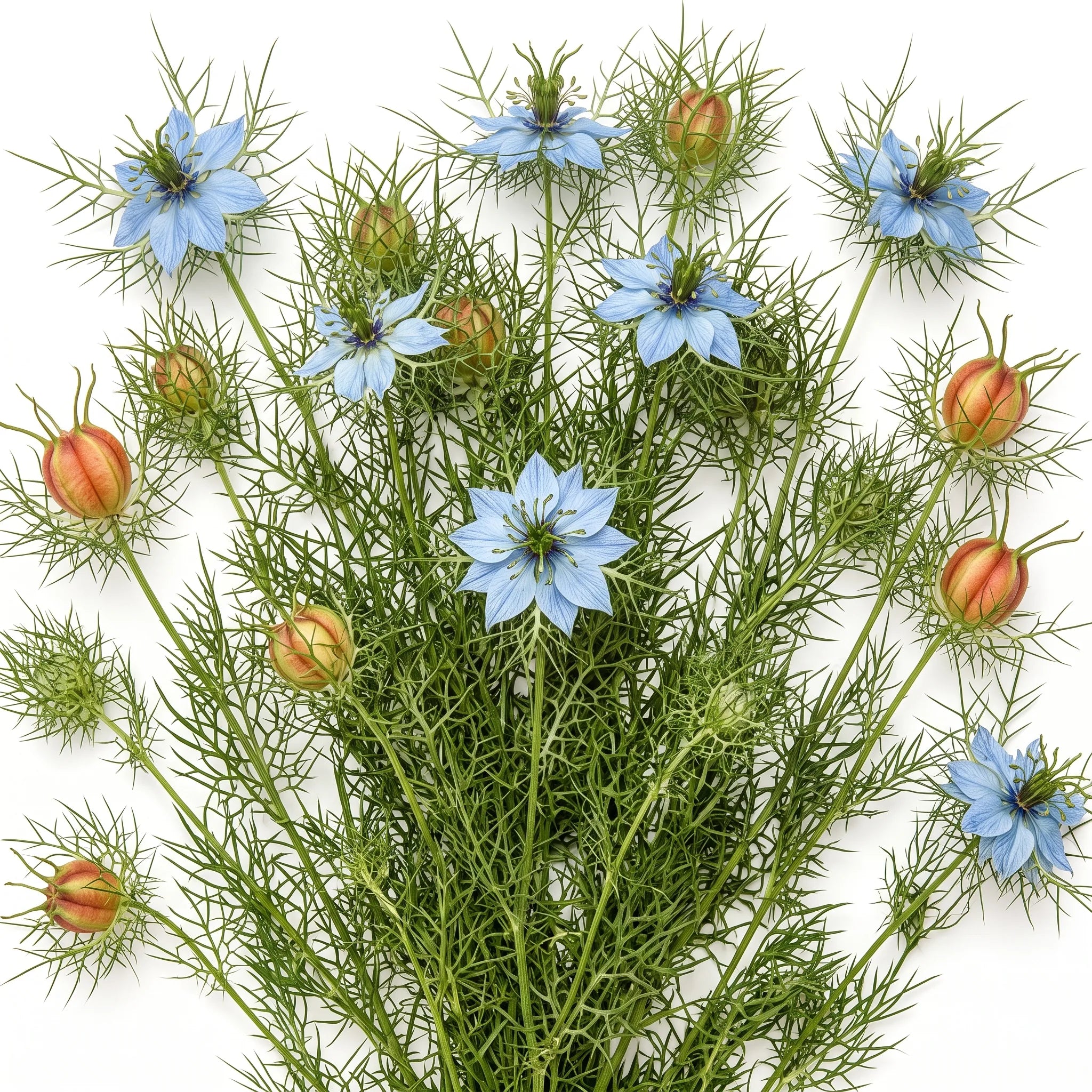
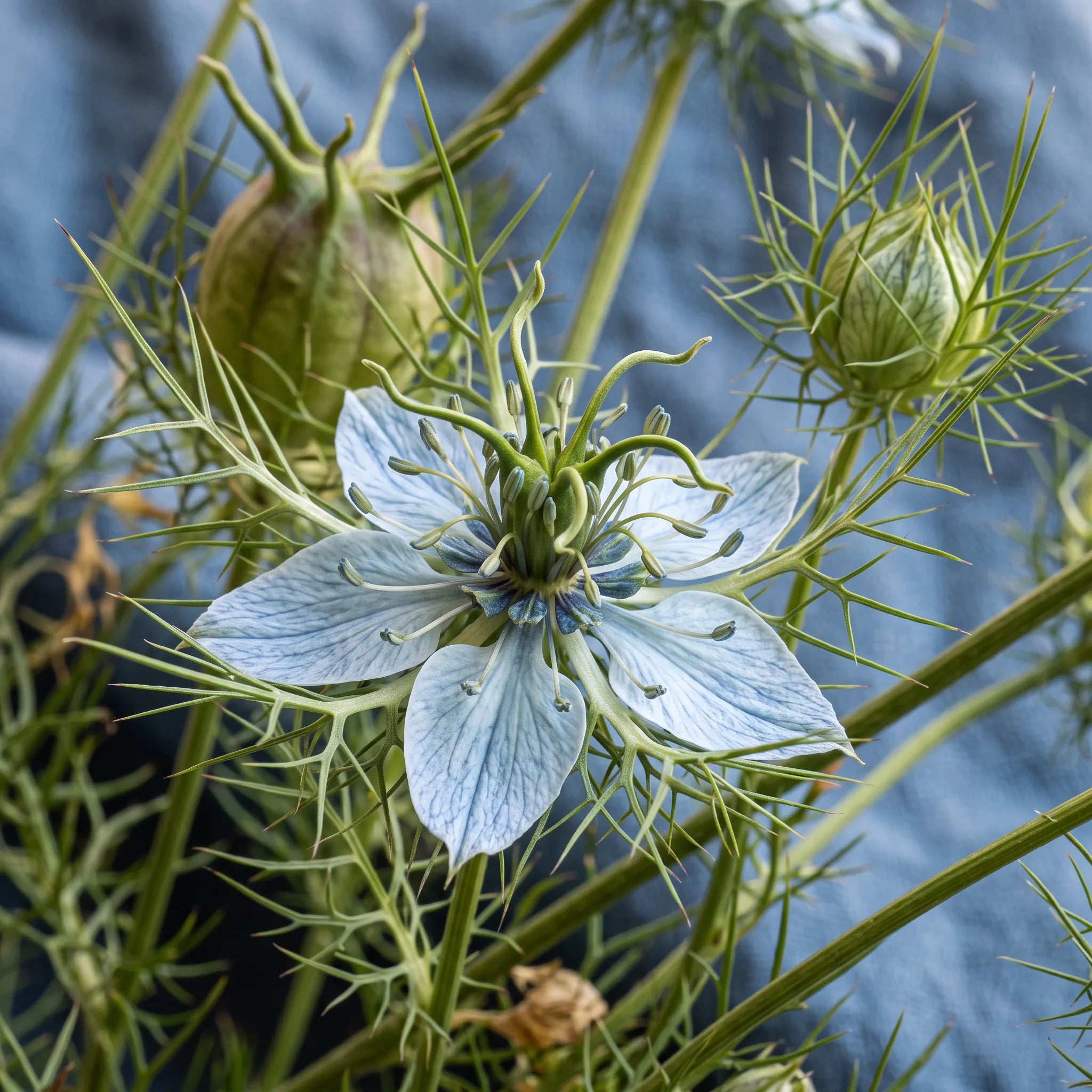
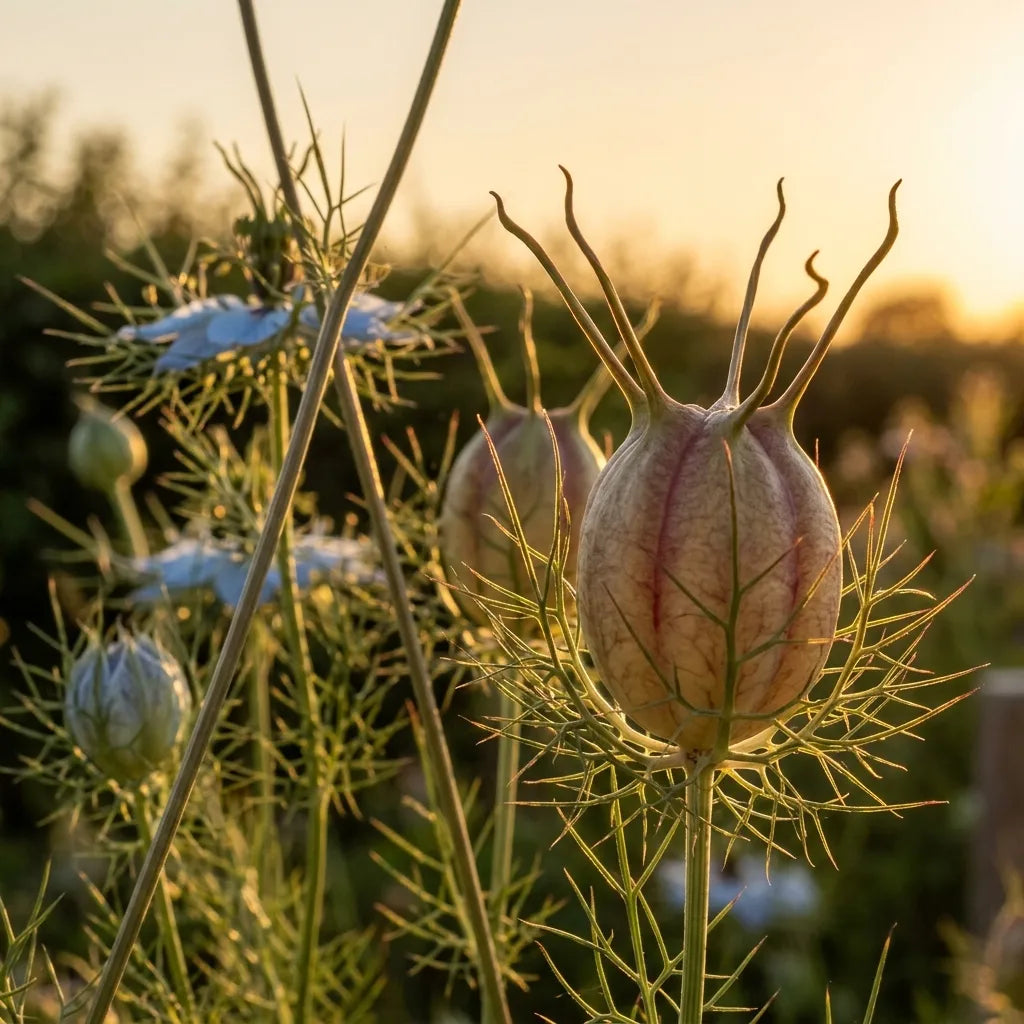
Love-in-a-mist, Venus's hair, friar's beard, devil-in-the-bush: these names all describe the same thing — the collar of fine green strips that surrounds the flower like a mist, in which the corolla seems trapped. The English call it love-in-a-mist.
Characteristics:
-
Enigmatic flowers: blue, white or pink, nestled in a collar of threadlike foliage, from June to September.
-
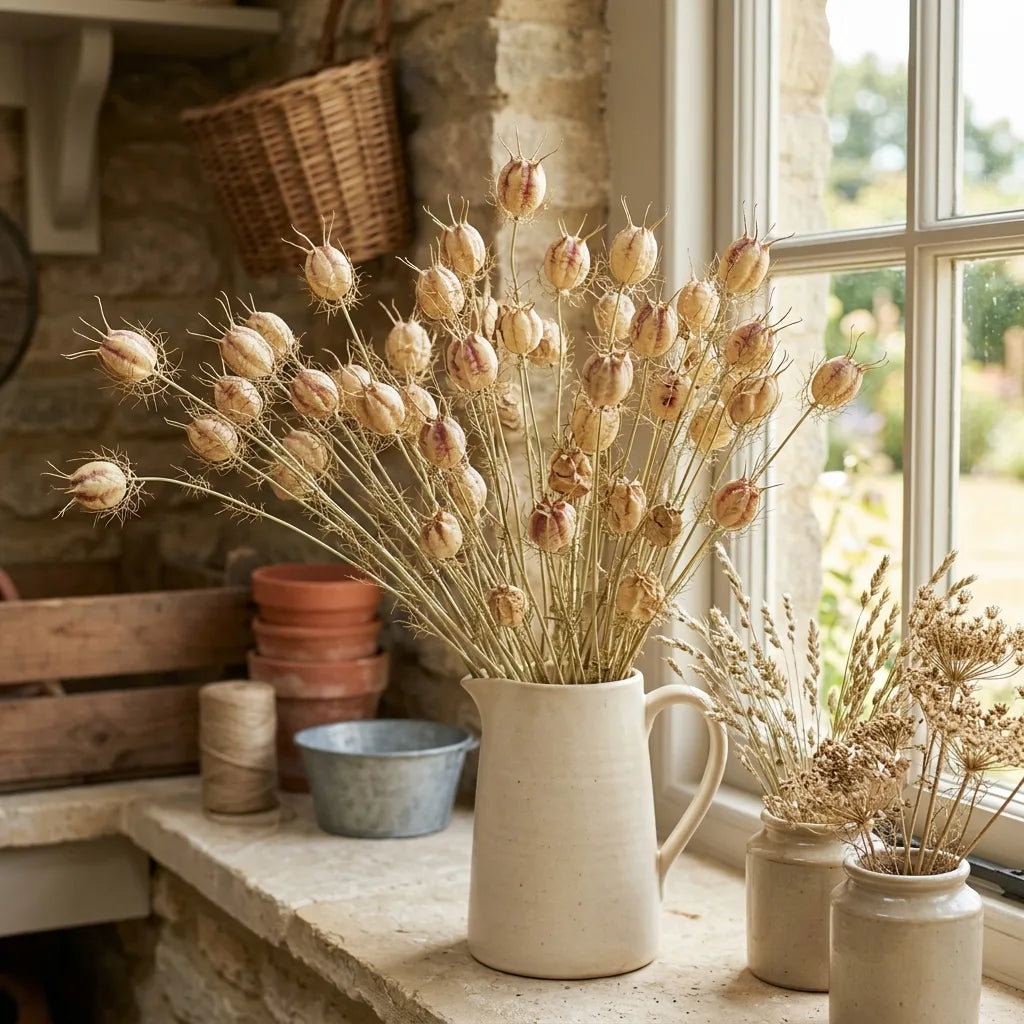
Decorative fruits: swollen, marbled capsules, as ornamental as the flowers and indispensable in dried bouquets.
-
Easy annual: it self-seeds from one year to the next and returns without effort.
Precautions:
-
Do not confuse this species with cultivated black cumin (Nigella sativa), whose black seeds are used as a condiment: the seeds of Nigella damascena are not edible and must not be consumed.
Sowing advice:
-
Exposure: sunny.
-
Soil: light, well drained, ordinary to poor, preferably alkaline. It does not appreciate heavy soil or excessive fertility, which cause its slender stems to flop. No fertilization.
-
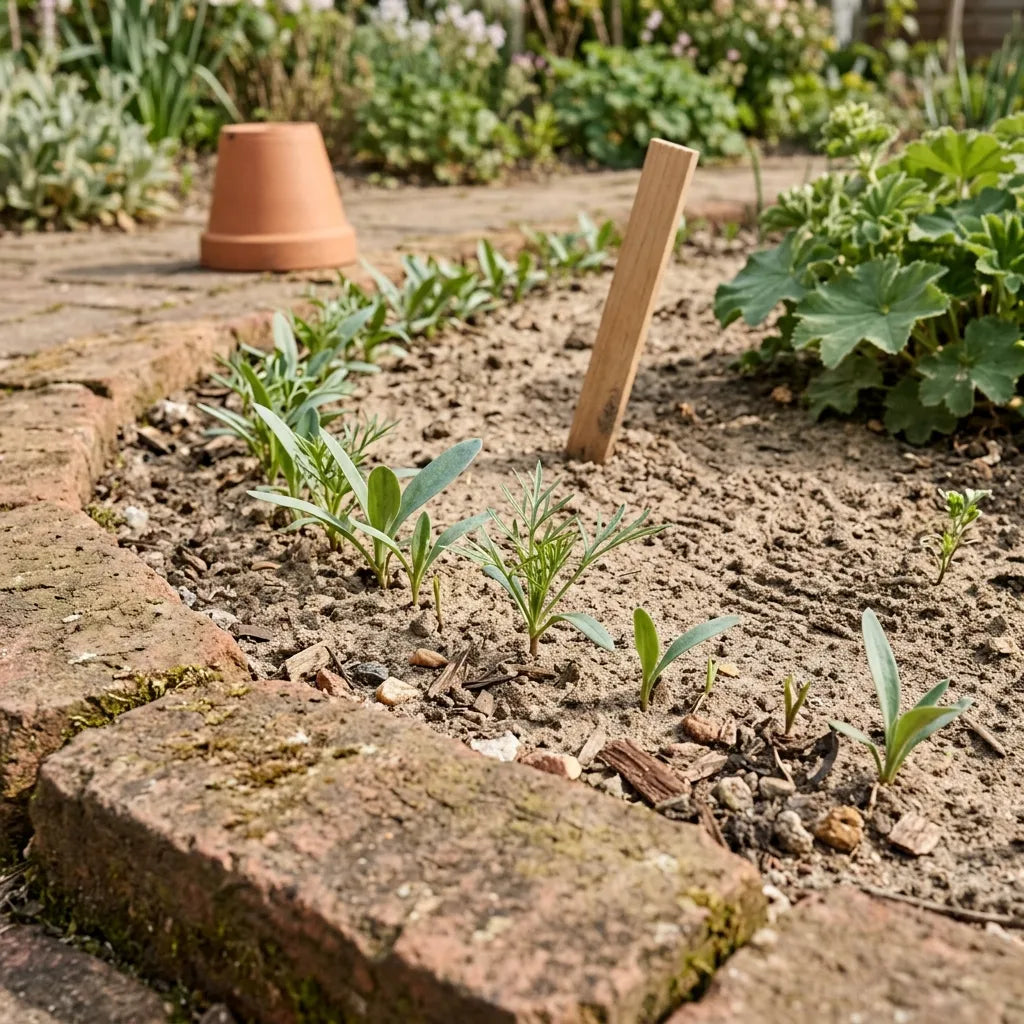
Method: no stratification necessary. Sow directly outdoors in spring or autumn (for earlier flowering), barely covering the seeds. As its root does not tolerate transplanting well, avoid sowing in pots. Germination in 2 to 3 weeks. See how to sow your seeds.
Care advice:
- Almost none. Stagger sowings every three weeks to extend flowering, and leave a few capsules to form for dried bouquets and self-seeding.
Harvesting advice:
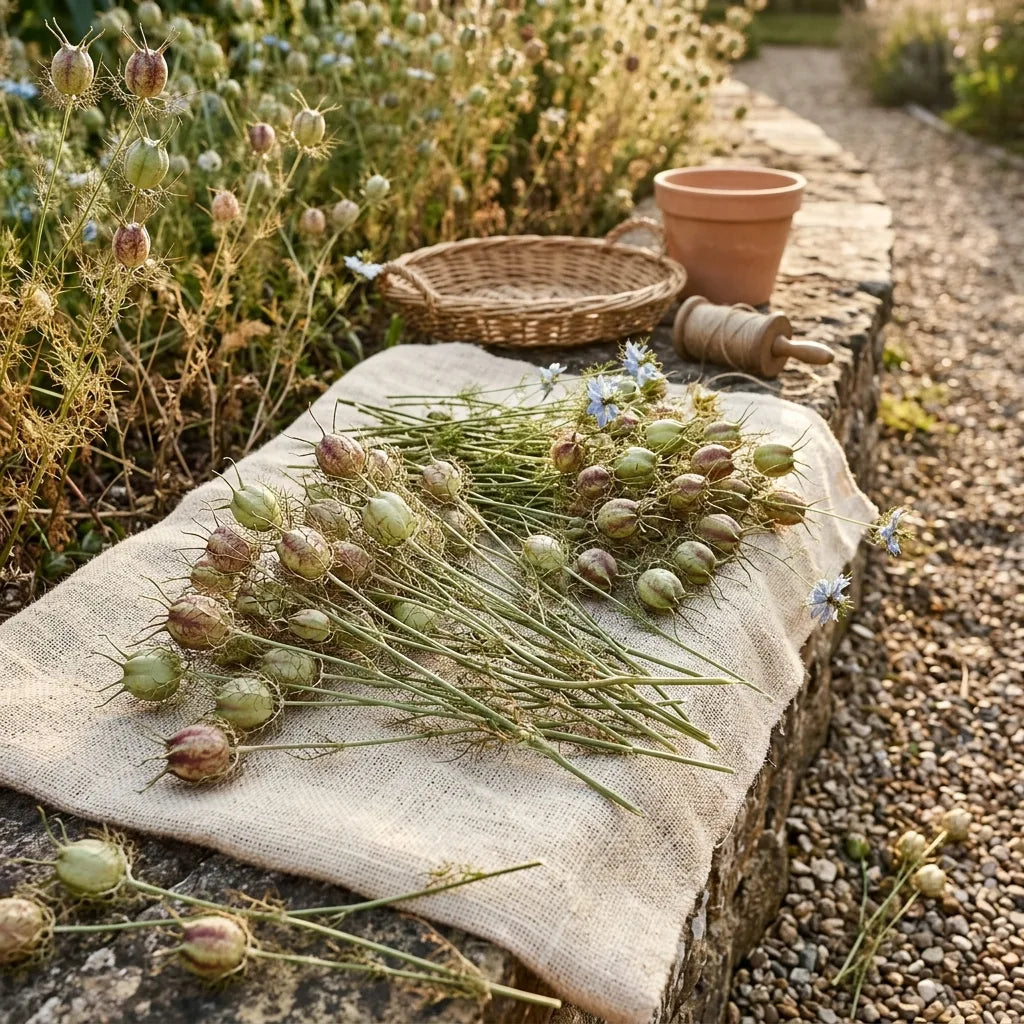
- For dried bouquets, cut the stems when the capsules are fully swollen and beginning to become mottled with purple, before they open, then hang them upside down.
Beneficial combinations:
Benefits for biodiversity:
- Its open flowers provide highly accessible pollen for bees and hoverflies, which are active among them all summer.
- Its seeds feed small seed-eating birds in autumn if a few capsules are left in place.
Uses:
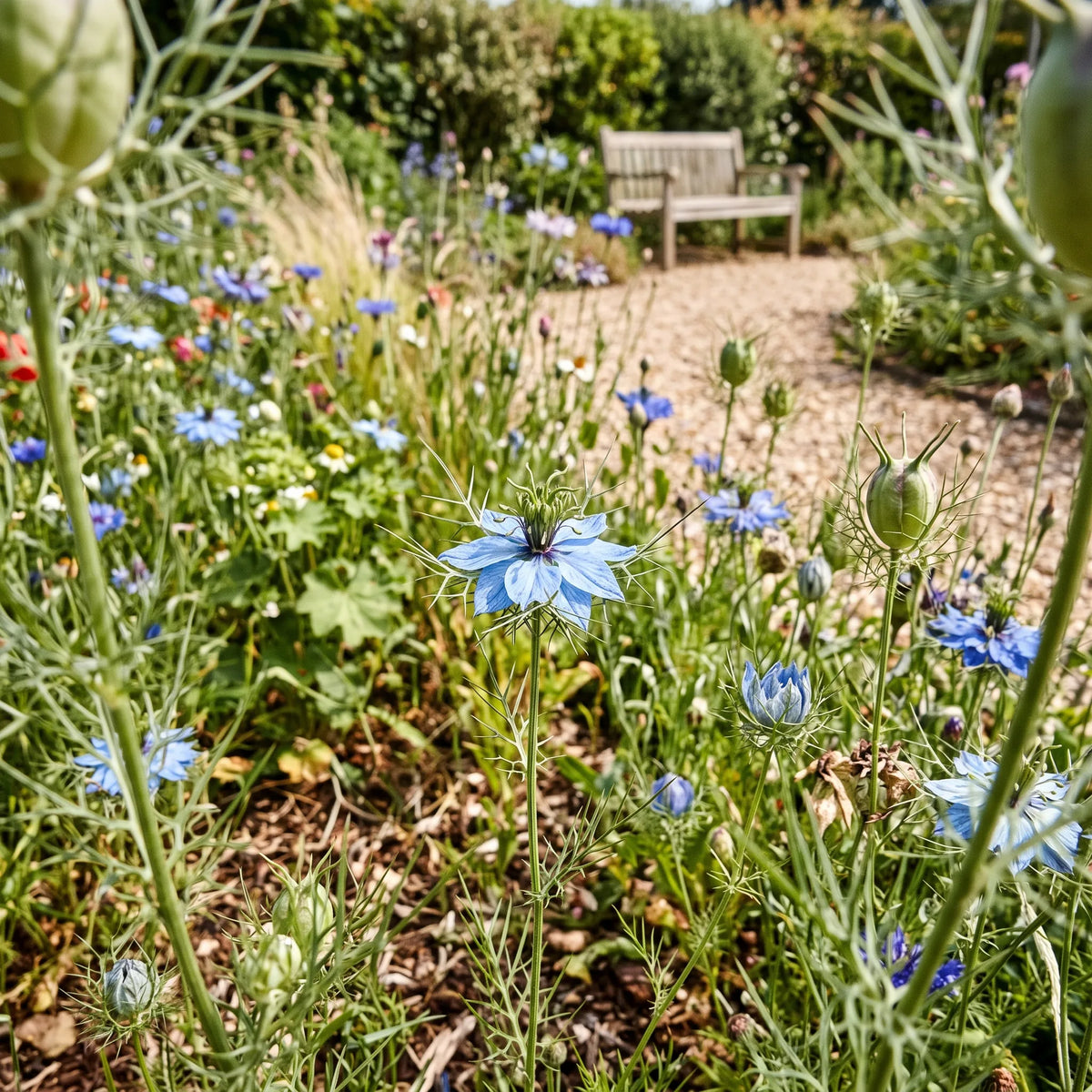
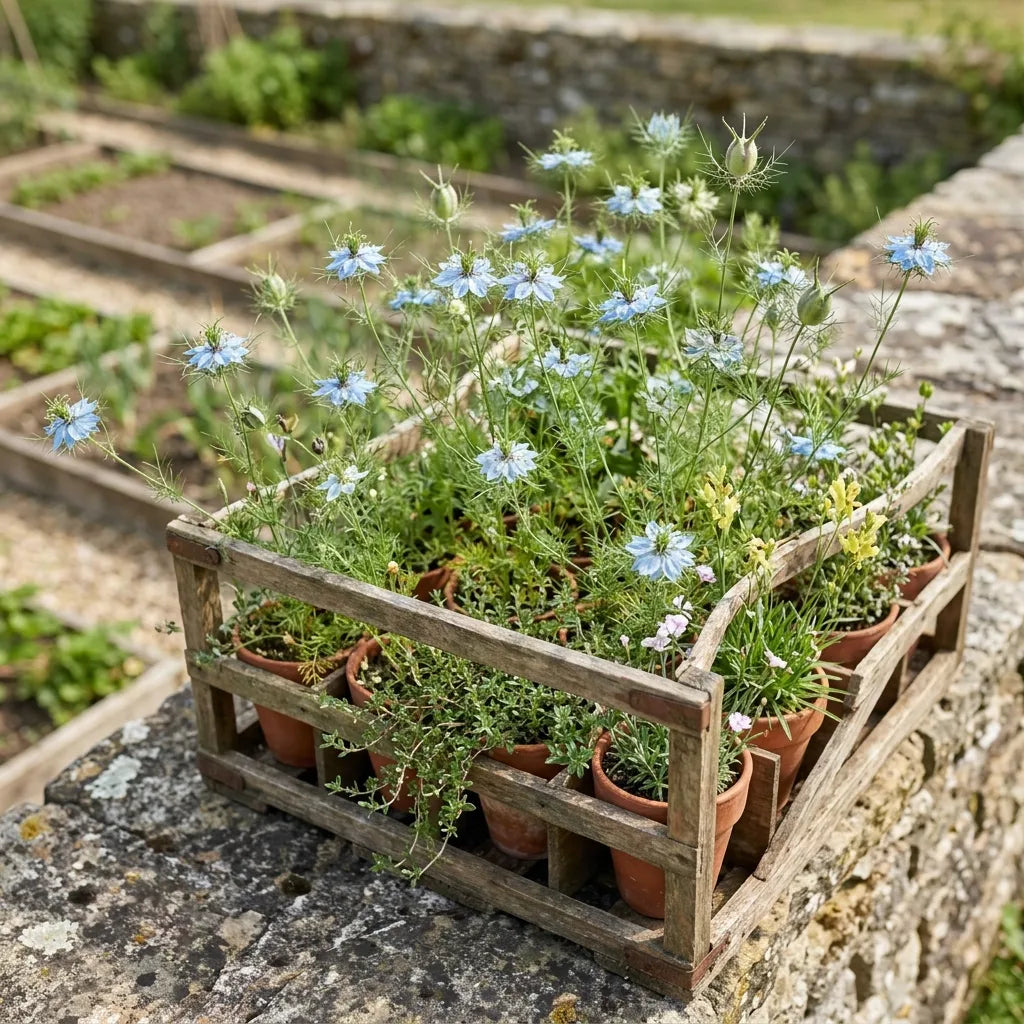
- Cottage-style beds, cottage gardens, borders and decorative pots. Its dried capsules are a reliable favorite for dried bouquets.
Symbolism:
Nigella evokes the secrets of the heart and mysterious beauty — its flower “caught in the mist” made it a favorite in the Victorian language of flowers, where it meant “you bewilder me.”
Harvesting your own seeds:
Leave a few capsules to turn completely brown on the plant until they open at the top, then turn them upside down over a container: the black seeds fall out easily. See how to store your seeds.
Commitment to Quality: at SemiSauvage - Permaculture, we grow and select our seeds with respect for all living things as our guiding principle. Based near the Auvergne Volcanoes, we choose open-pollinated, non-hybrid varieties, test them for germination rates, and carefully sort and package them without any chemical treatment. Our belief: to give gardeners back the ability to resow, year after year, seeds that truly belong to them.
Sales reserved for amateur gardeners seeking quality and authenticity.