Anethum graveolens
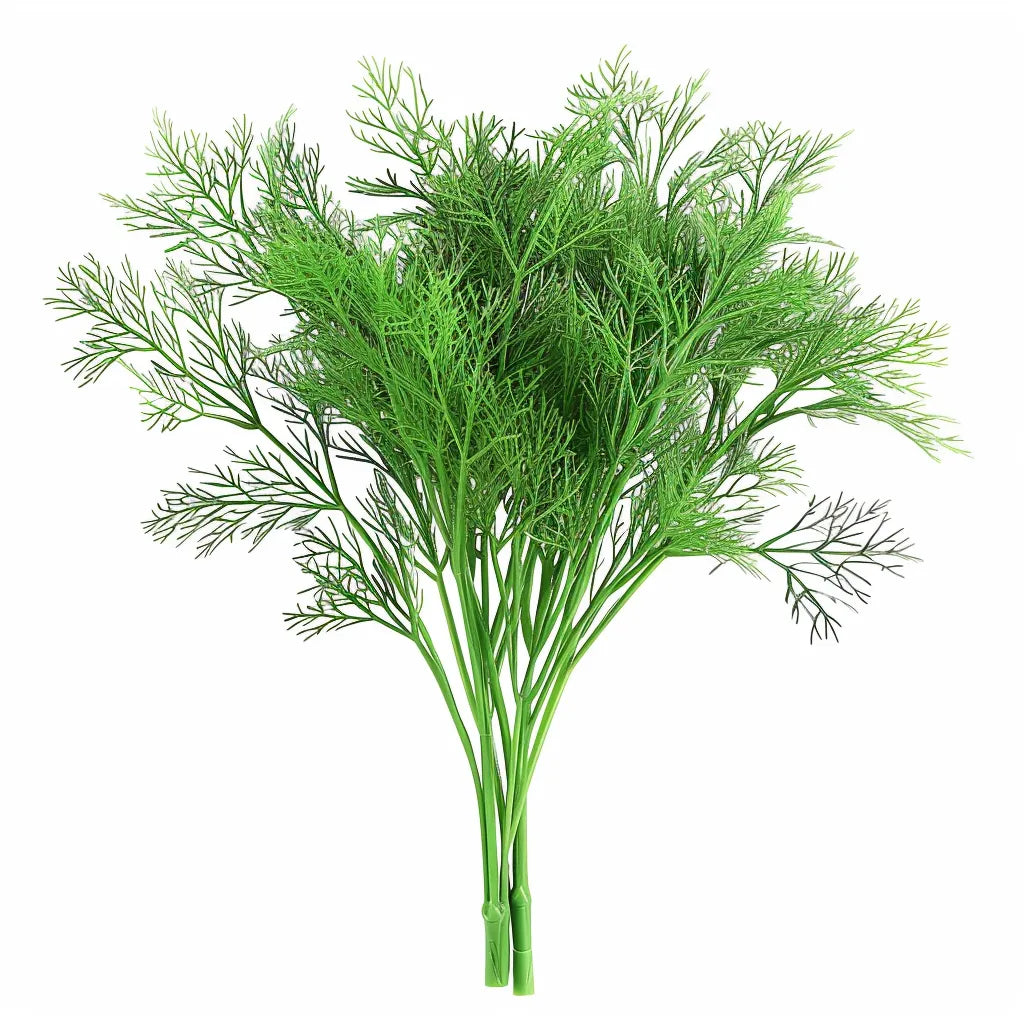
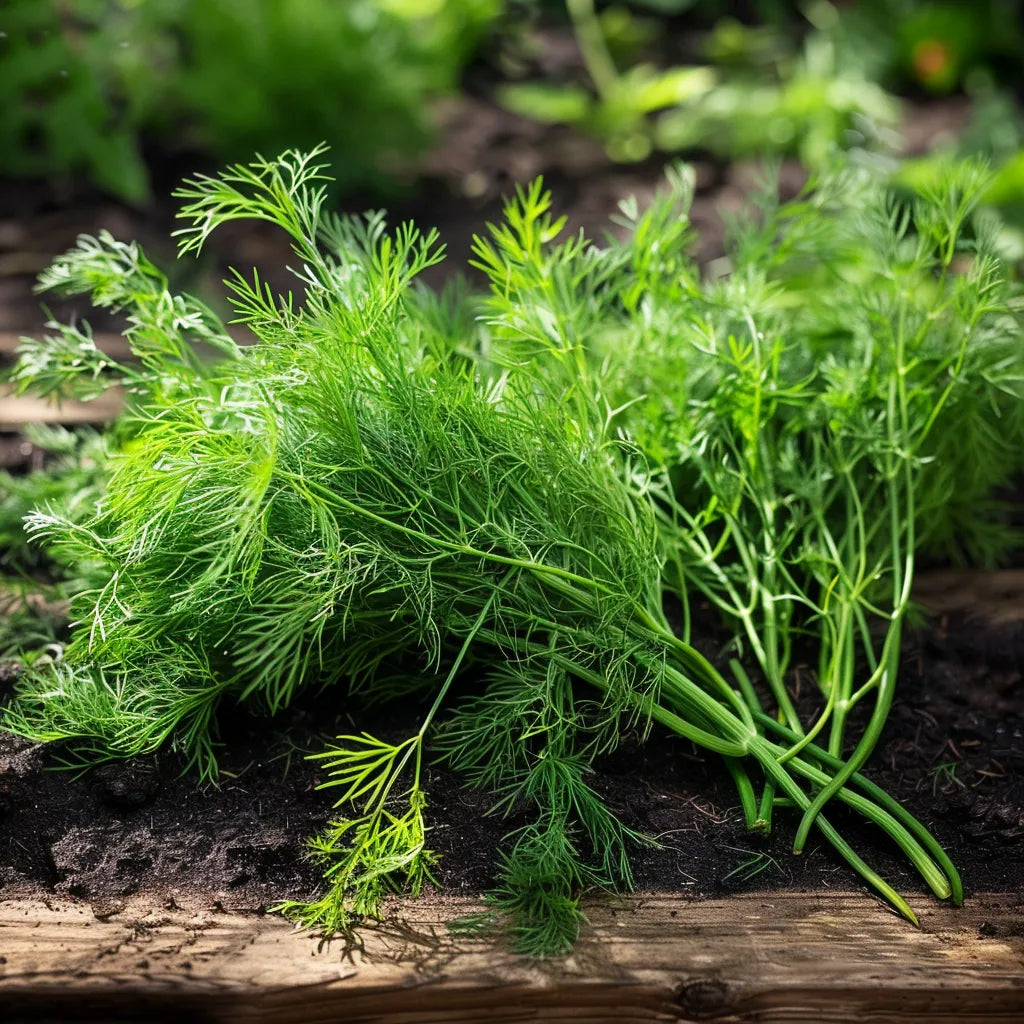
Dill, bastard fennel, false anise, fragrant dill: its subtle aroma combines anise, wild fennel, and a hint of mint. It is the indispensable herb for salmon and Scandinavian marinades, and one of the few whose feathery foliage and seeds are both used.
Characteristics:
-
Two harvests: fresh foliage all summer, followed by aromatic seeds in autumn.
-
Feathery foliage: very finely divided, bluish, and decorative in flower beds as well as in the vegetable garden.
-
Bee-friendly flowers: large, highly fragrant yellow umbels that fill the garden with their scent.
-
Fast growth: first harvest six to eight weeks after sowing.
Sowing advice:
-
Position: full sun and warmth, sheltered from strong winds — its hollow stems break easily.
-
Soil: light, well-drained, and rather dry. It needs no special amendments; overly rich soil produces soft stems that flop.
-
Method: sow directly in place from April to July — its taproot tolerates transplanting very poorly, which is the most common cause of failure. Sow 1 cm deep, staggering sowings every three weeks to extend the harvest. See how to sow your seeds.
Care advice:
- Thin to 20 cm apart. Water moderately: it prefers dry conditions to excess water.
- Stake the tallest plants in windy locations.
Harvesting advice:
- Pick the foliage as needed, before flowering. It freezes well but dries poorly: its delicate aroma almost completely disappears when dried.
- For the seeds, cut the umbels when they turn brown, before the seeds drop, and finish drying them under cover.
Beneficial pairings:
Benefits for biodiversity:
- Its large yellow umbels are genuine landing platforms for hoverflies and beneficial parasitoid wasps, whose larvae devour aphids. Deliberately leave a few plants to flower.
- Like all plants in the carrot family, it is a host plant for Swallowtail caterpillars.
Uses:
- Fresh foliage with fish, shellfish, soft cheeses, salads, soups, and sauces — Scandinavian gravlax owes it everything. Use the seeds in marinades, pickled gherkins, breads, and vinegars.
- A traditional medicinal plant, cultivated since ancient Egypt. See our medicinal plants to sow.
Harvesting your own seeds:
This is the harvest itself: let a few umbels ripen fully and dry them upside down in a paper bag. Dill also readily self-seeds from one year to the next. See saving your seeds.
Our Commitment to Quality: at SemiSauvage - Permaculture, we grow and select our seeds with respect for all living things as our guiding principle. Based near the Auvergne Volcanoes, we choose open-pollinated, non-hybrid varieties, test them for germination rates, and carefully sort and package them without any chemical treatment. Our belief: to give gardeners back the ability to sow, year after year, seeds that truly belong to them.
One plant, two harvests, and a magnet for beneficial insects in the vegetable garden.