Sanguisorba minor
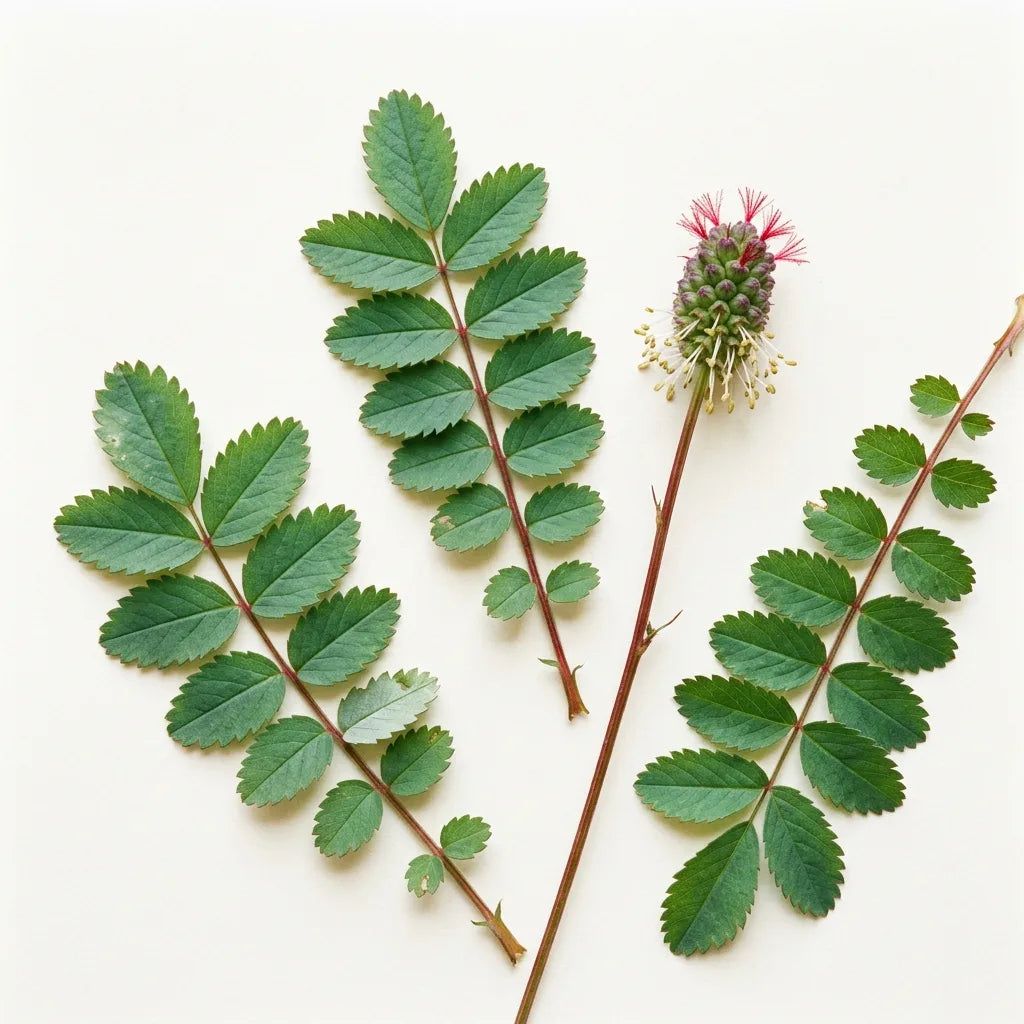
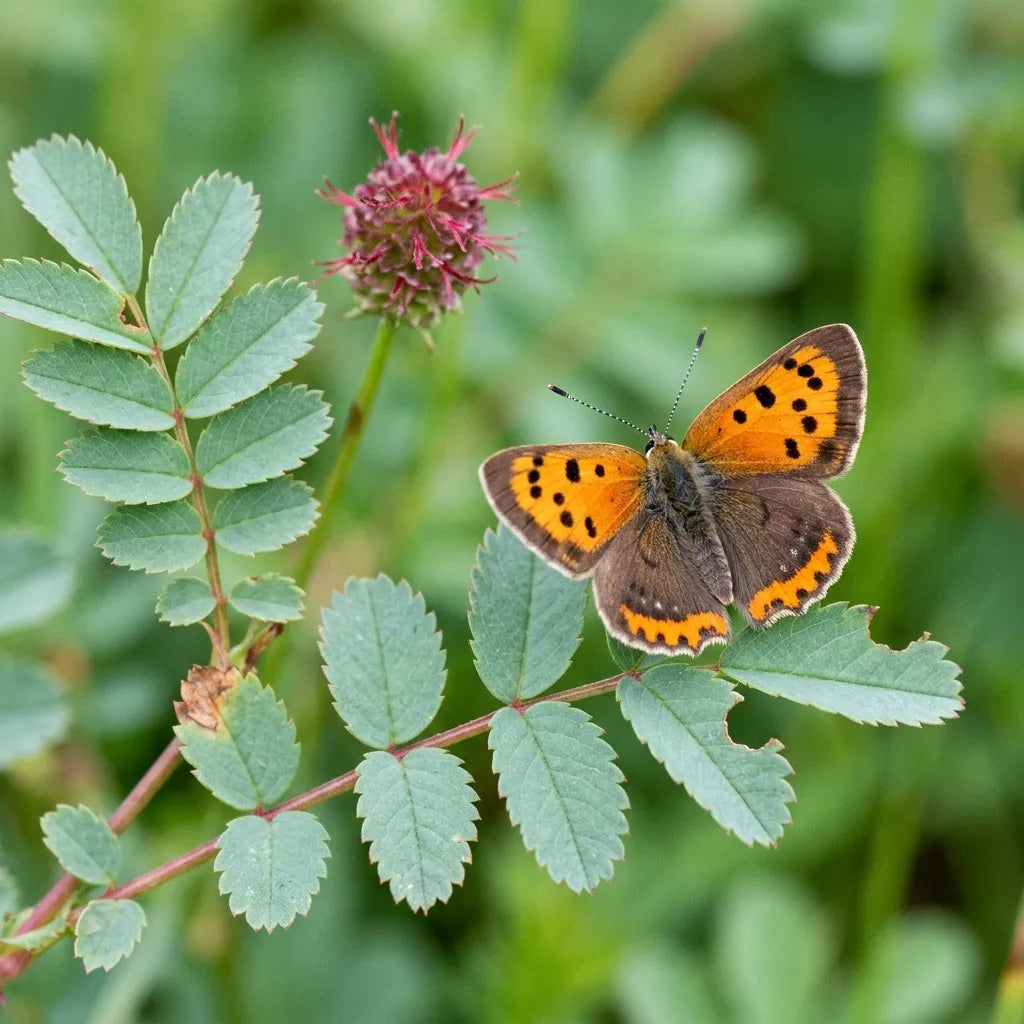
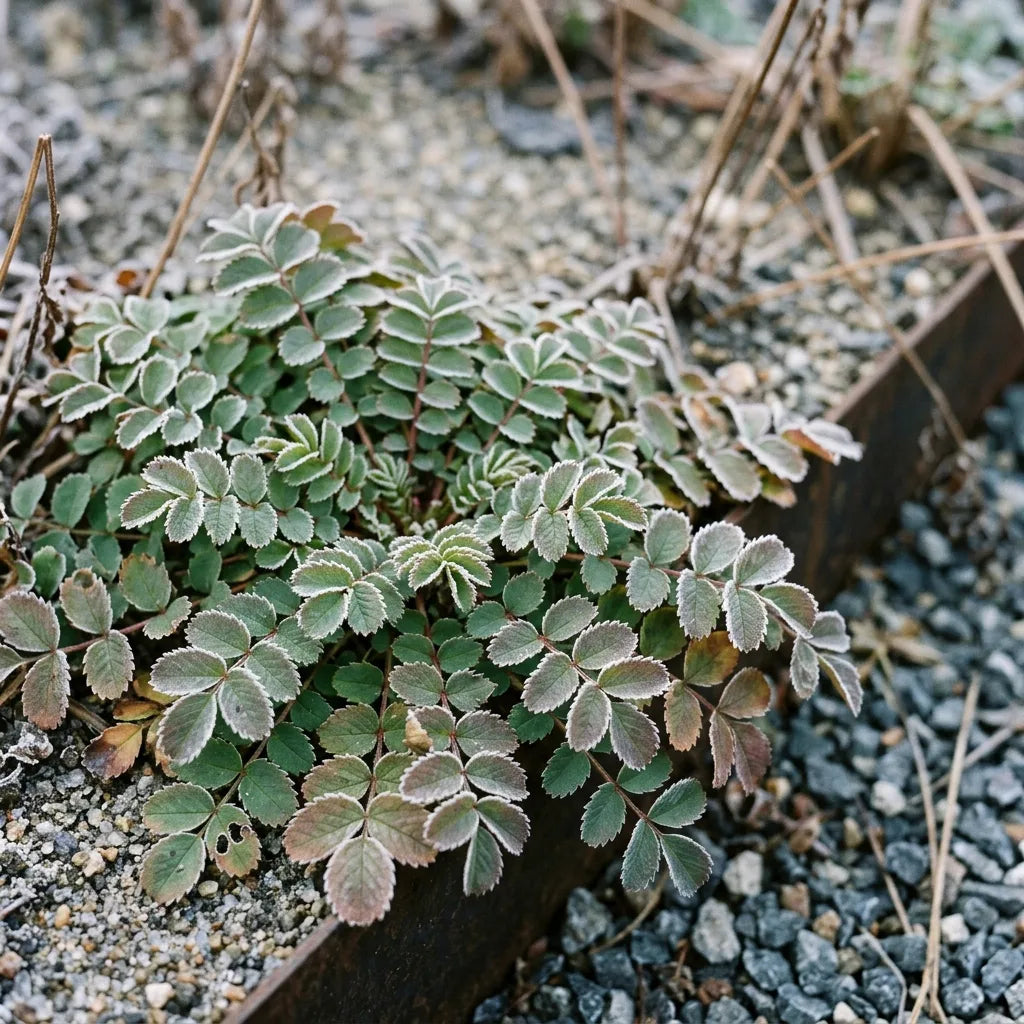
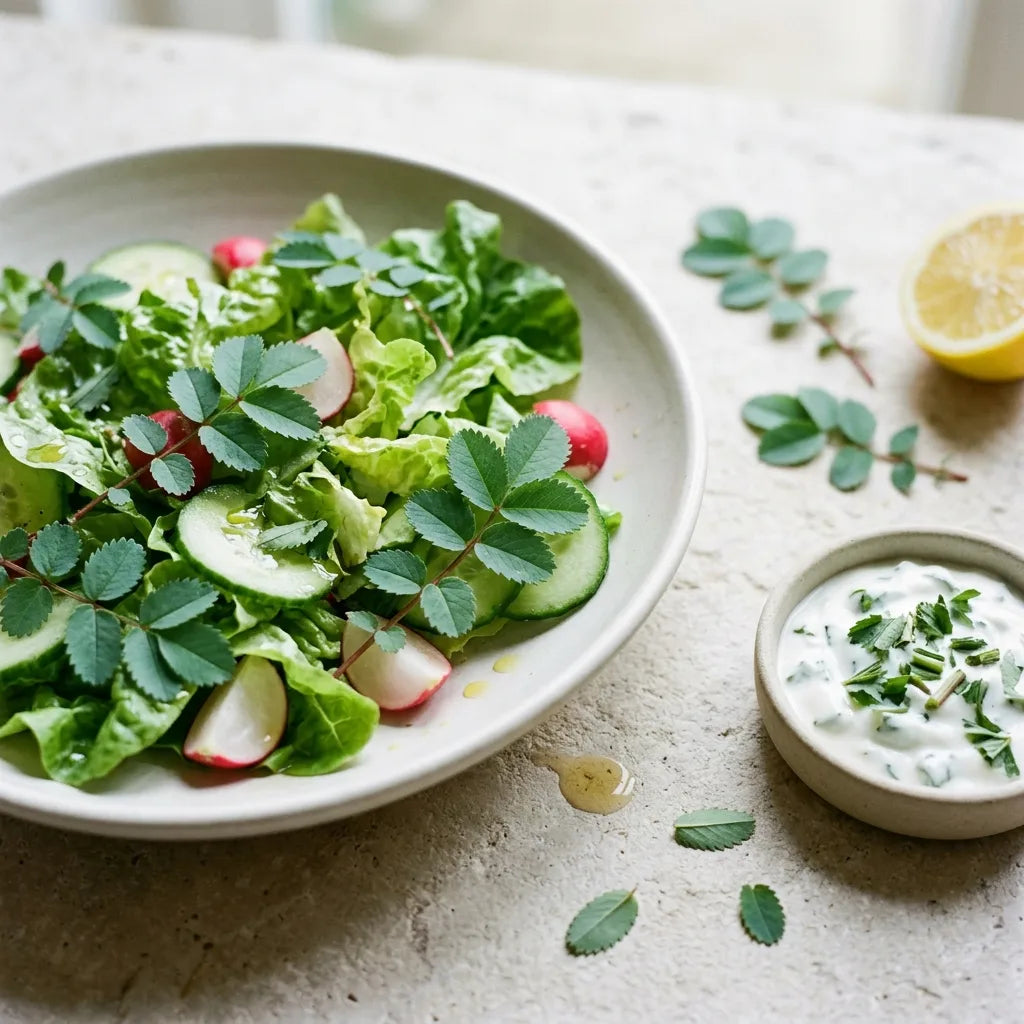
Small burnet, salad burnet, lesser burnet: its genus name comes from the Latin sanguis sorbere, “to absorb blood,” referring to its traditional uses. In the garden, it is above all an unfairly forgotten herb, whose young leaves add a fresh cucumber and green-walnut note to salads — while its finely divided foliage stays green all winter.
Characteristics:
-
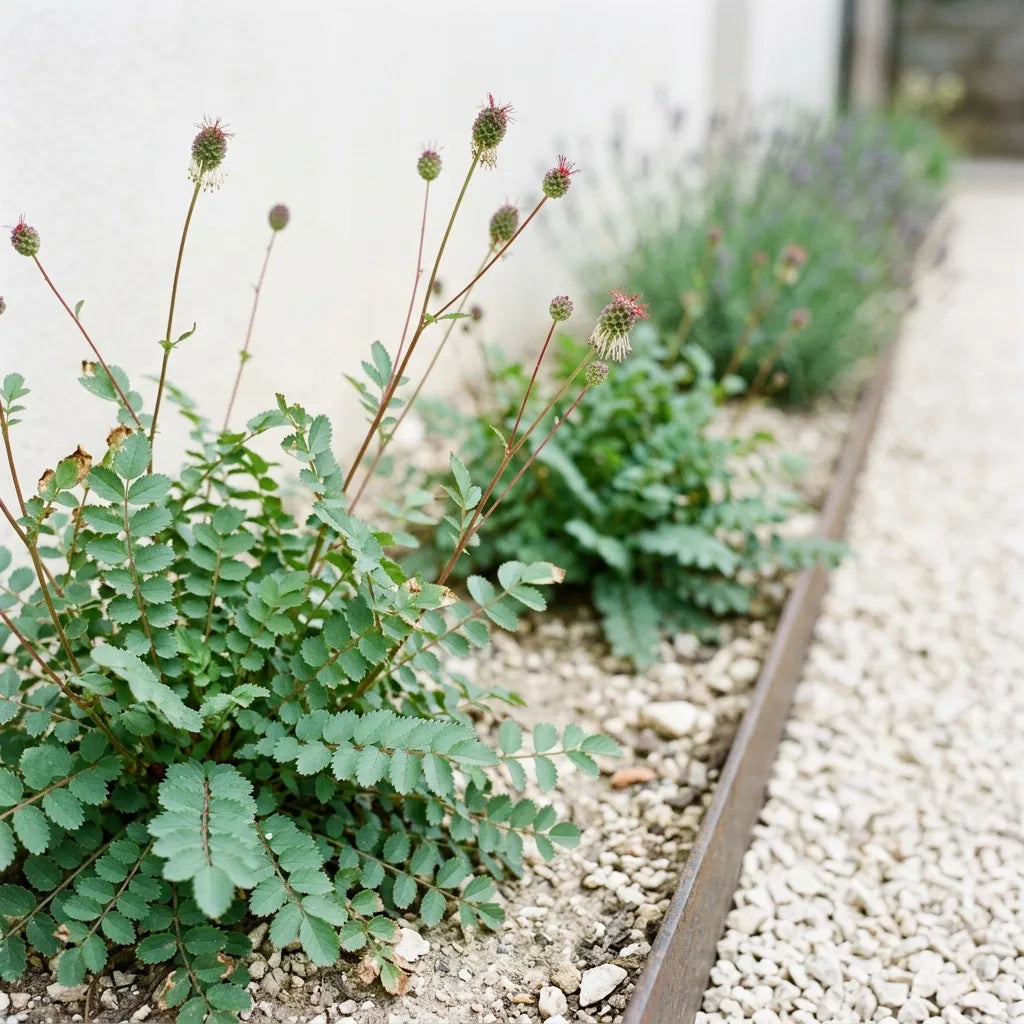
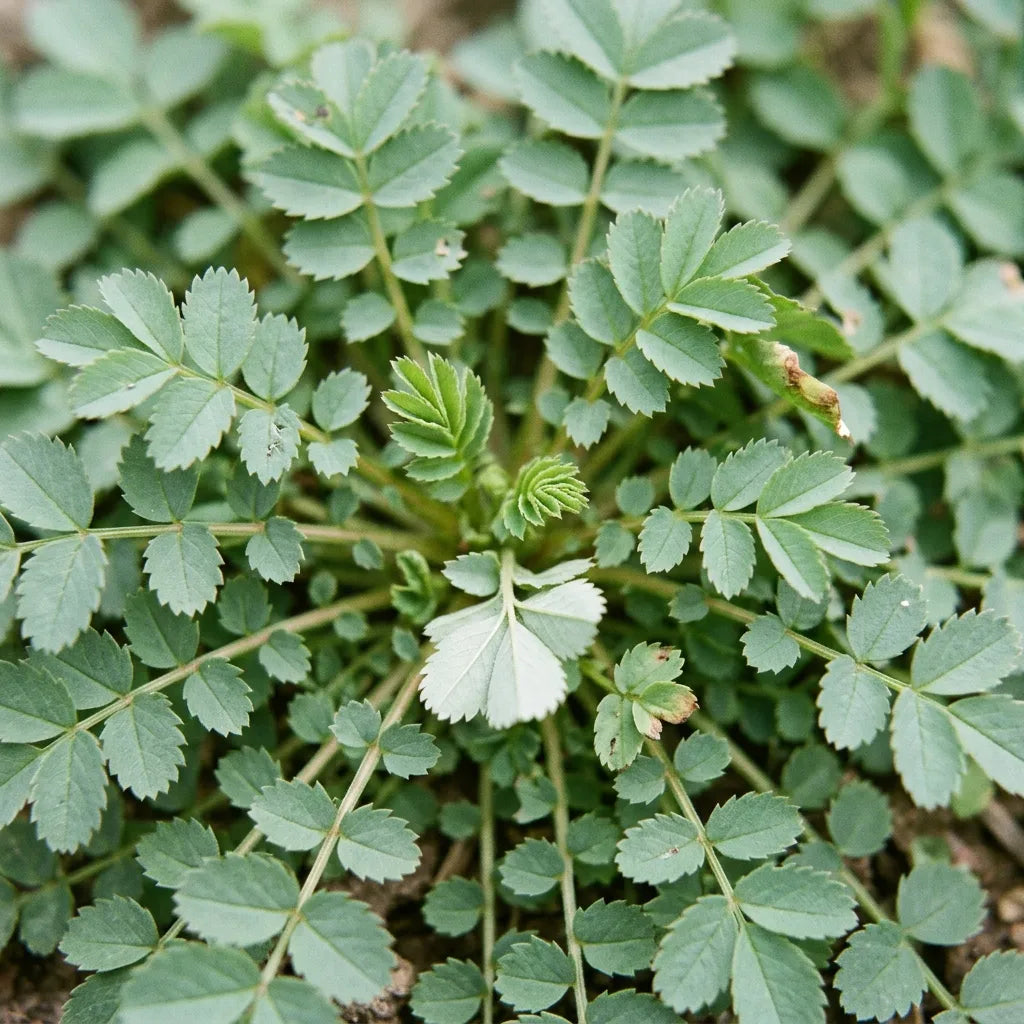
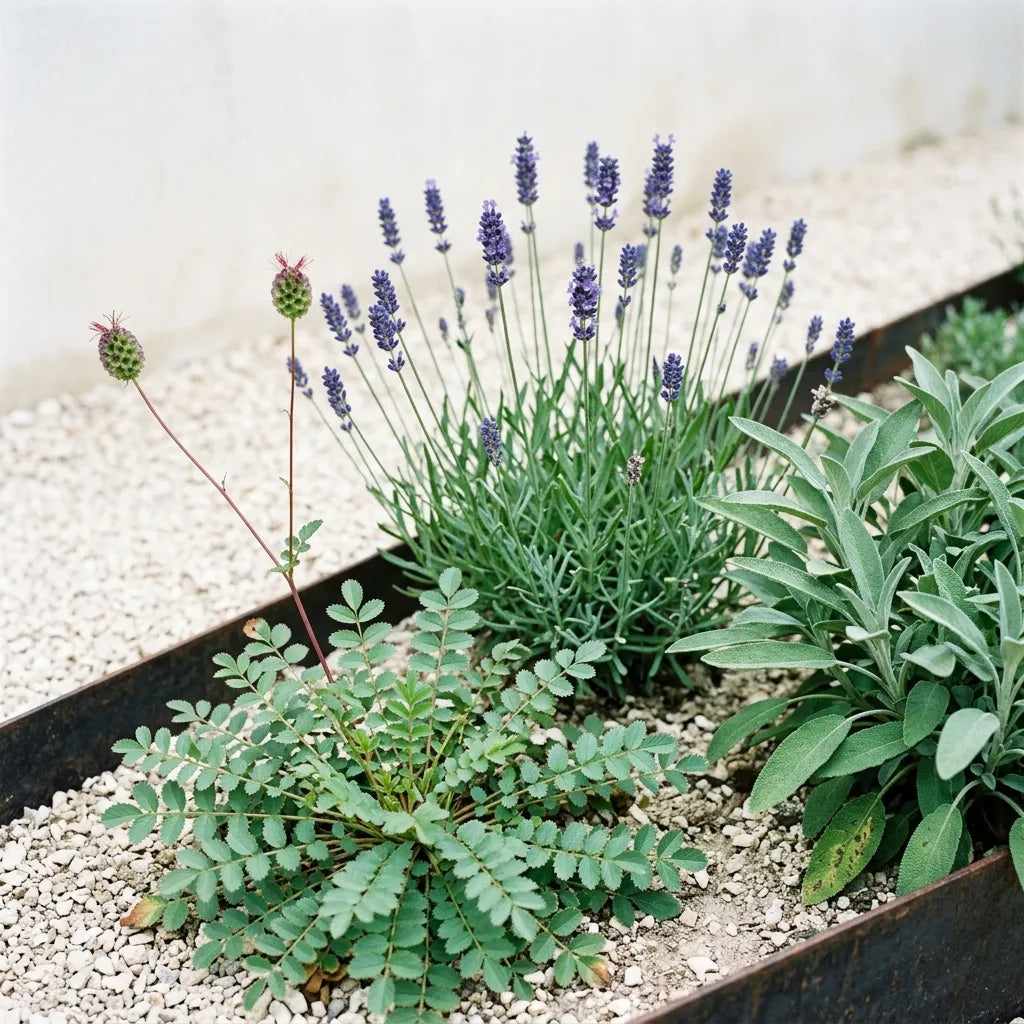
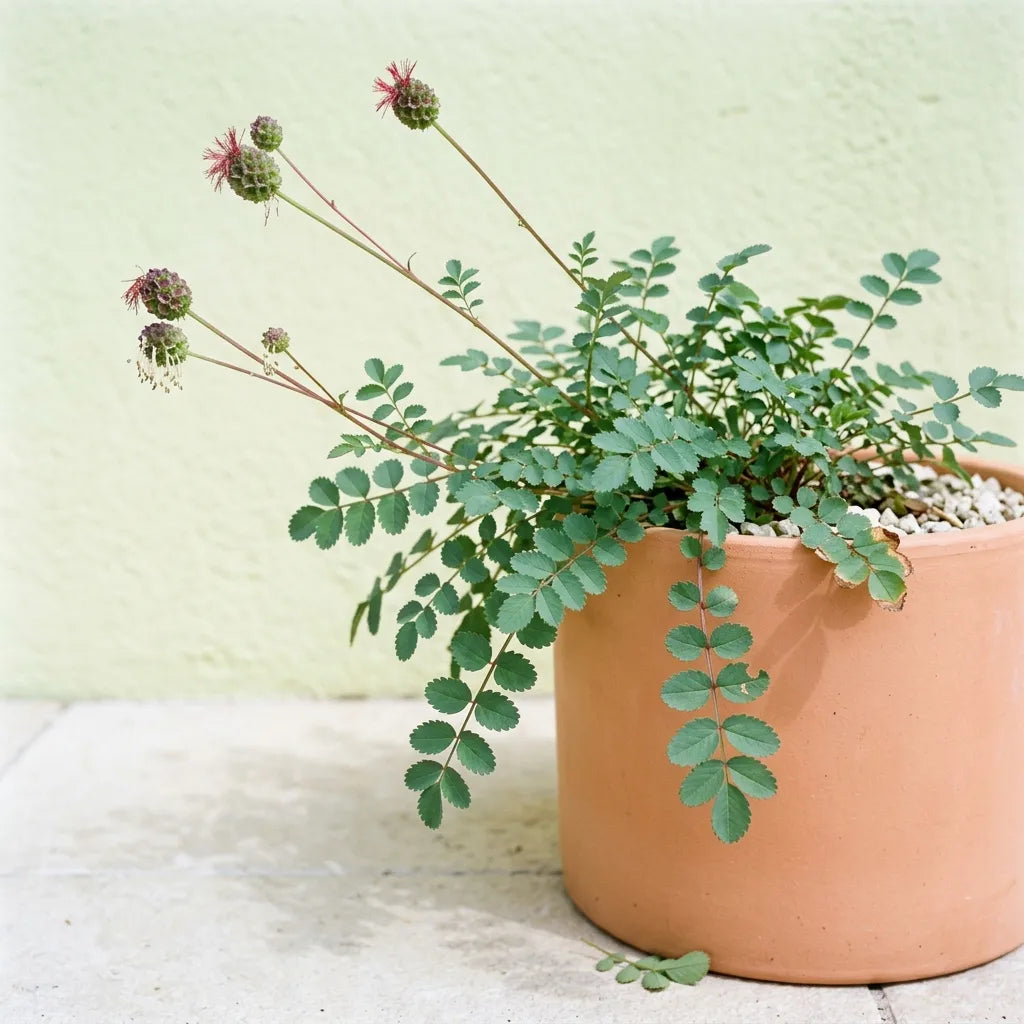
Decorative foliage: very finely divided into toothed leaflets, it forms graceful rosettes and remains evergreen in winter.
-
Original flavor: somewhere between cucumber and green walnut, with a hint of bitterness and astringency.
-
Hardy perennial: virtually indestructible, it provides fresh leaves all year round, including during the cold season.
Sowing advice:
-
Exposure: full sun or light shade; it adapts to both.
-
Soil: sandy, deep, dry and rather chalky — it grows naturally in poor grasslands and on dry slopes. It dislikes stagnant moisture and needs no amendments: in soil that is too rich, its leaves lose their flavor.
-
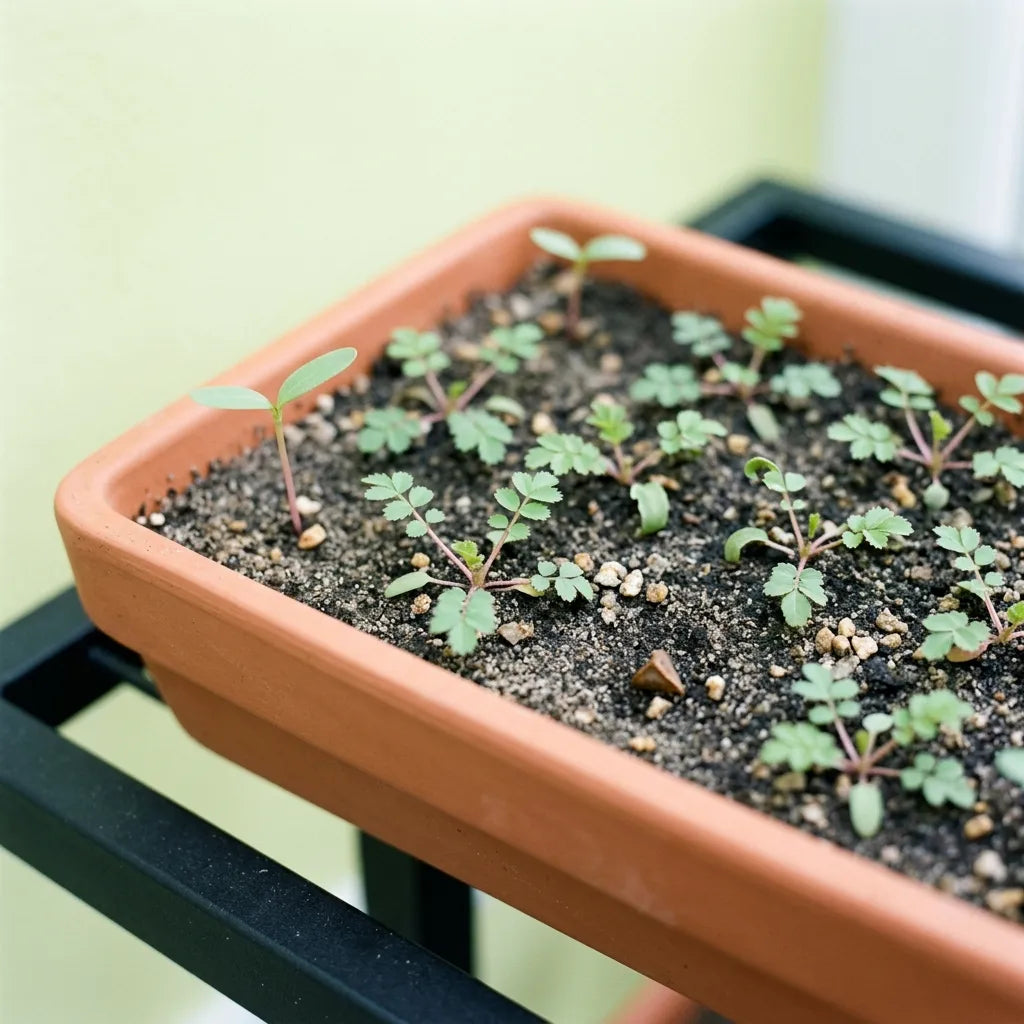
Method: sow in spring, directly in place or in pots, lightly covering the seeds. No soaking or stratification is necessary. See how to sow your seeds.
Planting advice:
- Plant it along the edge of the ornamental garden, in the vegetable garden, in a herb bed or in a pot at least 40 cm in diameter, spacing plants 30 cm apart.
Care advice:
- Cut off the flower stalks as soon as they appear to focus the plant’s energy on producing young, tender leaves, which are the most flavorful.
- Cut back the clump at the end of winter to encourage new shoots.
Harvesting advice:
- Always pick the young leaves from the center, as they are the most tender. Eat them fresh: drying completely destroys their delicate flavor.
Beneficial combinations:
Benefits for biodiversity:
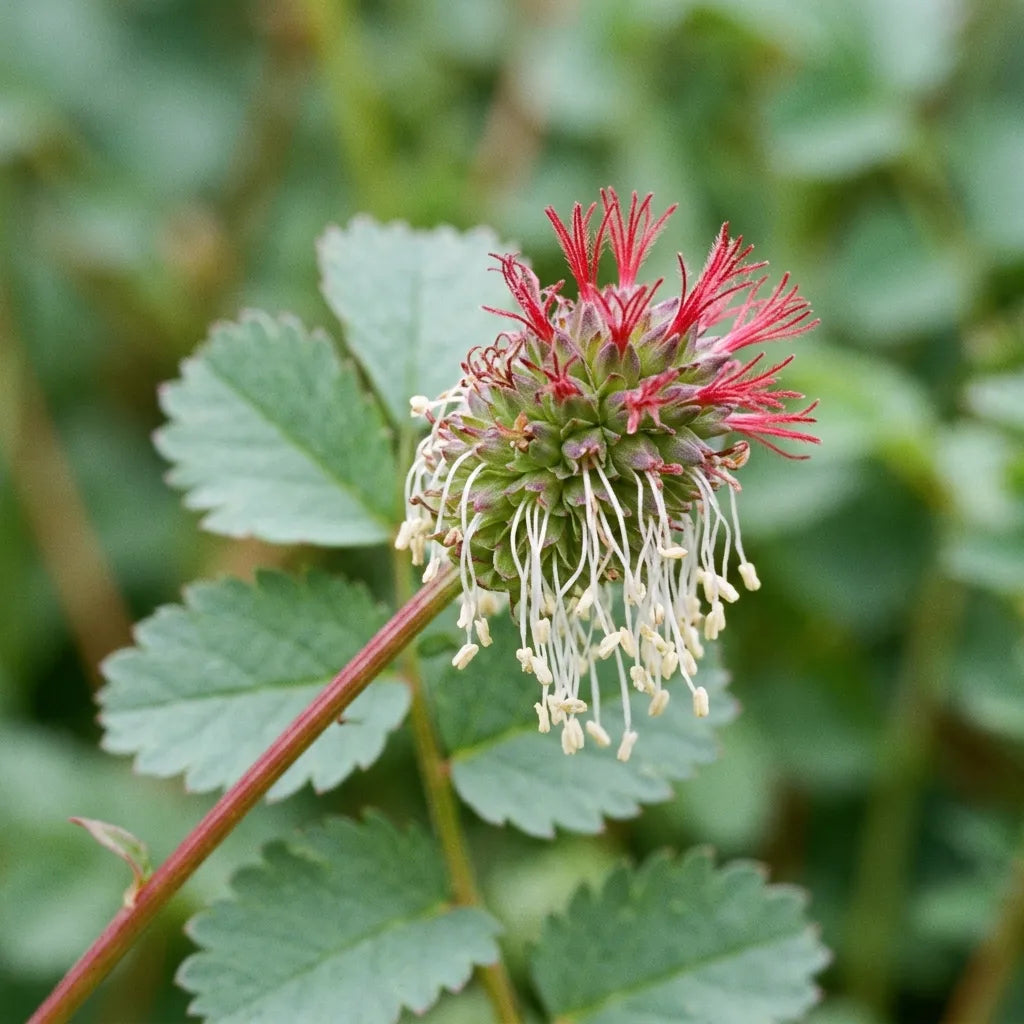
- If allowed to flower, its unusual reddish flower heads are pollinated by the wind but visited by small insects.
- Its evergreen foliage provides shelter close to the ground throughout winter, when most perennials have disappeared.
Uses:
- Fresh leaves in salads, cold sauces, fromage blanc or drinks, where they add their cucumber note. Traditional medicinal plant. See our medicinal plants to sow.
Harvesting your own seeds:
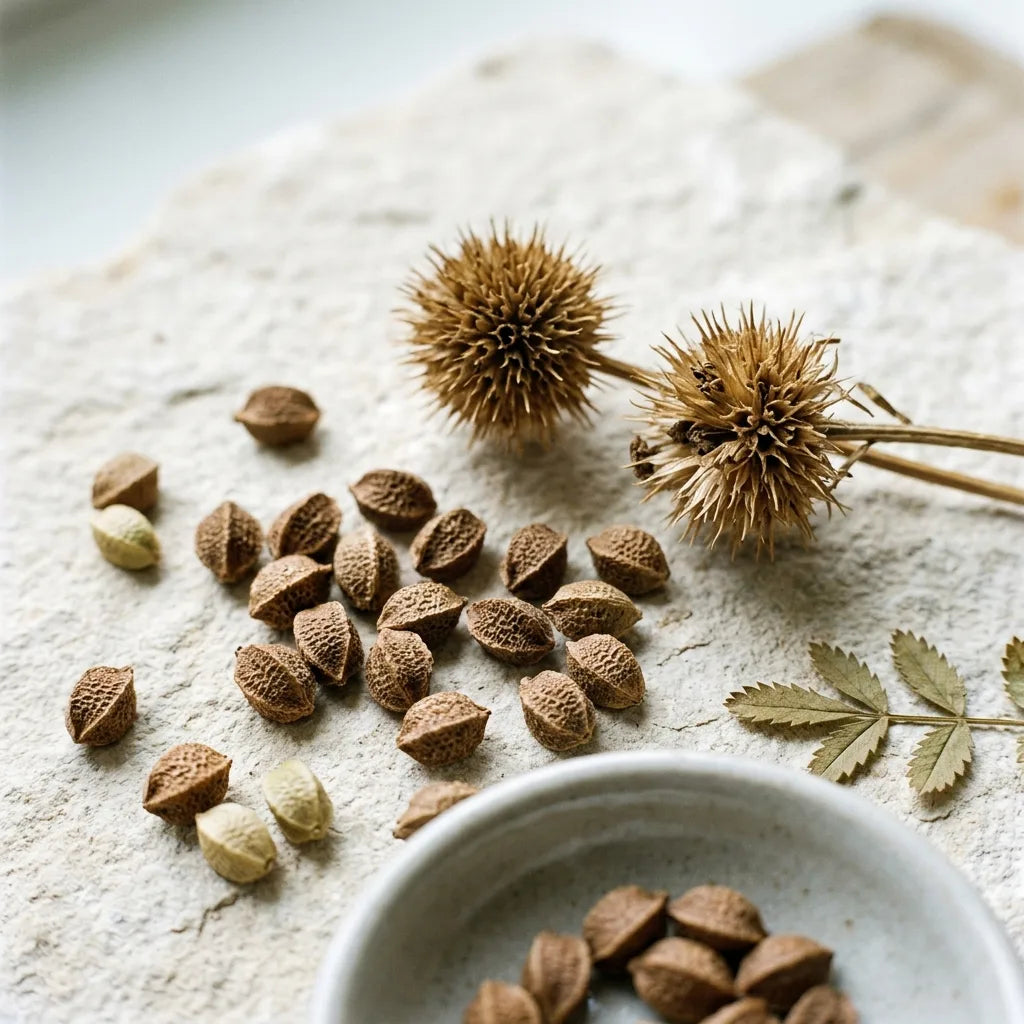
Allow a few flower stalks to grow and form their angular fruits, then harvest them once they are brown and dry. Burnet readily self-seeds in the garden. See how to store your seeds.
Our Commitment to Quality: at SemiSauvage - Permaculture, we grow and select our seeds with respect for all living things as our guiding principle. Based near the Auvergne Volcanoes, we choose reproducible, non-hybrid varieties, tested for their germination rate, sorted and carefully packaged, without any chemical treatment. Our belief: to give gardeners back the ability to sow again, year after year, seeds that truly belong to them.
Rediscover a forgotten herb, available fresh even in the depths of winter.