Beta vulgaris
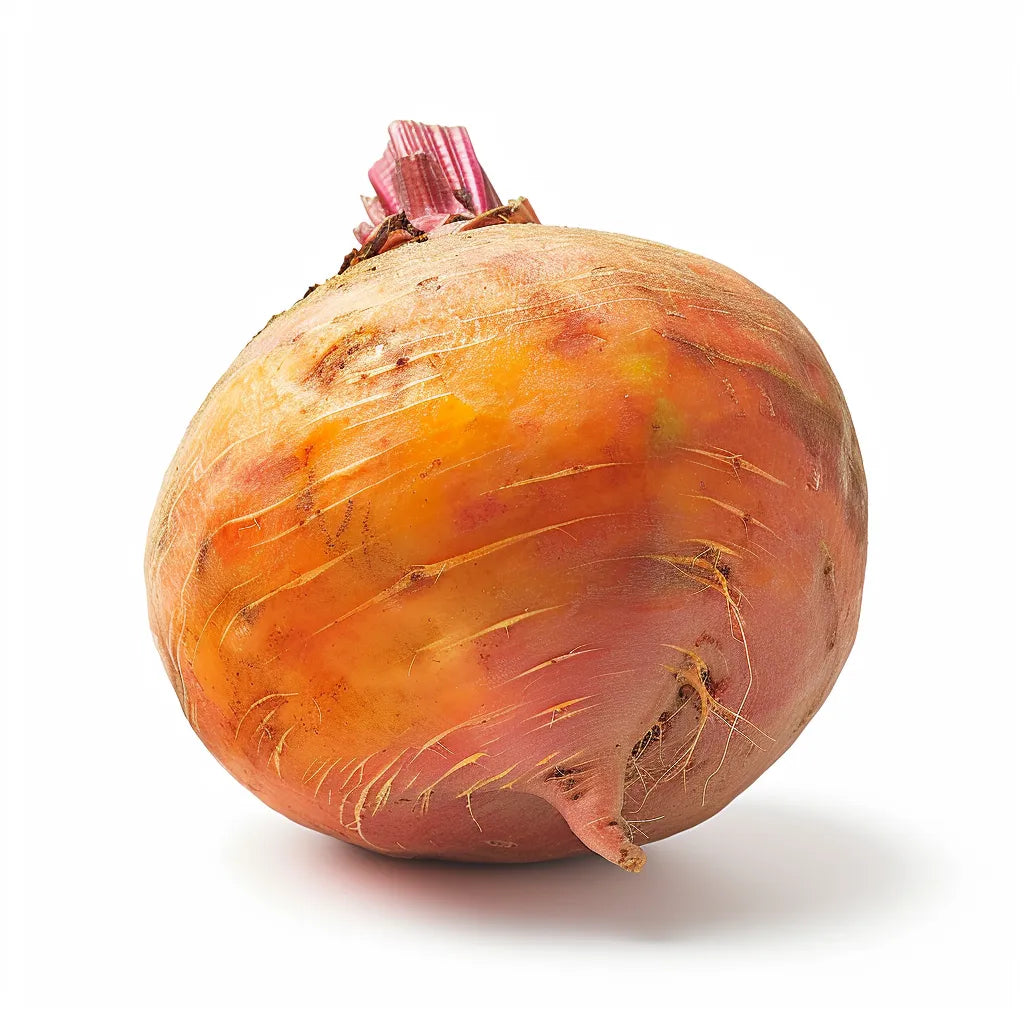
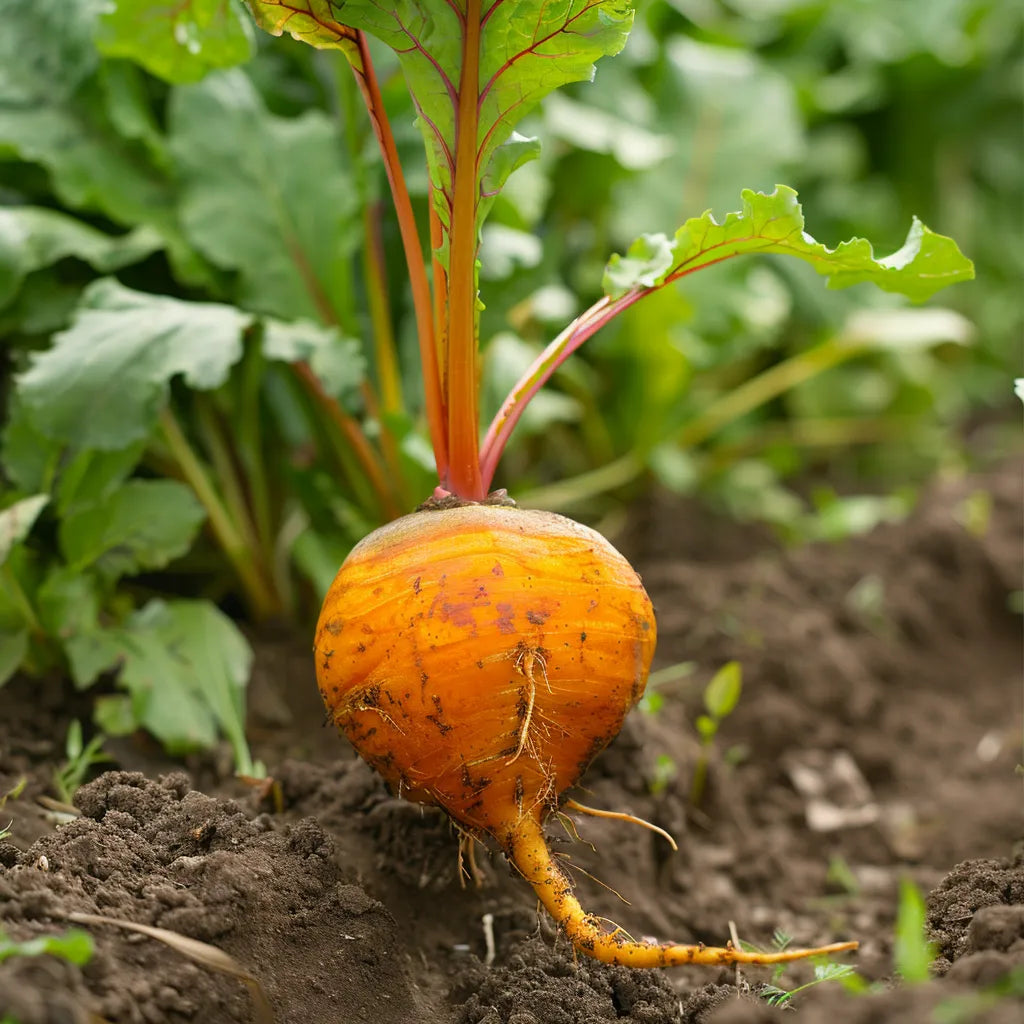
Yellow beetroot, golden beetroot, Burpee's Golden beetroot: its orange flesh has one very practical advantage over that of red beetroot — it does not stain. Not your fingers, the cutting board, or the other ingredients in a salad. Its flavor is also milder and less earthy, which often wins over those who do not like red beetroot.
Characteristics:
-
Orange-yellow flesh: it retains its color when cooked without staining other dishes.
-
Mild flavor: sweeter and less earthy than red beetroot.
-
Heritage variety: a forgotten vegetable that deserves to return to the garden.
-
Quick and easy to grow: accessible to all gardeners with deep soil.
Sowing advice:
-
Exposure: sunny.
-
Soil: deep, cool, light, and loose, enriched with well-rotted compost. Avoid stony soils, which deform the roots, and never add fresh manure.
-
Method: sow from March to June to stagger the harvests, 2 cm deep in rows 30 cm apart. Soaking for one hour in lukewarm water encourages germination. Each “seed” is actually a glomerule containing 3 to 6 fused seeds — hence the clustered emergence. See how to sow your seeds.
Care advice:
-
Thin out without fail to 10 cm apart as soon as the plants have 3 or 4 leaves: without this step, the plants compete with one another and you will get only small, stunted roots. The good news is that beetroot is the only root vegetable that can be transplanted without difficulty — the removed seedlings are not wasted.
- Water regularly, especially during dry periods: fluctuations in water availability cause the roots to split.
Harvesting advice:
- Harvest before severe frosts, when the roots reach the size of a tennis ball — if they grow larger, they become fibrous. Leave 3 cm of stem when cutting off the leaves, to prevent the beetroot from “bleeding” during cooking.
Beneficial companions:
Benefits for biodiversity:
- Its abundant foliage covers the soil, protects it from drying out, and shelters ground beetles and beneficial insects.
- Growing heritage varieties like this one directly contributes to maintaining cultivated diversity, which has been greatly reduced by standardization.
Uses:
- Grated raw, roasted in wedges, in a velouté soup, or as carpaccio — its golden color looks beautiful mixed with red beetroot, precisely because it does not become stained. Its leaves can be cooked like chard.
Saving your own seeds:
As a biennial, it produces seeds in its second year: keep a few roots protected from frost and replant them in spring. Harvest the dry flower stalks. Be careful: it cross-pollinates with chard and other beetroot varieties, so isolate your seed plant. See how to save your seeds.
Commitment to Quality: at SemiSauvage - Permaculture, we grow and select our seeds with respect for all living things as our guiding principle. Based near the Auvergne Volcanoes, we choose open-pollinated, non-hybrid varieties, tested for their germination rate, carefully sorted and packaged, without any chemical treatment. Our conviction: to give gardeners back the ability to resow, year after year, seeds that truly belong to them.
All the sweetness of beetroot, without the red fingers.