Hylocereus undatus
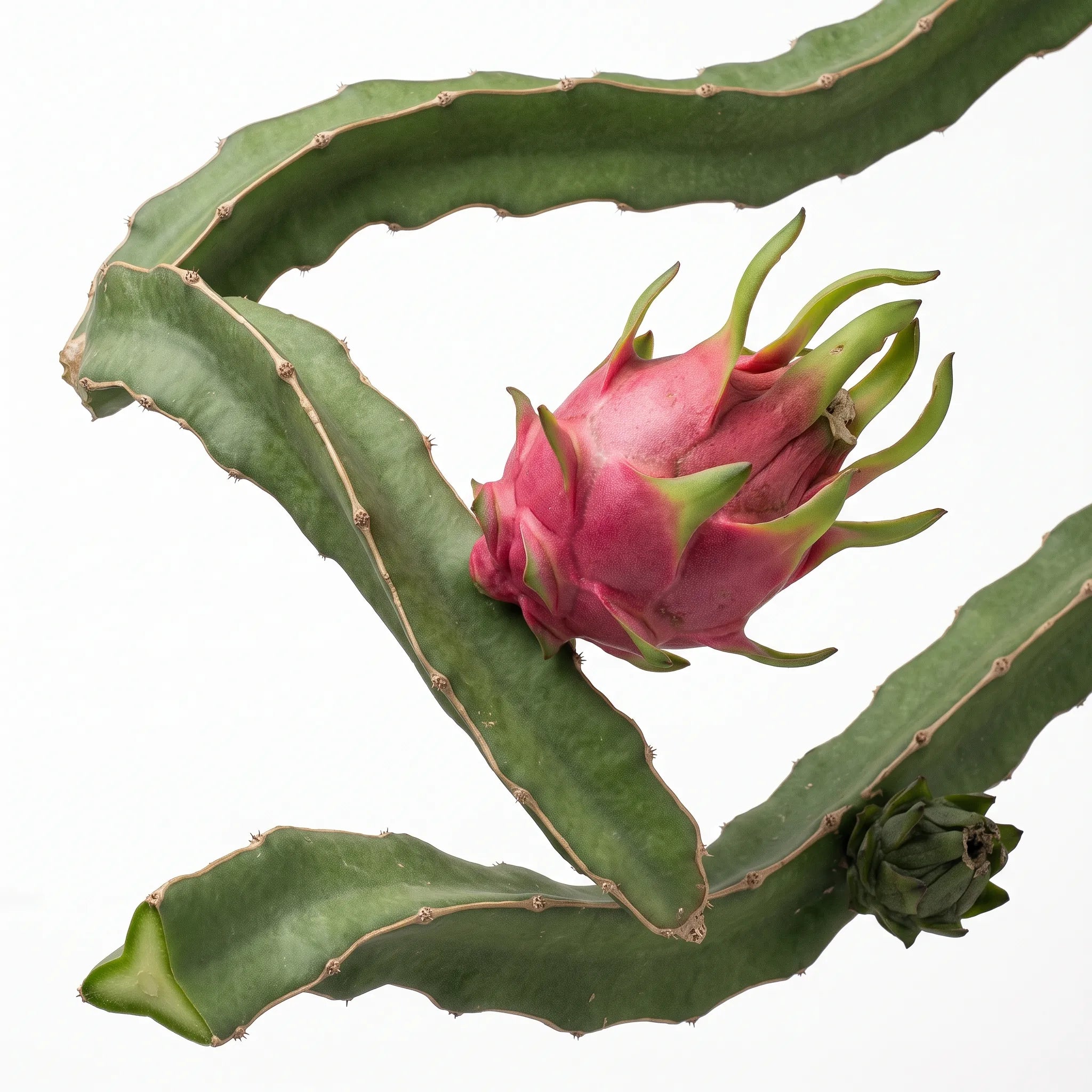
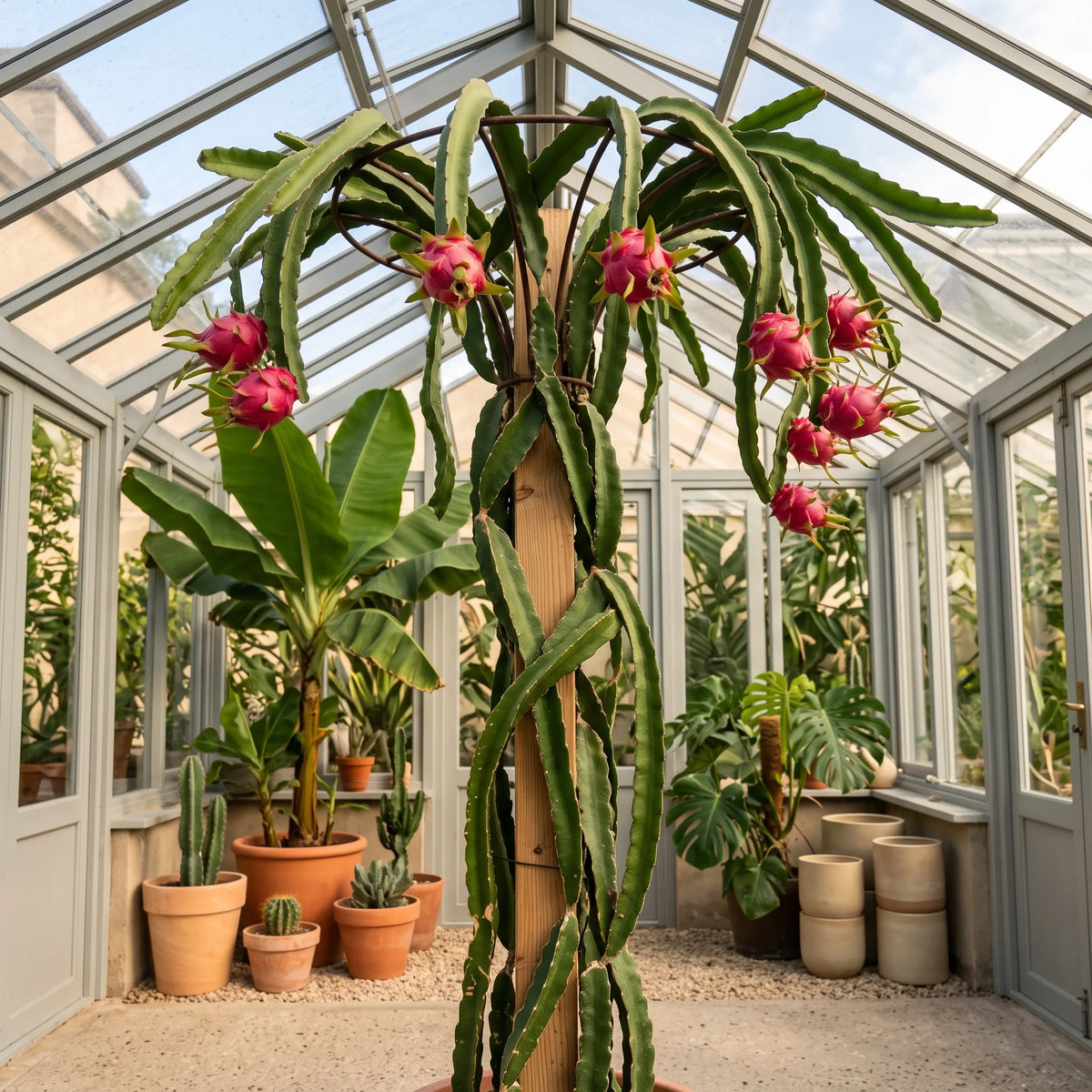
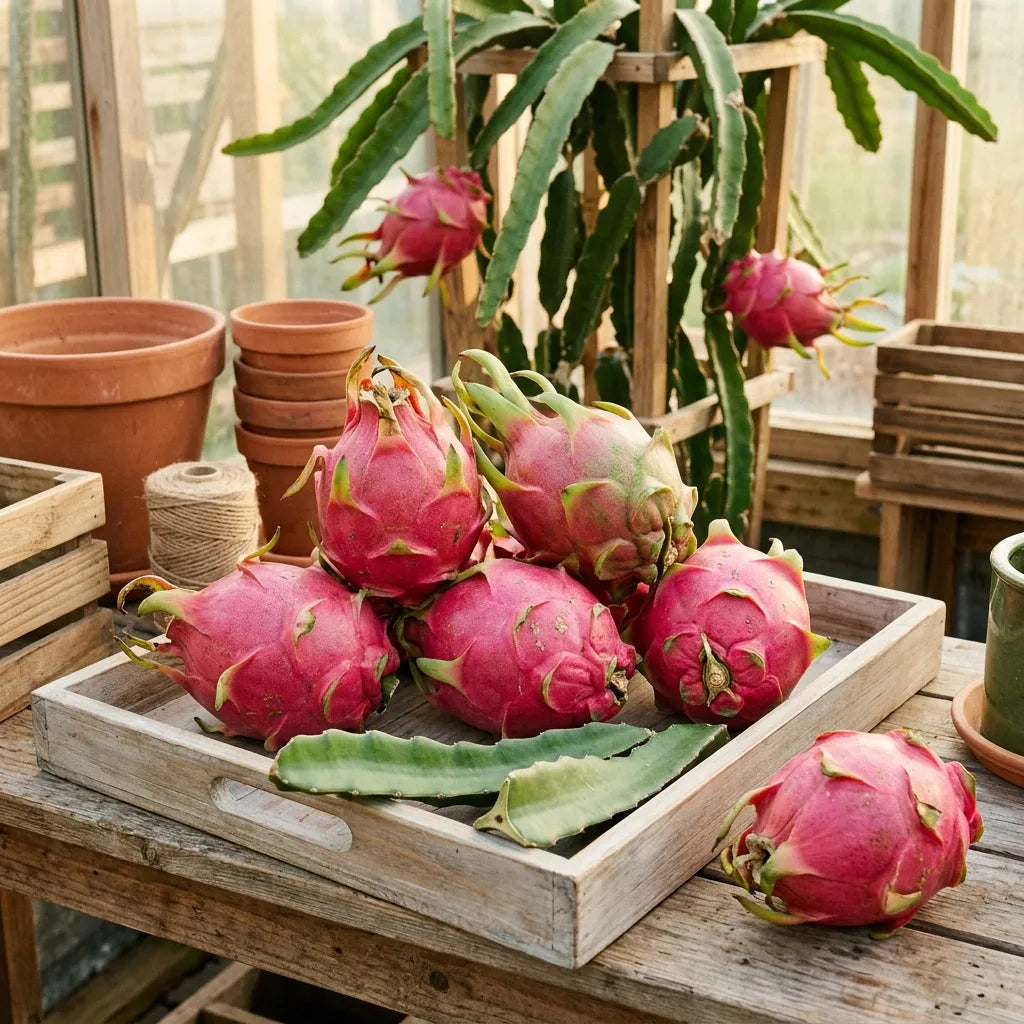
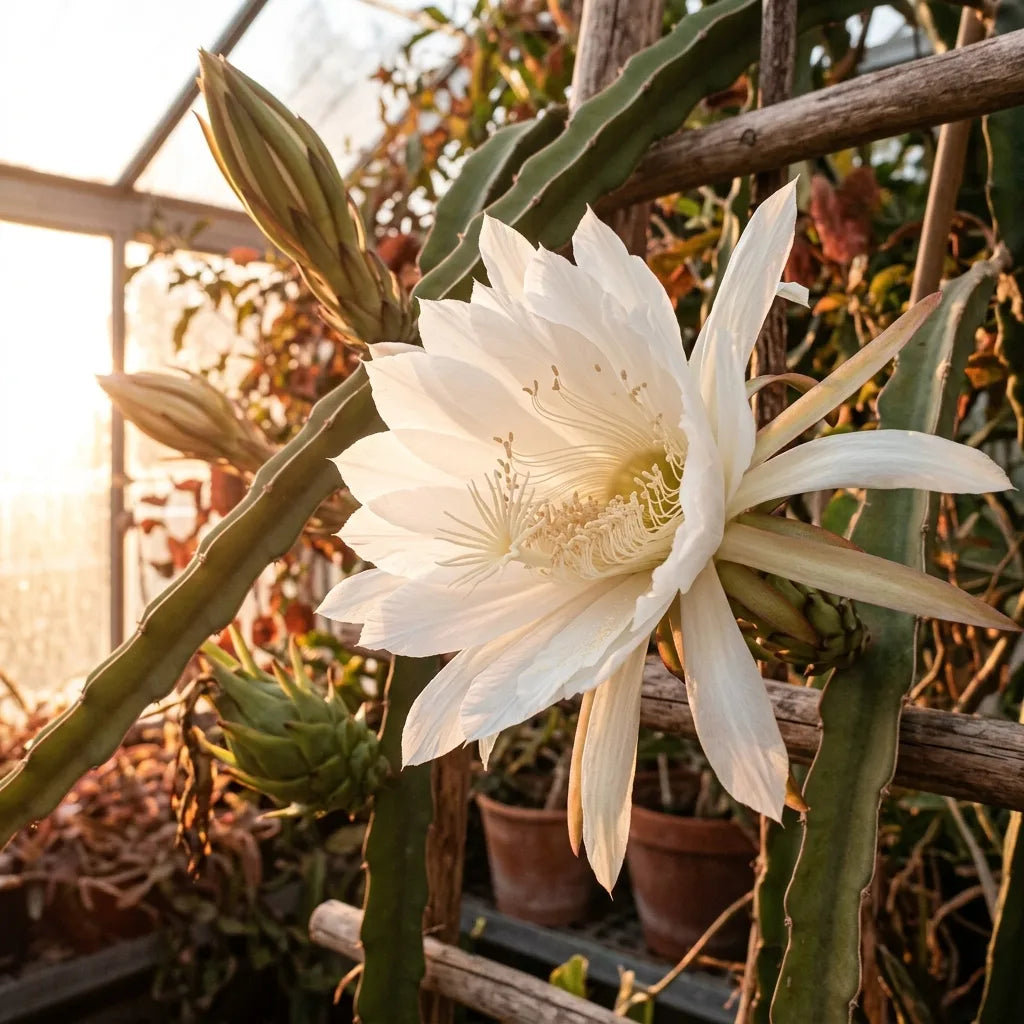
Dragon fruit, pitaya, pitahaya, thorn pear: this is not a tree but a climbing cactus, native to Central America, which clings to trunks with aerial roots. Its immense white flower opens for only one night — it is one of the most spectacular flowers in the plant kingdom, and it has wilted by early morning.
Characteristics:
-
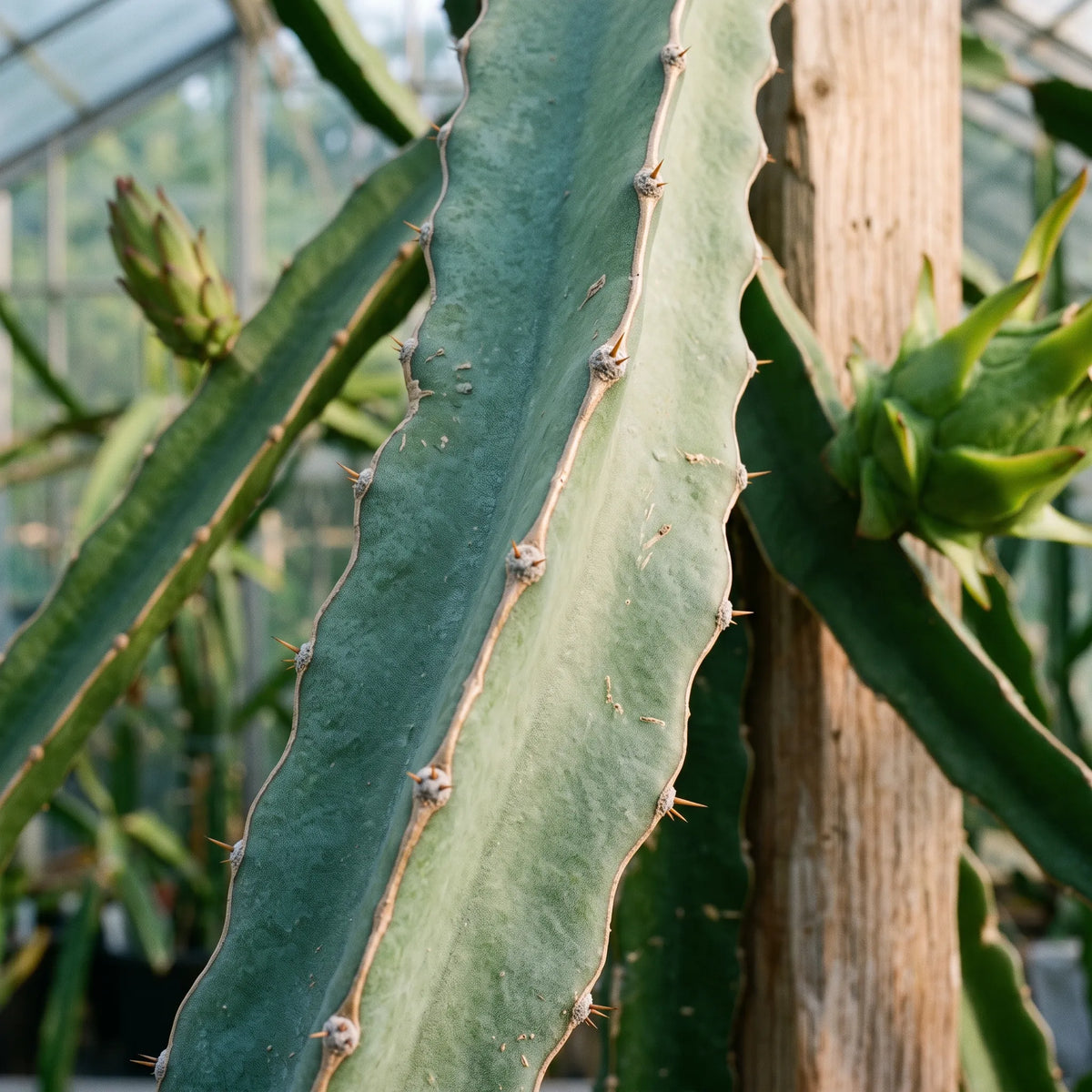
Climbing cactus: fleshy, triangular stems that cling with aerial roots and can reach several meters in length.
-
One-night flower: immense, fragrant white corolla, open from dusk to dawn, earning it the nickname “queen of the night.”
-
Scaly fruit: bright pink skin, white flesh dotted with tiny black seeds, with a mild and refreshing flavor.
-
Fast growth: easy to cultivate, it makes a spectacular houseplant.
Good to know before sowing:
-
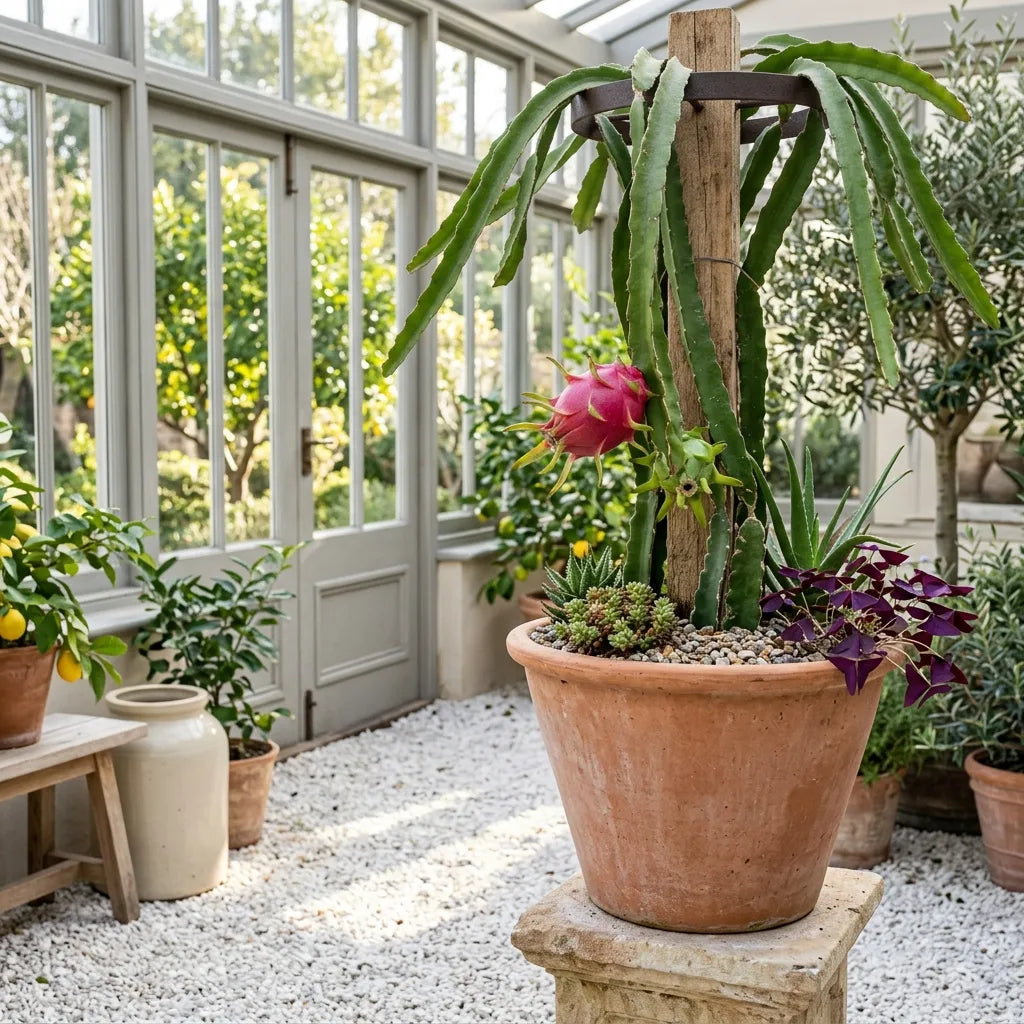
It freezes at 5 to 10°C: in our latitudes, it is grown in a pot, indoors, in a conservatory, or in a heated greenhouse. It can be placed outdoors in summer, during the warm season only.
- Allow 5 to 7 years before the first flowering for a plant grown from seed. In the meantime, it is a remarkable ornamental plant — but it is better to know this before sowing.
- It needs support: a trellis, thick stake, or coco coir totem, which it will cling to with its aerial roots.
- Many varieties are partially self-sterile: two separate plants significantly improve the chances of fruiting.
Sowing advice:
-
Exposure: very bright, but without intense direct sunlight through a window — in nature, it grows in partial shade, clinging to trunks beneath the canopy.
-
Soil: very well-drained, light, and airy: a mixture of potting soil and coarse sand or gravel, half and half. It is an epiphytic cactus and rots immediately in heavy or waterlogged substrate.
-
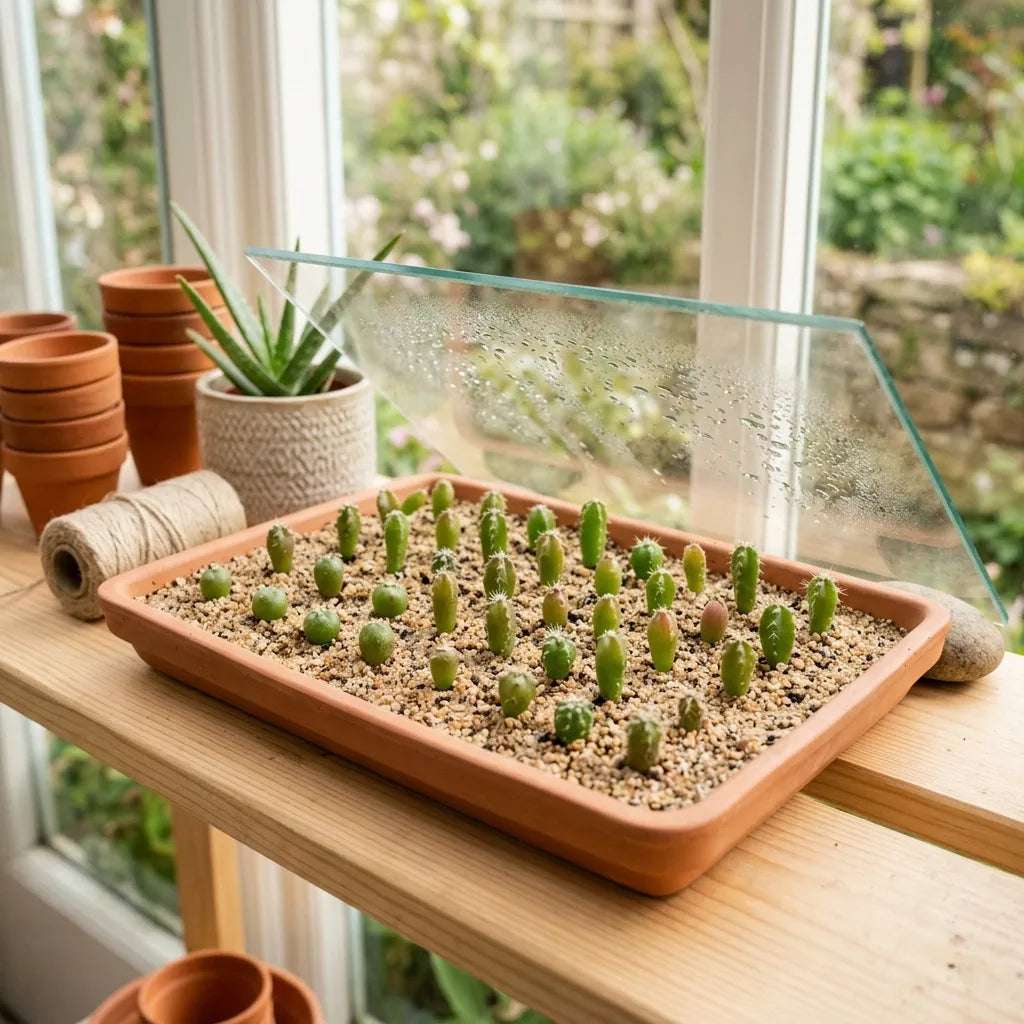
Method: no stratification — this is a tropical species, and cold is harmful to it. Sow on the surface without covering; the seeds need light. Maintain at 25–30°C in a mini-greenhouse, with constant humidity. Germination is quick: 1 to 3 weeks. See how to sow your seeds.
Planting advice:
- Transplant individually into pots when the seedlings reach 3 to 5 cm, taking care as they are fragile at first. Choose a wide, shallow pot, as its roots remain close to the surface.
- Install the support as soon as the stem exceeds 30 cm.
Care advice:
- Water moderately, allowing the substrate to dry between waterings — excess water is the leading cause of death. Reduce watering significantly in winter, when the plant becomes dormant.
- Never allow the temperature to drop below 10°C. An application of cactus fertilizer in spring and summer supports its growth.
- Prune stems that are too long to encourage branching: flowers appear on fully mature stems.
Harvesting advice:
- If your plant flowers and produces fruit, harvest about one month after flowering, when the skin is deep pink and the scales are beginning to dry at their tips.
- Manual pollination with a brush on the evening the flower opens significantly increases the chances of fruit set indoors.
Benefits for biodiversity:
- In its native habitat, its nocturnal flowering is pollinated by bats and moths — a fine example of adaptation to nocturnal pollinators, which is rare among cultivated plants.
- Growing it indoors offers an opportunity to discover an unusual plant lifestyle: that of epiphytic cacti.
Uses:
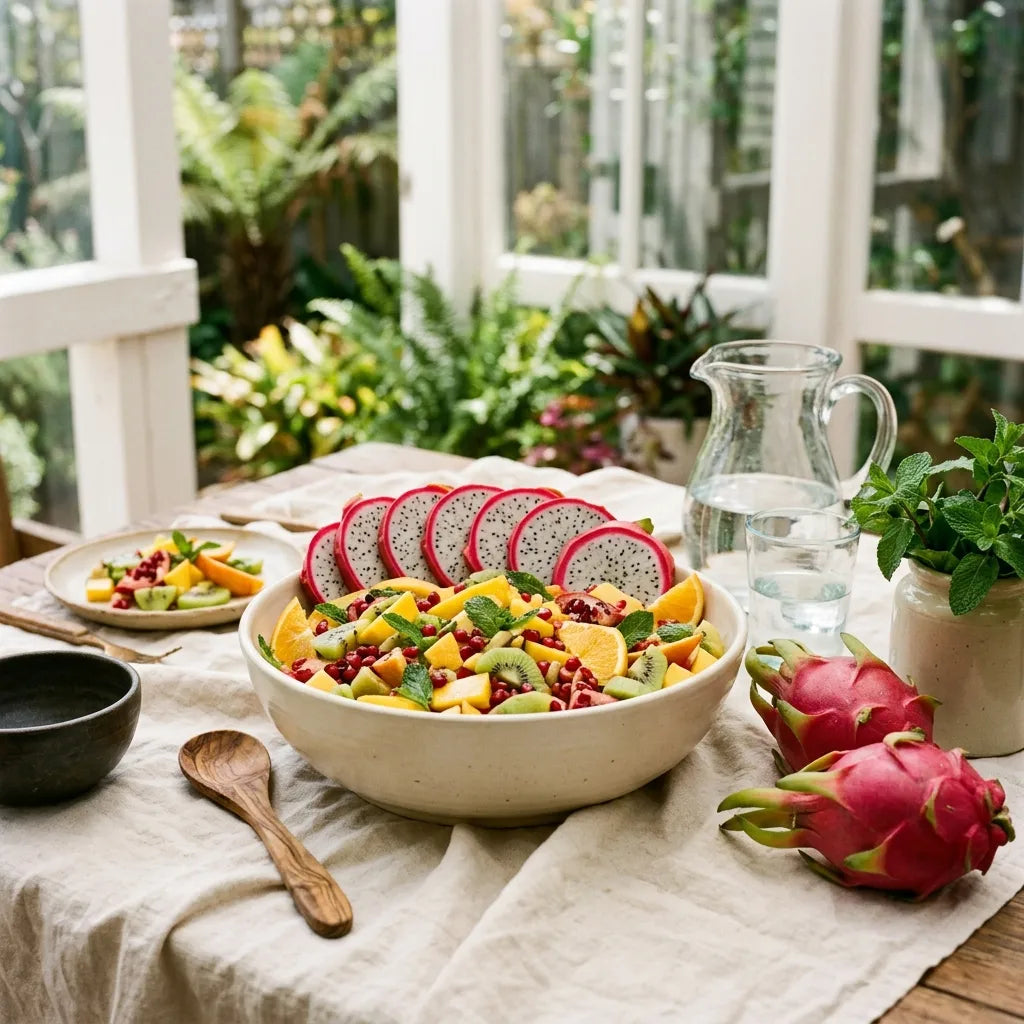
- Fresh fruit, cut in half and eaten with a spoon, in fruit salad, juice, or sorbet. Its flesh is mild and not very sweet.
- A striking ornamental houseplant, even without fruiting.
Symbolism:
Its name, “dragon fruit,” comes from the scaly appearance of its skin, which Asian tradition associated with the body of the dragon. In several Southeast Asian cultures, it is offered as a sign of prosperity and good fortune.
Harvesting your own seeds:
Scoop the flesh from a fully ripe fruit, mash it in a little water, and rinse several times through a fine sieve to separate the tiny black seeds from the pulp. Dry them flat on absorbent paper. Sow them quickly, as their germination capacity declines over time. See how to store your seeds.
Commitment to Quality: at SemiSauvage - Permaculture, we grow and select our seeds with respect for all living things as our guiding principle. Based near the Auvergne Volcanoes, we choose reproducible, non-hybrid varieties, tested for their germination rate, carefully sorted and packaged, without any chemical treatment. Our conviction: to give gardeners back the ability to resow, year after year, seeds that truly belong to them.
A climbing cactus whose flower opens for only one night.