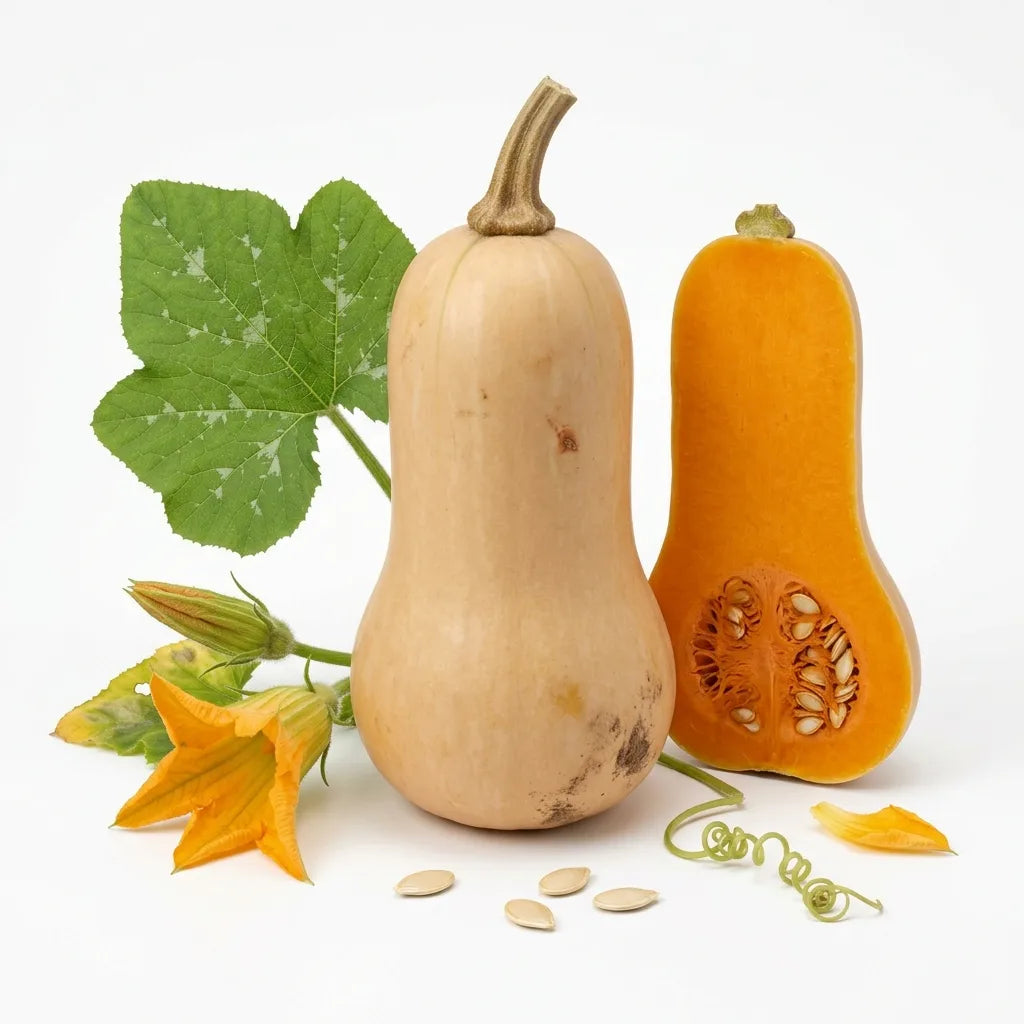
Cucurbita moschata “Butternut”
Butternut squash, also known as butternut or buttercup squash: its English name says exactly what it is—“butter nut.” Its bright orange, dense, fiber-free flesh, with its very small seed cavity concentrated in the bulbous end, makes it the easiest squash to cook: little waste, lots of flesh.
Characteristics:
-
Dense, fiber-free flesh: bright orange, firm, with a subtly sweet, musky flavor.
-
Storage squash: it keeps through the winter without difficulty in a well-ventilated place around 15°C.
-
Few seeds: concentrated in the lower part of the fruit; the rest is all flesh.
-
Adaptable: it grows well both in northern and southern France.
Precautions:
- As with all cucurbits, a fruit with a very bitter taste may contain cucurbitacins, which irritate the digestive system. Always taste a small piece: if the bitterness is pronounced, discard the entire fruit.
Sowing advice:
-
Exposure: full sun, to capture as much heat as possible.
-
Soil: very rich, deep, and well drained. This is an extremely hungry plant: add plenty of compost across the entire bed, not just in the planting hole. It does not tolerate standing water around the crown.
-
Method: sow in pots under cover at 20–25°C from April onward, or sow directly in the ground after the last frosts, 2–3 cm deep, with the seed placed on its edge. See how to sow your seeds.
Planting advice:
- Transplant after the frosts, spacing plants at least 1 metre apart: this is a vigorous trailing plant that can also be trained on a sturdy structure to save space.
Care advice:
- Water generously at the base, without wetting the foliage. Apply a thick mulch.
- In cool climates, limit each plant to 3 or 4 fruits and pinch out the stem tips after the last fruit: you will get properly ripe squash rather than a succession of underdeveloped ones.
Harvest advice:
- Harvest before the frosts, when the stem is dry and corky and the skin can no longer be scratched with a fingernail. Always leave 5 cm of stem: a squash cut flush with the fruit rots quickly.
- Let them cure in the sun for around ten days before storing. Their flavor improves after one or two months in storage.
Beneficial companions:
Benefits for biodiversity:
- Its large yellow flowers provide abundant pollen and nectar for bees and bumblebees early in the morning.
- Its immense trailing foliage covers the soil all summer, suppresses weeds, and protects the ground from drying out—a valuable crop for a living soil.
Uses:
- In soup, roasted in wedges, mashed, baked in a gratin, used in a sweet tart, or in risotto. Its thin skin becomes tender when cooked, so there is no need to peel it if you roast it. The seeds can be roasted.
Saving your own seeds:
Take seeds from a fully ripe fruit, rinse them, and dry them flat for several days. Good news: Cucurbita moschata does not cross with zucchini (C. pepo) or pumpkins (C. maxima)—only with other Cucurbita moschata. See how to save your seeds.
Commitment to Quality: at SemiSauvage - Permaculture, we grow and select our seeds with respect for living things as our guiding principle. Based near the Auvergne Volcanoes, we choose open-pollinated, non-hybrid varieties, test them for germination rate, and carefully sort and package them without any chemical treatment. Our conviction: to give gardeners back the ability to resow, year after year, seeds that truly belong to them.
The most practical squash in the vegetable garden—and one that keeps all winter.