
In this article 9
An open-pollinated seed differs from an F1 hybrid in just one respect: when resown, it produces the same plant again. The technical details are explained in What is the difference between F1, hybrid, and open-pollinated seeds?.
This article answers the other question, the only one that matters when choosing a packet: what does it change for you, concretely? Five reasons, and a method for getting started this season.
1. Your varieties adapt to your garden
That is the strongest reason, and the least visible in the first year.
A population variety is not a set of clones: its individual plants show slight variability. When you resow it every year in the same place, natural selection takes place in your garden: the plants that best withstand your soil, climate, and watering routine are the ones that produce the most viable seeds. After three or four cycles, you are growing a strain that exists nowhere else.
This mechanism is particularly important in a climate that has become unstable. A variety that adjusts year after year is better than one that is fixed, however high-performing it may be on paper. An identical F1 repurchased every spring can never benefit from this adaptation, by design.
2. You only buy once
The financial argument is modest on the scale of a family vegetable garden—the cost of seeds is marginal compared with soil, water, or time spent. But it takes on a different meaning when put another way: it is not a saving, it is the end of a subscription.
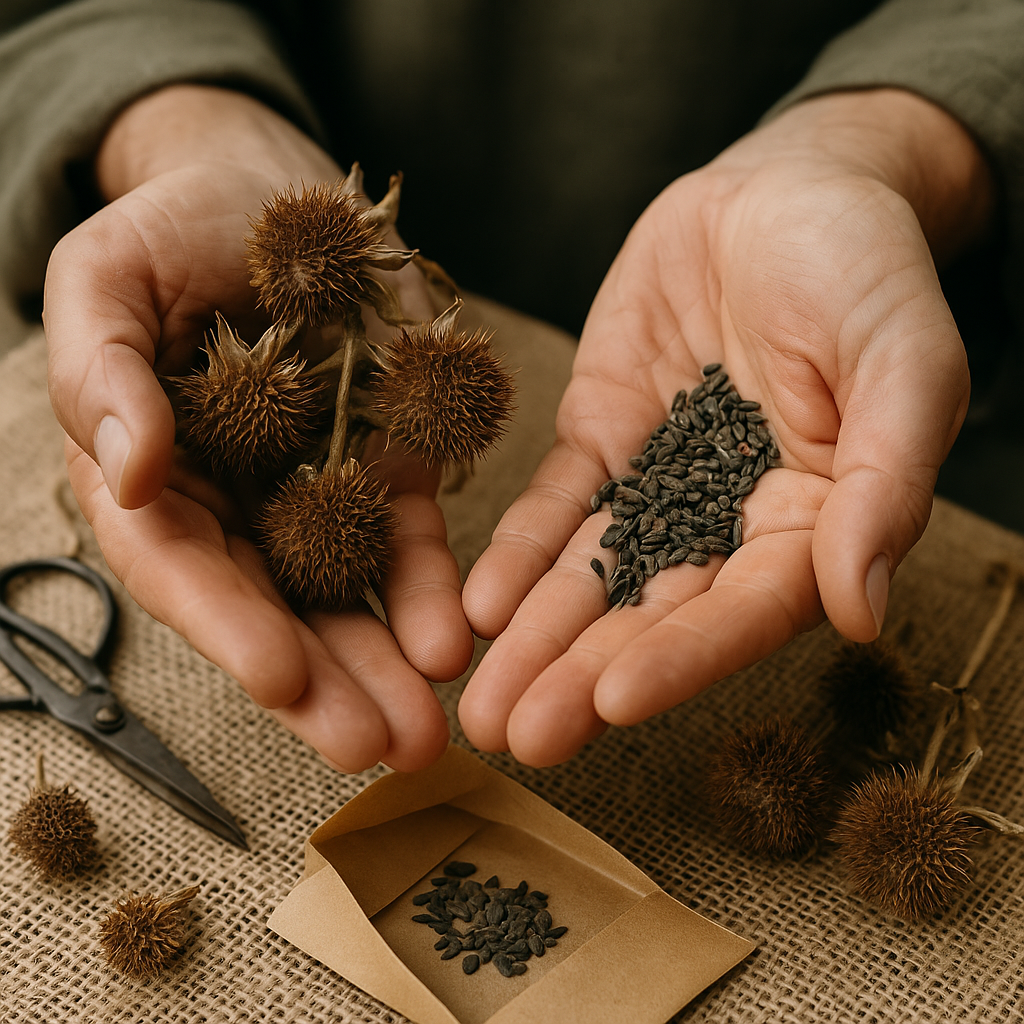
One packet of heirloom tomato seeds, bought once, and you are self-sufficient in that variety forever—as long as you harvest the seeds. One tomato plant easily produces several hundred seeds, more than enough to resow and share.
In practical terms, you buy in the first year; in the second, you only buy again what you were missing or what you want to try.
3. Flavor and diversity
Open-pollinated heirloom varieties were selected by people who ate them, in gardens, without systematic irrigation. The criteria were therefore flavor, hardiness, and keeping quality—not transportability or uniform size, which have shaped much of modern breeding.
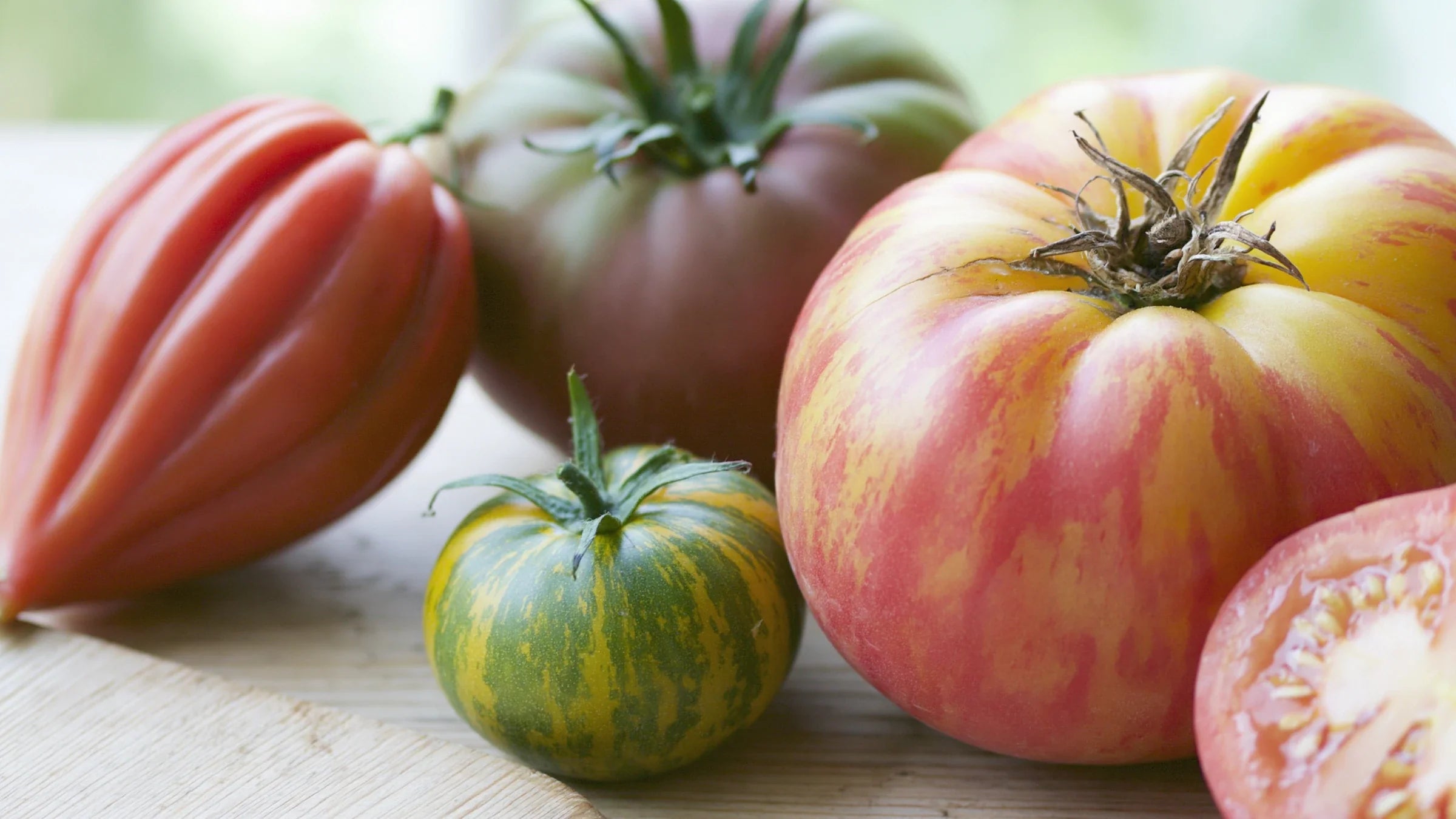
The most visible consequence is the diversity of shapes and colors: a green-and-yellow striped tomato, a beet with concentric rings, a deeply ribbed squash. These are vegetables that would never have passed the grading process.
An honest nuance: not all heirloom varieties taste better, and some modern F1s are excellent. What is certain is the breadth of choice—and the possibility of keeping the one you like.
4. A staggered harvest rather than one concentrated harvest
An F1 produces uniform fruit that all ripens at the same time. This is valuable for a market gardener who harvests in one pass. It is generally a disadvantage in a home garden, where thirty kilos of zucchini in ten days create more problems than they solve.
The slight heterogeneity of an open-pollinated variety naturally spreads production over several weeks. What is sometimes presented as a drawback is, on this scale, an advantage.
It also provides insurance: individuals do not all respond in the same way to an attack or a heat wave. A monoculture of clones is putting everything on a single roll of the dice.
5. You are contributing to conservation
The number of vegetable varieties actually grown declined sharply during the 20thand century, as production became concentrated on a small number of types that met distribution requirements. Many local varieties disappeared from commercial catalogs because there was no market large enough for them.
They survive only thanks to those who continue to resow them: gardeners, seed associations, regional seed banks. This is not merely a matter of heritage — a narrow genetic base does not withstand change well, whether new diseases or repeated droughts. The diversity preserved in gardens is a reserve of adaptability, and it cannot be rebuilt once lost.
A gardener who saves seed from three species is already taking part. An individually modest contribution, but a decisive one collectively.
What you need to know before getting started
To be honest, three points deserve to be addressed.
- Yields may be lower under optimal conditions — fertilized soil, irrigation, protection. Under average conditions, the gap narrows considerably, and sometimes reverses.
- Targeted disease resistance is a real advantage of modern selections. Open-pollinated varieties rely on general tolerance and diversity: less spectacular against a given pathogen, but more resilient over time.
- Harvesting requires a minimum of method — no equipment, but rigor when it comes to drying and labeling. See How to store your seeds from one year to the next.
Where to start this season
Don't try to switch everything over at once. A three-step plan:
- Year 1 — two or three self-pollinating species. Tomatoes, beans, lettuce: they fertilize themselves before the flower even opens, accidental crosses are rare, and one or two seed plants are enough. You see that it works from the very first harvest.
- Year 2 — expand to self-pollinating crops that require monitoring. Bell peppers, chili peppers, and eggplants: keep three to five plants and space the varieties a few meters apart.
- Year 3 — take on cross-pollinated crops. Squash, cabbages, carrots: cross-pollination is obligatory, so you need a sufficient population and only one variety per botanical species flowering at the same time. This is the stage where seed-exchange networks between gardeners really come into their own.
One precaution that prevents many disappointments: always keep some of the original seed packet in reserve. If a seed harvest fails or cross-pollination occurs, you can return to the original stock without having lost anything.
Frequently asked questions
Does reproducible mean heirloom?
Not necessarily. All heirloom varieties are reproducible, but recent open-pollinated varieties also exist—resulting from contemporary breeding work. The designation that matters is “reproducible” or “open-pollinated variety.”
Does reproducible mean organic?
No, these are two independent criteria. A reproducible variety can be conventionally produced and treated after harvest; an F1 variety can be organically certified. See Organic vs. conventional seeds.
Can I mix F1 and reproducible seeds in the vegetable garden?
Yes, no problem. Simply do not harvest seeds from F1 plants, and avoid having an F1 flower in the immediate vicinity of a seed plant of the same cross-pollinated species.
What happens if my seeds cross-pollinate anyway?
You get heterogeneous offspring, not a catastrophe. Some gardeners take advantage of this to select over several years and create their own variety. And you still have some of the original seed packet left.
Where can you exchange seeds?
Seed swaps, municipal library seed banks, and local gardening networks. This is the best way to introduce new genetic material into cross-pollinated species and discover varieties adapted to your region.
Key points
Choosing reproducible seeds isn't just about refusing something: it's about giving yourself the ability to harvest, adapt, and pass them on. Start with one tomato and one bean this season—in a single harvest, you'll know whether this approach is right for you.
To take it further
- What is the difference between F1, hybrid, and reproducible seeds?
- Heirloom seeds: what are they? Why grow them?
- How to store your seeds from one year to the next
- Heirloom tomato seeds: varieties, sowing, and care
All our seeds are reproducible, without exception: discover our heirloom varieties, our vegetable seeds, and our starter kits.

Leave a comment
This site is protected by hCaptcha and the hCaptcha Privacy Policy and Terms of Service apply.