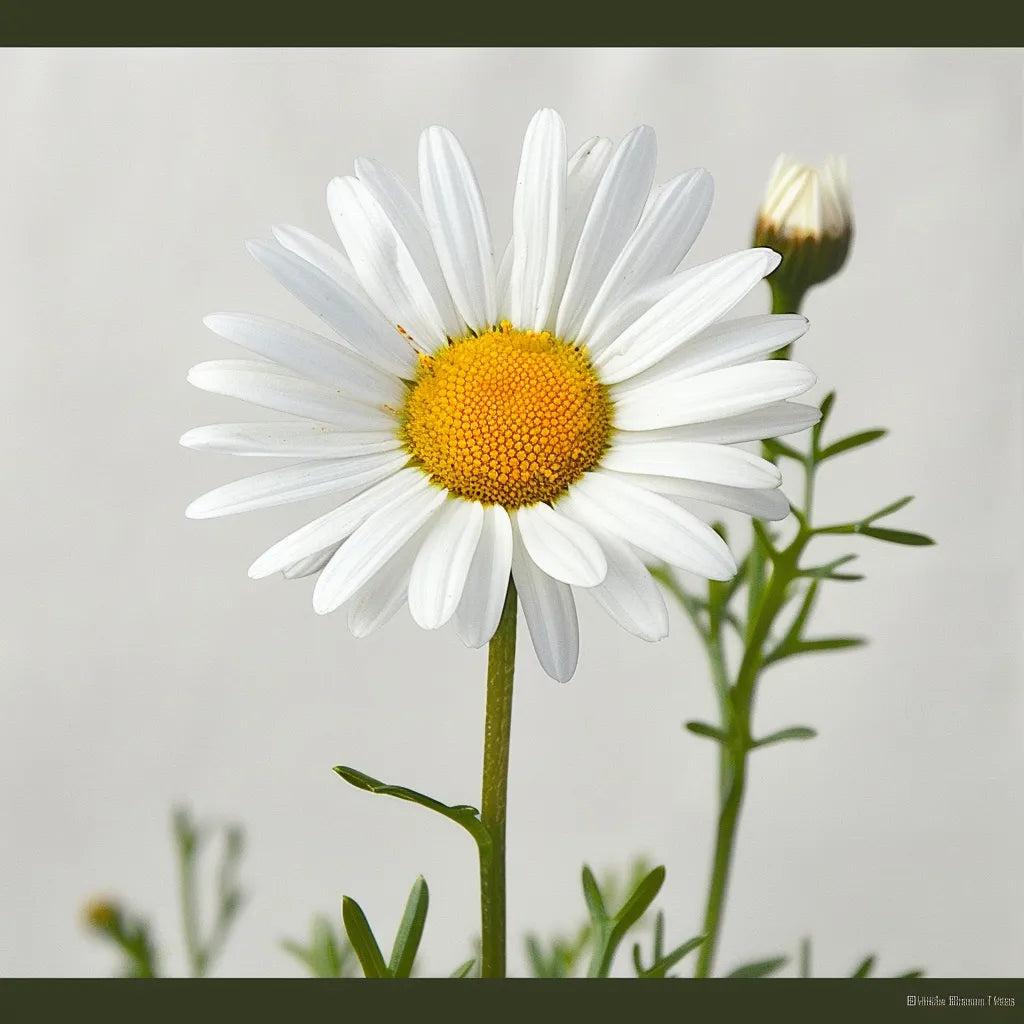
Leucanthemum vulgare
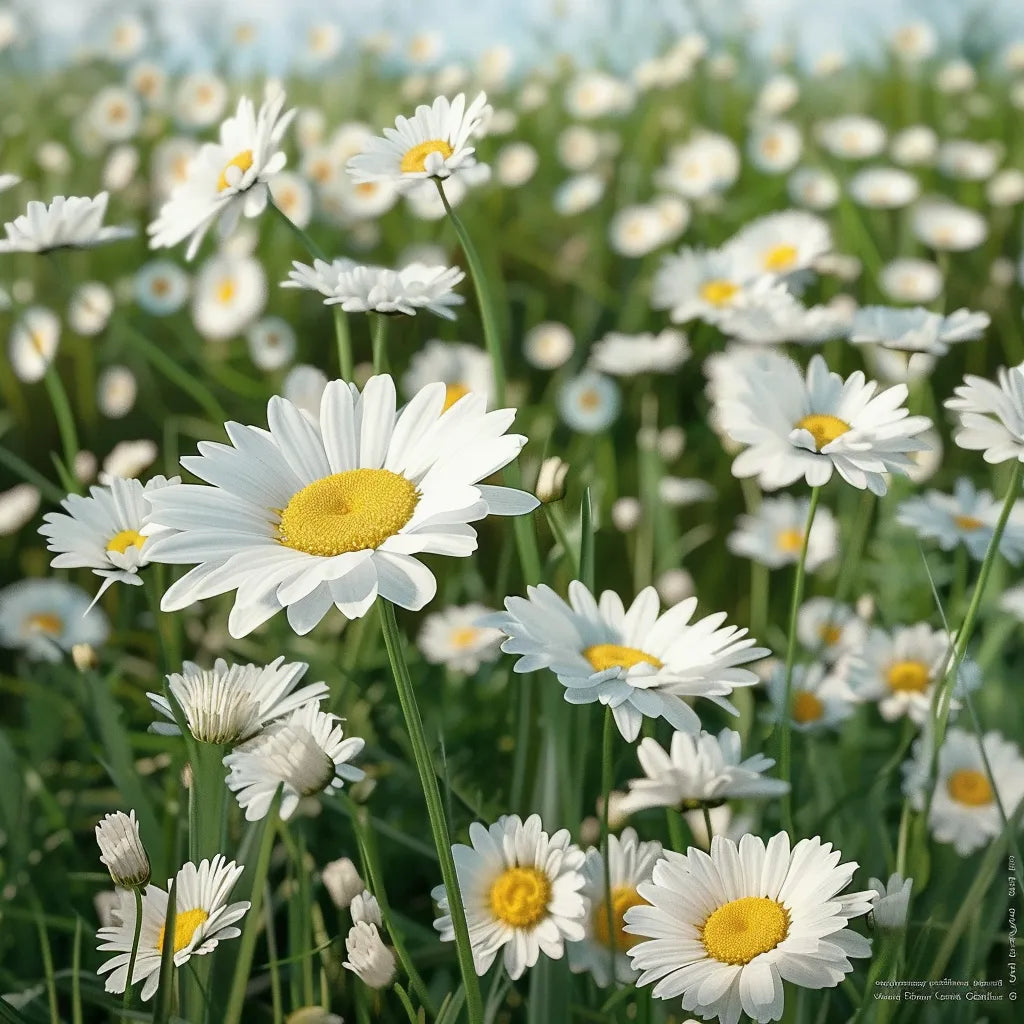
Oxeye daisy, common daisy, moon daisy, meadow daisy: this is the quintessential flower of hay meadows, the one whose petals people have been plucking for generations while reciting “he loves me, he loves me not…”. Its name comes from the Greek leukos anthemon, “white flower,” and its luminous silhouette remains one of the most universal symbols of the countryside.
Characteristics:
-
Generous perennial: it returns every year and forms increasingly large clumps, flowering from May to July.
-
Extremely hardy: it withstands temperatures down to -20 °C and can be grown in all regions.
-
Excellent cut flower: long-lasting in a vase, it creates unmistakable country bouquets.
Sowing advice:
-
Exposure: sunny; it tolerates light partial shade.
-
Soil: undemanding, it accepts all ordinary soils, even poor and calcareous ones, provided they are well drained. However, it dislikes excess water around the roots, especially in winter. There is no need to fertilize: in soil that is too rich, the stems grow long and flop over.
-
Method: cold stratification improves germination. Then sow in spring, directly in the ground or in pots, barely covering the seeds. When sown in spring, it generally flowers from the second year onward.
Care advice:
- Cut off faded flowers to extend flowering, and cut back the clump after the first flush to sometimes encourage a second one.
- Divide the clumps every 3 years to rejuvenate them and prevent them from becoming bare in the center.
Beneficial combinations:
Benefits for biodiversity:
- Its broad, flat flower head is a genuine landing pad, accessible to a wide variety of insects: solitary bees, hoverflies, beetles, and butterflies can easily find pollen and nectar there.
- It is part of the plant community found in hay meadows, habitats that are rapidly declining: sowing it helps recreate these rich ecosystems. See combining flowers with the vegetable garden.
Uses:
- Beds, borders, wildflower meadows, and bouquets. Its young leaves and buds can also be eaten raw in salads or pickled like capers.
Symbolism:
A symbol of innocence and simplicity, the daisy is inseparable from the romantic petal-plucking game, documented in France since the 19th century.
Harvesting your own seeds:
Leave a few faded flower heads to turn completely brown on the plant, then rub them between your fingers over a container. Oxeye daisies also readily self-seed in a meadow. See storing your seeds.
Commitment to Quality: at SemiSauvage - Permaculture, we grow and select our seeds with respect for living organisms as our guiding principle. Based near the Auvergne Volcanoes, we choose open-pollinated, non-hybrid varieties, tested for their germination rate, carefully sorted and packaged, with no chemical treatment. Our conviction: to give gardeners back the ability to sow, year after year, seeds that truly belong to them.
Add a touch of wild meadow to your garden with these oxeye daisy seeds.