Allium sativum
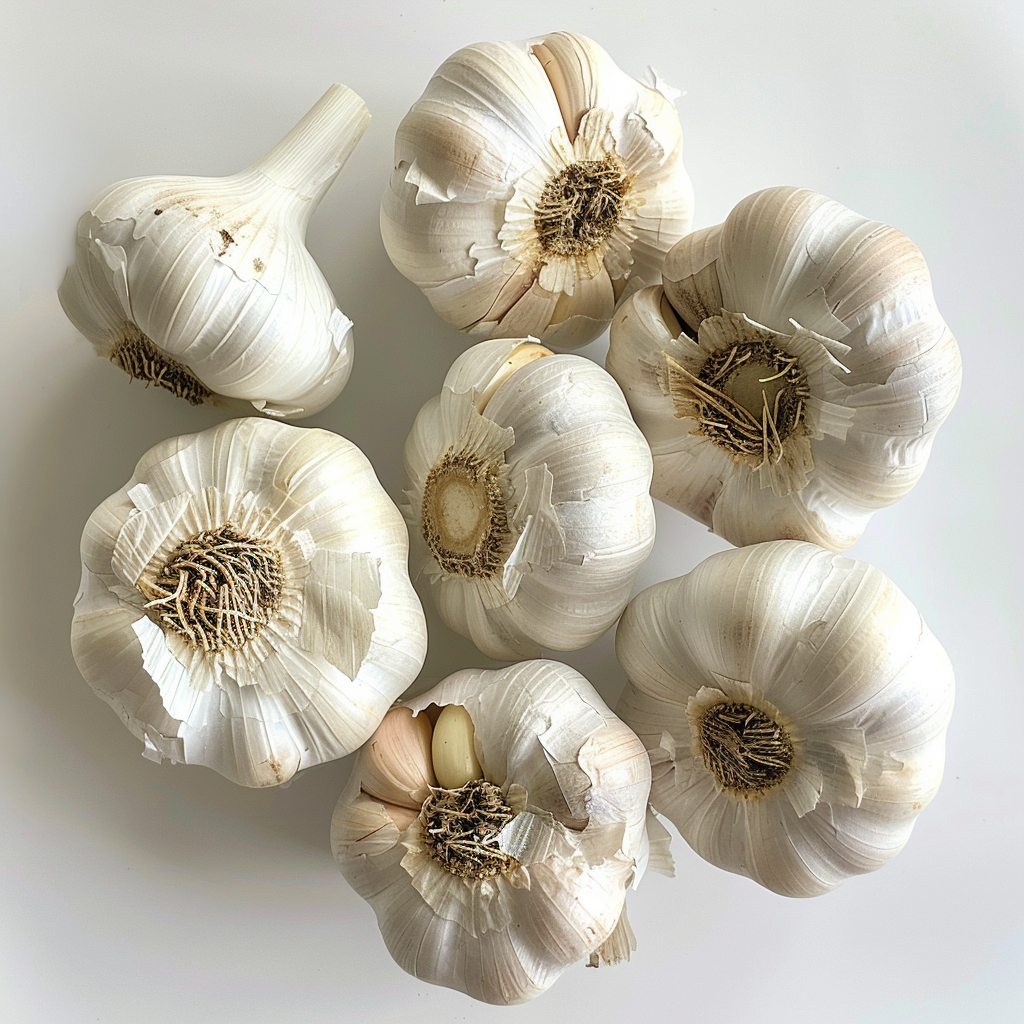
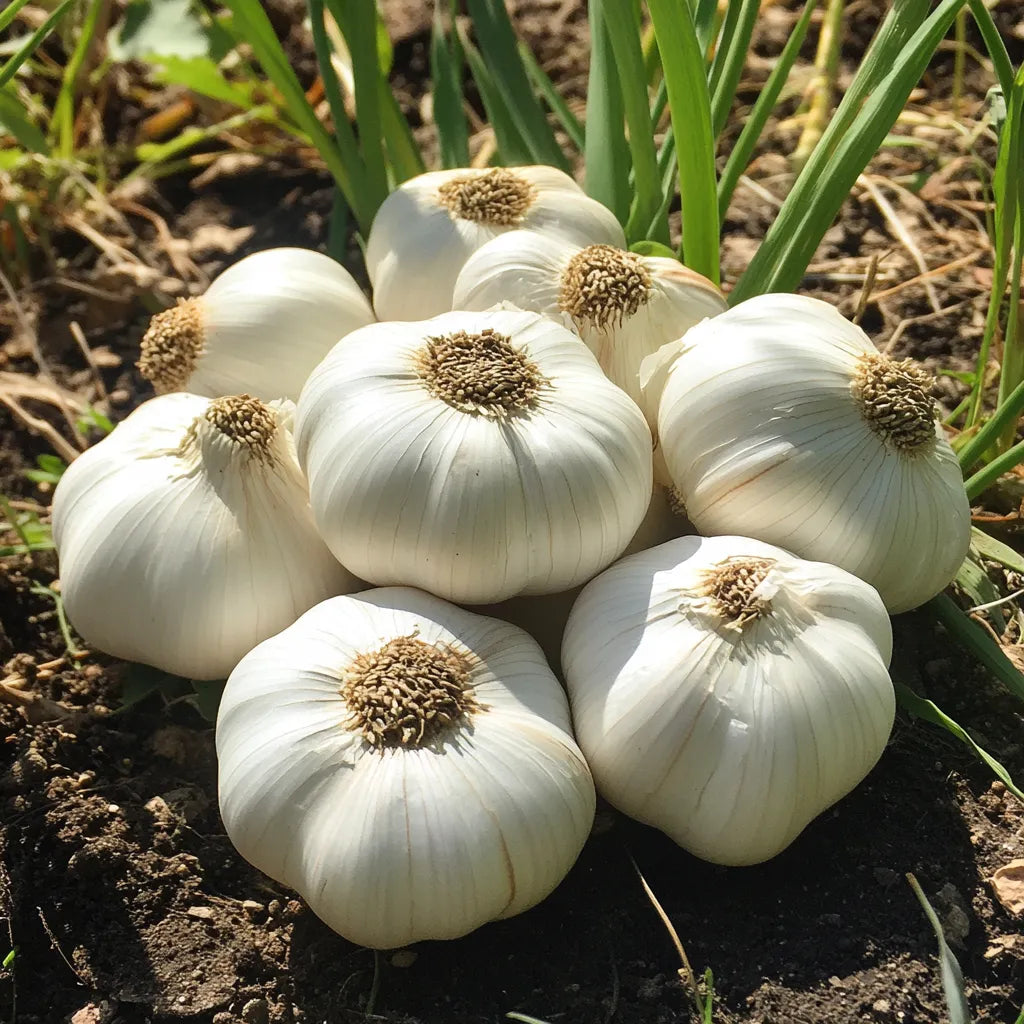
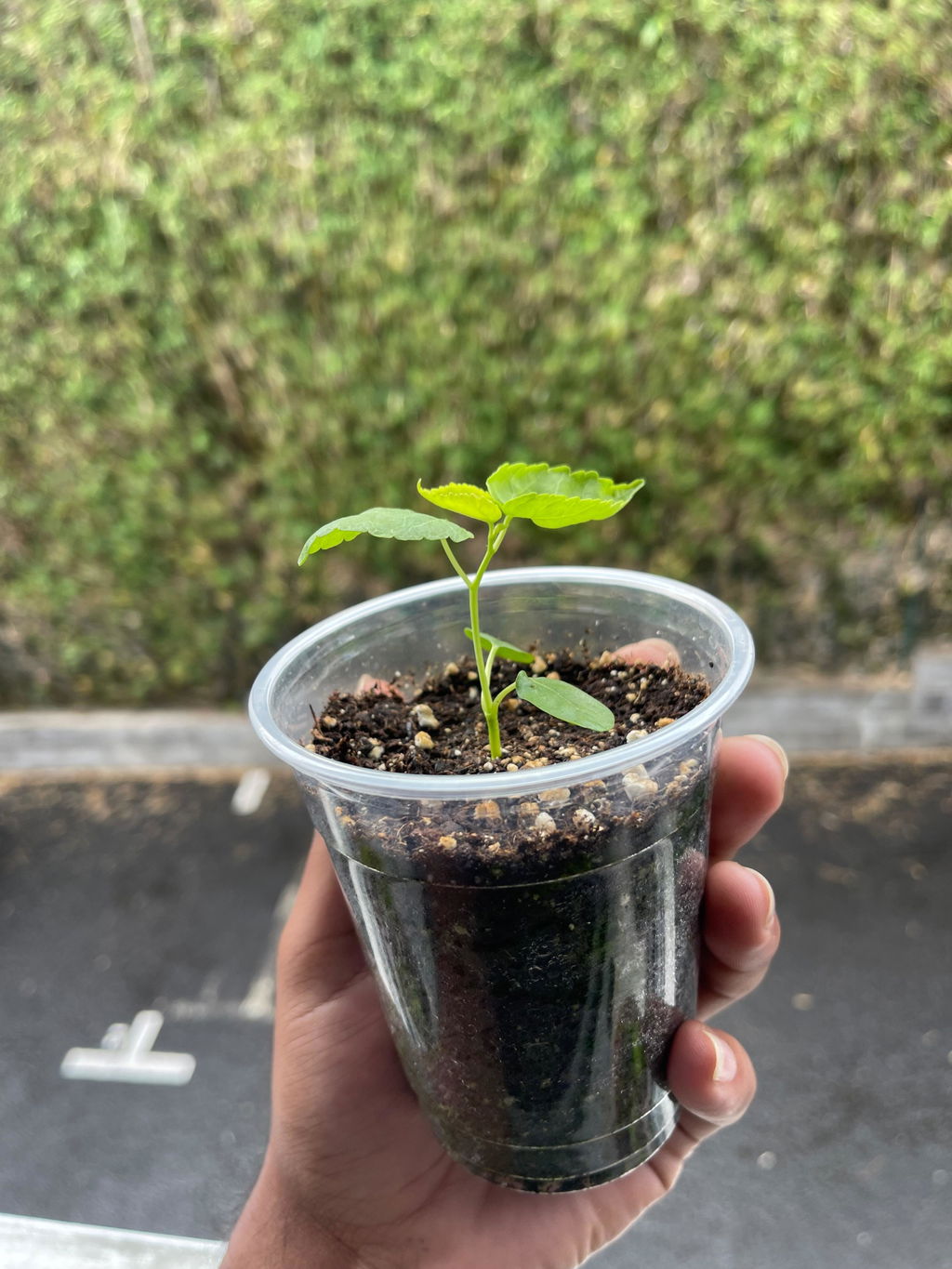
White garlic, common garlic, cultivated garlic: sowing garlic rather than planting cloves is an unfamiliar but highly rewarding approach. In the first year, the plant develops its foliage and a small bulb; in the second, it forms the garlic heads that you can then replant as cloves, year after year. And throughout its growth, the stems and young leaves can already be eaten.
Characteristics:
-
Progressive harvest: stems and young leaves can be eaten from the first year, even before the bulbs form.
-
Two-year cycle: garlic heads form in the second year, after which the crop continues through cloves.
-
Very hardy: it withstands temperatures of -15 °C and below, but is above all sensitive to moisture.
-
Low-maintenance: it requires very little water and no special fertilization.
Sowing advice:
-
Exposure: sunny, in a temperate climate.
-
Soil: light, loose and above all perfectly well-drained — this is the critical point. Garlic rots in heavy, wet soil much more readily than it freezes. Avoid fresh manure and nitrogen applications: they encourage foliage at the expense of the bulb. In clay soil, grow it on a raised mound.
-
Method: sow from February to April, or from August to September, directly in place, covering lightly. See how to sow your seeds.
Care advice:
- Water very sparingly, or not at all: excess water is its main enemy. Hoe regularly to prevent weeds from competing with it.
- Tip: if flower stalks appear in the second year, cut them off. The plant will then concentrate its energy in the bulb — and these stalks, known as garlic scapes, are delicious when sautéed.
Harvest advice:
- Harvest the young stems and leaves as needed during growth: their flavor is milder than that of the bulb and they add flavor to salads, omelets and soups.
- Harvest the bulbs in the second year, when two-thirds of the foliage has turned yellow. Leave them to dry in a dry place for about two weeks before braiding or storing them.
Beneficial companion plants:
- Garlic is a valuable companion in the vegetable garden: it grows very well alongside strawberries, beets, potatoes, lettuces, carrots and tomatoes, helping to keep certain pests away. However, avoid planting it near legumes (peas, beans), which it inhibits. See vegetable companion planting in the garden.
Benefits for biodiversity:
- Its sulfurous smell disrupts the orientation of several pests — aphids, carrot flies and mites — making it a natural ally for neighboring crops.
- If you let a flower stalk bloom, its white umbel will be visited by bees.
Uses:
- Raw cloves to flavor raw vegetables, salads and sauces; cooked for meat, fish and slow-cooked dishes. The young leaves, stems and garlic flowers can also be cooked.
Harvesting your own seeds:
Once you have obtained your first heads, the simplest method is to replant the best cloves every autumn: this is how garlic has traditionally been propagated, adapting a little more to your soil with each generation. See how to save your seeds.
Our Commitment to Quality: at SemiSauvage - Permaculture, we grow and select our seeds with respect for all living things as our guiding principle. Based near the Auvergne Volcanoes, we choose open-pollinated, non-hybrid varieties, tested for their germination rate, carefully sorted and packaged, with no chemical treatment. Our belief: to restore gardeners' ability to sow, year after year, seeds that truly belong to them.
Start your own line of garlic, from seed.