
Bu makalede 9
Bir ekim nadiren özen eksikliği yüzünden başarısız olur. Başarısızlığın nedeni, tür için yanlış yöntemin seçilmesi, tohumların fazla derine ekilmesi veya toprağın çok soğuk olmasıdır. Bu üç neden, başarısızlıkların büyük çoğunluğunu açıklar ve üç kuralı bilerek düzeltilebilir.
Bu rehber üç yöntemi — pamuk, saksı ve doğrudan toprağa — karşılaştırır; hangi türün hangisine uygun olduğunu açıklar ve fideleri başarıyla çimlendirdikten sonra kaybedebileceğimiz aşama olan şaşırtmayı ayrıntılarıyla ele alır.
Bir tohumun ihtiyaç duyduğu şeyler
Üç koşul vardır ve bunlardan yalnızca biri isteğe bağlıdır.
- Su — embriyoyu uyandıran imbibisyonu başlatır. Sürekli nem gerekir: şişip sonra kuruyan bir tohum ölür.
- Sıcaklık — havanın değil, toprağın sıcaklığı. Her türün bir eşiği vardır: bezelye için 5 °C, havuç için 8-10 °C, domates veya fesleğen için 18-20 °C.
- Oksijen — unutulan parametredir. Suya doymuş veya sıkışmış bir yetiştirme ortamı tohumu havasız bırakır; tohum çimlenmek yerine çürür.
- Işık — isteğe bağlıdır ve değişkenlik gösterir. Tohumların çoğu karanlıkta çimlenir; bazıları ise ışığa ihtiyaç duyar (marul, kereviz, hodan) ve bu nedenle üzerleri yalnızca hafifçe örtülerek ekilir.
Tohum kendi besin depolarını içerir: çimlenmek için hiçbir gübreye ihtiyaç duymaz. Bu nedenle tohum ekim toprağı, şaşırtma toprağının aksine özellikle fakir ve ince yapılıdır.
Pamuk üzerinde ekim
Bir kutuda veya tabakta nemli tutulan bir parça pamuk, kâğıt havlu ya da kumaş.

Gerçekte ne işe yarar?
Bu bir yetiştirme yöntemi değil, kontrol ve ön çimlendirme yöntemidir. Gerçekte üç kullanım alanı vardır:
- Çimlenme testi — bütün bir yatağı ekmeden önce eski bir tohum partisinin durumunu kontrol etmek. On tohum, iki hafta ve ne beklemeniz gerektiğini bilirsiniz.
- Ön çimlendirme — yavaş veya nazlı türlerde birkaç gün kazanmak ve ardından filizlenmeye başlamış tohumları ekmek.
- Eğitsel gözlem — kavanozdaki fasulye, bir çocuk için hâlâ en akılda kalıcı deneydir: önce kökçüğü, ardından gövdeyi ve sonra çenekleri görürüz.
Yöntem
- Pamuğu suya boğmadan nemlendirin — nemli olmalı, sırılsıklam değil: tohumun oksijene ihtiyacı vardır.
- Tohumları aralıklı yerleştirin ve üzerlerini hafifçe ikinci bir pamuk tabakasıyla örtün.
- Kutuyu hava geçirmez şekilde kapatmadan, yaklaşık 20 °C'de ve doğrudan güneş ışığından uzakta tutun.
- İki günde bir kontrol edin ve gerekirse yeniden nemlendirin.
- Kökçük görünür görünmez, 2 ila 5 mm uzunluğa ulaştığında aktarabilirsiniz.
Bu aşamadan sonra kök, pamuğun liflerinin içine ilerler ve şaşırtma sırasında kırılır. Klasik hata budur — güzel, küçük bir bitki oluşmasını beklenir ve bitkiyi pamuktan ayırırken kaybedilir. Pamuk hiçbir zaman substratın yerini tutmaz.
Viyolde ekim
Uzun gelişim döngüsüne sahip, mevsimi birkaç hafta öne çekmek için korunaklı bir yerde başlatılması gereken türler için en uygun yöntem.

Hangi türler için
Domates, biber, acı biber, patlıcan, lahana, pırasa, kereviz, fesleğen. İsteğe bağlı olarak: balkabağı, sakız kabağı, salatalık, marul — gençken şaşırtmak koşuluyla.
Yöntem
- Ekim harcıyla doldurun, parmak uçlarınızla hafifçe bastırın ve ekimden önce sulayın: substrat nemli ve oturmuş olmalıdır.
- Çimlenmeyen tohumları telafi etmek için her viyole 2 ila 3 tohum bırakın. Daha sonra seyreltme yaparsınız.
- Aşağıdaki ekim derinliği kuralına göre üzerini örtün, ardından çok hafifçe bastırın — tohum ile toprak arasındaki temas, suyun emilmesini sağlar.
- Tohumları yerinden oynatmamak için sulamak yerine fısfıslayın.
- Nemi korumak için çimlenene kadar üzerini bir filmle veya kapakla kapatın.
- Çimlenir çimlenmez kapağı çıkarın ve öncelikleri değiştirin: daha az sıcaklık, mümkün olduğunca fazla ışık.
Sıcaklık çimlenmeye, ışık ise büyümeye yarar. Çimlenmeden sonra fideleri sıcak tutmak, gelişimi cılızlaşmış — uzun, soluk gövdeli ve yaprakları seyrek — fideler oluşturur; bu fideler aradaki gelişim farkını hiçbir zaman kapatamaz.
Seyreltme
İlk gerçek yapraklar çıktığında, her viyolde en güçlü fideyi bırakın. Diğerlerini kökünden sökmek yerine makasla substrat hizasından kesin: böylece bıraktığınız fidenin köklerinin yırtılmasını önlersiniz.
Doğrudan toprağa ekim
Varsayılan yöntemdir ve yerinden oynatılmaktan hoşlanmayan her şey için mümkün olan tek yöntemdir.
Hangi türler için — ve neden
Havuç, turp, yabani havuç, şalgam, pancar, kuzu kulağı, ıspanak, bezelye, bakla, fasulye. Bunların hepsinin, şaşırtma sırasında zarar gördüğünde yeniden oluşmayan bir kazık kökü vardır: havuç çatallanır, yabani havucun şekli bozulur. İstisnasız, yerlerine ekin.
Sıra ekimi
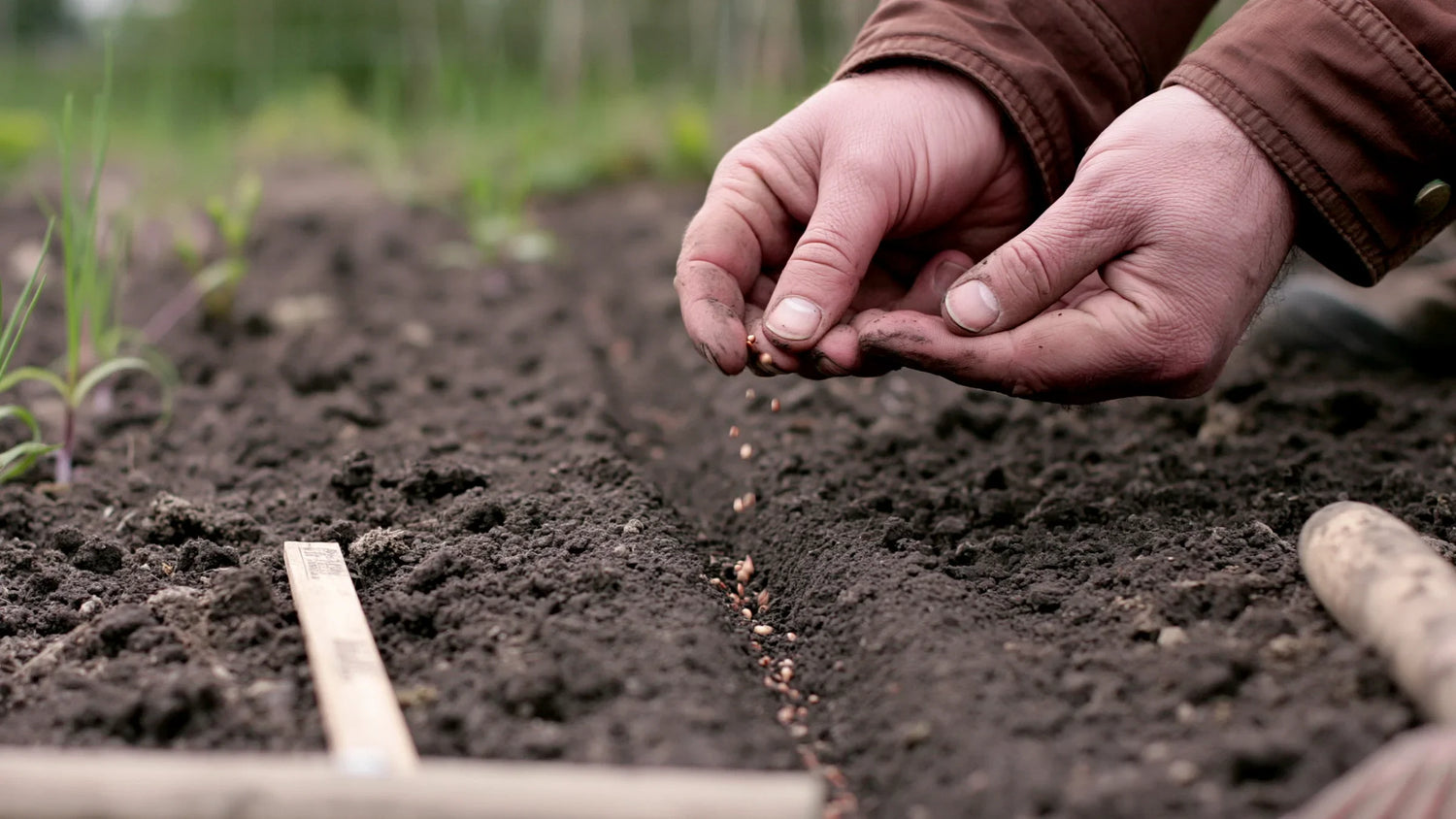
- Yüzeyi tırmıkla inceltin — 3 cm'lik bir toprak parçası bile küçük bir tohumun çimlenmesini engellemeye yeter.
- Düzgün bir oluk açın, ekimden önce oluk tabanını sulayın.
- Seyrek ekin — her zaman fazla sık ekeriz; bu da zahmetli bir seyreltmeyi gerektirir ve kalan fideleri zayıflatır.
- Üzerini kapatın, tırmığın sırtıyla bastırın ve ince bir yağmur şeklinde sulayın.
- Çizgiyi işaretleyin; aynı oluğa ekilen turplar üç günde çıkar ve kendi ekimlerinizi yanlışlıkla yabani ot sanıp yolmanızı önler.
Serpme ekim
Yeşil gübre bitkileri, kuzu kulağı ve mesclun için. Mümkün olduğunca düzenli dağıtın, ardından hafif bir tırmık hareketiyle üzerlerini toprağa karıştırın. Çok seyrek serpme ekim, örtücülük amacını karşılamaz.
Ocak usulü ekim
Büyük tohumlar için bir çukura üç ila beş tohumu birlikte ekin: kabak, fasulye, mısır, bezelye. Daha sonra en güzel bir veya birkaç fideyi bırakın.
Her şeyi belirleyen iki kural
Derinlik
Tohumun üzerini, çapının iki veya üç katı kalınlığında toprakla örtün. Bu evrensel kuraldır ve çimlenme başarısızlıklarının neredeyse tümünü açıklar.
| Tohum türü | Derinlik | Örnekler |
|---|---|---|
| Çok küçük | Üzeri hafifçe örtülmeli veya yüzeyde bırakılmalı | Marul, fesleğen, kereviz, aromatik bitkiler |
| Küçük | 5 mm | Domates, lahana, havuç, turp |
| Orta | 1 ila 2 cm | Pancar, ıspanak, pazı |
| Büyük | 3 ila 5 cm | Fasulye, bezelye, kabak, mısır |
Fazla derine gömülen bir tohum, ışığa ulaşmadan önce depolarını tüketir. Yüzeye bırakılan bir tohum ise iki sulama arasında kurur. Yazın, yüzey daha hızlı kuruduğu için ilkbahara göre biraz daha derine — yaklaşık bir buçuk kat — ekim yapın.
Toprak sıcaklığı
Toprağa 5 cm batırılmış bir termometre, sabahları on saniye içinde yanıtı verir. Mart ayının ilk güzel hafta sonundaki hata budur: hava ılıktır, toprak 8 °C'dir ve fasulyeler çürür.
- 5 °C — bakla, bezelye, ıspanak, kuzu kulağı, turp
- 8-10 °C — havuç, marul, pancar, soğan, lahana
- 12-15 °C — fasulye, mısır, kabak, sakız kabağı
- 18-20 °C — domates, biber, patlıcan, fesleğen, kavun
Aylara göre ekim takvimine bakın.
Fideleri kaybetmeden şaşırtma
Başarılı fidelerin kaybedildiği yer tam olarak burasıdır.

- Doğru aşamada — İlk şaşırtma için iki gerçek yaprak. Yuvarlak kotiledonlar sayılmaz: Bunlar tohumun besin depolarıdır.
- Önceden sulayın, işlemden bir saat önce. Kuru kök toprağı dağılır ve ince kökleri koparır.
- Fideyi asla gövdesinden değil, bir yaprağından tutun. Zarar görmüş bir yaprağın yerine yenisi çıkar; ezilmiş bir gövde ise kaybedilmiştir.
- Domatesleri derine dikin — kotiledonlara kadar. Gömülü gövdenin tamamı boyunca kök oluştururlar. Bu yöntem, uzayıp cılızlaşmış fideler için de çözüm sağlar.
- Dikimden bir hafta önce alıştırın: Fideleri her gün birkaç saat rüzgârdan korunaklı bir yere çıkarın ve süreyi kademeli olarak artırın. Seradan doğrudan rüzgâra çıkarılan bir fide iki hafta geride kalır.
- Akşam dikin veya kapalı havayı tercih edin ve köklerin çevresindeki toprağı sıkıştırmak için bolca sulayın.
Ekim neden başarısız olur?
| Belirti | Olası neden | Çözüm |
|---|---|---|
| Hiçbir tohum çimlenmedi | Toprak fazla soğuk, tohum fazla derinde veya parti son kullanma tarihi geçmiş | Sıcaklığı kontrol edin, yeniden ekmeden önce pamuk üzerinde test yapın |
| Düzensiz çimlenme | Kesintili nem, derinlik açısından düzensiz ekim | Çimlenmeye kadar üzerini örtün, yüzeyi inceltin |
| Kök boğazından çöken fideler | Fide çökerten hastalığı — soğuk ve fazla suyun teşvik ettiği mantar | İyi drene olan yetiştirme ortamı kullanın, havalandırın, daha az ve alttan sulayın |
| Uzun ve soluk gövdeler | Cılızlaşma: Çimlenme sonrası fazla sıcaklık, yetersiz ışık | Sıcaklığı düşürün, ışığa yaklaştırın, daha derine dikin |
| Yerinden oynayan tohumlar, delikli sıralar | Fazla güçlü sulama | Yukarı doğru yönelmiş ince elma veya sisleme |
| Yenen tohumlar | Kuşlar, sümüklüböcekler, karıncalar | Çimlenme başlayana kadar örtü veya file |
Sık sorulan sorular
Ekimden önce tohumları ıslatmak gerekir mi?
Kalın kabuklu büyük tohumlar — bezelye, bakla, fasulye, latin çiçeği — için ılık suda birkaç saat bekletmek yararlıdır, daha uzun değil: aksi hâlde havasız kalırlar. Küçük tohumlar için gereksiz ve risklidir; tohumları elleçlenemez hâle getirir.
Doğrudan saksı toprağına ekim yapılabilir mi?
İşe yarar, ancak daha az iyidir: fazla besin içerdiğinden gevşek fideler oluşturur ve kaba dokusu küçük tohumları zorlaştırır. Tohum ekim toprağı ucuzdur ve sonucu belirgin biçimde iyileştirir.
Ne kadar süre sonra endişelenmeye başlamalı?
Turp için 3–5 gün, marul için 6–10 gün, domates için 8–15 gün, soğuk toprakta maydanoz veya havuç için 3 haftaya kadar bekleyin. Bu sürenin iki katından fazla geçtiyse bir tohumu çıkarın: yumuşamış ve parçalanmışsa çürümüştür; sağlam durumdaysa yalnızca daha sıcak koşulları bekliyordur.
Bazı tohumların özel bir işleme ihtiyacı var mı?
Evet, uyku hâlindeki tohumlar için: birçok ağaç, çalı ve çok yıllık bitkinin soğukta bekletilmesi gerekir. Soğuk katlama bölümüne bakın.
Kendi topladığımız tohumları ekebilir miyiz?
Evet, tohumdan üretilebilen çeşitlerden elde edilmişler ve doğru şekilde kurutulup saklanmışlarsa. Tohumlar bir yıldan diğerine nasıl saklanır? bölümüne bakın.
Akılda tutulması gerekenler
Denemek için pamuk, öne geçmek için fide saksısı, kazık köklü bitkiler için doğrudan toprak. Sonrasında iki sayı yeterlidir: tohumun çapının iki ila üç katı derinlik ve türe uygun toprak sıcaklığı. Çimlenme başlar başlamaz ise tersini yapın: daha az ısı, daha fazla ışık.
Daha fazlası için
- Aylara göre ekim takvimi
- Tohumlar bir yıldan diğerine nasıl saklanır?
- Soğuk katlama: Tohumlar neden ve nasıl çimlendirilir?
- Doğal bir sebze bahçesine başlamak için hangi malzemeler seçilmeli?
İlk ekimleriniz için: sebze bahçesi tohumlarımız, ilkbahar ekimlerimiz ve yıl boyunca ekimlerimiz.

Yorum yazın
Bu site hCaptcha ile korunuyor. Ayrıca bu site için hCaptcha Gizlilik Politikası ve Hizmet Şartları geçerlidir.