
I denne artikkelen 8
«Tørkeresistent» betegner ikke én enkelt egenskap. Planter som kommer seg gjennom en tørr sommer, gjør det ved hjelp av fem forskjellige strategier, og å vite hvilken som er i bruk, endrer fullstendig hvordan de bør dyrkes.
Noen unngår tørken i stedet for å motstå den. Andre klarer seg så lenge de har vært etablert lenge. Atter andre motstår den dårlig det første året, men perfekt det tredje. Denne artikkelen tar utgangspunkt i mekanismene og presenterer deretter artene.
Denne artikkelen handler om valg av arter. For teknikker knyttet til jordsmonnet — dekking, jorddekke og vannopphold — se Anlegg en grønnsakshage uten vanning, og for å analysere jordsmonnet, se Hvilke frø passer til mager og tørr jord?.
De fem strategiene for motstandskraft
1. Unnvikelse — fullføre livssyklusen før sommeren
Disse plantene motstår ikke tørken: De er ferdige. Valmue, kornblomst, ert, bondebønne, linse, men også de fleste løkvekster fullfører livssyklusen sin på vårregnet og er døde eller i dvale når tørken kommer.
Praktisk konsekvens: Så dem tidlig, svært tidlig. En ert sådd i mars klarer seg; den samme sådd i mai mislykkes. Det handler om tidspunkt, ikke sort.
2. Dyp forankring
De leter etter vannet der det blir værende. Luserne går ned mer enn én meter, pastinakk, havrerot og svartrot borer seg dypt ned, mens krypende gresskar utforsker et stort område.
Konsekvens: Disse plantene trenger vann i starten for å utvikle dette rotsystemet. Vann rikelig de to første månedene, og deretter ikke mer. Det er akkurat det motsatte av det man instinktivt gjør.
3. Begrensning av vanntap
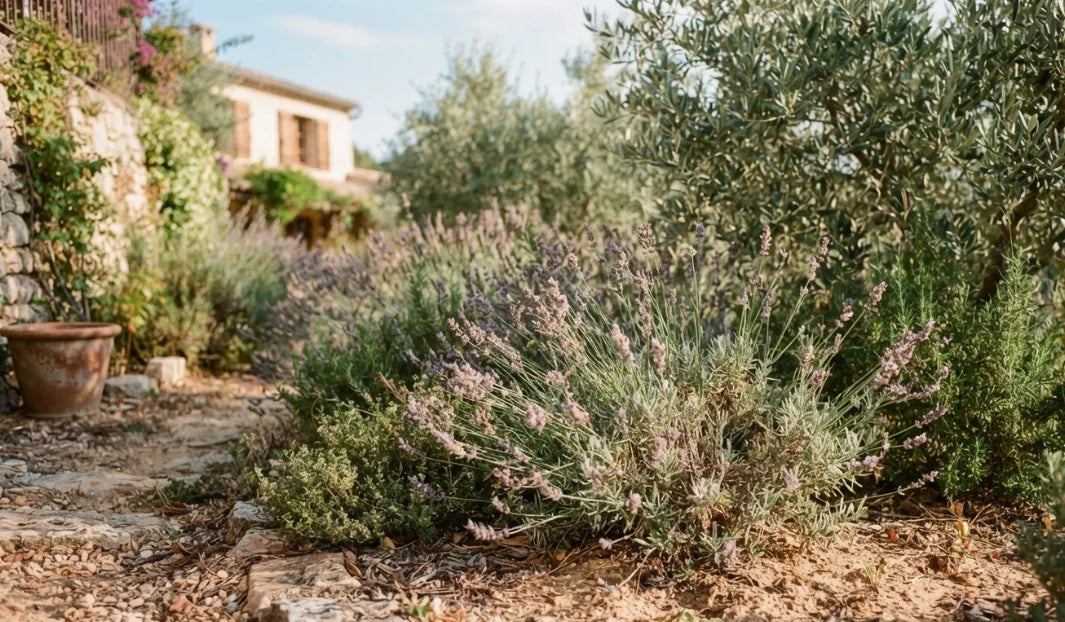
Smale, harde, voksaktige eller sølvfargede, hårete blader: Dette er de visuelle kjennetegnene på en nøysom plante. Lavendel, timian, salvie, rosmarin, marrubium. Hårene skaper et lag med stillestående luft som bremser fordampningen; den lyse fargen reflekterer strålingen.
Konsekvens: Disse plantene krever en veldrenert og mager jord. I rik og fuktig jord råtner de — deres svake punkt er ikke tørke, men for mye vann.
4. Lagring
Reserver lagret i en saftig rot, en løk eller tykke vev: løk, hvitløk, artisjokk, kardon, og blant prydplantene takløk og bergknapp. De henter fra reservene sine i kritiske perioder.
5. Vannsparende fotosyntese
Enkelte planter med tropisk eller subtropisk opprinnelse – amarant, mais, sorghum og portulakk – bruker et stoffskifte som gjør at de kan binde karbon med langt mindre vanntap. Derfor trives amarant og portulakk midt i august, når salatene går i stokk.
I kjøkkenhagen: det som holder stand
| Dyrking | Strategi | Verdt å vite |
|---|---|---|
| Gresskar, vintergresskar, vannmeloner | Rotfesting + dekke | Bladverket beskytter jorden. Vann ved etablering, og reduser deretter vanningen |
| Tørre bønner, kikerter, linser | Unngåelse + nitrogenbinding | Syklus tilpasset våren, høsting i tørt vær |
| Tomater dyrket uten vanning | Dyp rotfesting | Tykt jorddekke, vanning bare ved planting. Mindre volum, mer konsentrert smak |
| Amarant, mangold, nyzealandsk spinat | Vannsparende stoffskifte | Erstatter salater i juli–august |
| Rødbete, pastinakk, havrerot | Dype røtter | Så tidlig, slik at påleroten er etablert før sommeren |
| Løk, hvitløk, sjalottløk | Lagring | Lite vann når løken først er dannet – for mye vann får den til å råtne |
| Artisjokk, kardong | Lagring + pålerot | Svært hardføre når de først har etablert seg, men krever to års tålmodighet |
| Portulakk | Vannsparende stoffskifte | Selvsår seg, utmerket spiselig bunndekke |
Tåler det ikke: sommersalater, selleri, agurk, reddik, spinat og blomkål. Dette er vår- og høstavlinger – å tvinge dem frem i juli krever mye vann og gir et middelmådig resultat.
Urter og blomster
Middelhavsurter
Timian, salvie, ekte lavendel, oregano, sar, filtkattost. Når de først har etablert seg – beregn en hel sesong – trenger de ikke mer. De er dessuten utmerkede nektarplanter.
Blomster for tørre områder
- Kaliforniavalmue – trolig den mest pålitelige: lang blomstring, selvsår seg og krever ikke vedlikehold.
- Ryllik – svært hardfør staude med flate blomsterskjermer som gir næring til blomsterfluer.
- Purpursolhatt – flerårig prærieplante, spektakulær og nøysom.
- Valmue og kornblomst – ved å unngå sommervarmen: høstsåing, vårblomstring.
- Blomkarse – nøysom og sparsom, den trenger faktisk mager jord for å blomstre godt.
- Solsikke – kraftig pålerot, bemerkelsesverdig i dyp jord.
Bunndekkere og grønngjødsel
Luserne, hvitkløver, honningurt, lin. De beskytter jorden mens de vokser – dobbel gevinst på tørre arealer. Se Så grønngjødsel.
Stellet endrer alt
En tørketålende plante som stelles feil, tåler ikke tørke. Fem regler – og den første er den mest kontraintuitive.
- Vann rikelig det første året, og slutt deretter. Lavendel eller artisjokk tåler tørke først når de har fått godt feste. Mange planter som kalles tørketålende, dør den første sesongen fordi de fra starten av har blitt behandlet som om de allerede var etablert.
- Sjelden, men grundig. Lett daglig vanning holder røttene i de fem øverste centimeterne, der jorden tørker først. En grundig vanning én gang i uken får dem til å vokse dypere.
- Plant om høsten. Dette er det mest effektive tiltaket på listen. En flerårig plante som plantes i oktober, har hele vinteren og våren til å slå rot; den samme planten som plantes i mai, møter sommeren med grunne røtter.
- Ikke gjødsle. Nitrogen gir et mykt, frodig bladverk som krever mye vann – akkurat det motsatte av det vi ønsker. Det svekker også smaken i krydderurter.
- Dekk til jorden, alltid. Det beste sortsvalget kan ikke kompensere for bar jord.
Tilpasning – virkemiddelet vi glemmer
En sort som kan formeres videre og sås på nytt hvert år på samme sted, utsettes for naturlig seleksjon: individene som best tåler stedets vannforhold, er de som produserer flest levedyktige frø. Etter tre eller fire sykluser dyrker du en stamme som er tilpasset jorden din.
En F1-hybrid som kjøpes inn på nytt og er identisk hver vår, vil aldri dra nytte av denne mekanismen. I et stadig mer ustabilt klima er dette sannsynligvis det sterkeste argumentet for frø som kan formeres videre – og det er kumulativt: hvert år bygger på det forrige.
Se Slik oppbevarer du frøene dine.
Feilene som koster en hel sesong
- Å plante middelhavsurter i næringsrik og fuktig jord. De dør ikke av tørst, men av kvelning. Veldrenert og mager jord er helt nødvendig.
- Å så unnvikelsesartene for sent. En ert sådd i mai vil ikke ta igjen en ert sådd i mars.
- Å vanne litt hver dag. Det er den beste måten å gjøre en plante avhengig på.
- Å forveksle tørketoleranse med varmetoleranse. Over 35 °C blir tomatpollen sterilt selv om jorden er fuktig. Skygge i de varmeste timene løser det vanning ikke kan løse.
- Å slutte å dekke jorden fordi «det tiltrekker snegler». I tørr jord er snegler et marginalt problem, mens jorddekke er livsviktig.
Vanlige spørsmål
Kan man ha en produktiv kjøkkenhage uten å vanne i det hele tatt?
Ikke helt: frøplanter og unge planter trenger alltid vann, siden røttene ligger i overflaten. Det realistiske målet er å slutte med vedlikeholdsvanning når vekstene er etablert – det utgjør allerede det meste av forbruket.
Tåler gamle sorter tørke bedre?
Ofte ja, fordi de er blitt utvalgt uten systematisk vanning og utvikler mer utbredte rotsystemer. Men det er ingen absolutt regel: Det er sortens geografiske opprinnelse som betyr mest.
Trenger man sukkulenter?
Når det gjelder prydplanter, er sedum og takløk uslåelige på murer eller i steinbed. I kjøkkenhagen har de ingen nytte – de nyttige strategiene er rotfesting og unnvikelse.
Fungerer det i potte?
Bare delvis: en potte har begrenset vannreserve og tørker ut gjennom veggene. Middelhavsurter tåler dette godt; de andre trenger likevel regelmessig vanning. Se Kjøkkenhage på balkongen.
Når bør man så for å begrense vannbehovet?
Tidlig om våren for unnvikelsesartene, og særlig om høsten for stauder og urter. Høsten er den mest effektive plantesesongen i tørt klima, og den minst praktiserte.
Husk dette
Finn strategien før du velger planten: unnvikelse avgjøres av tidspunktet, rotfestingen bygges med vann i starten, og sparsom bladvekst krever veldrenert jord. Plant om høsten, vann sjelden og grundig, ikke gjødsle – og la sortene dine tilpasse seg fra år til år.
For å gå videre
- Anlegg en kjøkkenhage uten vanning: mulch, bunndekke og dekke
- Hvilke frø passer til mager og tørr jord?
- De ulike jordtypene
- Såkalender måned for måned
For en vannbesparende hage: våre middelhavsurter, vår grønngjødsel og våre gamle sorter.

Legg igjen en kommentar
This site is protected by hCaptcha and the hCaptcha Privacy Policy and Terms of Service apply.