Capsicum annuum
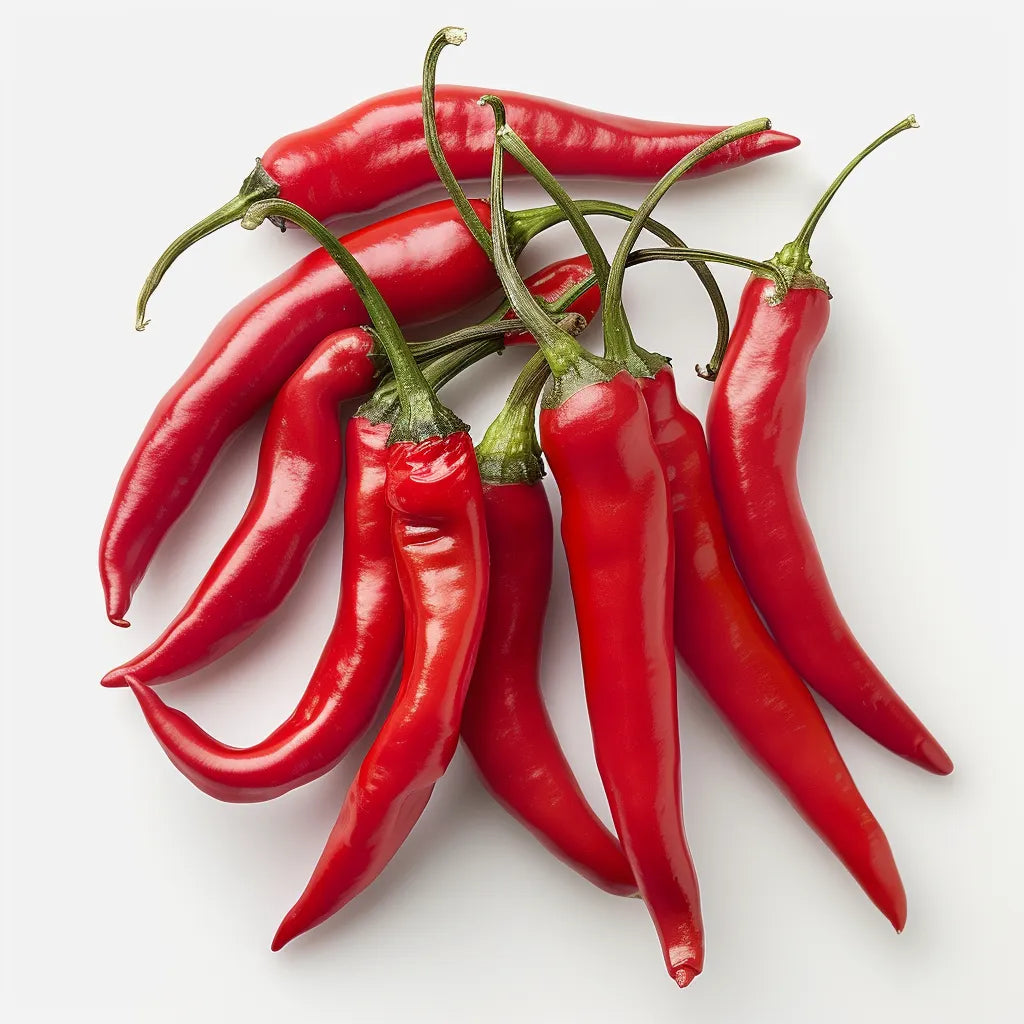
Cayenne pepper, red long pepper: although it bears the name of the capital of French Guiana, it comes from the Amazon basin and spread throughout the world along trade routes. It is the most universally cultivated chili pepper, found in everything from Tabasco to harissa and curries.
Characteristics:
-
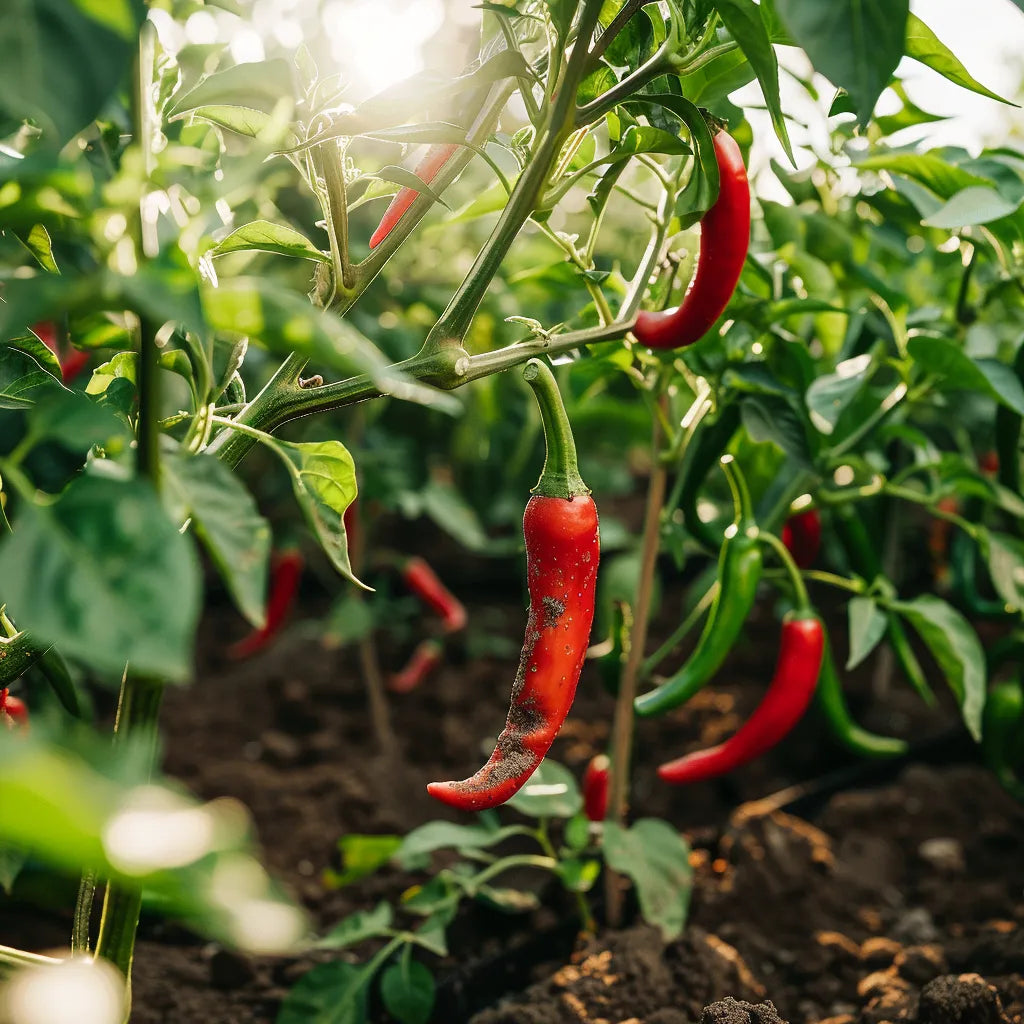
Long, slender fruits: 10 to 12 cm, tapered, changing from green to bright red.
-
Consistent heat: 30,000 to 50,000 Scoville units — distinctly hot without reaching the extremes.
-
Highly productive: a single plant provides more than enough to dry an annual supply.
-
Dries perfectly: the benchmark variety for chili powder.
Precautions:
-
Wear gloves when handling the fruits, whether fresh or dried. Capsaicin adheres to the skin and resists washing with water: subsequent contact with the eyes causes painful burning.
- Wash your hands with soap and oil rather than water alone — capsaicin is fat-soluble.
- When grinding dried fruits, protect yourself: chili dust is highly irritating to the eyes and respiratory tract. Keep the fruits and seeds out of children’s reach.
Sowing advice:
-
Exposure: full sun and warmth, in a spot sheltered from the wind.
-
Soil: rich in organic matter, loose, and well drained. It does not tolerate standing water, which causes the roots to rot.
-
Method: sow from February to April under cover, at 20–25 °C — below 18 °C, the seeds will not germinate. Sowing directly in the ground after the frosts would be far too late for the fruits to reach maturity. Allow 2 to 3 weeks for germination. See how to sow your seeds.
Planting advice:
- Transplant when nighttime temperatures remain above 12 °C, spacing plants 50 cm apart. Unlike tomatoes, do not bury the stem: chili peppers do not form adventitious roots, and a buried crown will rot.
- Provide light staking: branches laden with long fruits tend to droop.
Care advice:
- Keep the soil slightly moist, without excess water. Mulch to reduce the need for watering.
- Tip: slight water stress at the end of the growing season increases the capsaicin content of the fruits.
- Bring the pot indoors before the frosts: chili peppers are perennial and can produce for several years in a conservatory.
Harvesting advice:
- Harvest with gloves when the fruits are bright red and firm. To dry them: thread the fruits into a garland and hang them in a dry, well-ventilated room, or place them in a dehydrator at a low temperature. Once brittle, they can be ground into powder.
Beneficial combinations:
Benefits for biodiversity:
- Its white flowers are visited by bees and bumblebees throughout the summer.
- Capsaicin does not affect birds, which lack the relevant receptor: this is the plant’s strategy for deterring mammals, which crush the seeds, while favoring birds, which disperse them intact.
Uses:
- Fresh, dried, or powdered, in African, Creole, and Asian cuisines. A base for Tabasco and harissa. It pairs well with meat, fish, and vegetables — and, more surprisingly, with dark chocolate.
Harvesting your own seeds:
Open a fully red fruit while wearing gloves, remove the seeds, rinse them, and dry them flat. Be aware that chili peppers cross easily between closely related varieties: isolate your seed plants. See saving your seeds.
Commitment to Quality: at SemiSauvage - Permaculture, we grow and select our seeds with respect for all living things as our guiding principle. Based near the Auvergne Volcanoes, we choose open-pollinated, non-hybrid varieties, tested for their germination rate, carefully sorted and packaged, without any chemical treatment. Our conviction: to give gardeners back the ability to sow, year after year, seeds that truly belong to them.
The most universal chili pepper, and the easiest to dry.