Kniphofia uvaria
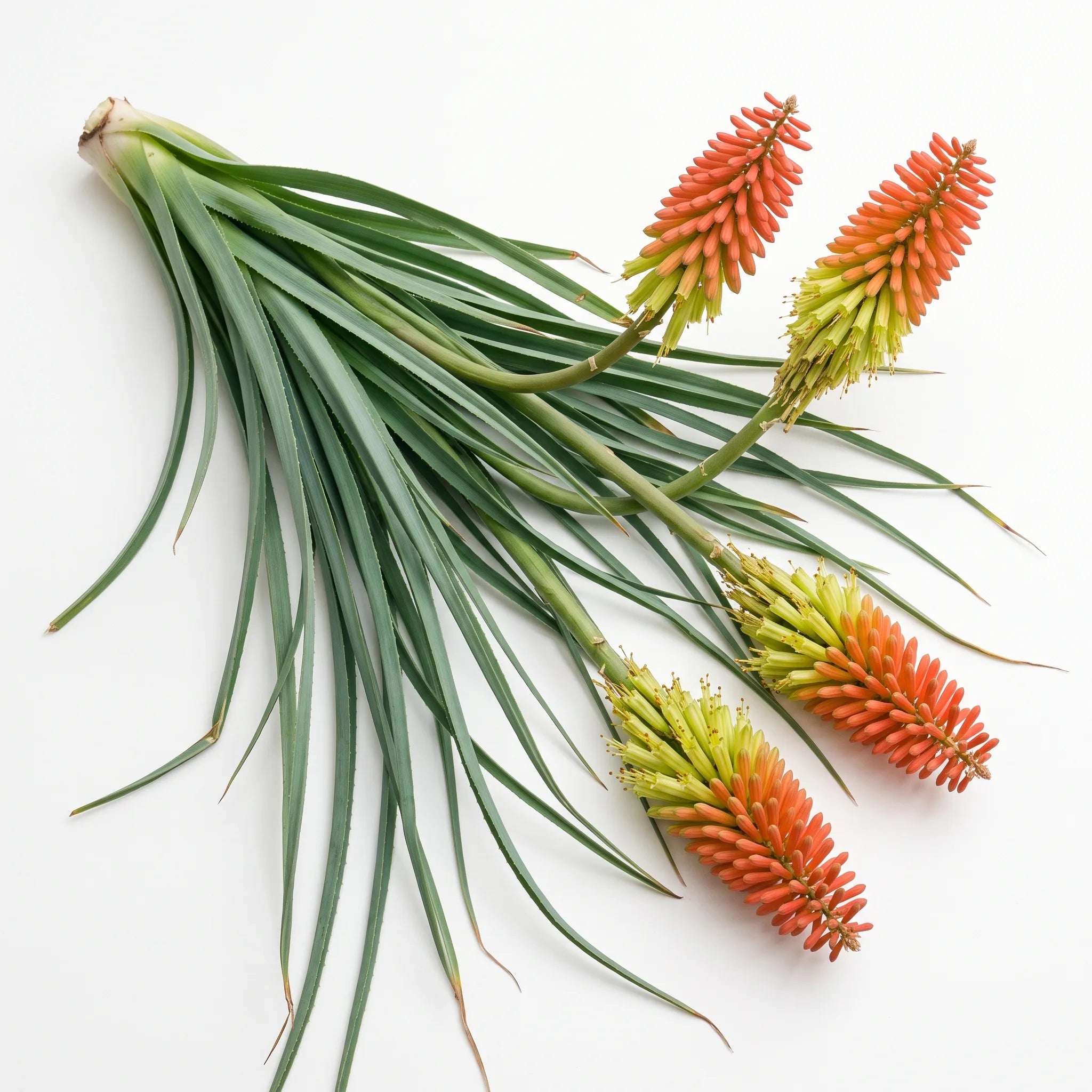
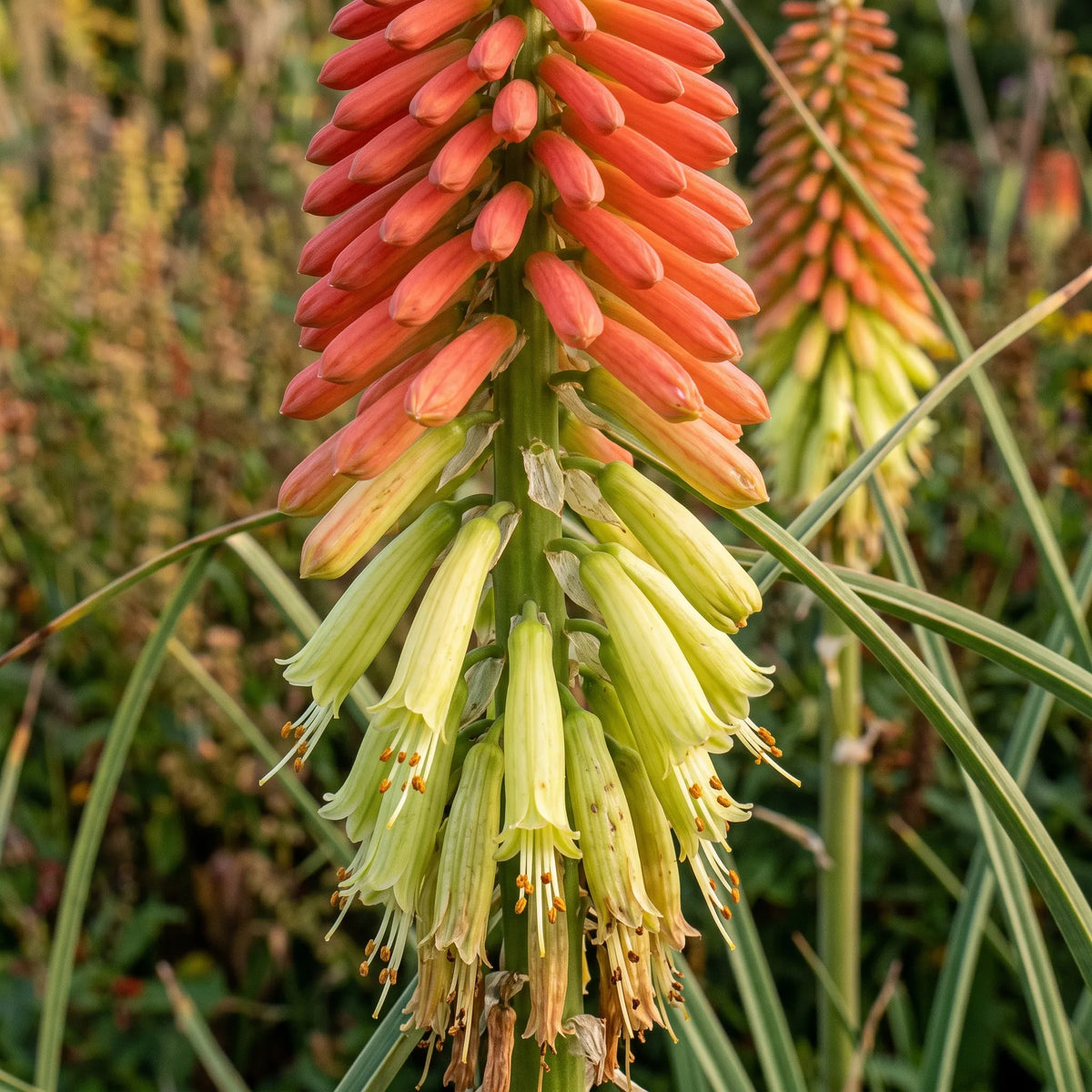
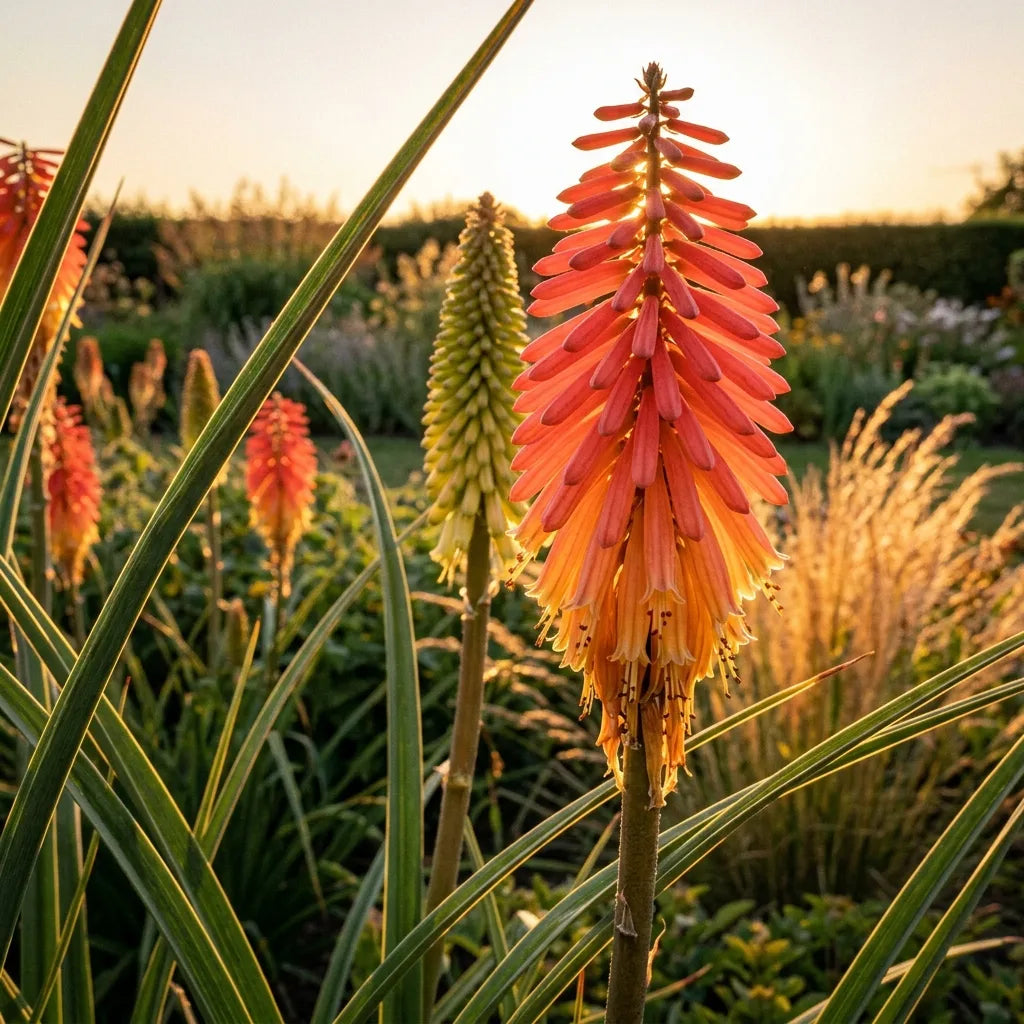
Red hot poker, false aloe, kniphofia, Satan's torch, blazing poker: native to South Africa, it bears upright spikes whose flowers open from the bottom upward, creating that characteristic gradient from orange-red to yellow — exactly like a glowing ember, hence its nickname. An architectural plant that few French gardens have yet made the most of.
Characteristics:
-
Flamboyant spikes: rigid flower stalks held well above the foliage, with a red-orange-yellow gradient.
-
Striking foliage: long, narrow, arching leaves reminiscent of aloe leaves — hence its other name.
-
Long-lived perennial: a well-established clump grows fuller year after year and flowers more abundantly over time.
Precautions:
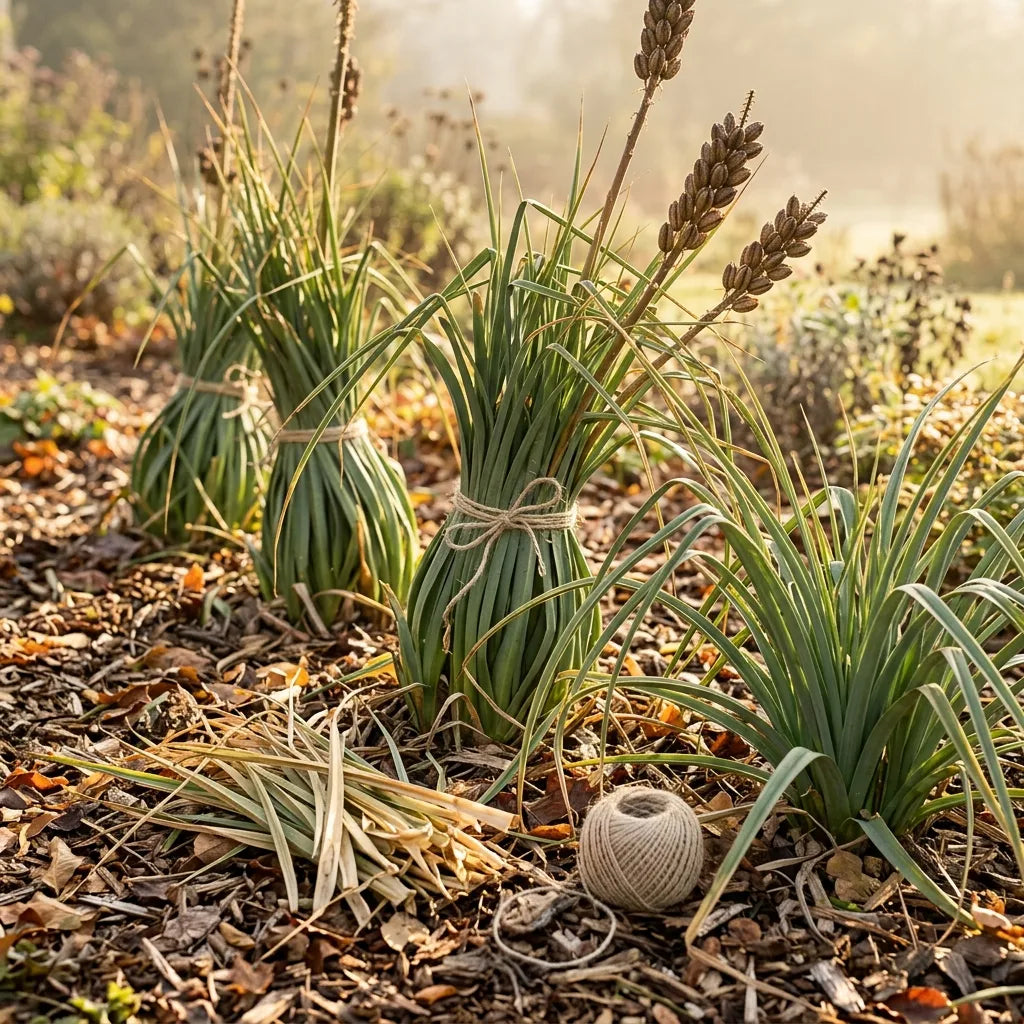
- It fears winter moisture far more than the cold itself: this is the most common cause of failure. In regions with harsh or wet winters, tie the foliage into a bundle above the crown to protect it from rain, and mulch the base.
Sowing advice:
-
Exposure: full sun, in a warm position — this is essential for flowering.
-
Soil: light, sandy, deep, and above all perfectly well-drained in winter. It tolerates summer drought but rots in heavy, waterlogged soil. In clay soil, plant it on a mound or incorporate coarse sand.
-
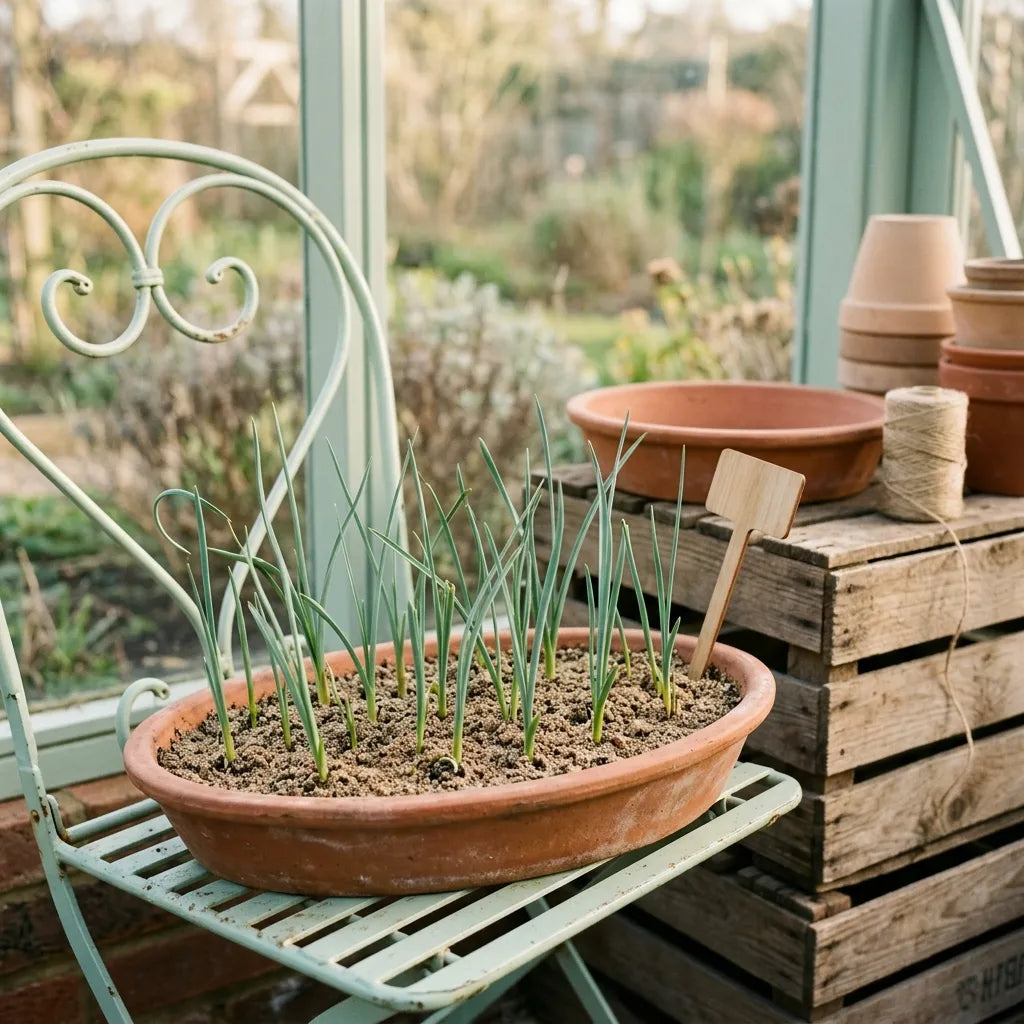
Method: sow in spring in pots, at 18–20 °C, covering the seeds lightly. No soaking or stratification is necessary. Be patient: flowering generally occurs in the second or third year. See how to sow seeds.
Planting advice:
- The best planting periods are early autumn and spring, spacing plants 50 cm apart.
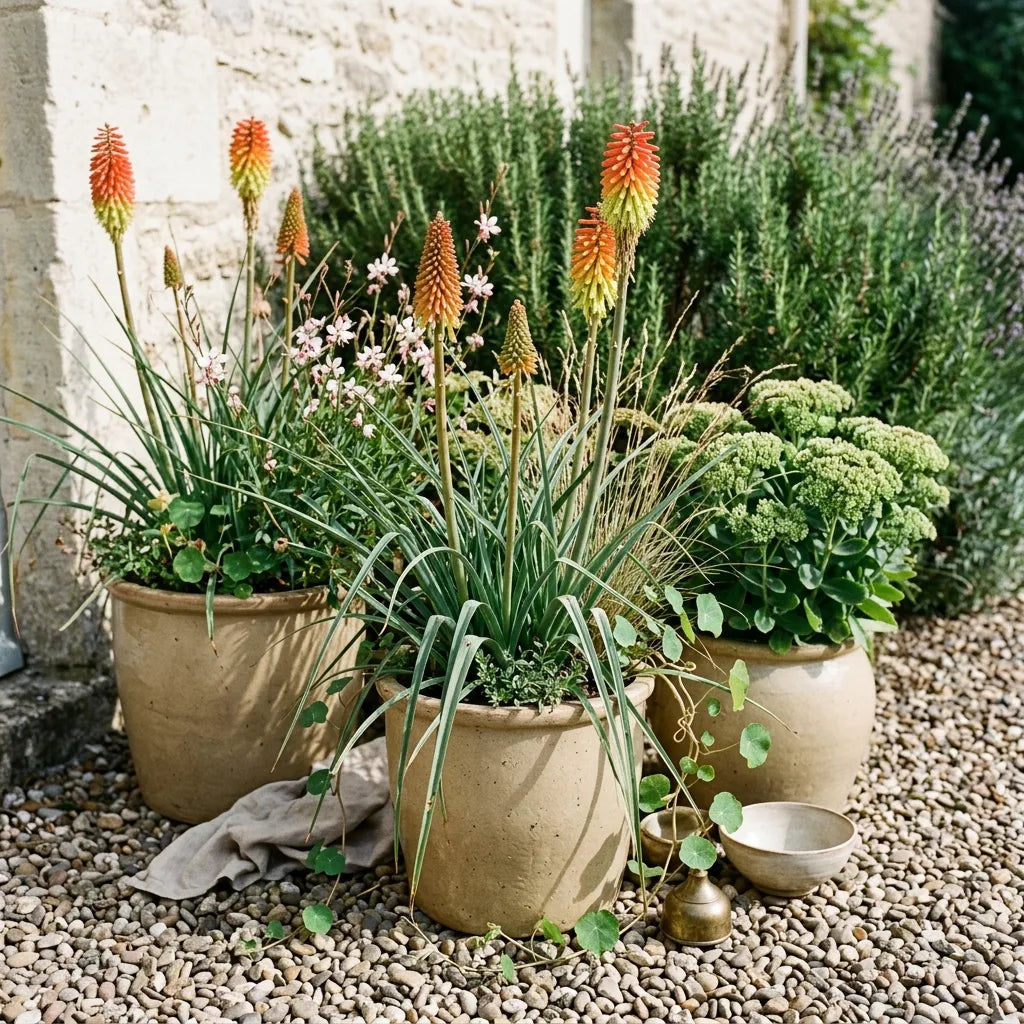
- In pots: use a container at least 30 cm in diameter to start, then repot into a 40 cm container the following year, with a layer of gravel at the bottom for drainage.
Care advice:
- Water moderately in summer and not at all in winter. Cut faded flower stalks back at the base.
- Do not cut back the foliage in autumn: it protects the plant's crown during winter.
Beneficial combinations:
Benefits for biodiversity:
- Its nectar-rich tubular flowers are pollinated in their native Africa by sunbirds. In our climates, bees and bumblebees flock to them — it is one of the most visited perennials of the summer.
- Its evergreen foliage, growing in a dense clump, shelters insects and small wildlife throughout the winter.
Uses:
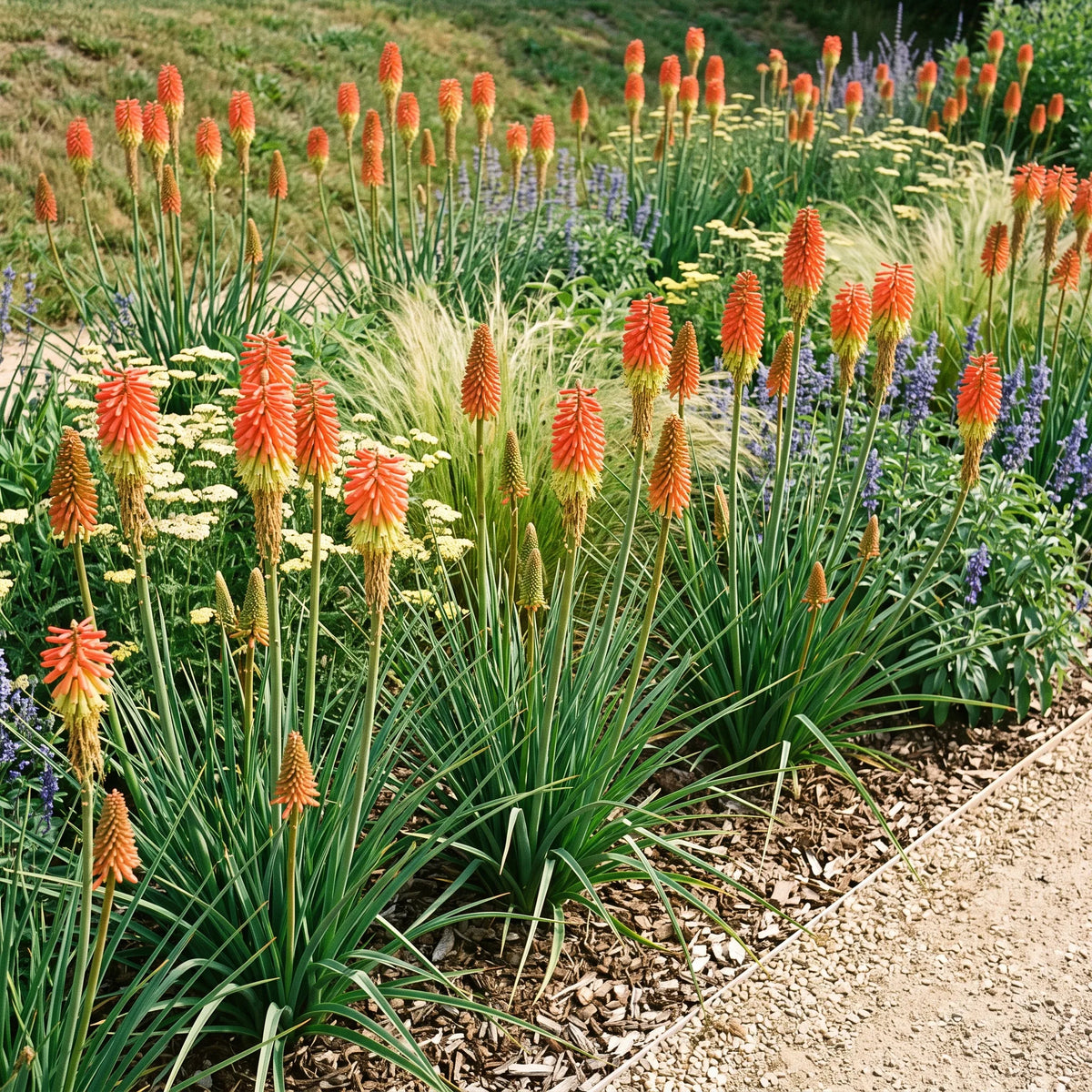
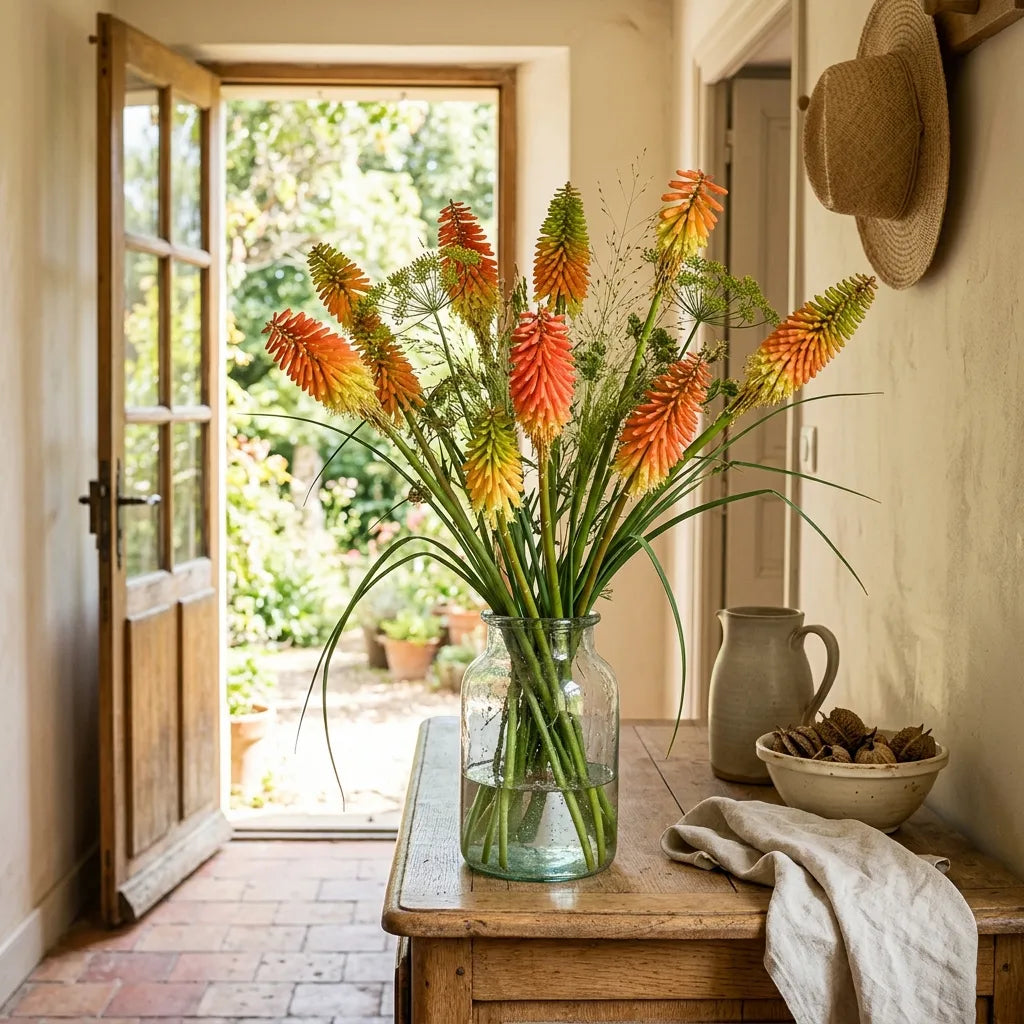
- Flower beds, exotic displays, dry gardens, and containers. An excellent cut flower, with a striking appearance in bouquets.
Harvesting your own seeds:
Leave a few faded flower stalks to form their capsules, then harvest them once they are brown and dry, before they open. The black, angular seeds store well in a dry place. See how to store your seeds.
Commitment to Quality: at SemiSauvage - Permaculture, we grow and select our seeds with respect for living things as our guiding principle. Based near the Auvergne volcanoes, we choose reproducible, non-hybrid varieties, tested for their germination rate, carefully sorted and packaged, with no chemical treatments. Our belief: to give gardeners back the ability to resow, year after year, seeds that truly belong to them.
Light up your flower bed with a botanical ember using these red hot poker seeds.