Anthriscus cerefolium
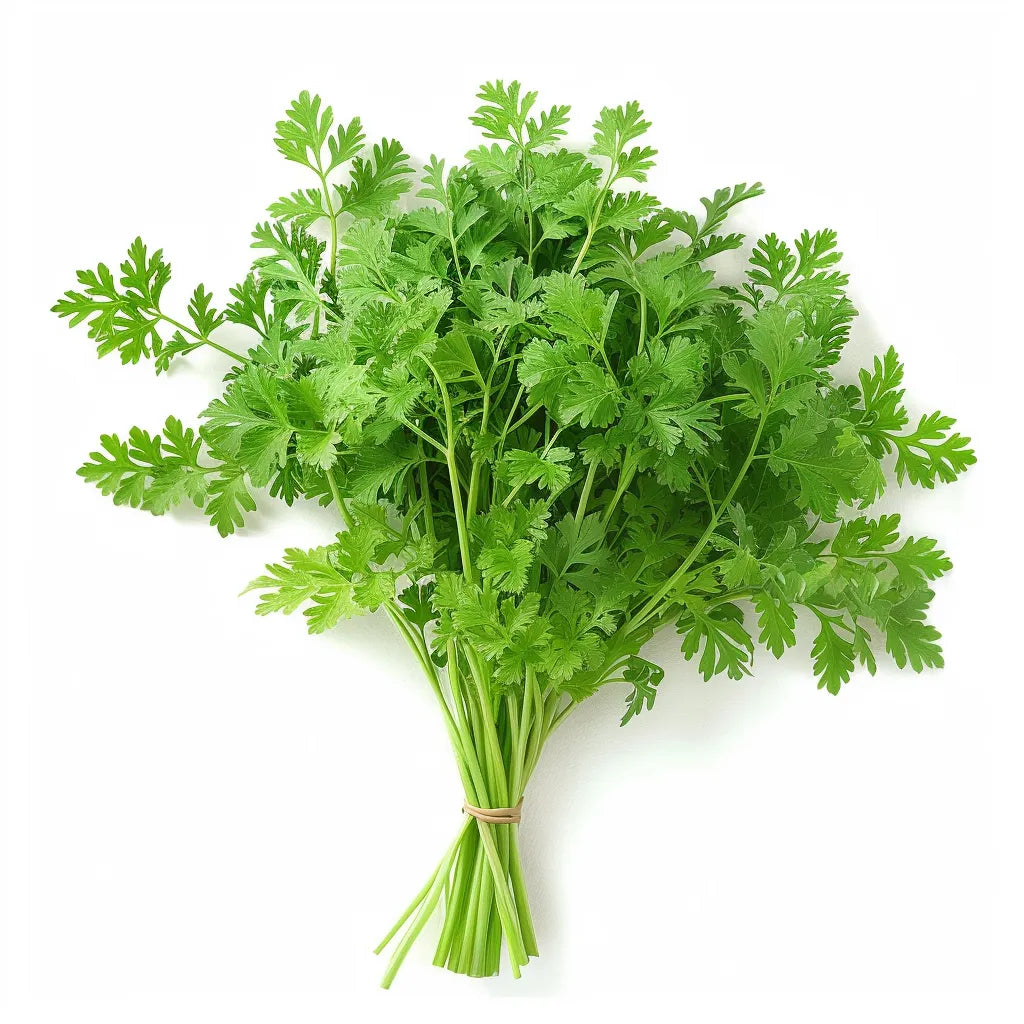
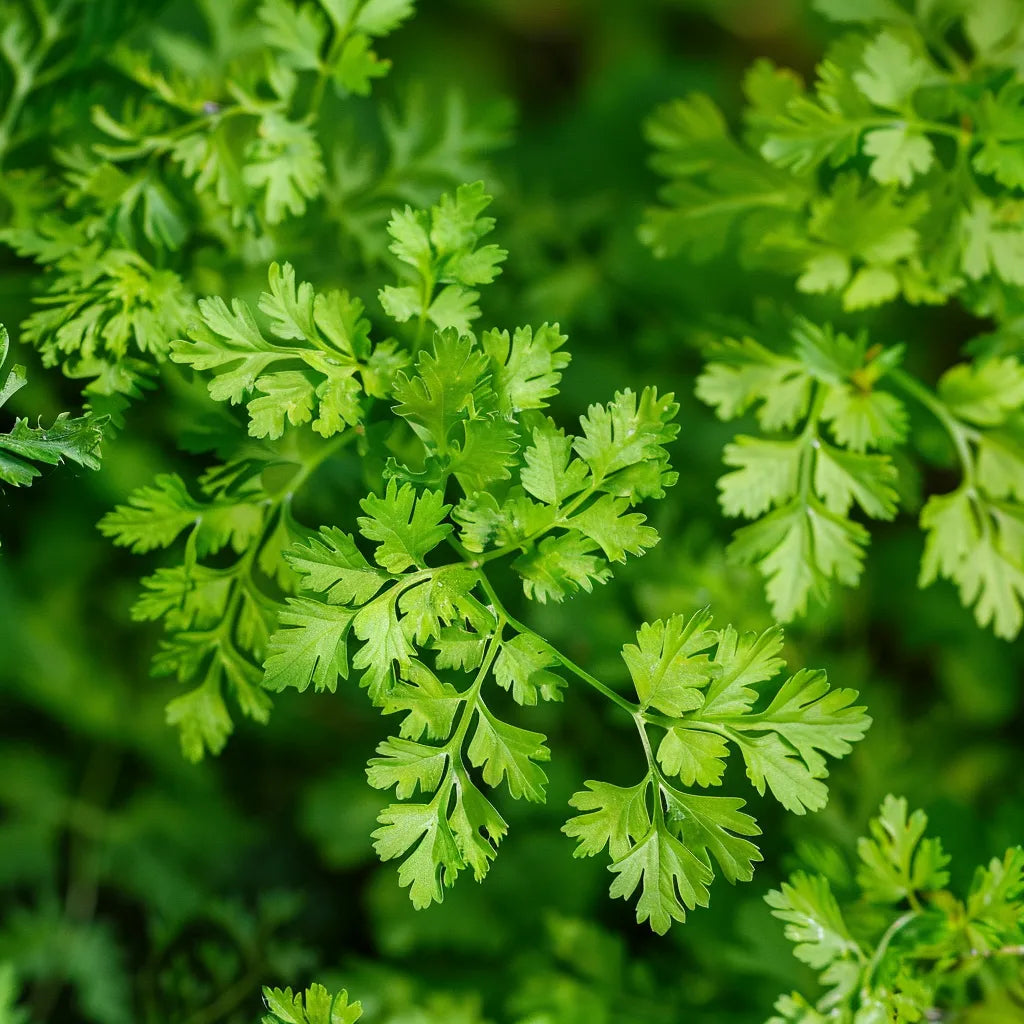
Common chervil, garden chervil, beaked parsley: the most delicate of fine herbs, and the most fragile. Its subtle aniseed fragrance disappears with the slightest prolonged cooking, making it the herb to add at the last moment. It is part of the classic “fine herbs” mixture with parsley, chives, and tarragon.
Characteristics:
-
Delicate flavor: aniseed-like and subtle, it pairs with almost everything without ever overpowering other flavors.
-
Fast growth: first harvest six to eight weeks after sowing.
-
Loves cool conditions: one of the few herbs that prefers shade to summer heat.
-
Can be grown anywhere: vegetable garden, flower bed, border, planter, pot, or window box.
Precautions:
-
Never pick wild chervil without absolute certainty. Several highly toxic umbellifers resemble it, especially fool's parsley (Aethusa cynapium), which readily grows in vegetable gardens. This is precisely the advantage of sowing your own in a clearly identified bed: the risk of confusion disappears.
- Useful distinguishing feature: cultivated chervil gives off a pleasant aniseed scent when rubbed. Fool's parsley, on the other hand, smells unpleasantly of garlic or fetid parsley.
Sowing advice:
-
Exposure: warm in spring and autumn, but partially shaded to shaded in summer — this is its main requirement. In full summer sun, it immediately goes to seed.
-
Soil: healthy, light, cool, well-aerated, and preferably rich in humus. Soil that stays cool is essential.
-
Method: sow directly in place — its taproot does not tolerate transplanting well. From March to September, at a depth of 1 cm, staggering sowings every three weeks: chervil bolts quickly, so it is better to renew it than to try to extend its harvest. See how to sow your seeds.
Care advice:
- Thin to 15 cm apart. Water regularly, as drought immediately triggers bolting.
- A late-season sowing under a cold frame allows you to harvest it through much of the winter.
Harvesting advice:
- Cut the outer stems at the base, leaving the center intact. Use it fresh and raw, added off the heat: cooking completely destroys its aroma, as does drying. Freezing is the only worthwhile preservation method.
Beneficial companion planting:
Benefits for biodiversity:
- Let a few plants go to seed: their white umbels attract hoverflies and beneficial micro-wasps, whose larvae devour aphids.
- Like all umbellifers, it is a host plant for swallowtail caterpillars.
Uses:
- Snipped raw over raw vegetables, salads, soups, vegetables, sauces, meat, and fish. Essential in béarnaise sauce and herb omelets.
- A traditional medicinal plant, cultivated in physic gardens since Antiquity. See our medicinal plants to sow.
Harvesting your own seeds:
Let a few plants flower, then harvest the umbels when the elongated seeds turn brown, before they fall. Chervil readily self-seeds in the garden as well. See saving your seeds.
Commitment to Quality: at SemiSauvage - Permaculture, we grow and select our seeds with respect for living organisms as our guiding principle. Based near the Auvergne Volcanoes, we choose reproducible, non-hybrid varieties, tested for their germination rate, sorted, and carefully packaged, without any chemical treatment. Our belief: to give gardeners back the ability to resow, year after year, seeds that truly belong to them.
The finest of fine herbs, to be picked at the last moment.