Anethum graveolens
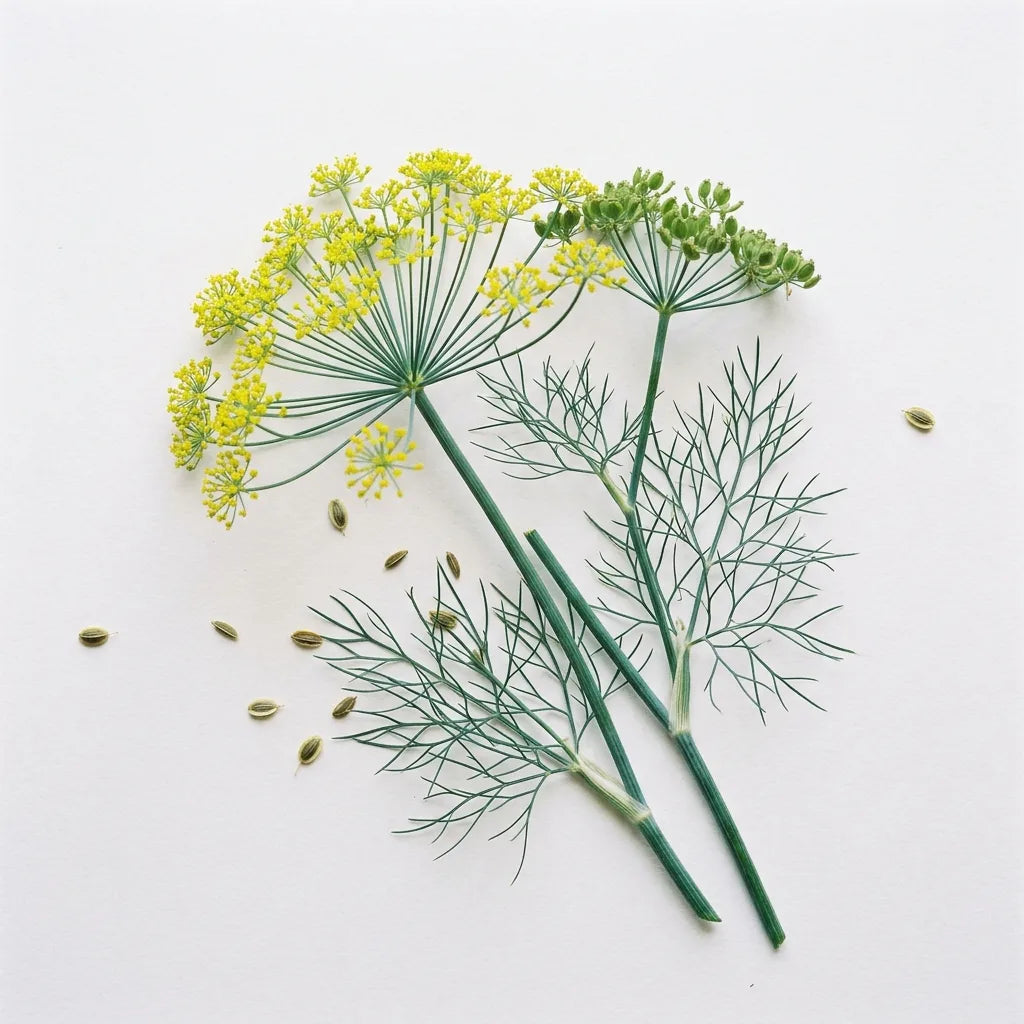
Dill, Bastardfenchel, falscher Anis, Duft-Dill: Sein subtiles Aroma vereint Anis, wilden Fenchel und einen Hauch Minze. Er ist das unverzichtbare Gewürzkraut zu Lachs und skandinavischen Marinaden und eines der wenigen Kräuter, bei denen sowohl das fedrige Laub als auch die Samen verwendet werden.
Eigenschaften:
-
Doppelte Ernte: frisches Laub den ganzen Sommer über, danach aromatische Samen im Herbst.
-
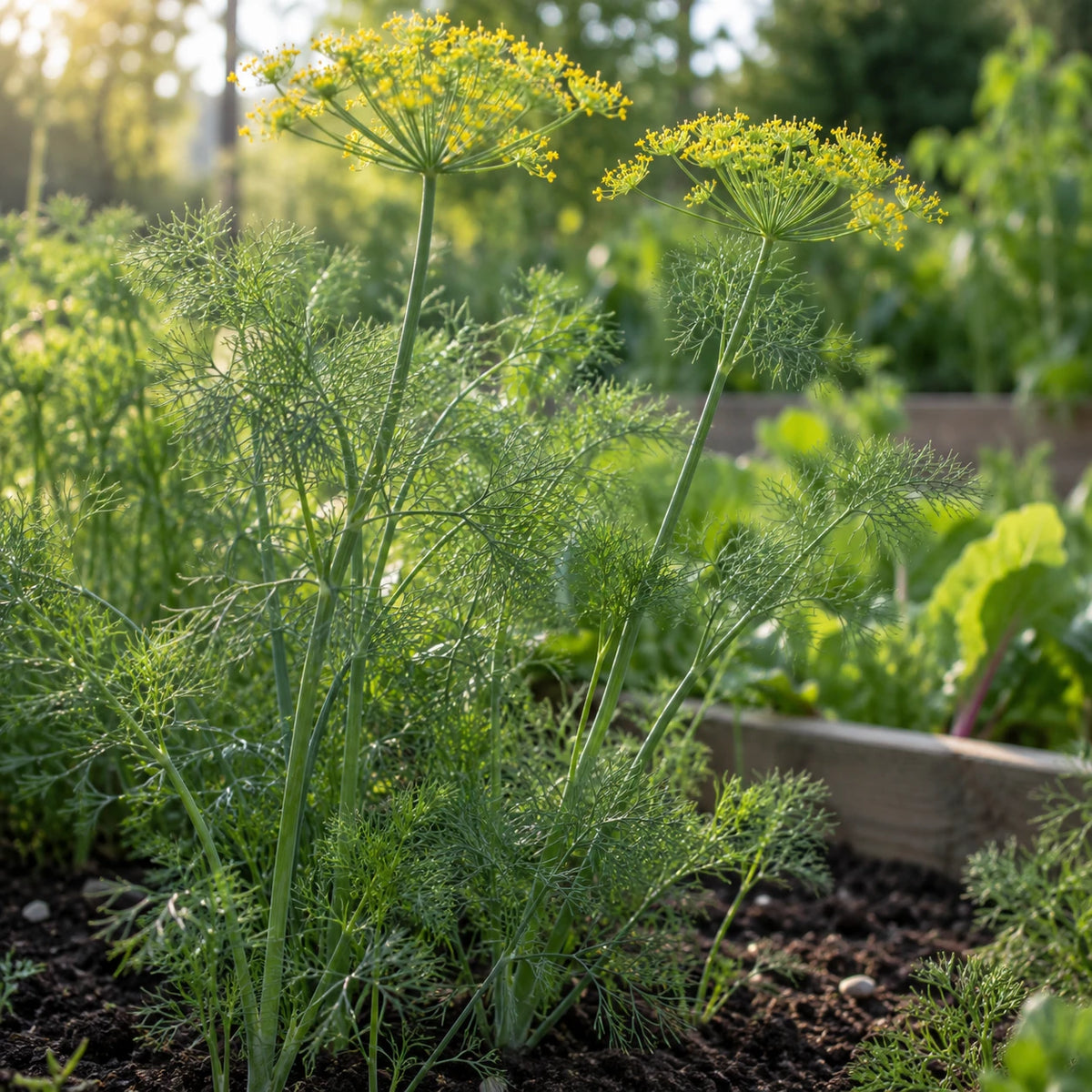
Fedriges Laub: sehr fein geteilt, bläulich und sowohl im Blumenbeet als auch im Gemüsegarten dekorativ.
-
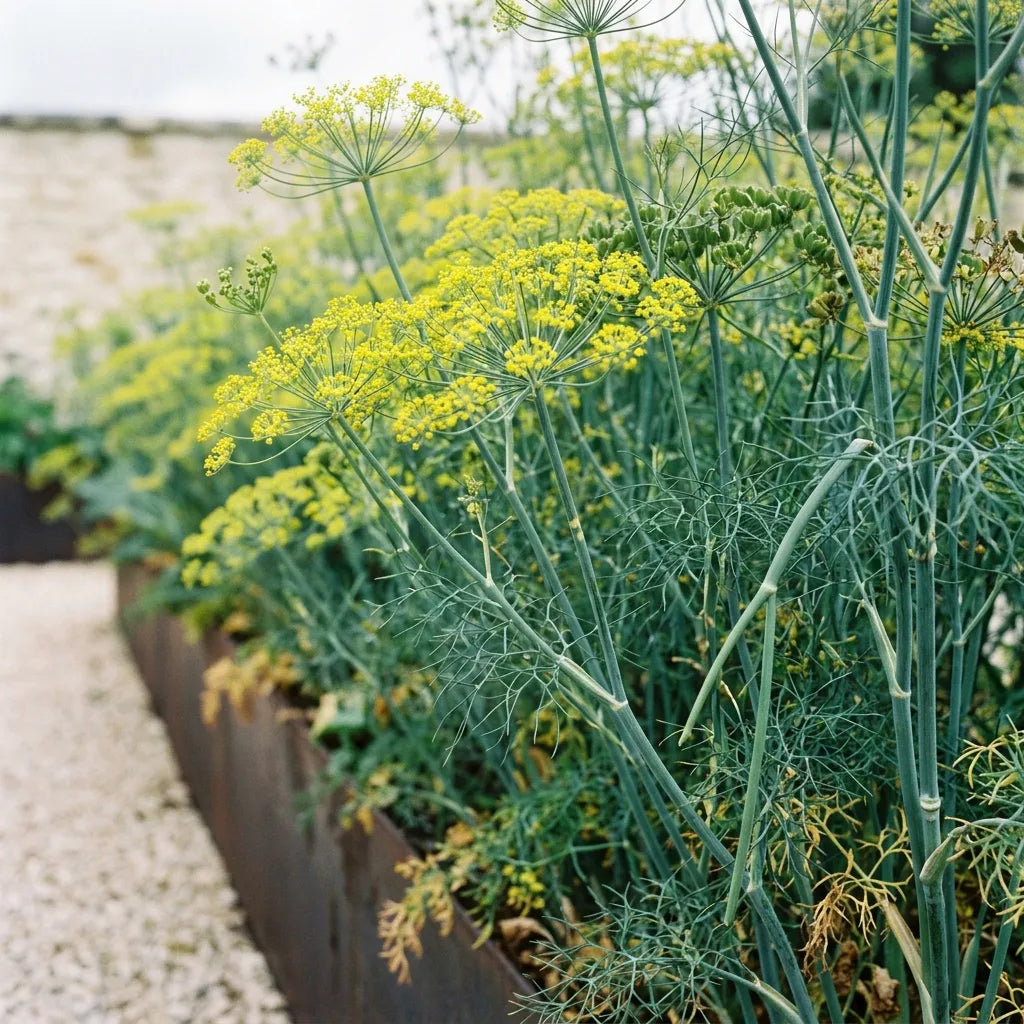
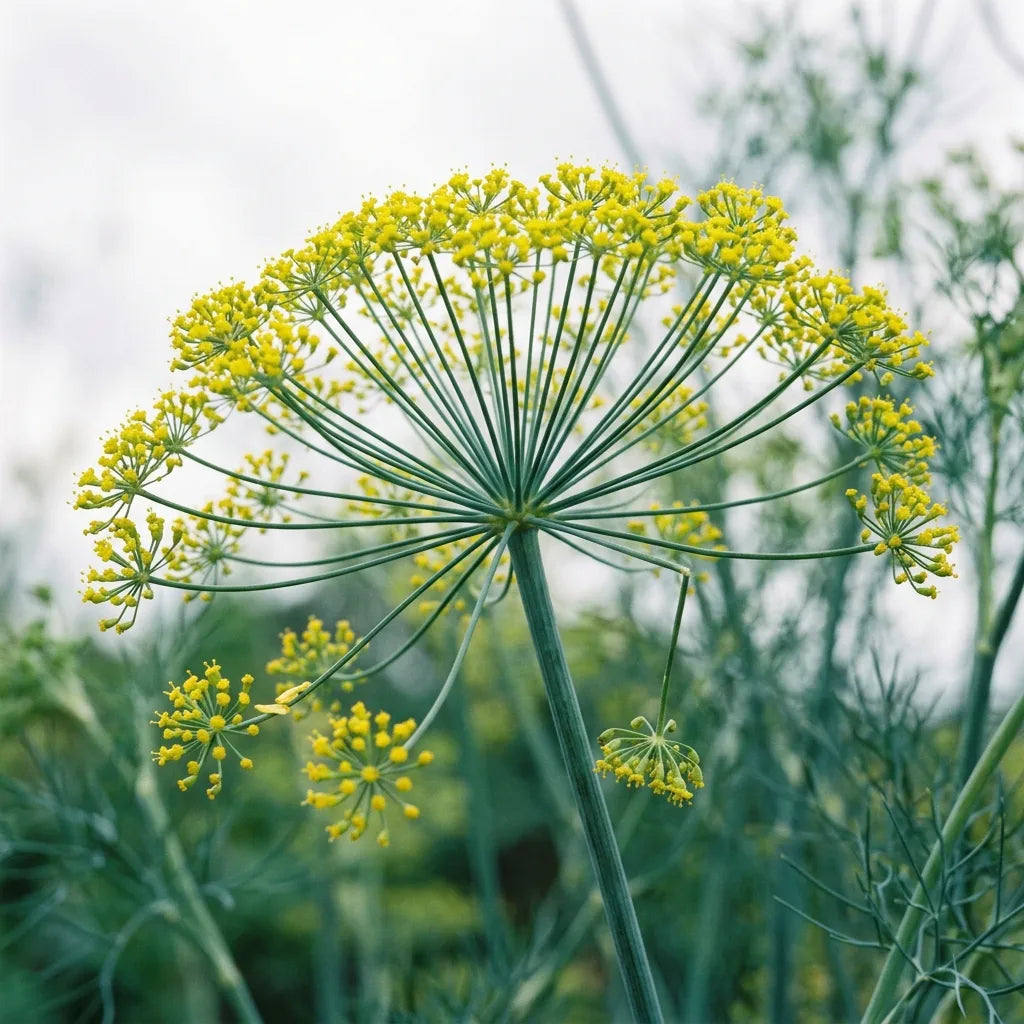
Bienenfreundliche Blüten: große, intensiv duftende gelbe Dolden, die den Garten mit ihrem Duft erfüllen.
-
Schnelles Wachstum: erste Ernte sechs bis acht Wochen nach der Aussaat.
Aussaat-Tipps:
-
Standort: volle Sonne und Wärme, geschützt vor starkem Wind – seine hohlen Stängel brechen leicht.
-
Boden: leicht, gut durchlässig und eher trocken. Er benötigt keine besonderen Zusätze; ein zu nährstoffreicher Boden führt zu weichen, umkippenden Stängeln.
-
Methode: Säen Sie von April bis Juli direkt an Ort und Stelle – seine Pfahlwurzel verträgt das Umpflanzen sehr schlecht, was die häufigste Ursache für Misserfolge ist. In 1 cm Tiefe aussäen und alle drei Wochen nachsäen, um die Ernte zu verlängern. Siehe wie man Samen aussät.
Pflegetipps:
- Auf 20 cm Abstand ausdünnen. Mäßig gießen: Er bevorzugt Trockenheit gegenüber zu viel Wasser.
- Die höchsten Pflanzen an windigen Standorten stützen.
Ernte-Tipps:
- Das Laub nach und nach vor der Blüte ernten. Es lässt sich gut einfrieren, aber schlecht trocknen: Sein feines Aroma verschwindet beim Trocknen nahezu vollständig.
- Für die Samen die Dolden abschneiden, sobald sie braun werden, bevor sie ausfallen, und die Trocknung an einem geschützten Ort abschließen.
Günstige Kombinationen:
Nutzen für die Biodiversität:
- Seine großen gelben Dolden sind wahre Landeplattformen für Schwebfliegen und parasitische Kleinstwespen, deren Larven Blattläuse fressen. Lassen Sie einige Pflanzen bewusst blühen.
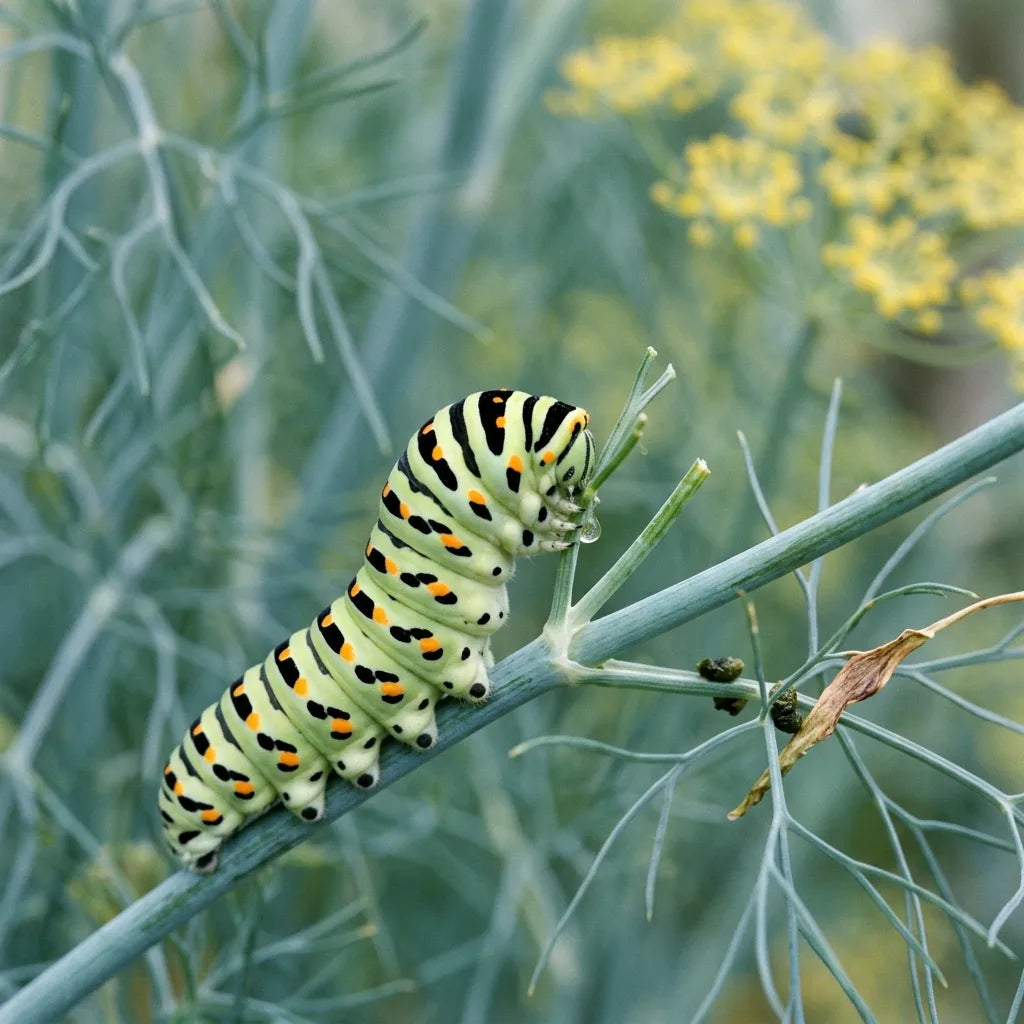
- Wie alle Doldenblütler ist er eine Wirtspflanze für die Raupen des Schwalbenschwanzes.
Verwendung:
- Frisches Laub zu Fisch, Krustentieren, Frischkäse, Salaten, Suppen und Soßen – das skandinavische Graved Lachs verdankt ihm alles. Die Samen werden für Marinaden, eingelegte Gurken, Brote und Essige verwendet.
- Traditionelle Heilpflanze, die bereits seit dem alten Ägypten kultiviert wird. Siehe unsere Heilpflanzen zur Aussaat.
Eigene Samen ernten:
Das ist die Ernte selbst: Lassen Sie einige Dolden vollständig ausreifen und trocknen Sie sie kopfüber in einer Papiertüte. Dill sät sich außerdem gerne von Jahr zu Jahr selbst aus. Siehe Samen aufbewahren.
Unser Qualitätsversprechen: Bei SemiSauvage - Permakultur bauen wir unsere Samen an und wählen sie aus, wobei der respektvolle Umgang mit der Natur unser Leitgedanke ist. In der Nähe der Vulkane der Auvergne ansässig, wählen wir samenfeste, nicht hybride Sorten aus, die auf ihre Keimfähigkeit geprüft, sorgfältig sortiert und ohne chemische Behandlung verpackt werden. Unsere Überzeugung: Gärtnerinnen und Gärtnern wieder die Möglichkeit zu geben, Jahr für Jahr Samen auszusäen, die wirklich ihnen gehören.
Eine Pflanze, zwei Ernten und ein Magnet für Nützlinge im Gemüsegarten.