Petroselinum crispum
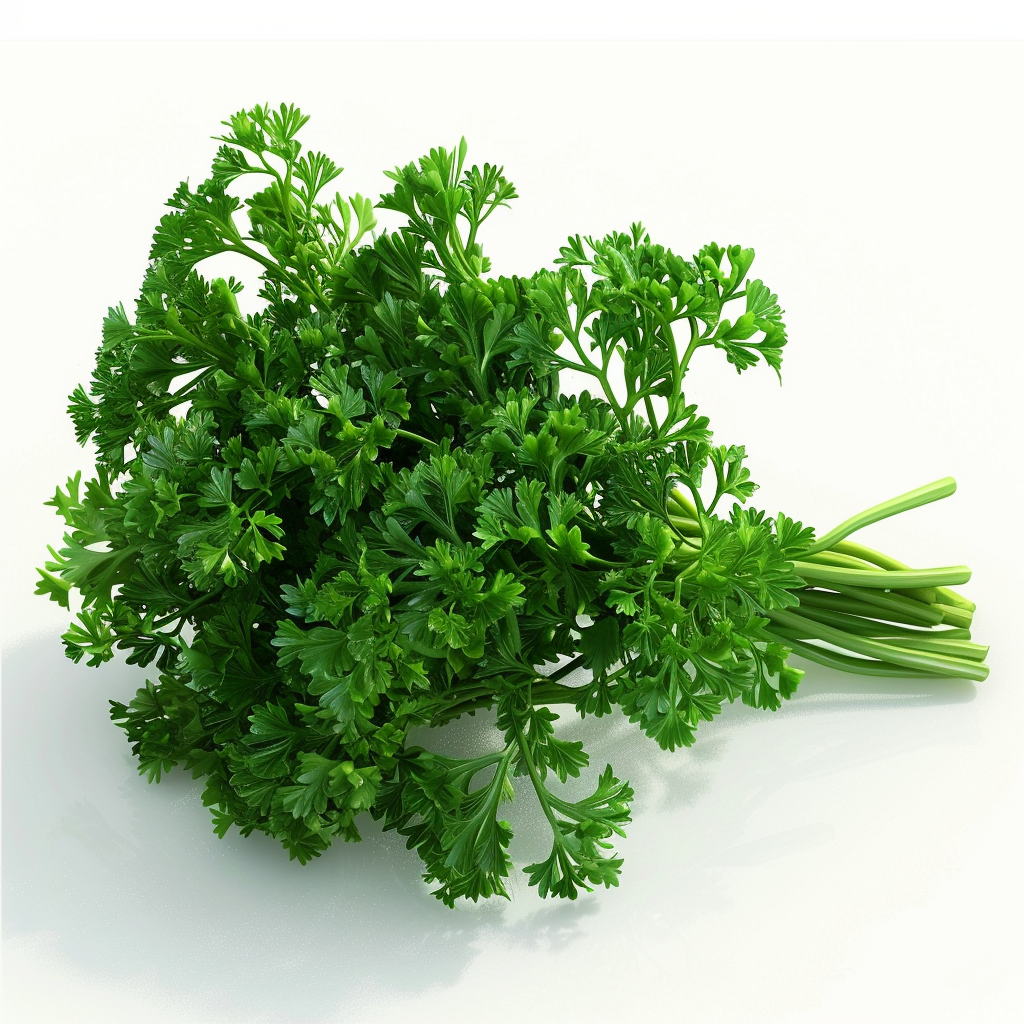
Curly parsley, common parsley, garden parsley: the most universal of herbs, and yet the one that causes the most confusion when sown. Its seeds take three to four weeks to germinate, a delay that gave rise to the saying that “parsley goes to the devil seven times before emerging from the ground.” Patience and consistent moisture will overcome its reputation.
Characteristics:
-
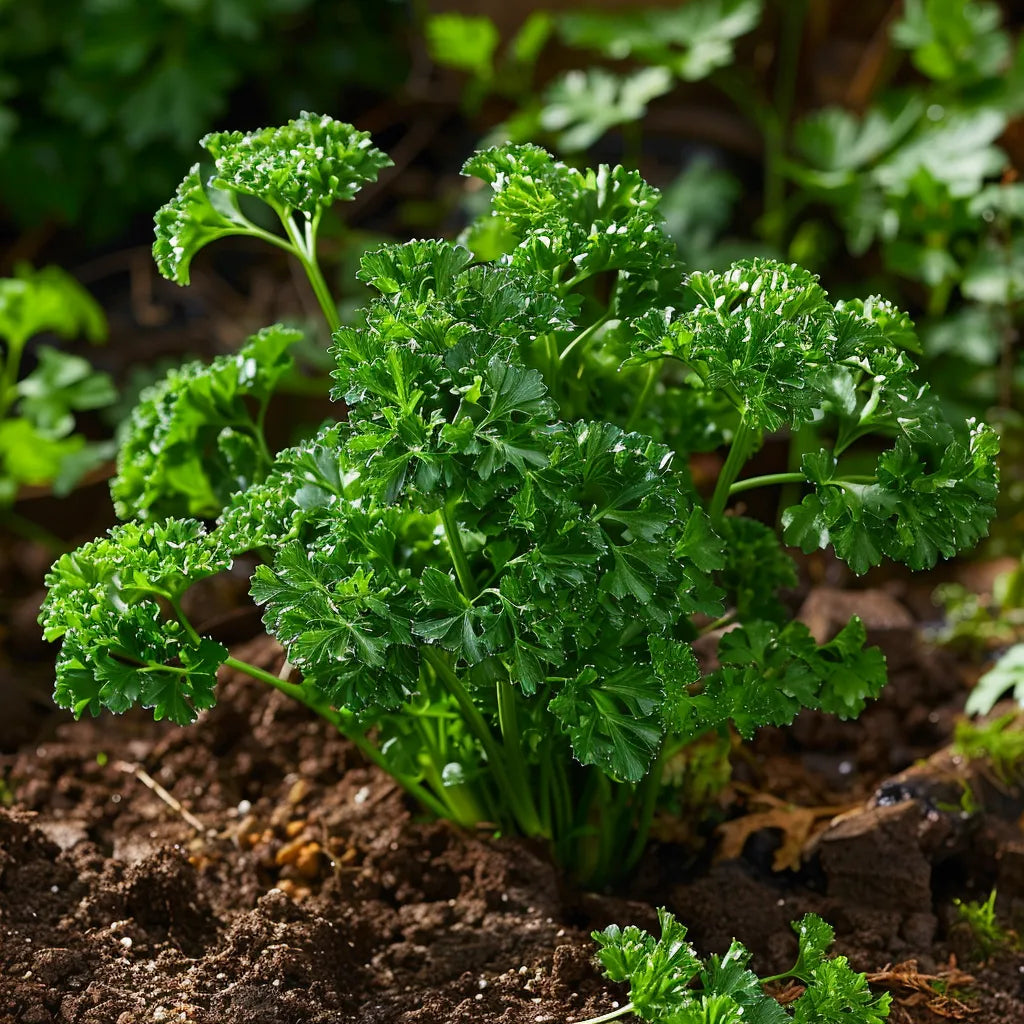
Decorative curly foliage: very dense and ornamental, it also makes a lovely border.
-
Extended harvest: from spring to winter, leaf by leaf.
-
Can be grown anywhere: in the ground, in a planter, or in a pot on a windowsill.
-
Hardy: it withstands the cold and can often be harvested throughout the winter.
Sowing advice:
-
Exposure: sunny or lightly shaded — partial shade suits it very well in summer.
-
Soil: deep, cool, loose, rich in humus, and well drained. This plant appreciates well-nourished soil: adding compost produces noticeably fuller foliage.
-
Method: germination is slow, so soak the seeds overnight in lukewarm water before sowing. Sow from April to October at a depth of 1 cm, and above all keep the soil constantly moist until germination: drying out during germination is the main cause of failure. Stagger sowings by a few weeks for a continuous harvest. See how to sow your seeds.
Care advice:
- Thin to 15 cm apart. Water regularly, as parsley dislikes drought, which causes it to bolt.
- Remove flower stalks as soon as they appear in the second year to prolong leaf production.
Harvesting advice:
- Harvest the outer stems at the base, leaving the center intact: the plant will continue to regrow. Never cut the clump halfway up.
- It freezes very well when chopped; drying causes it to lose much of its flavor.
Beneficial combinations:
Benefits for biodiversity:
- Let one plant go to seed in the second year: its yellow-green umbels are true platforms for hoverflies and parasitic wasps, whose larvae devour aphids.
- Like all umbellifers, it is a host plant for Swallowtail caterpillars.
Uses:
- Chopped raw and added at the end of cooking: salads, tabbouleh, parsley-garlic seasoning, sauces, and soups. Its stems, often discarded, add excellent flavor to broths and stocks.
- A traditional medicinal plant, cultivated in herb gardens since Antiquity. See our medicinal plants to sow.
Harvesting your own seeds:
Biennial, it goes to seed in its second year: let one plant flower, then harvest the umbels when the seeds turn brown. Parsley also readily self-seeds. See saving your seeds.
Commitment to Quality: at SemiSauvage - Permaculture, we grow and select our seeds with respect for living things as our guiding principle. Based near the Volcans d'Auvergne, we choose open-pollinated, non-hybrid varieties, tested for their germination rate, carefully sorted and packaged, with no chemical treatments. Our conviction: to give gardeners back the ability to resow, year after year, seeds that truly belong to them.
The everyday herb you should always have on hand.