Calendula officinalis
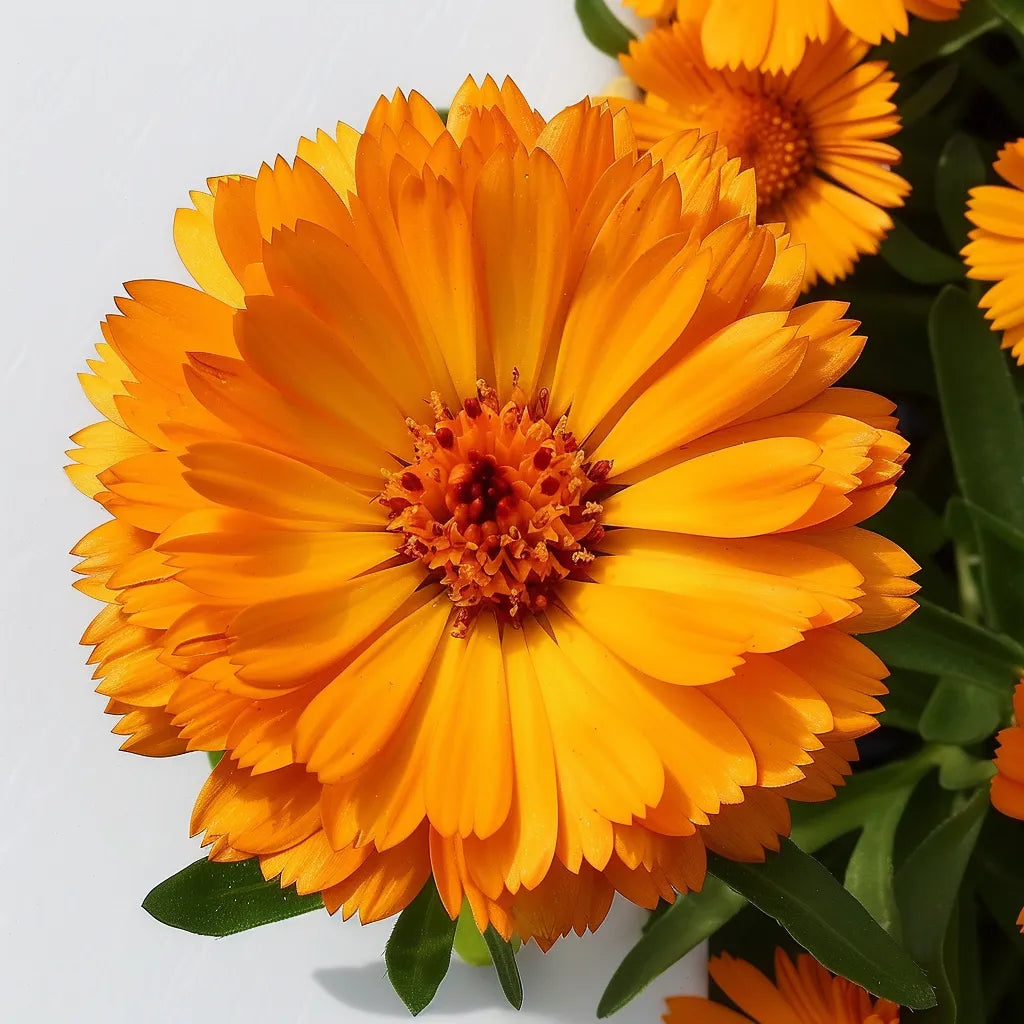
Pot marigold, calendula, flower of every month: this last nickname comes from the Latin calendae, the first day of the month, because this flower seems never to stop blooming. Farmers of the past even used it as a barometer: flower heads that remained closed in the morning foretold rain.
Characteristics:
-
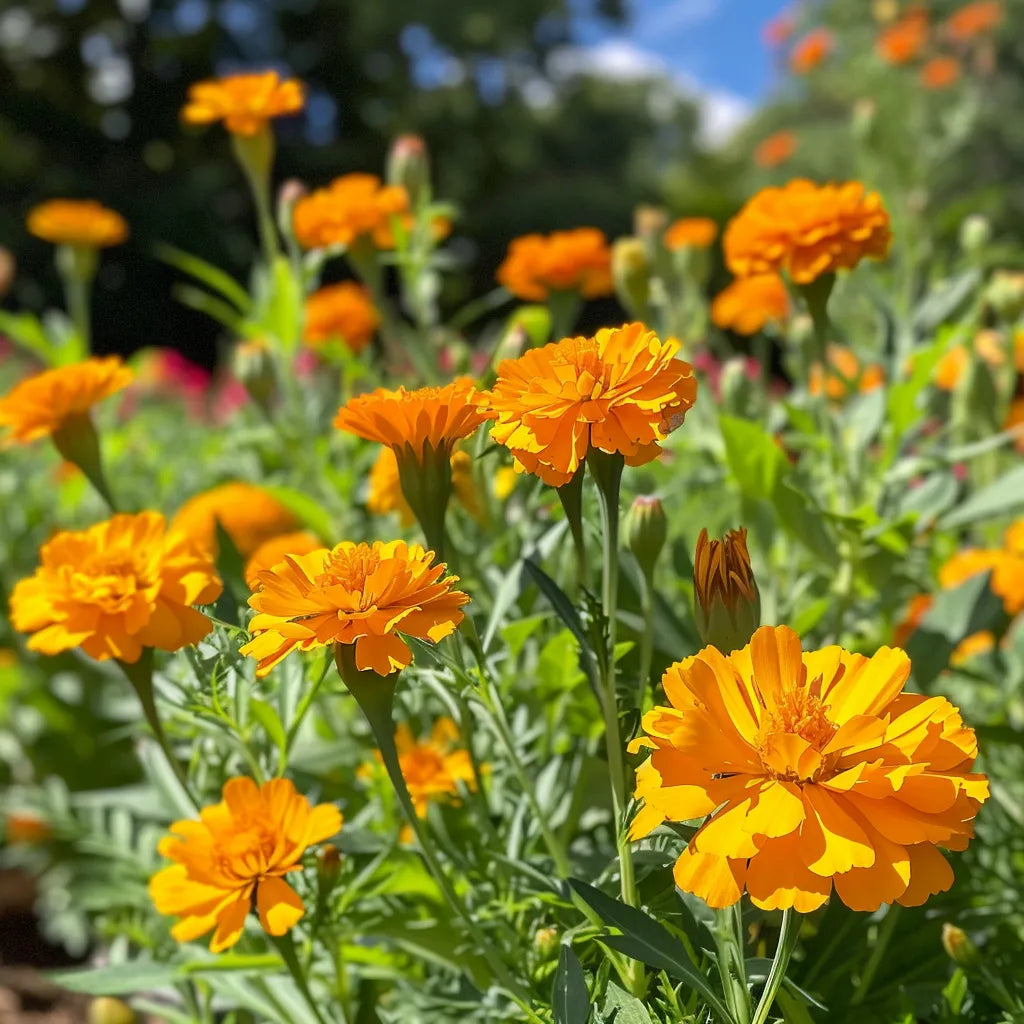
Relentless flowering: bright yellow to orange, from spring until the first frosts, on spreading, bushy clumps.
-
Very easy: an annual that adapts to all types of soil and self-seeds from one year to the next.
-
Versatile: beds, borders, rock gardens, containers or vegetable garden rows—it fits in everywhere.
Sowing advice:
-
Exposure: sunny; it tolerates light partial shade.
-
Soil: truly any type, even poor, calcareous or stony, provided it is well drained—it is one of the most accommodating flowers there is. No fertilization is necessary.
-
Method: sow directly in place from March to May, covering the curved seeds with about 1 cm of soil. No pots or pre-soaking needed; germination is quick and highly reliable. Thin to 30 cm. See how to sow your seeds.
Care advice:
- Regularly remove faded flowers: this encourages continuous flowering right through to the first frosts.
Harvesting advice:
- Pick fully open flower heads in dry weather, during mid-morning, and dry them quickly in the shade, spreading out the petals.
Beneficial companion planting:
Benefits for biodiversity:
- Its wide-open flower heads are accessible to a great diversity of pollinators, including small short-tongued species often overlooked by complex flowers.
- Its very late flowering, lasting until the first frosts, makes it one of the season’s last resources for insects.
Uses:
- Leaves and petals are edible: the colorful petals decorate salads, rice and desserts, which has earned the pot marigold the nickname “poor man’s saffron.” See our edible flowers.
- Traditionally used in cosmetics and homemade preparations for centuries.
Harvesting your own seeds:
Leave a few faded flower heads in place: they form very distinctive, crescent-shaped curved seeds that turn brown and detach easily once dry. Pot marigold also generously self-seeds. See how to save your seeds.
Our commitment to Quality: at SemiSauvage - Permaculture, we grow and select our seeds with respect for all living things as our guiding principle. Based near the Auvergne Volcanoes, we choose reproducible, non-hybrid varieties, tested for their germination rate, carefully sorted and packaged, with no chemical treatment. Our conviction: to give gardeners back the ability to resow, year after year, seeds that truly belong to them.
Add these pot marigolds to your garden for their luminous color and usefulness in the vegetable garden.