Rubus fruticosus
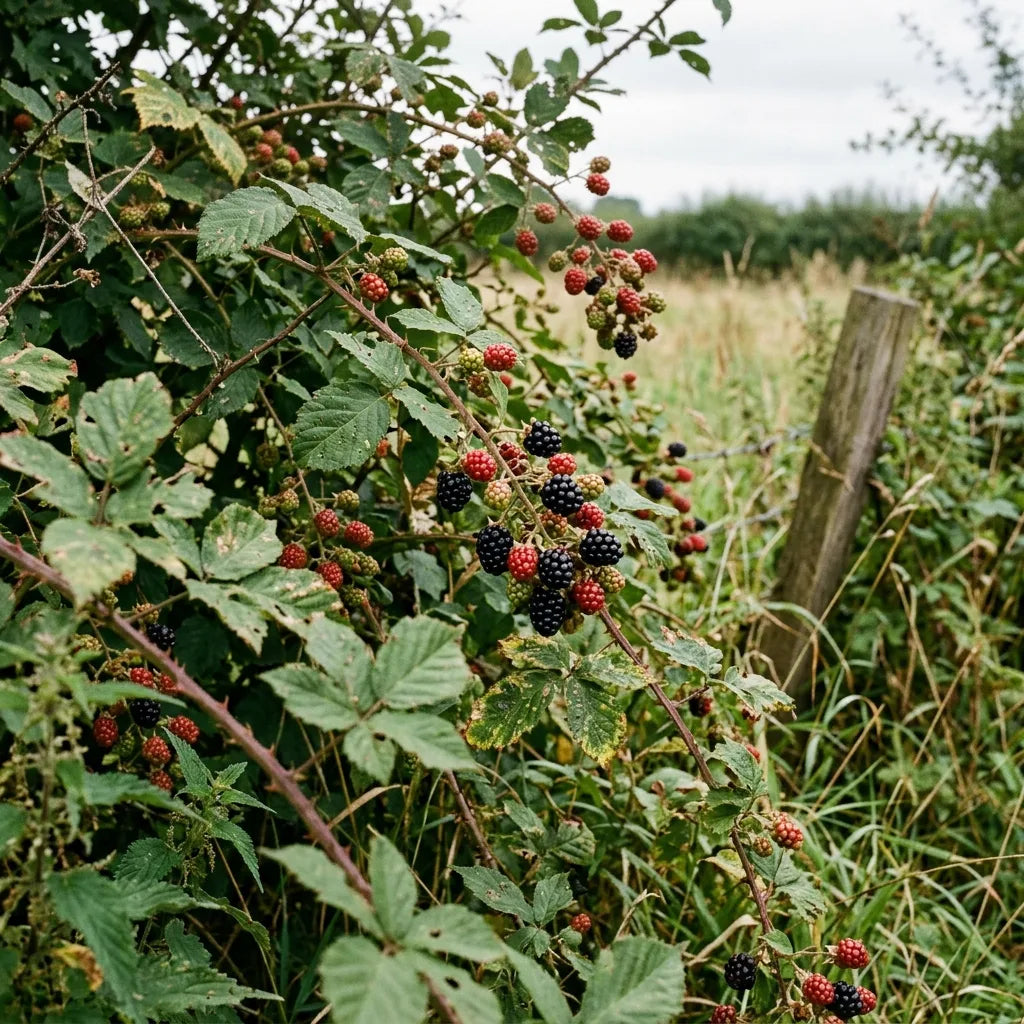
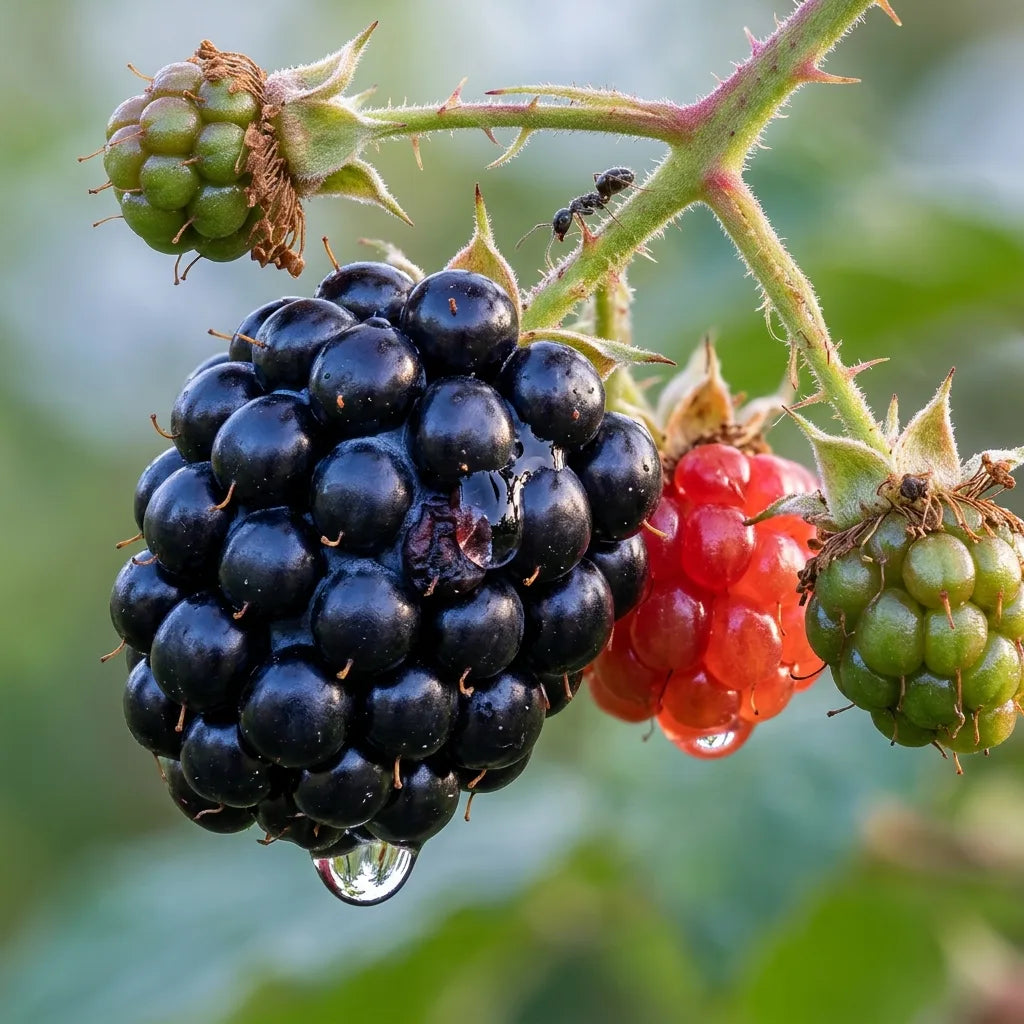
야생 블랙베리, 일반 산딸기나무, 산울타리 뽕나무, 카티뮈롱: 산딸기나무는 정원에서는 뽑아내고, 9월에는 바구니를 들고 축복하게 되는 식물입니다. -25 °C까지 견디는 강인함과 끈질긴 생명력을 지녔으며, 아무것도 요구하지 않고도 다른 어떤 작물도 따라가기 힘든 풍성함으로 검고 달콤한 열매를 맺습니다.
특징:
-
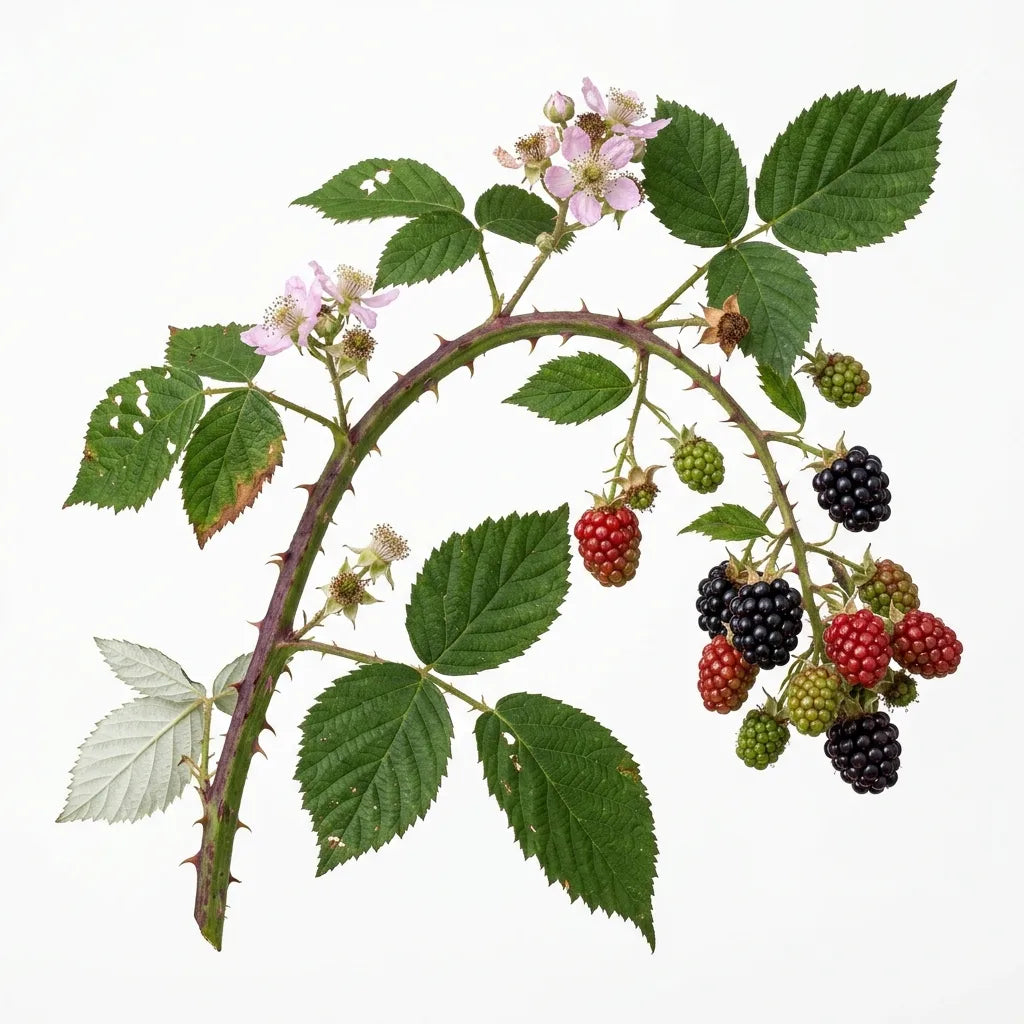
검고 달콤한 열매: 8월부터 10월까지 차례로 익어 수확 기간이 길어집니다.
-
매우 강한 내한성: -25 °C까지 견디며 다른 식물이 버티지 못하는 환경에서도 자랍니다.
-
길고 덩굴성인 줄기: 가시가 있으며 땅에 닿는 곳마다 뿌리를 내립니다.
-
토양을 거의 가리지 않음: 양지나 반그늘, 깊고 배수가 잘되는 토양이면 충분합니다.
주의사항 — 파종 전에 반드시 읽어 주세요:
-
산딸기나무는 매우 왕성하게 번집니다. 늘어진 줄기는 땅에 닿으면 뿌리를 내리고(자연 취목), 뿌리줄기에서도 새순이 나옵니다. 방치한 한 포기가 몇 년 만에 통과하기 어려운 덤불을 만들 수 있습니다. 퍼져도 괜찮은 공간에 심거나 매년 엄격하게 가지치기할 수 있을 때만 파종하세요.
- 굽은 가시는 매우 위험하므로 작업할 때는 두꺼운 장갑과 긴소매가 필수입니다.
- 공동 울타리나 대지 경계선 가까이에 심기 전에는 이웃에게 미리 알리세요.
파종 방법:
-
햇빛: 양지 또는 반그늘. 강한 햇빛에서는 열매가 더 달고, 반그늘에서는 잎이 더 무성하게 자랍니다.
-
토양: 깊고 부식질이 풍부하며 약간 모래가 섞이고 배수가 잘되는 토양이 좋습니다 — 하지만 솔직히 거의 모든 토양에서 자랍니다. 다만 물이 늘 고여 있는 곳은 피하세요.
-
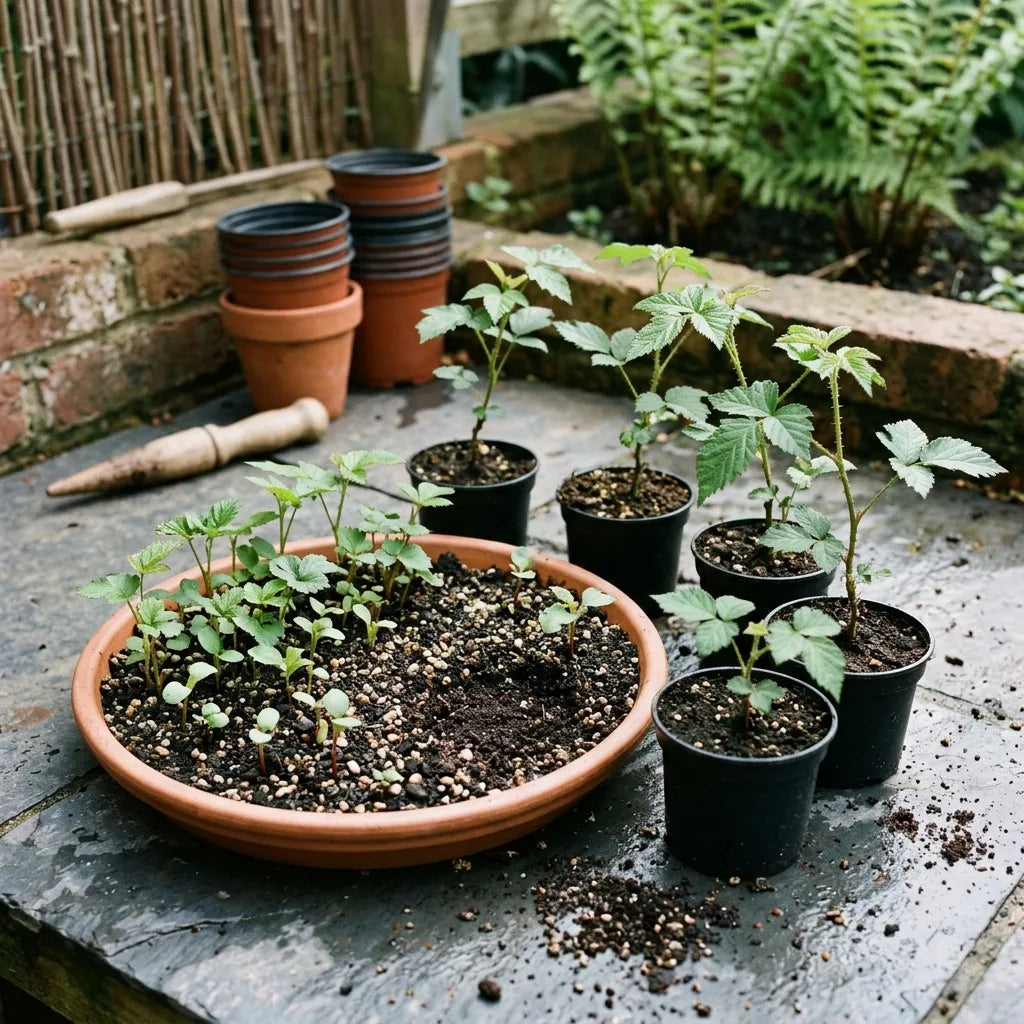
방법: 휴면을 깨우려면 4~8주간 저온 층적 처리가 필요합니다. 이후 봄에 화분에 파종하고 흙을 얇게 덮으세요. 발아는 느리고 시차를 두고 진행되므로 인내심을 가지세요. 씨앗 파종 방법을 참고하세요.
식재 방법:
- 정원 가장자리, 정원 안쪽 또는 자연형 울타리에 옮겨 심고 1.50~2m 간격을 두세요. 나중에는 옮기기 어려우므로 처음부터 최종 위치를 신중히 정하세요.
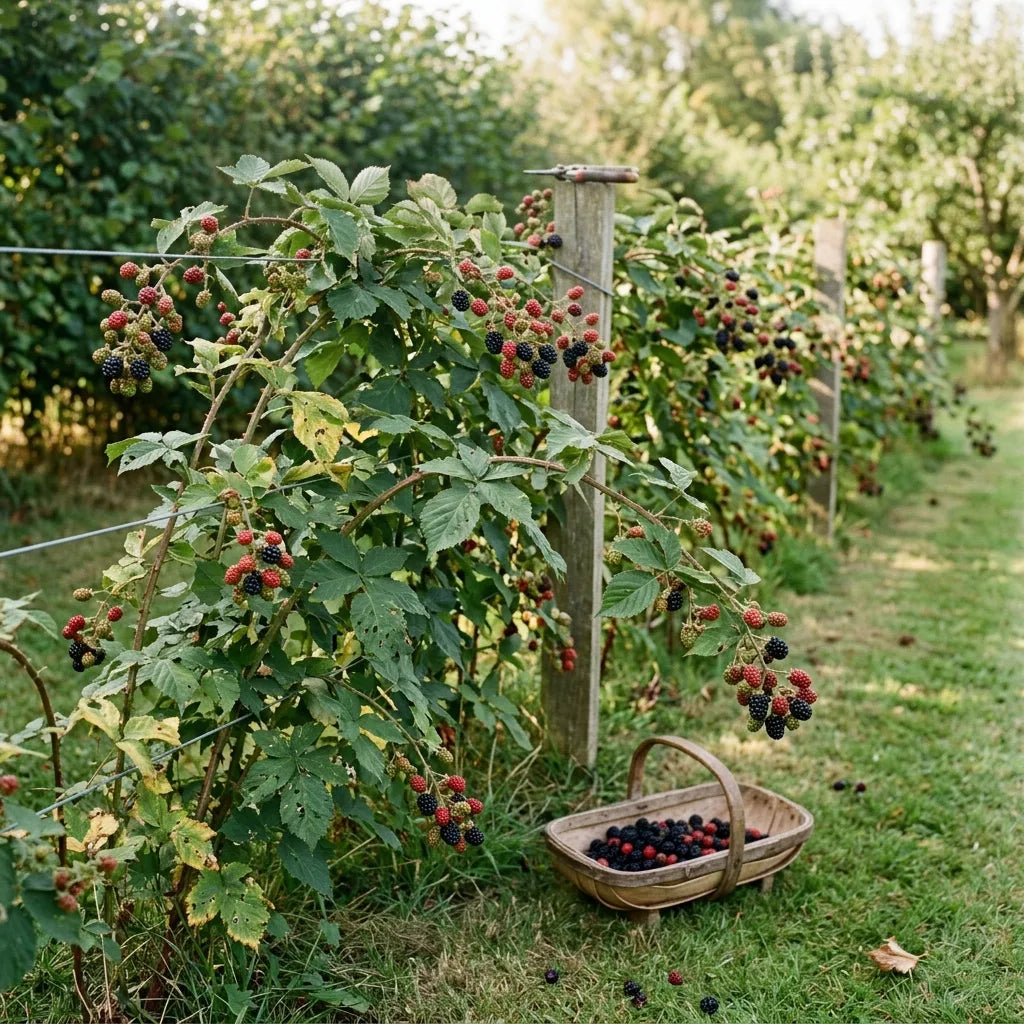
- 팽팽하게 친 철사에 유인하면 수확과 가지치기가 훨씬 쉬워집니다.
관리 방법:
- 자리를 잡은 뒤에는 물을 줄 필요가 없습니다. 첫해에 극심한 가뭄이 들 때만 예외입니다.
-
가지치기: 산딸기나무는 2년생 줄기에서 열매를 맺습니다. 열매를 맺은 줄기는 철이 끝날 때 지면 가까이 잘라내고, 그해 새로 자란 어린 줄기는 남겨 두세요. 매년 하는 이 가지치기는 번식을 억제하는 가장 중요한 방법이기도 합니다.
- 늘어진 줄기의 끝을 들어 올려 원하지 않는 곳에 뿌리를 내리지 않도록 하세요.
수확 방법:
- 열매가 광택 없는 검은색이 되고 저절로 떨어질 때 수확하세요 — 저항감이 있으면 아직 시큼합니다. 윤이 나는 블랙베리는 아직 익지 않은 것입니다.
- 수확은 여러 주에 걸쳐 이어지므로 2~3일마다 다시 확인하세요.
유익한 조합:
생물다양성에 대한 가치:
- 산딸기나무는 야생동물에게 가장 유용한 식물 중 하나입니다. 가시덤불은 휘파람새, 개똥지빠귀, 울새에게 외부에서 침입하기 어려운 둥지 터전과 은신처가 됩니다.
- 한여름에는 꽃에 벌과 나비가 대량으로 찾아오며, 가을에는 열매가 새와 포유류의 먹이가 됩니다.
- 수많은 나비 애벌레의 기주식물 역할을 합니다.
활용:
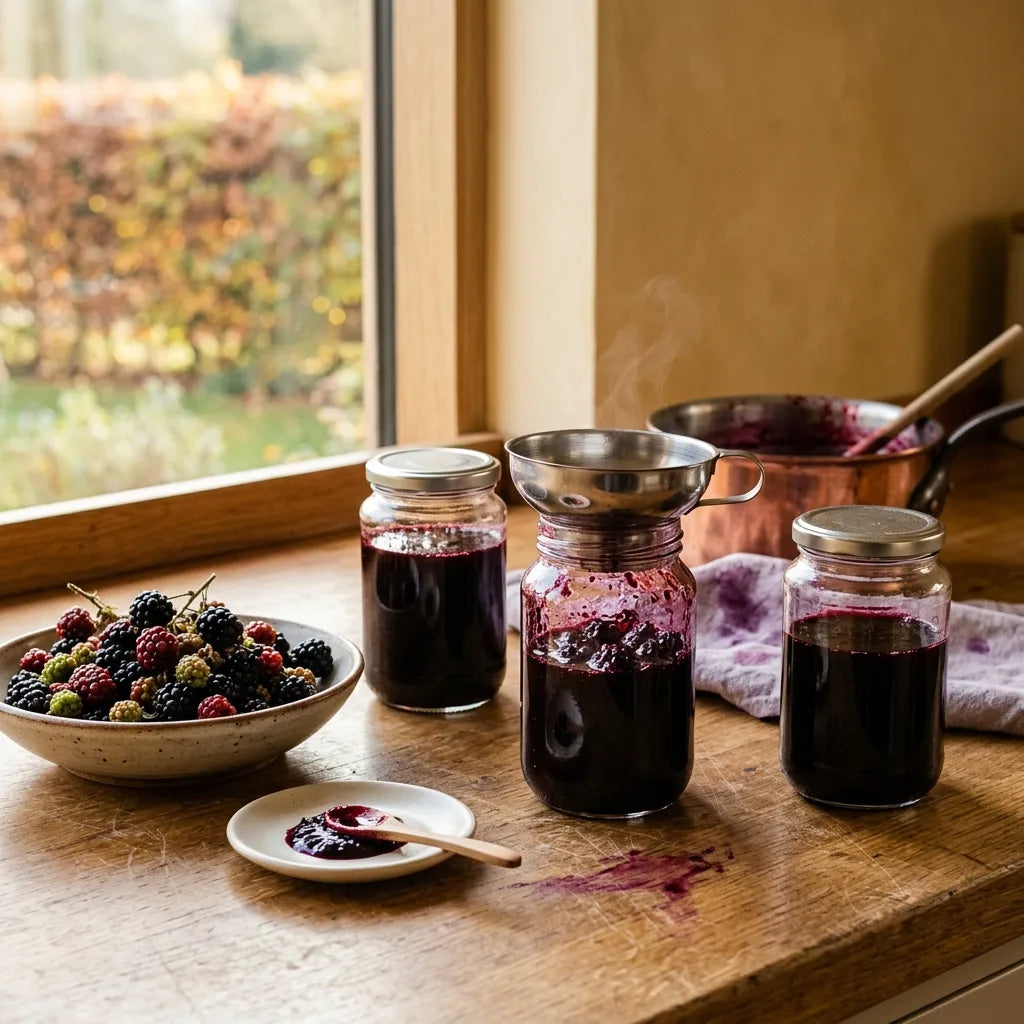
- 생과로 먹거나 잼, 젤리, 타르트, 셔벗, 시럽으로 활용할 수 있습니다. 넓은 쟁반에 펼쳐 먼저 얼린 다음 봉지에 담으면 냉동 보관도 매우 잘됩니다.
- 봄철 어린순과 잎은 전통적으로 차로 이용합니다.
직접 씨앗 채종하기:
잘 익은 블랙베리를 물에 으깬 뒤 여러 번 헹궈 과육과 씨앗을 분리하고, 겨울철 층적 처리 전에 평평하게 펼쳐 말리세요. 취목으로도 매우 쉽게 번식합니다. 줄기 끝을 땅에 묻으면 스스로 뿌리를 내립니다. 씨앗 보관 방법을 참고하세요.
품질에 대한 약속: SemiSauvage - 퍼머컬처에서는 생명을 존중하는 마음을 중심에 두고 씨앗을 재배하고 선별합니다. 오베르뉴 화산 지역 인근에 자리한 저희는 다시 번식시킬 수 있고 교잡되지 않은 품종을 선택하며, 발아율을 검사하고 정성껏 선별·포장합니다. 화학 처리는 전혀 하지 않습니다. 저희의 믿음은 정원사들이 해마다 자신에게 진정으로 속한 씨앗을 다시 파종할 수 있는 힘을 되찾도록 하는 것입니다.
야생 정원에서 가장 소중한 은신처이자, 9월이면 바구니를 가득 채워 주는 식물입니다.