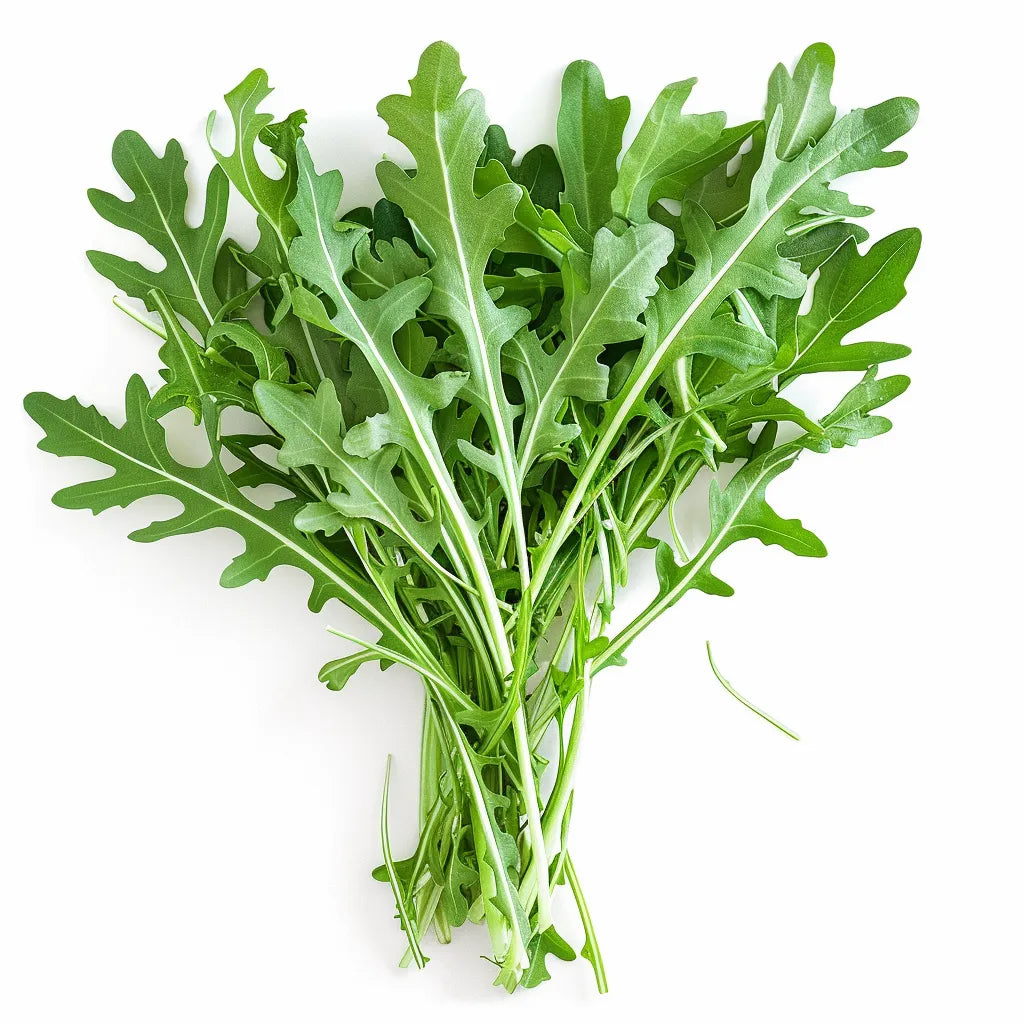
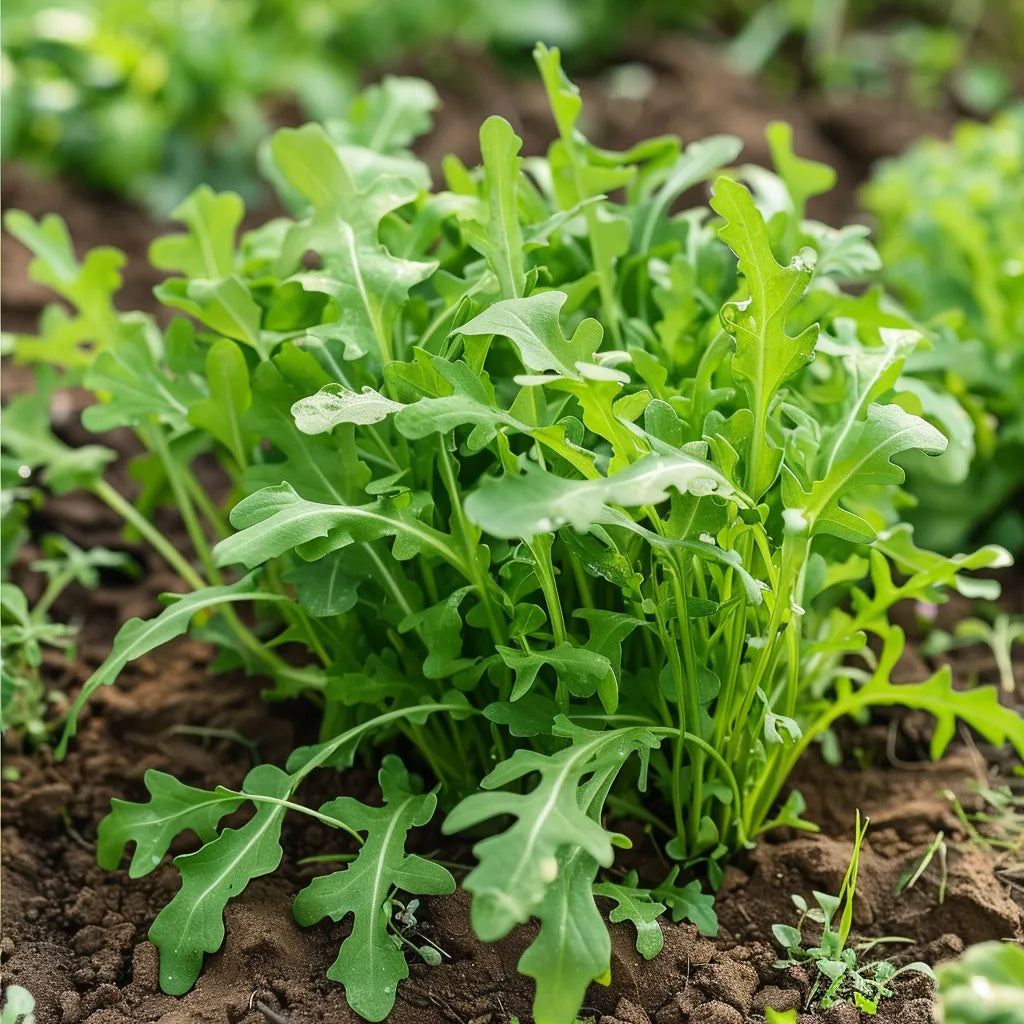
Eruca sativa
Arugula, cultivated arugula, rocket, wild rocket: its peppery bite comes from the same sulfur compounds as mustard — it is, in fact, a brassica, much more closely related to cabbage than to lettuce. An exceptionally quick crop: just three to four weeks are needed between sowing and the first harvest.
Characteristics:
-
Peppery flavor: a distinct bite and a nutty note that enhance every salad.
-
Very fast growth: first harvest 3 to 4 weeks after sowing.
-
Edible flowers: cream-white with purple veins, they make an attractive garnish.
-
Self-seeds once established in the garden.
Sowing advice:
-
Exposure: sunny, or partial shade in midsummer — heat intensifies its bite to the point of harshness and makes it bolt.
-
Soil: ordinary, cool and well-drained. It is not demanding, but soil that stays moist produces noticeably more tender, less peppery leaves.
-
Method: sow directly in place from March to September, 1 cm deep, in rows spaced 20 cm apart. Stagger sowings every two to three weeks: arugula bolts quickly, so it is better to renew it than try to extend the crop. See how to sow your seeds.
Care advice:
- Thin to 10 cm apart. Water regularly: this is the key to tender, mild leaves.
- An insect netting keeps flea beetles away — the small beetles that pepper its foliage with holes.
Harvesting advice:
- Pick the outer leaves one at a time, leaving the center intact: the plant will regrow and produce for weeks. Do not cut the whole clump.
- Harvest young: the older the leaves, the more peppery and tough they become.
Beneficial pairings:
- Its rapid growth makes it an excellent intercrop between slower-growing vegetables. Avoid sowing it after other brassicas, with which it shares pests. See vegetable garden companion planting.
Benefits for biodiversity:
- Allow a few plants to flower: their cream-colored flowers veined with purple are frequently visited by bees and hoverflies, whose larvae devour aphids.
- It makes useful use of empty spaces in the vegetable garden rather than leaving the soil bare.
Uses:
- Raw in salads, on its own or mixed with other greens, with Parmesan and pine nuts. Cooked like spinach, in soup, or in pesto, where it makes an excellent substitute for basil. Its flowers can be used to garnish dishes.
Harvesting your own seeds:
Allow a few plants to flower, then form their seed pods. Harvest them when thoroughly dry and shell them. Arugula also readily self-seeds from one year to the next. See how to store your seeds.
Commitment to Quality: at SemiSauvage - Permaculture, we grow and select our seeds with respect for all living things as our guiding principle. Based near the Auvergne Volcanoes, we choose open-pollinated, non-hybrid varieties, tested for their germination rate, carefully sorted and packaged, with no chemical treatment. Our belief: to give gardeners back the ability to resow, year after year, seeds that truly belong to them.
The fastest salad crop in the vegetable garden, and the most flavorful.